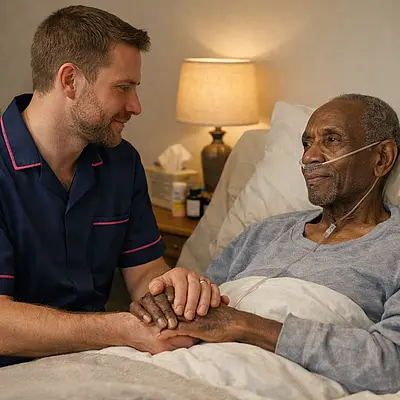
How do I know when end-of-life care may need to be discussed at home?
This can be a difficult step, but there are often signs that it may be time to explore more focused comfort-based planning. These can include increasing weakness, spending more time in bed, reduced appetite, greater dependence on others, or symptoms becoming harder to manage. Families do not need to guess alone. Resources about when it may be time to consider end-of-life care at home can help, as can conversations with professionals already involved. Discussing this does not mean losing compassion or hope. It means making sure the person’s comfort, dignity, and preferences remain central as needs change.