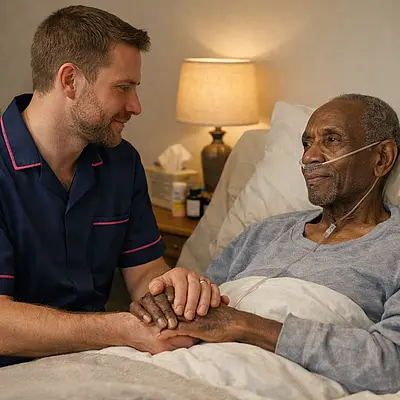
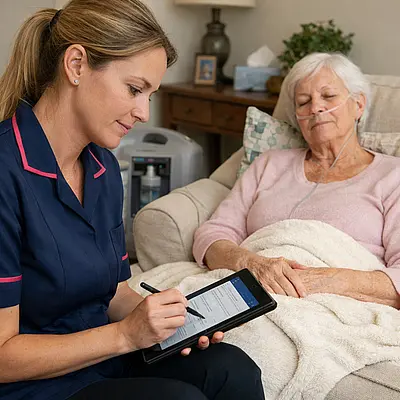
In the final 48 hours at home, many people become much sleepier, eat and drink far less, and may respond only briefly or not at all. Their breathing can change in pattern, with pauses or a rattling sound, and their hands or feet may become cooler as circulation slows. Some people also become restless for short periods. These changes are often part of the natural dying process and do not always mean the person is uncomfortable. Families can usually help most by keeping the room calm, offering mouth care, speaking gently, and checking any comfort medicines are given as advised. If something changes suddenly or feels worrying, it is always sensible to ask for professional guidance.
Before You Go Support at Home Could Change Everything
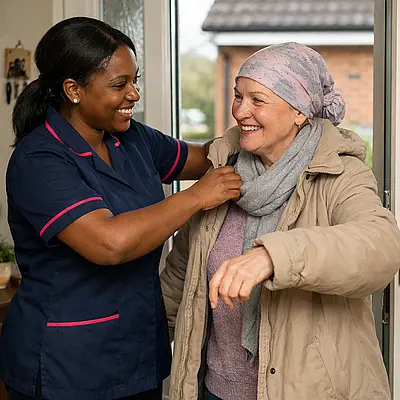
If you or a loved one need extra support at home, the right care can make daily life safer, easier, and more comfortable. Our compassionate domiciliary care team is here to help with everything from personal care to companionship, all tailored to your needs. Speak with us today to learn how we can support independent living at home.
We sometimes use a number cookies to improve your browsing experience, but these are not always essential to the propper functionality of our site. By clicking "Accept All", you consent to our use of these additional cookies where applicable. You can read more about cookies in our Website Privacy Statement.