
Understanding a care needs assessment
A care needs assessment is a process conducted by local authorities to evaluate an individual's requirements for care and support services, ensuring they receive appropriate assistance to improve their quality of life.
How to get a care needs assessment
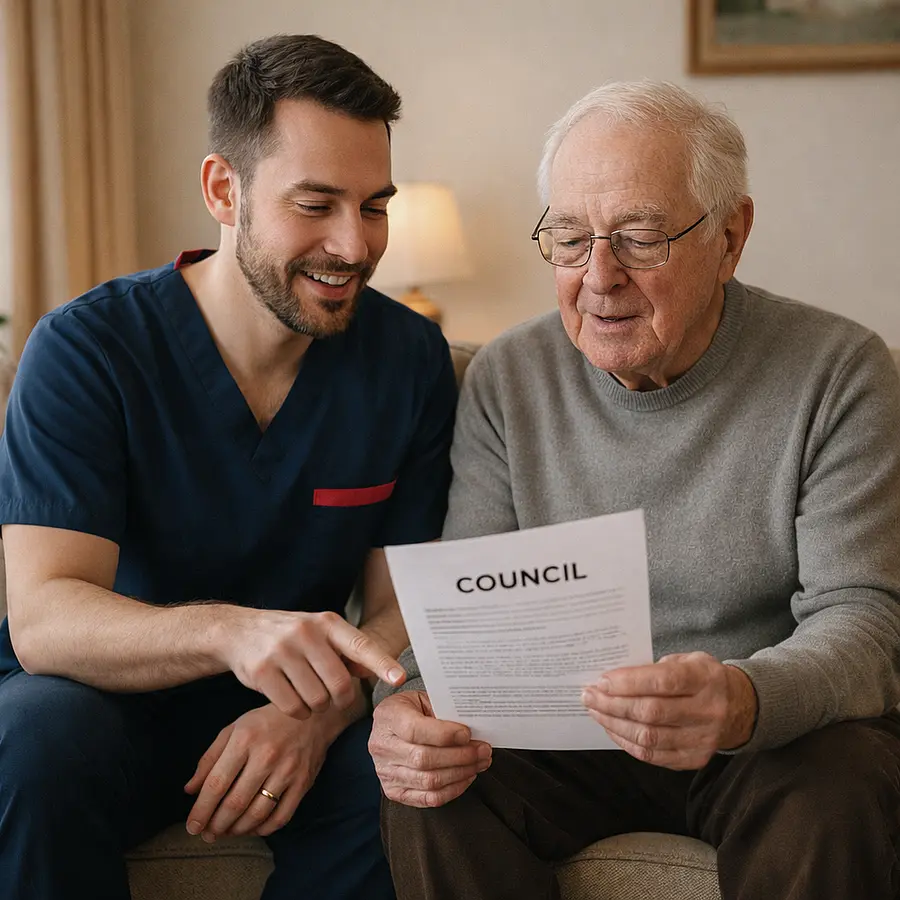
Get in touch with the adult social services department of your local council and ask for a care needs assessment.
There’s no charge for a care needs assessment and everyone is entitled to one regardless of income, savings or level of need.
A friend or carer can ask for a care needs assessment on behalf of someone, with their permission. If the person lacks mental capacity to decide about having a care needs assessment, someone can ask for them to be assessed if they think this is in their best interests

What the assessment involves
A social care professional will usually come to see the individual to find out how they are managing everyday tasks.
They'll consider:
- Health, and what they can, can't, or struggle to do
- Cultural and religious background and support network
- Current living arrangements
- How they would like to be supported
- Information from healthcare professions, like their GP
The local council should consider what support the individual needs right now, and what might help them in the future.

Waiting time for an assessment
The local council will decide how soon to carry out a care needs assessment based on the individual needs and circumstances. They may decide to prioritise some requests over others, which is why it's important to give as much detail as you can about the needs and circumstances, especially if urgent help is required.
If you feel you're waiting too long, ask the council for an update and make a complaint if needed.
If there is an urgent need for help, for example if there's a safeguarding issue, the council has the power to put services in place immediately, without waiting to do a care needs assessment.

Preparing for an assessment
It's helpful to think about the kind of help needed. Be specific, for example:
- ‘I need someone to help me get up and dressed in the mornings’
- ‘I need help to shower regularly’
- ‘I need to be reminded to take my medication’
Think about cultural, social, religious and emotional needs too, for example:
- ‘I want to go to my place of worship once a week’
- ‘I want to visit my brother twice a month’
Ask a friend or carer to be at the assessment too, if you can.

Eligibility for care and support
Local councils have their own assessment procedures, but they follow national criteria to decide who's eligible for care and support. In making their decision, they'll look at whether the individual is unable to do, or have difficulty with, daily living tasks (which are called 'outcomes'), and whether this has a significant impact on their wellbeing.
- Do you have care and support needs as a result of a physical or mental condition?
- Are you unable to achieve two or more outcomes?
- Is there, or is there likely to be, a significant impact on your wellbeing?
If the individuals needs meet the criteria above, this is known as having 'eligible needs'.

Examples of Daily living outcomes
The daily living outcomes include things like:
- Eating properly
- Going to the toilet
- Being safe at home
- Keeping your home clean and safe
- Seeing family and friends
- Going to work, volunteering, education or training
- Using services in your area

After the assessment
- If the council are going to meet the individuals needs, a care plan should be agreed and a copy provided. This will detail what the needs are and what the council is going to do to meet them, for example the care services it's going to put in place.
- There will also be a financial assessment (also called a means test) to find out whether the individual is entitled to help with the cost of the care services and, if so, how much they need to contribute towards the cost.

Disagreeing with the decision
If the council decides that an individual don't meet the eligibility criteria but you think they do, you should first try and resolve the issue informally by raising and discussing your concerns with the council.
If you're still unhappy, you can raise a formal complaint with them.