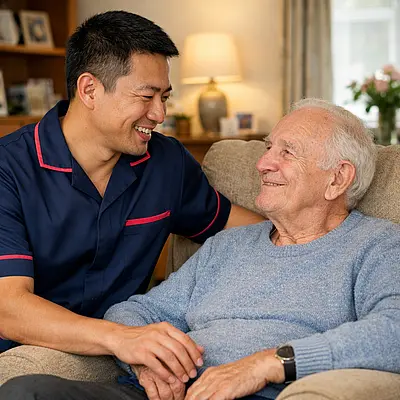

A realistic dining room table where a Caucasian male caregiver in a 00072b tunic uniform e51974 accent sits with an older couple reviewing a printed care plan all calm and engaged symbolising thoughtful future planning.

Dementia Care

Dementia care at home helps you or your loved one stay safe, comfortable, and independent in familiar surroundings. We provide specialist support with daily routines, personal care, and companionship, all tailored to your needs and interests.

Understanding dementia care at home

Dementia care at home focuses on helping someone live safely, comfortably, and meaningfully in familiar surroundings. We support daily routines, medication, personal care, and emotional wellbeing, always at the person’s pace. Our home care team works alongside families, offering guidance, reassurance, and practical help so you don’t feel alone with the responsibilities of supporting a loved one.
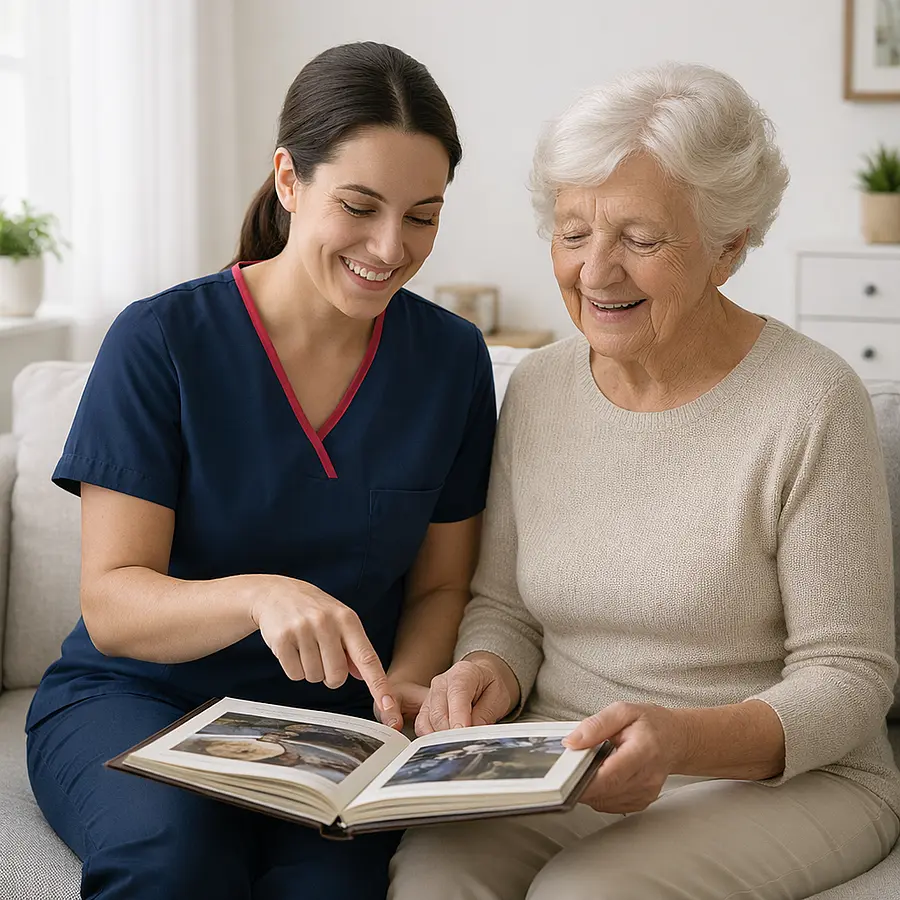
A realistic scene in a bright living room where a Caucasian female caregiver in a 00072b tunic with

What is dementia and how does it affect daily life?

Dementia describes a group of conditions that affect memory, thinking, and communication. It can make everyday tasks, like preparing meals or managing appointments, feel confusing or overwhelming. People may become forgetful, anxious, or withdrawn. Our role is to reduce stress, maintain independence, and gently adapt routines so life remains as familiar, safe, and enjoyable as possible at home.
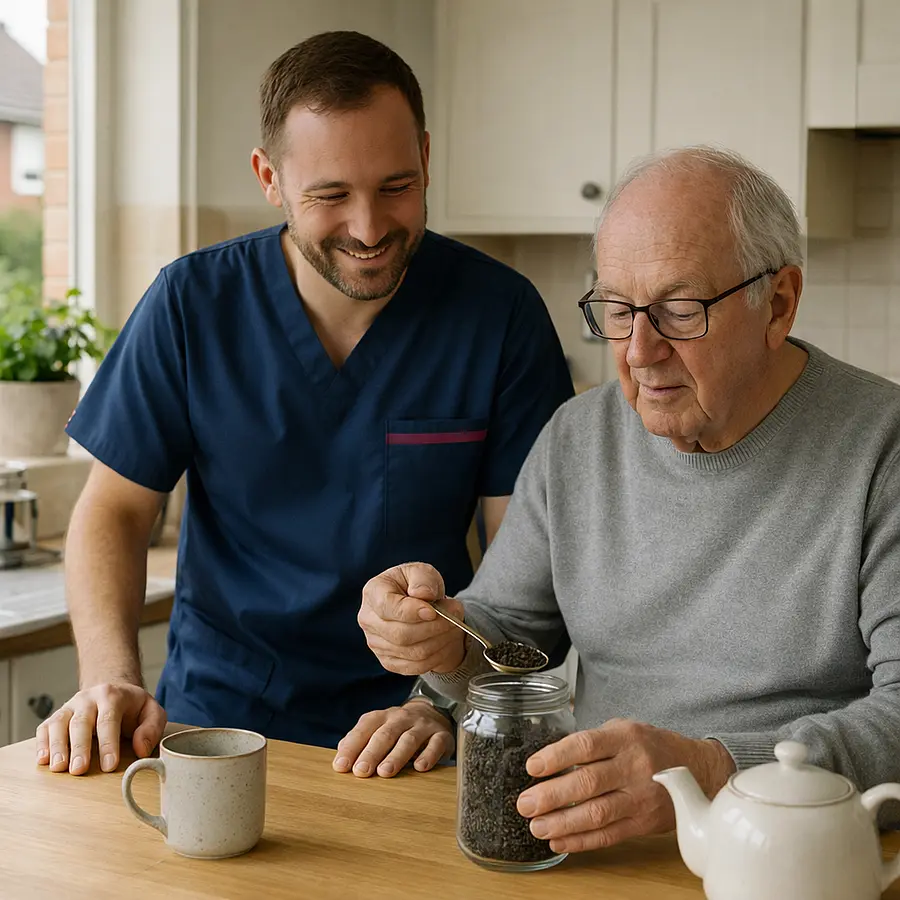
A realistic kitchen setting where a Caucasian male caregiver in a #00072b uniform with #e51974 accents helps an older man measure ingredients for tea, both focused and relaxed, with natural daylight and homely details, illust

Types of dementia care and changing needs

Dementia affects everyone differently, and care should reflect that. Someone with early memory changes may only need a little prompting and companionship, while advanced dementia may require full support with washing, dressing, and mobility. We tailor home visits or live-in care to your loved one’s specific symptoms, personality, and preferences, adjusting our approach as their needs evolve over time.

A realistic bedroom scene where a Caucasian female caregiver in a 00072b tunic uniform with e51974 a

Can dementia care be provided safely at home?

Yes, many people with dementia are safely and happily supported at home, often for many years. With the right routines, safety checks, and professional guidance, home can remain a familiar anchor. We assess risks, suggest simple adaptations, and provide hands-on support, so your loved one can stay in the place they know best while you gain confidence in their day-to-day wellbeing.
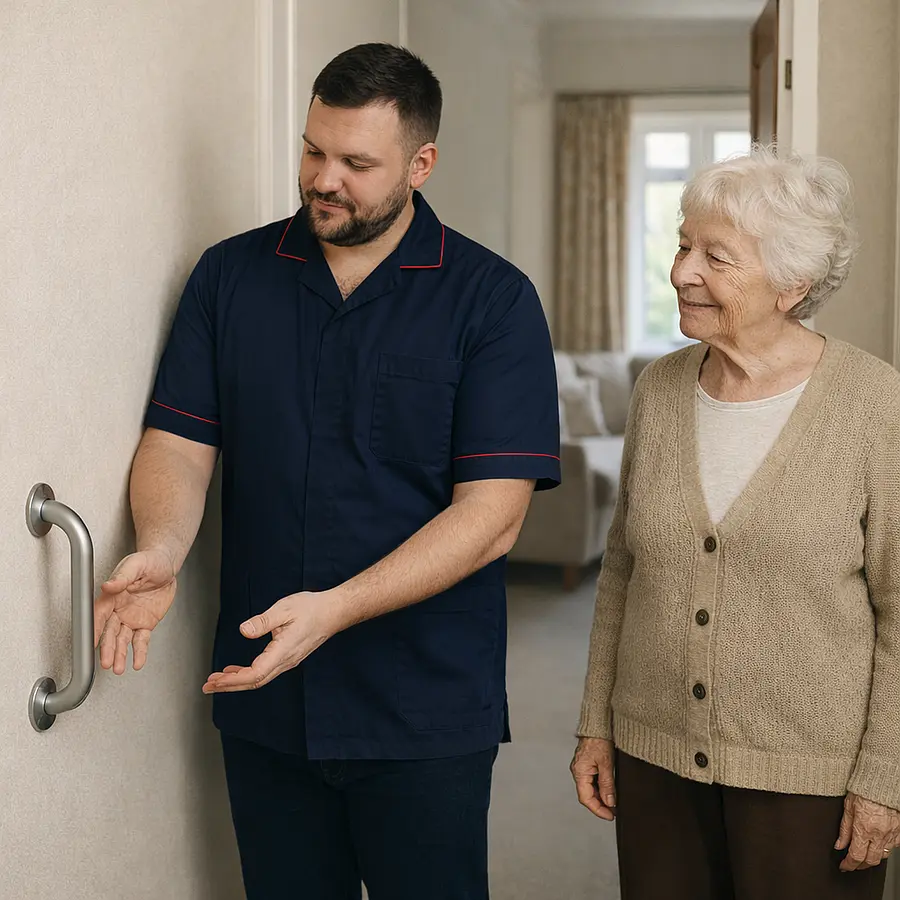
A realistic hallway scene showing a Caucasian male caregiver in a 00072b tunic with e51974 accent wh

Home-based dementia care versus residential settings

For many families, remaining at home feels less disruptive than moving into residential care. Familiar surroundings, personal possessions, and neighbours can all help reduce confusion and anxiety. Our home care services are flexible, from short daily visits to full-time live-in support, allowing you to scale help around changing needs while preserving privacy, routines, and cherished community connections.

A realistic front room scene with a Caucasian female caregiver in a 00072b tunic with e51974 trim opening curtains beside an older man seated in his favourite armchair surrounded by family photos both smiling reinforcing comfort and continuity at home.

How loved ones can support dementia care every day

As a family member, you play a crucial role in emotional security. Keeping a calm tone, using short, clear sentences, and allowing plenty of time for responses can reduce frustration. Simple routines—morning tea together, a daily walk, listening to favourite music—offer comforting structure. We can help you shape these routines and share techniques that make communication easier and more reassuring.

A realistic garden path where a Caucasian male caregiver in a 00072b tunic with e51974 accent walks slowly arm in arm with an older woman both chatting and smiling surrounded by greenery illustrating gentle routine and companionship.

Practical support from family and friends

Small, practical actions make a big difference: labelling cupboards, keeping keys in one place, using large-print calendars, or preparing snacks in advance. Try to limit background noise, like loud TV, which can be confusing. Accepting help from friends or neighbours—perhaps sharing lifts to appointments or arranging check-in visits—can also ease the pressure on you as a primary carer.
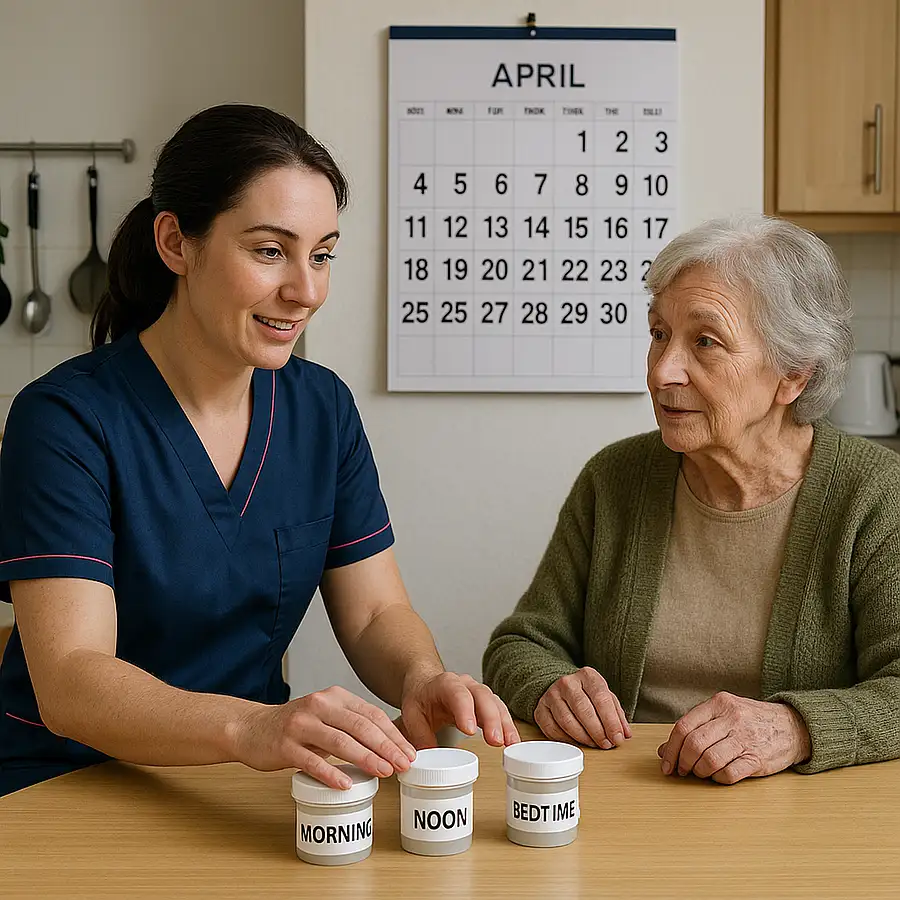
A realistic kitchen table scene where a Caucasian female caregiver in a 00072b uniform with e51974 accent places clearly labelled containers in front of an older woman both talking calmly with a large print calendar on the wall highlighting practical home adaptations.

Emotional support for someone living with dementia

Dementia can feel frightening and disorientating. Reassurance is as important as practical help. Validating feelings—“I can see this is upsetting”—and gently redirecting to a calming activity can reduce distress. We use compassionate communication, consistent faces, and predictable routines so your loved one feels secure, respected, and valued, even when words or memories become harder to access.

 A realistic lounge scene where a Caucasian male caregiver in a 00072b tunic with e51974 accent sits facing an older woman holding her hands and listening attentively both relaxed emphasising empathy and emotional connection.

Dementia care that facilitates hobbies and interests

Staying connected to favourite hobbies can spark joy and preserve identity. Whether your loved one enjoys gardening, puzzles, knitting, or football, we weave those interests into daily routines. Even if complex tasks become difficult, we adapt activities to their abilities, focusing on enjoyment rather than achievement, so they continue to feel like themselves and look forward to moments of pleasure.

A realistic conservatory scene where a Caucasian female caregiver in a 00072b uniform with e51974 trim helps an older man water potted plants both smiling as sunlight streams in symbolising support for familiar hobbies.

Supporting creativity and meaningful activities

Creative activities stimulate memories and conversation. We might encourage simple painting, sorting buttons by colour, singing along to favourite songs, or baking together. These tasks can reduce anxiety, improve mood, and offer a sense of purpose. Our carers get to know your loved one’s life story, then design personalised activities that feel familiar, dignified, and achievable, rather than childish or overwhelming.

A realistic dining table scene where a Caucasian male caregiver in a 00072b tunic with e51974 accent lays out coloured pencils and simple drawings for an older woman both showing shared creative engagement.

Community and social engagement in dementia care

Social contact can prevent isolation and lift mood. Short visits to a local café, gentle walks, or small family gatherings often feel more manageable than busy events. We can accompany your loved one to groups, faith services, or local activities, or simply provide regular companionship at home, ensuring they stay connected to people and places that bring comfort and meaning.

A realistic caf scene where a Caucasian female caregiver in a 00072b jacket with e51974 accents sits at a small table with an older man both smiling over cups of tea with soft background bustle reflecting safe community engagement.

How you can care for a loved one with dementia

Caring for someone with dementia is both rewarding and demanding. Try to focus on what your loved one can still do, rather than losses. Break tasks into small steps, offer choices instead of instructions, and keep a predictable daily pattern. We can share specialist techniques and take on practical tasks, giving you more time to enjoy simply being family together.

A realistic living room scene where a Caucasian male caregiver in a 00072b tunic with e51974 accents helps an adult daughter and her older mother look through a written daily routine all three smiling representing collaborative family care.

Balancing your wellbeing as a dementia carer

Your wellbeing matters too. Tiredness and stress can make caring feel overwhelming. Building in short breaks, accepting help, and talking openly about how you feel are crucial. We can provide regular respite visits or live-in support so you can rest, work, or spend time with friends, knowing your loved one is safe, supported, and treated with kindness at home.
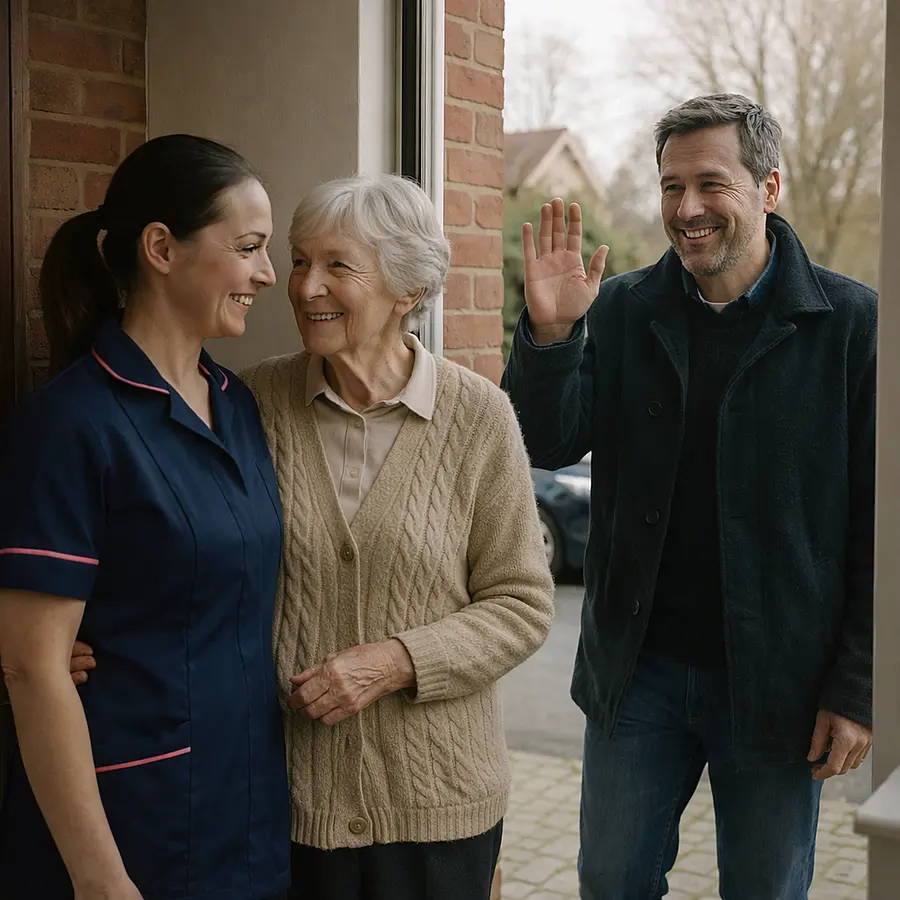
A realistic scene where a Caucasian female caregiver in a 00072b tunic uniform with e51974 accent with older woman at the door while her adult son coat on waves then goodbye with relief suggesting respite and balance for family carers.

Planning ahead with professional dementia care

Dementia is progressive, so planning ahead reduces crisis decisions. Talking early about wishes around routines, visitors, and future care helps everyone. We can work with you to create a flexible care plan that can grow from occasional visits to full-time support if needed, ensuring continuity, dignity, and comfort at each stage of your loved one’s journey.


A realistic dining room table where a Caucasian male caregiver in a 00072b tunic uniform e51974 accent sits with an older couple reviewing a printed care plan all calm and engaged symbolising thoughtful future planning.
Hands of young adult and senior women over green b
Contact Us

Contact us to arrange Dementia Care at home

If you're looking for support with daily living for some one with dementia, we're here to help. Our friendly team is ready to offer guidance, answer your questions, and arrange dementia care tailored to your or your loved ones' needs in their own home. Reach out today for personalised support.

Elderly hands on a walking sitck

We're becoming a fully regulated service

While we are not currently regulated, meaning there are some services we cannot currently provide, we are in the process of registering to become a fully regulated service.

CQC

Dementia Care FAQ's

You’re bound to have questions when exploring your home care options, so we’ve answered some of the most common ones below.

Consistency is especially important in dementia care, so we build small, stable care teams wherever possible. This helps your loved one recognise familiar faces and routines, reducing anxiety. It also allows carers to really get to know their personality, preferences, and life story, tailoring support in a meaningful, person-centred way.

Safety starts with a careful home assessment. Simple changes can help, such as removing trip hazards, improving lighting, adding grab rails, and using reminders or clear labels. We combine these with regular visits, supervision when needed, and structured routines, reducing risks while preserving as much independence as possible.

Yes, many people with advanced dementia remain at home with the right level of support. This might involve frequent daily visits or live-in care, plus equipment, safe moving and handling, and close coordination with health professionals. The goal is always dignity, comfort, and reassurance for both the person living with dementia and their family.

Signs of dementia include increasing forgetfulness, missed medication, safety concerns in the kitchen or around the home, difficulty keeping clean, or withdrawal from usual activities. If you feel worried leaving them alone, or caring responsibilities are affecting your health, it may be time to explore flexible home care (also called domiciliary care) support and a personalised assessment.

It starts with a friendly conversation about your situation and what you’re finding difficult. We then arrange a home visit to assess needs, discuss preferences, and create a personalised care plan. You remain in control throughout, and we adjust support as you learn what works best for your loved one and family. Contact our good people to start your care journey.

Dementia care at home provides tailored support with everyday tasks, personal care, medication, and companionship in familiar surroundings. It focuses on safety, routine, and emotional well-being, allowing your loved one to stay where they feel most comfortable while you gain reassurance that they are receiving the care and support they need.

Yes, we can remind your loved one about appointments, help them get ready, and accompany them if needed. Having a trusted carer present often reduces stress, supports communication with professionals, and ensures important information is understood and passed on to you and the wider care team.

Dementia is progressive, so flexibility is built into our approach. We regularly review care plans with you, adapting visit times, length, and tasks as needs evolve. Support can increase from occasional check-ins to multiple daily visits or live-in care, ensuring continuity and avoiding sudden, disruptive changes in routine.

Our carers receive specialist training in dementia awareness, communication techniques, managing changes in behaviour, and safe moving and handling. Ongoing learning means they stay up to date with best practice. Most importantly, we recruit for empathy and patience, so support is not only skilled but also kind, calm, and reassuring.

We can take on practical tasks like washing, dressing, preparing meals, and medication support, giving you breathing space. Planned respite visits or live-in care mean you can rest, work, or spend time with other family members; knowing your loved one is receiving the care and support they need. We also share advice and guidance, helping you feel more confident and less alone.

We proudly provide high-quality home care across the East Midlands, in an around the towns and cities detailed below.

Elderly hands on a walking sitck

Call us to find out more about Dementia Care

East Midlands

We proudly provide high-quality home care across the East Midlands

Our Reviews

We’re proud of the trust families place in us. Here’s what some of the people we support, and their loved ones, say about our home care services.

"Really helped me with keeping on top of my house work since my parkinson's has progressed."

Mark T

"They have been a great help with keeping on top of my dads laundry and general house cleaning as he is bed bound and have been being changed daily."

Emily R

"Great support for my mum after she lost her confidence after a fall and hospital stay."

Sarah L

Senior woman hand in caregiver hands

Join The Good News Newsletter

Be the first to discover exclusive offers, and service updates. Your journey to independent living starts here - where everything truly is fine.


Contact The Good Place

We’d love to hear from you! Whether you have questions, want to learn more about our home care service, or are ready for us to start supporting you or your loved one, our good people are here to help. If you are looking to make a complaint, you can contact our Registered Manager or Nominated Individual directly.

Send Us a Message


Elderly hands on a walking sitck

Working in Partnership

We work closely within the community to provide safe, compassionate, reliable home care that supports independence, dignity, and improved wellbeing while remaining at home.

Staffordshire County Council
Derbyshire County Council
NHS