
Meal Preparation

  • Home
  • Care In Your Own Home
  • Meal Preperation

Routine is important to many older people, especially those living with dementia or a learning disability. So establishing a routine around mealtimes, and providing assistance, may make the difference between someone eating or not.

Supporting Health and Well-Being at Mealtimes

Mealtimes shouldn’t become an issue for you or your loved one.

Maintaining a healthy diet is essential for overall well-being, but preparing nutritious meals can be challenging, especially for those that need extra support with daily living.

 A caucasian male caregiver tunic uniform with color 00072b and with an accent color e51974 in a realistic kitchen preparing a meal with an elderly woman. they are preparing this together and are both at ease

Mealtime Routines Matter

A routine is very important to many older people, especially those living with dementia or a learning disability. So establishing a routine around mealtimes, and providing support, may make the difference between someone eating or not.

 A caucasian female caregiver tunic uniform with color 00072b and with an accent color e51974 in a realistic kitchen preparing a meal for elderly man. this is to promote mealtime routine

Practical Tips to Simplify Mealtimes

  • Create a comfortable and stress-free dining environment;
  • Plan nutritious and enjoyable meals;
  • Adapt meals to dietary needs and preferences;
  • Encourage independence while offering support;
  • Keep consistent routines and environments;
  • Encourage socialisation and promote independence.

 A black female caregiver in tunic uniform with color 00072b and with an accent color e51974 in a realistic kitchen with an elderly couple who have dementia ensuring save and simple mealtime routine

Support with Mealtimes

There are many reasons why challenges may arise around mealtimes, especially when supporting an older person to eat; this could be due to swallowing difficulties, an inability to taste, or inadequate hydration. 

By having visiting care at home you or your loved one can relax in familiar surroundings and eat your favourite meals in comfort, prepared by us.
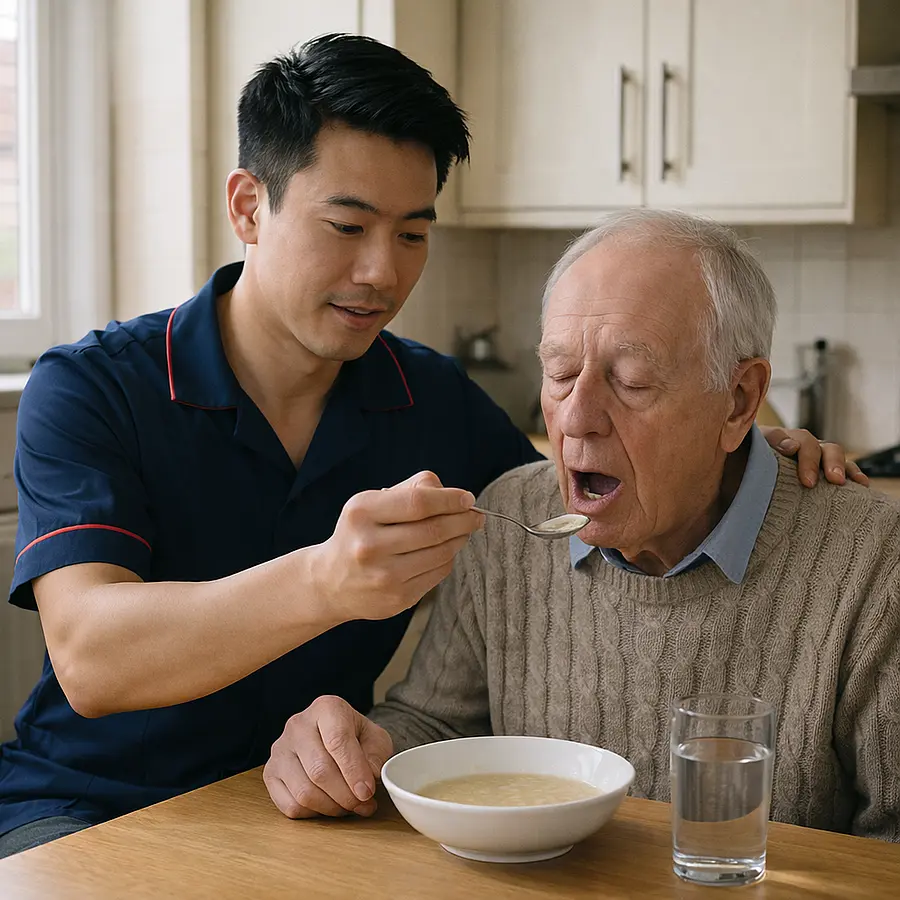

 A an asian male caregiver in tunic uniform with color 00072b and with e51974 accent colour in a realistic kitchen supporting an older person to eat this could be due to swallowing difficulties an inability to taste or inadequate hydration.
Contact Us

Contact us to arrange Mealtimes at home

If you’re looking for support at mealtimes for you or a loved one, we’re here to help. Our friendly team is ready to offer guidance, answer your questions, and arrange a mealtime support routine tailored to your or your loved ones' needs. Reach out today for personalised advice and support.

We're becoming a fully regulated service

While we are not currently regulated, meaning there are some services we cannot currently provide, we are in the process of registering to become a fully regulated service.

CQC

Call us to find out more about Meal Preparation

Meal Preparation FAQ's

You’re bound to have questions when exploring your home care options, so we’ve answered some of the most common ones below.

A personal assistant (PA) is someone employed directly by your (or your loved one) to provide care or support. The person employing the PA becomes a legal employer and has legal responsibilities (e.g. payroll, insurance, employment rights). Many people use Direct Payments from their local authority, personal budgets, or their own money to employ a PA. A PA is not regulated by the CQC even if they are providing personal care. For a stress free care journey we would recommend you engage with a regulated home care provider, where they have all of the employer responsibilities.

For many people, it is vital to stay independent and at home in their own familiar surroundings near friends and family. Remaining independent may be very important to you or your loved one, but it can mean a little extra help is need. Home care (also called domiciliary care), is a flexible type of visiting care where a care worker visits you in your own home. This can often be the perfect solution to getting a little help whilst retaining a good level of personal freedom.

Reasons for choosing home care (also called domiciliary care) can vary. For example, sometimes, after a stay in the hospital, someone might find they need some help while recuperating. Others can find that a long-term condition or disability means they need some help at home. You or those close to you might notice changes in abilities to manage the day-to-day things like preparing meals or personal care.

Home care (also called domiciliary care) can be paid for privately or can be funded in full or in part by your local council. For funding by your local council, a needs assessment is carried out including an assessment on finances. See Care Costs & Funding for more details.

Yes. In England, home care agencies that provide personal care must be registered with and regulated by the Care Quality Commission (CQC). In Wales, home care agencies that provide personal care must be registered with and regulated by the Care Inspectorate Wales (CIW). For Scotland, home care agencies that provide personal care must be registered with and regulated by the Care Inspectorate (CI).  Personal care includes things like help with washing, dressing, toileting, and assisting with medications — anything that involves direct physical care or support with hygiene.

Visiting home care (also called domiciliary care) can help you or your loved one maintain independence and comfort while receiving the support needed in your own homes. Whether it’s assistance with daily tasks such as cooking, cleaning, personal care, or help managing medication and health conditions, home care allows you or your loved one to stay in familiar surroundings without sacrificing safety or quality of life. It offers peace of mind, knowing that professional, compassionate caregivers are there to lend a hand when needed.

We proudly provide high-quality home care across the East Midlands

Our Reviews

We’re proud of the trust families place in us. Here’s what some of the people we support, and their loved ones, say about our home care services.

"They have been a great help with keeping on top of my dads laundry and general house cleaning as he is bed bound and have been being changed daily."

Emily R

"Really helped me with keeping on top of my house work since my parkinson's has progressed."

Mark T

"Great support for my mum after she lost her confidence after a fall and hospital stay."

Sarah L

Join The Good News Newsletter

Be the first to discover exclusive offers, and service updates. Your journey to independent living starts here - where everything truly is fine.


Contact The Good Place

We’d love to hear from you! Whether you have questions, want to learn more about our home care service, or are ready for us to start supporting you or your loved one, our good people are here to help.

Send Us a Message


Working in Partnership

We work closely within the community to provide safe, compassionate, reliable home care that supports independence, dignity, and improved wellbeing while remaining at home.

Staffordshire County Council
Derbyshire County Council
NHS