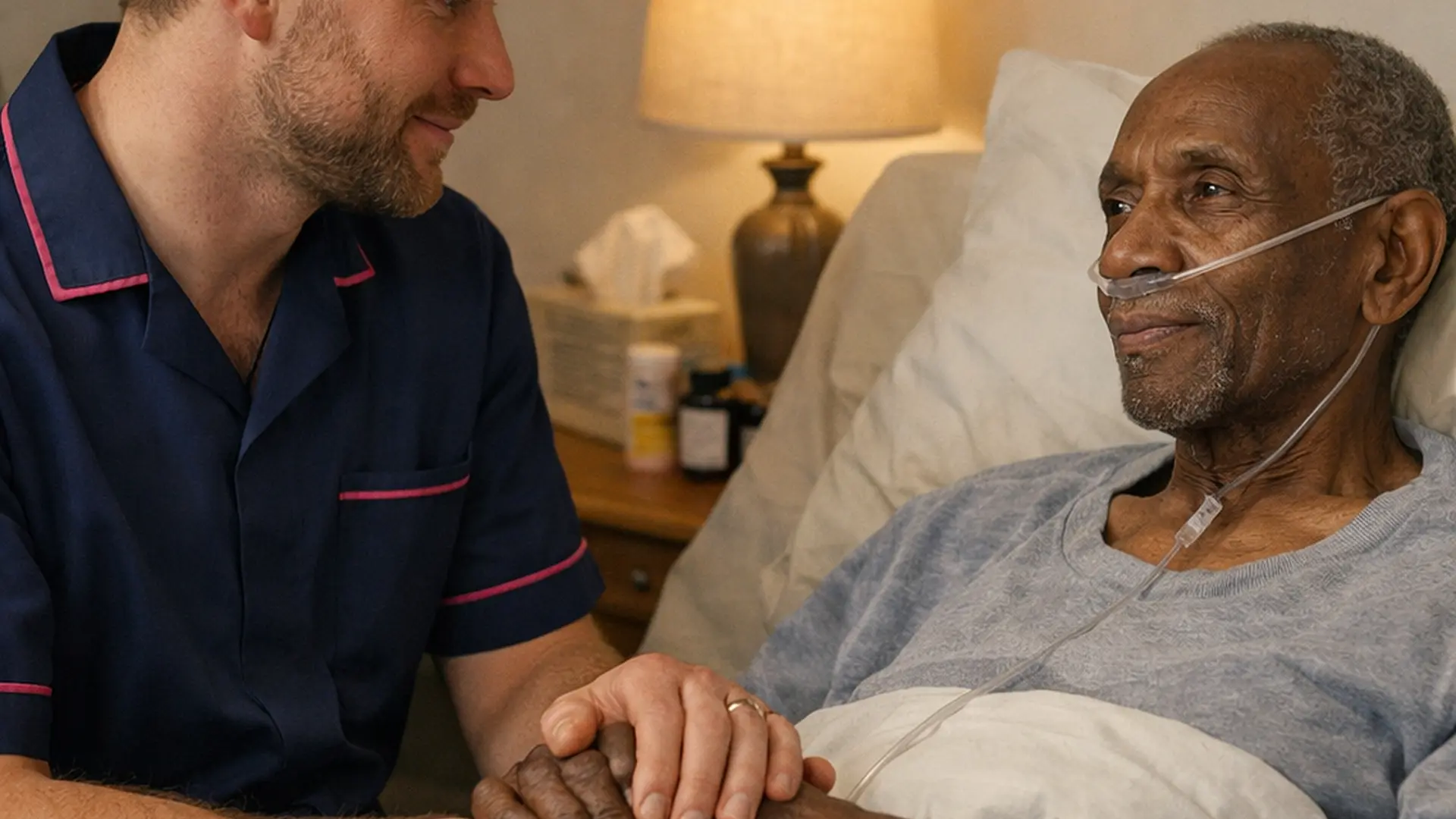
End-of-life care at home focuses on comfort, dignity, emotional reassurance, and supporting the wishes of the person who is nearing death. This often includes managing pain and discomfort, helping with repositioning, keeping the person clean and settled, noticing changes in breathing or awareness, and creating a calm environment. It can also involve supporting family members who may be frightened, exhausted, or unsure what to expect. Practical things matter too, such as helping with drinks, mouth care, bedding, quiet routines, and reducing unnecessary stress in the home. Emotional and spiritual preferences may become especially important during this stage. The aim is not to force normal routines, but to help the person feel safe, comfortable, and cared for in familiar surroundings.