
Care Costs & Funding

  • Home
  • Care In Your Own Home
  • Care Costs & Funding

Understanding how to pay for home care can feel confusing, especially when you’re trying to make the best decisions for yourself or a loved one. This guide breaks down the different ways care can be funded — from private payments to council support, part-funding and direct payments. Our aim is to make the process clearer, remove uncertainty and help you feel confident planning safe, reliable and affordable care at home.

Paying for home care

Home care services aren’t usually free, and are paid for by:-

  • The person that uses the service or their loved ones;
  • A local authority (such as a council or NHS Trust).
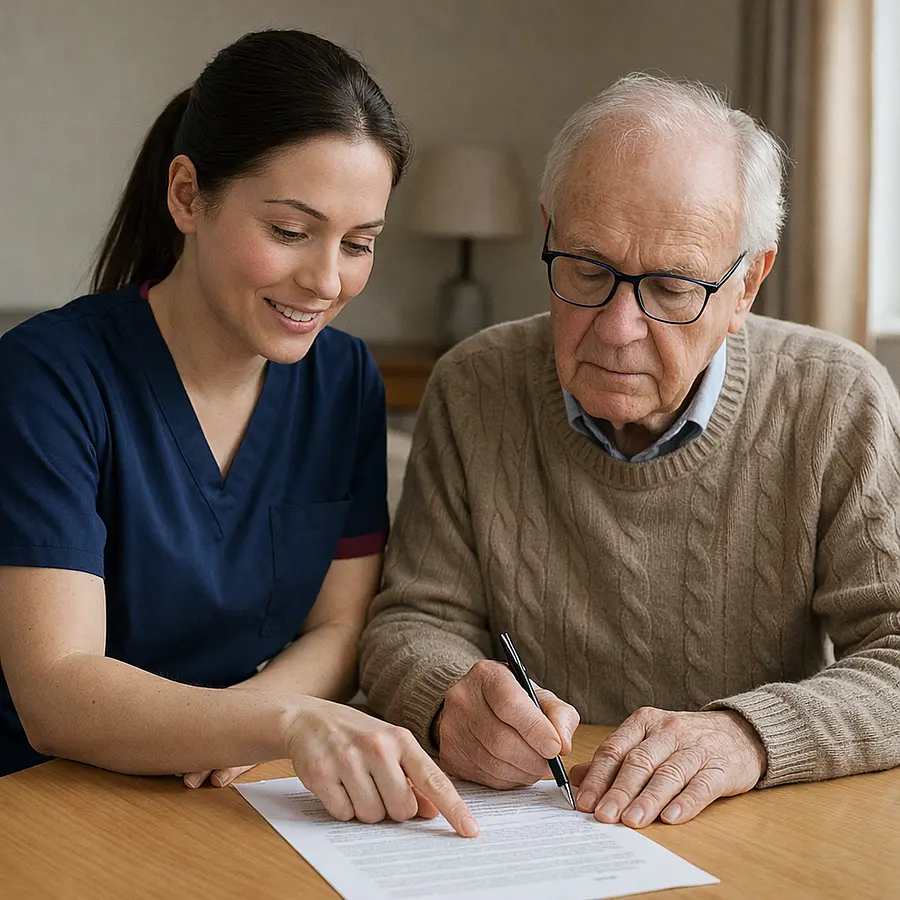
A realistic scene of a Caucasian female caregiver wearing a 00072b tunic with e51974 accent sitting beside an older adult at a living room table offering gentle guidance with paperwork warm natural lighting calm and supportive mood.

Paying Privately for Home Care

Paying privately (also called self-funding) means you or your loved one uses personal savings and/ or income (such as a pension) to pay a provider directly for home care. 

This option is generally for those who are not eligible for funding by a local authority (because of assets and savings greater than £23,250), or those who want to have control over their care options.

With this option you are free to choose the care provider that you want to use.
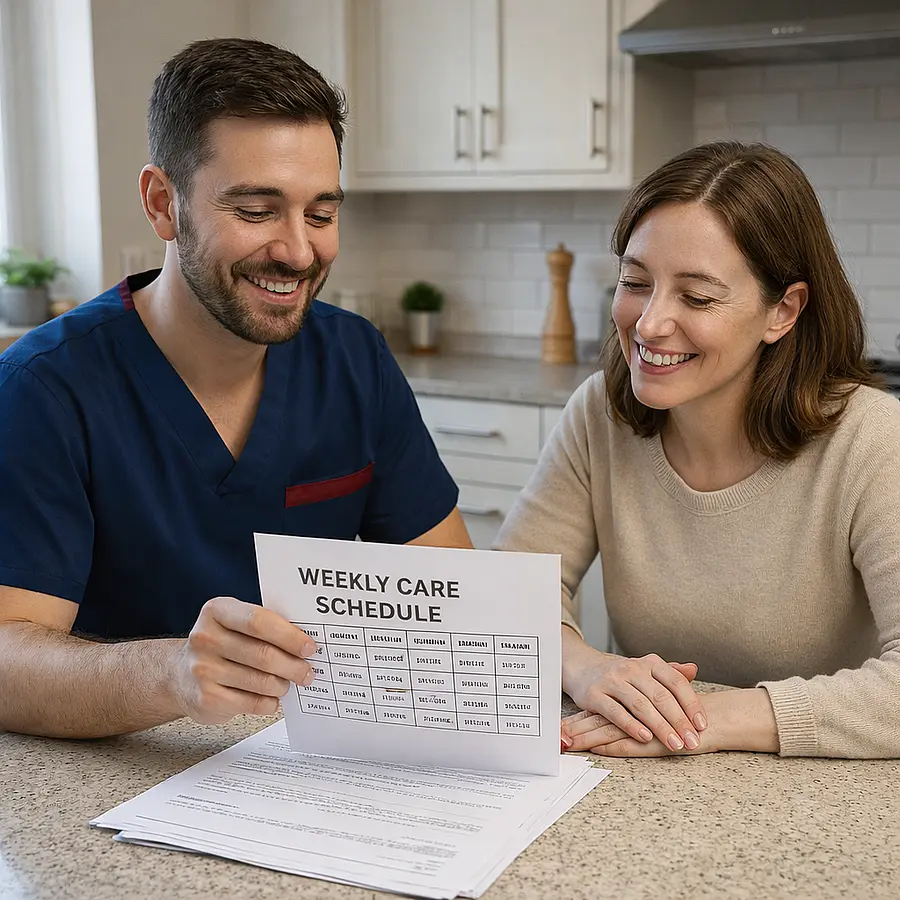
A realistic scene of a caucasian male caregiver in tunic 00072b with accent e51974 showing a weekly care schedule to a family member at a kitchen island friendly expressions tidy paperwork natural photo style. all are happy and comfortable

The Costs of Private Home Care 

Care costs depend on the care needs, the care visit duration, as well as when and where the care takes place.

Our care costs start at £25 per-hour, and care visits can be arranged in 15 minute increments. Travel time is covered in the cost and travel time to and from the location is not deducted from the care visit time (if you need us for 1 hour that's the face-to-face time your get), there are also no hidden fees or extra charges for things like travel, admin, or PPE.

A realistic image of a caucasian male caregiver wearing a tunic 00072b with accent e51974 reviewing a printed pricing sheet with a family smiling reassuringly warm living room setting natural and non stylised. all are happy and comfortable

Full Funding by a Local Authority

If the council or other local authority fully funds your care, they cover the cost based on you or your loved ones' assessed needs.

Fully funded care is only available following a care needs assessment, which includes a financial assessment (or means test).

Generally, if assets (including most investments and savings, but excluding any property) for the person needing care are less than £14,250 they should qualify for full funding. 

With this option the council or local authority will choose the care provider that will be used, and will pay the provider directly.
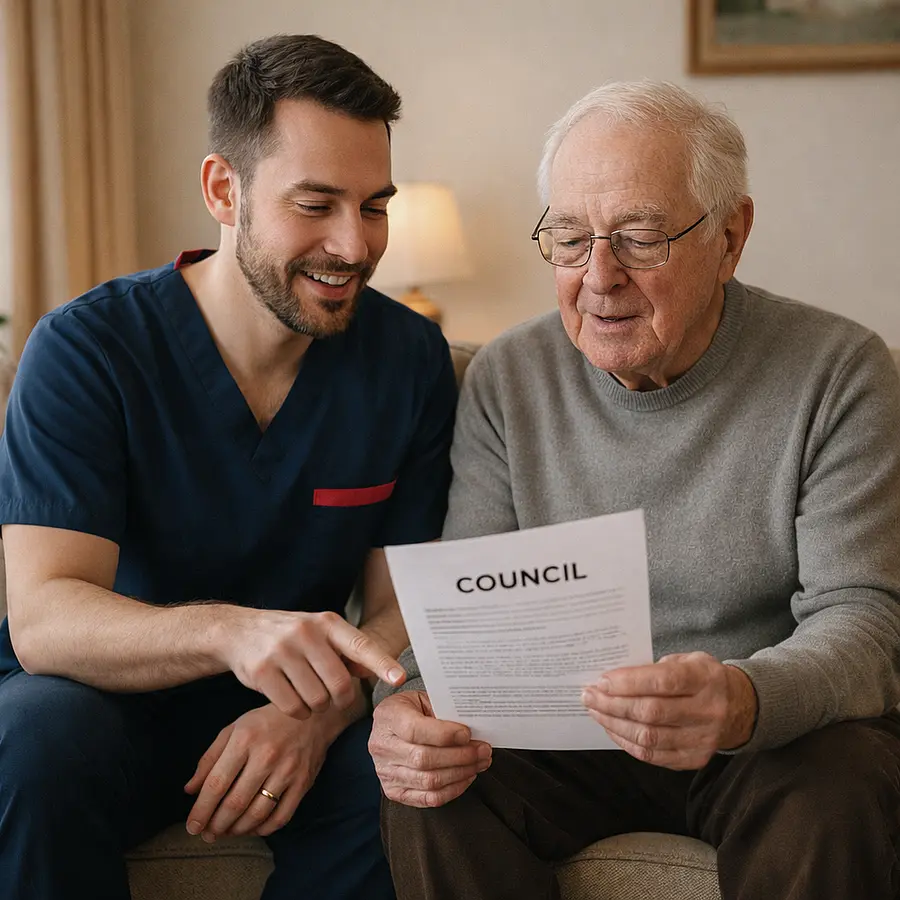
A realistic image of a caucasian male caregiver in tunic 00072b with accent e51974 helping an older gentleman review council paperwork warm and calm living room setting supportive and reassuring interaction.

Partial Funding by a Local Authority

When care is part-funded, the council or other local authority pays for a portion of the care costs and you or your loved one have to pay the rest.

Partially funded care is only available following a care needs assessment, which includes a financial assessment (or means test).

Generally, if assets (including most investments and savings, but excluding any property) for the person needing care are between £14,250 and £23,250 they should qualify for partial funding.

With this option the council or local authority will choose the care provider that will be used, and will pay their portion directly to the provider, your or your loved one then pay the difference. 

A realistic scene of a caucasian female caregiver in tunic 00072b with accent e51974 gently guiding a family through a simple budgeting sheet for an elderly relative warm daylight calm home environment photorealistic. all are happy and at ease

Asking for Direct Payments 

If you or your loved one are eligible for funding (either in full or in part) by a local authority you can request the funding amount to be paid to you or your loved one directly.

With this option you choose and arrange the care provider that you want to use, which you or your loved one would then pay for using all or part of the direct payment you received. 

A realistic depiction of a caucasian male caregiver in tunic 00072b with accent e51974 handing an organised folder of direct payment documents to an adult daughter warm smiles tidy living room natural documentary style photo.

How to access funding from a local authority

To get help from a local council, you or your loved one must first ask them for a care needs assessment. This assessment looks at what care needs you or your loved ones' have and the sort of care services that may help meet the needs.

The care needs assessment also looks at whether you or your loved ones' are eligible for help from the council, based on the level of need. This is called having 'eligible' care needs.

The care needs assessment will also include a financial assessment (or means test).

A caucasian male caregiver wearing a tunic uniform with color 00072b and with an accent color e51974 is standing to the right of a senior man walking with a zimmer frame. the senior man feels safe and comfortable. the carer is standing close by for reassurance. this is in a bright bedroom setting

Getting a Care needs assessment

Everyone is entitled to a free care needs assessment.

You can ask your council for a care needs assessment or, with your permission, your carer, GP or district nurse can refer you for an assessment on your behalf. 
 A an asian male caregiver in tunic uniform with color 00072b and with e51974 accent colour in a realistic kitchen supporting an older person to eat this could be due to swallowing difficulties an inability to taste or inadequate hydration.

Support following a hospital discharge

If you or a loved one is being discharged from hospital, there should be a care needs assessment done beforehand to work out what care services may be needed following the discharge. This may include a period of rehabilitation to help with recovery at home.

A female black caregiver wearing a tunic uniform with color 00072b and with an accent color e51974 is sitting next to a senor man with her arm around his shoulder. he looks lost and confused. she is reassuring him. in a dright and caringing living room environment

Other Financial Support

Make sure you’re claiming all the benefits you’re entitled to.

  • Attendance Allowance is a benefit for people over State Pension age who need extra help to stay independent at home, due to an illness or disability.
  • If you’re under State Pension age, you may be eligible for Personal Independence Payment (PIP) instead.
  • If you have a carer, they could be eligible for Carer’s Allowance.

These benefits aren’t means-tested (although with Carer's Allowance you can't earn more than a set amount per week) so they don't take into account your income and savings.
A photorealistic image of a caucasian female caregiver in tunic 00072b with accent e51974 taking a friendly support call while writing notes soft living room lighting warm atmosphere reassuring smile.
Contact Us

Contact us to arrange Care at home

If you're looking for support with daily living, we're here to help. Our friendly team is ready to offer guidance, answer your questions, and arrange care tailored to your or your loved ones' needs in their own home. Reach out today for personalised advice and support.

We're becoming a fully regulated service

While we are not currently regulated, meaning there are some services we cannot currently provide, we are in the process of registering to become a fully regulated service.

CQC

Care Costs & Funding FAQ's

You’re bound to have questions when exploring your home care options, so we’ve answered some of the most common ones below.

Self-funded care mean you arrange and pay for care using your own savings or income. This option is generally for those who are not eligible for funding by a local authority (because of assets and savings greater than £23,250), or those who want to have control over their care options.

You’ll need a care needs assessment which will include financial assessment (or means test). 

If assets (including most investments and savings, but excluding any property) are:-

  • Over £23,250 - No funding available, so you or your loved one will need to pay for the full costs privately (also called self-funding).
  • Between £14,250 and £23,250 - Partial-funding available, you or your loved one will need to contribute towards the costs of care from income (such as a pension) or savings.
  • Less than £14,250 - Full-funding available, but some financial contribution from income (such as a pension) or savings may still be needed.

Direct payments are funds the council gives directly to you our your loved one so you can choose and pay for your own care provider. 

Many people qualify for allowances or pension-related support that can contribute to care expenses. These include:-

  • Attendance Allowance;
  • Personal Independence Payment;
  • Carer’s Allowance.

A personal budget is money allocated by the council to meet you or your loved ones' assessed needs. You can choose for the council to manage care arrangements (including payments to the provider) or you take direct payments (where you arrange your own care provider and pay them using the money from the direct payment).

Part-funded care means the council pays a portion of the care costs while you or a loved one contributes the rest. This is normally the case where assets (including most investments and savings, but excluding any property) are between £14,250 and £23,250

Approaches like combining tasks into one visit, using assistive devices or adjusting care visit lengths can lower costs.

Contact us for a friendly conversation about you or your loved ones' needs. We’ll assess routines, preferred visit times and required support before providing a clear, itemised estimate tailored to your situation. 

Call us to find out more about Care Costs & Funding

We proudly provide high-quality home care across the East Midlands

Our Reviews

We’re proud of the trust families place in us. Here’s what some of the people we support, and their loved ones, say about our home care services.

"Great support for my mum after she lost her confidence after a fall and hospital stay."

Sarah L

"They have been a great help with keeping on top of my dads laundry and general house cleaning as he is bed bound and have been being changed daily."

Emily R

"Really helped me with keeping on top of my house work since my parkinson's has progressed."

Mark T

Join The Good News Newsletter

Be the first to discover exclusive offers, and service updates. Your journey to independent living starts here - where everything truly is fine.


Contact The Good Place

We’d love to hear from you! Whether you have questions, want to learn more about our home care service, or are ready for us to start supporting you or your loved one, our good people are here to help.

Send Us a Message


Working in Partnership

We work closely within the community to provide safe, compassionate, reliable home care that supports independence, dignity, and improved wellbeing while remaining at home.

NHS
Staffordshire County Council
Derbyshire County Council