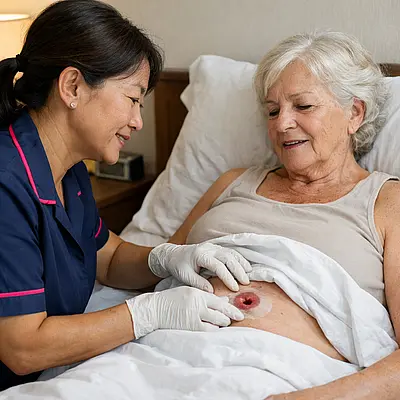
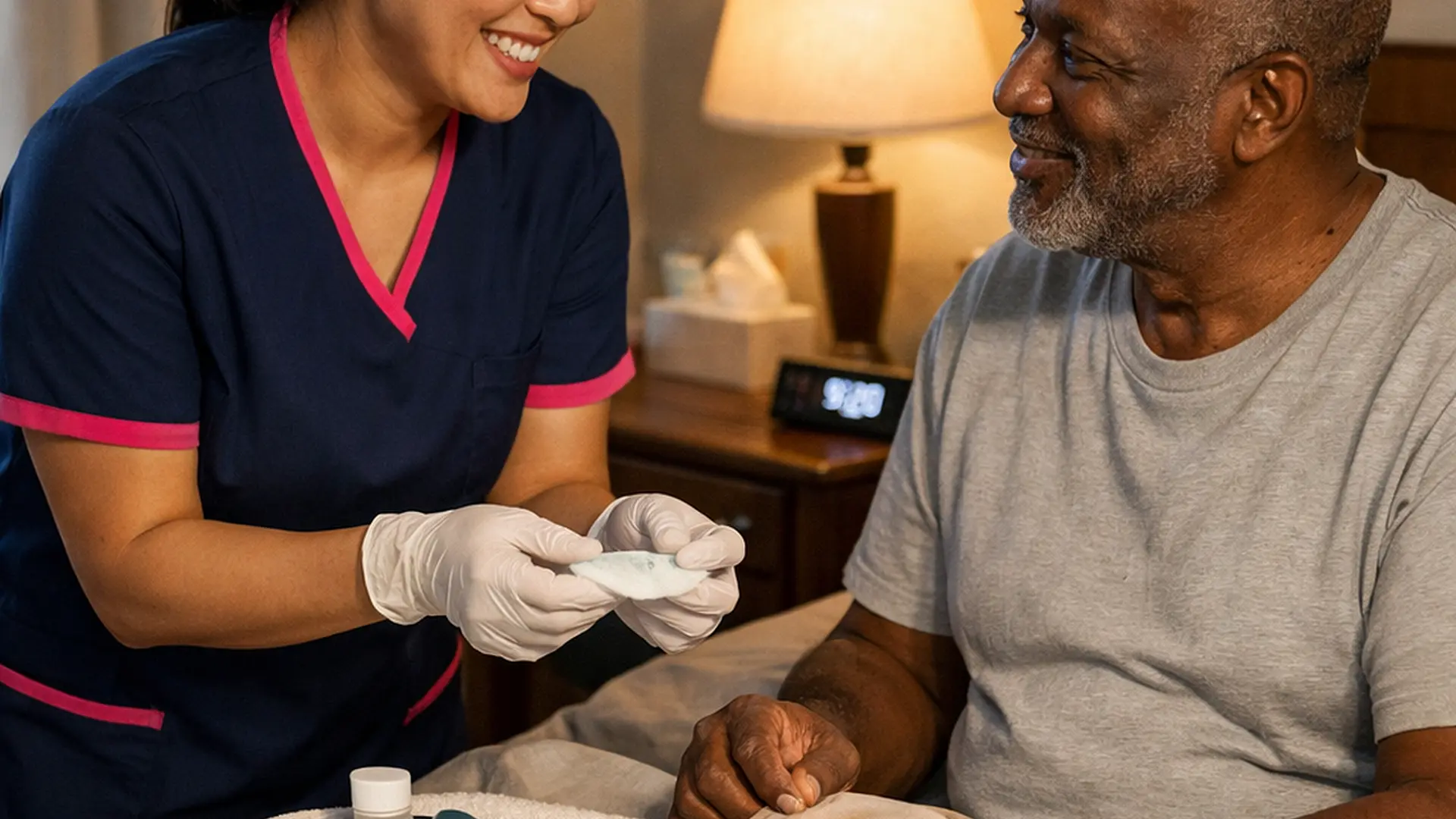
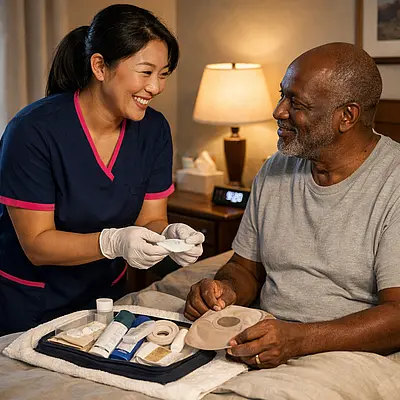
A realistic bedroom scene showing an asian female caregiver in a 00072b tunic with e51974 accent helping an older black male service user prepare a bedside stoma care kit for overnight reassurance soft evening light caring eye contact joyful yet calm sense of support.

Stoma Care

Stoma care at home can help with comfort, confidence, daily routines, and dignity after surgery or ongoing health changes. We provide practical, compassionate support with personal care, routines, meals, and reassurance. Contact us to find out how our home care team can support you or your loved one.

Understanding stoma care at home

Stoma care is the day-to-day support needed to help someone live comfortably and confidently with a stoma. This can include help with changing or emptying a pouch, spotting skin problems, supporting routines, and building confidence after surgery. Our home care team can assist with discreet washing and personal hygiene, medicine support, and practical reassurance at home.

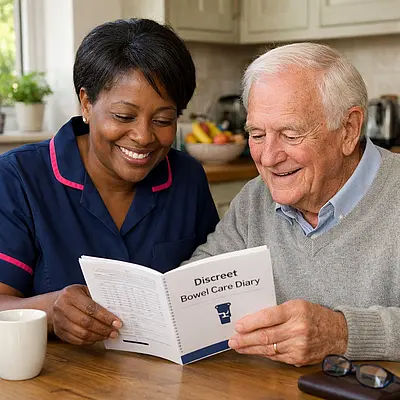
A realistic home care scene showing a black female caregiver in a tunic uniform with color 00072b and accent e51974 sitting beside an older caucasian male service user in a bright living room gently discussing stoma care supplies on a table both smiling warmly conveying reassurance dignity and confi

What is a stoma?

A stoma is an opening made on the abdomen to allow waste to leave the body into a pouch. It may be created after bowel or bladder surgery and can be temporary or permanent. People may have a colostomy, ileostomy, or urostomy. Good support at home helps make daily life feel more manageable and less overwhelming.
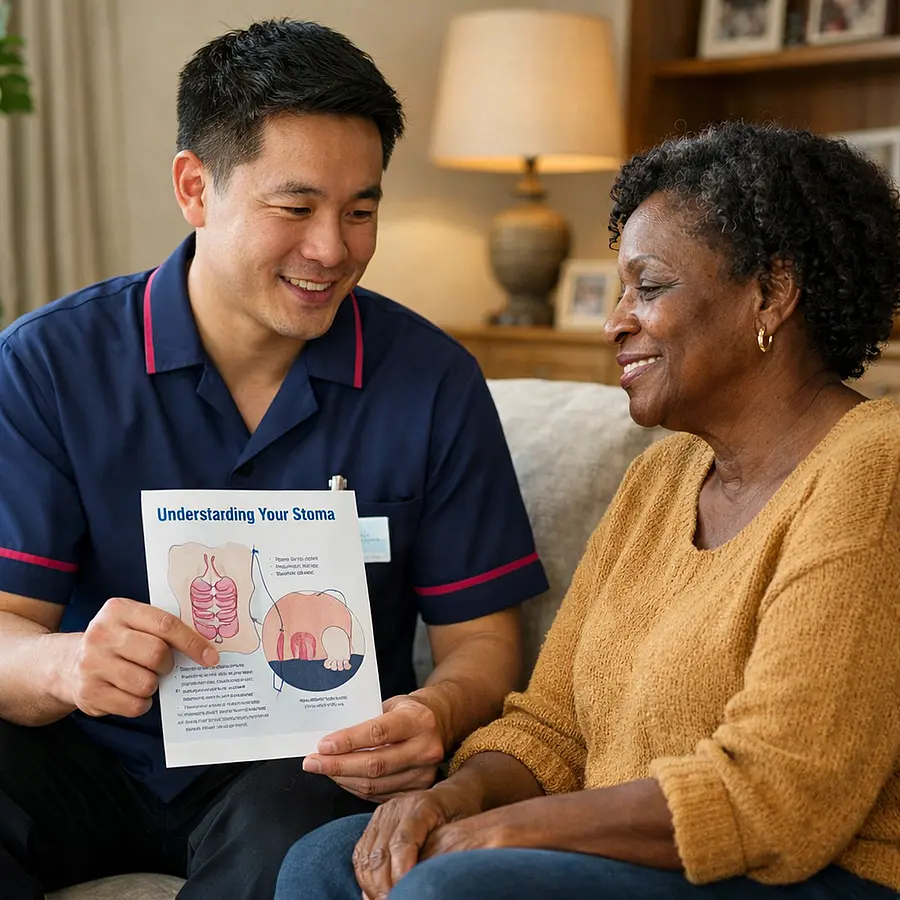
A realistic image of an asian male caregiver in a 00072b tunic with e51974 accent speaking kindly with a middle aged black female service user at home using a simple anatomical leaflet to explain what a stoma is warm natural light relaxed body language reassuring and professional atmosphere.

Daily life with stoma support

Living with a stoma often means adjusting routines around pouch changes, skin care, hydration, clothing, meals, and outings. Some people adapt quickly, while others need more encouragement. We can provide calm, respectful help alongside wider bowel-related care at home, ensuring support fits around the person rather than taking over their independence.
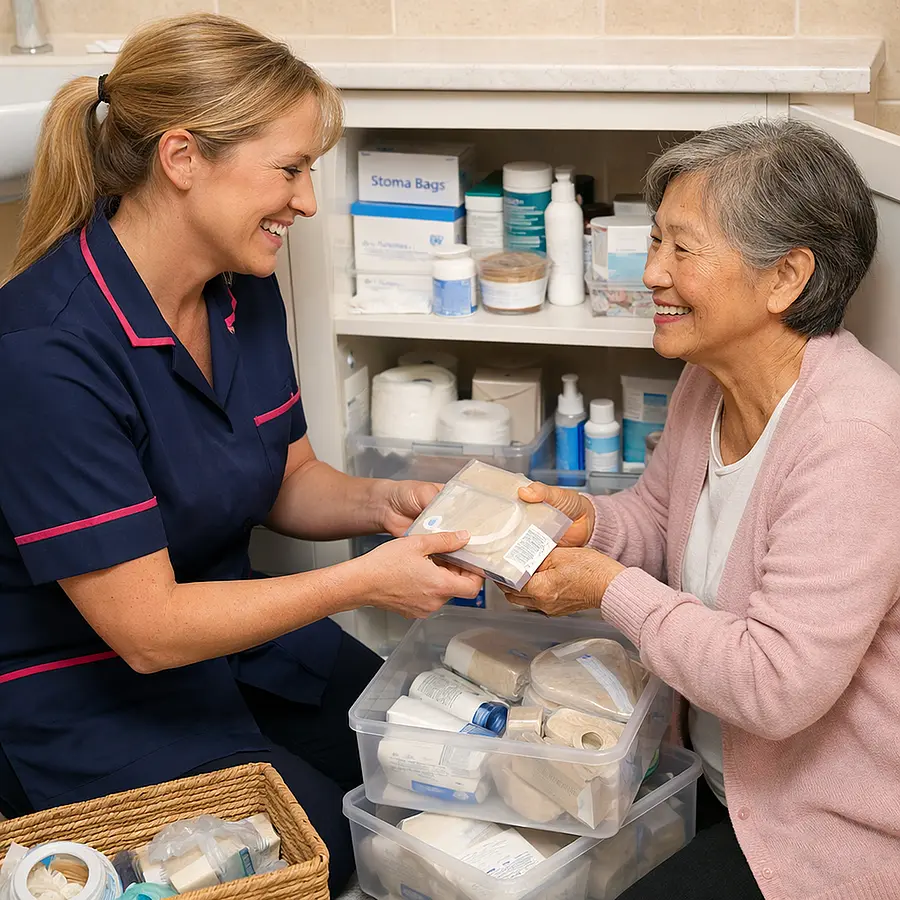
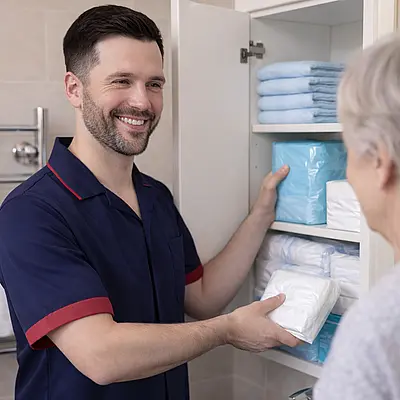
A realistic home environment with a caucasian female caregiver wearing a 00072b tunic with e51974 trim helping an asian elderly female service user organise stoma supplies neatly in a bathroom cupboard both relaxed and smiling clean and practical surroundings warm and reassuring mood.

Can stoma care be managed at home?

Yes, many people manage stoma care very well at home with the right guidance and routine. Home is often the most comfortable place to recover, rebuild confidence, and settle into new habits. Our carers can support with practical tasks, observe for concerns, and work alongside family members so daily care feels safer, gentler, and less stressful.
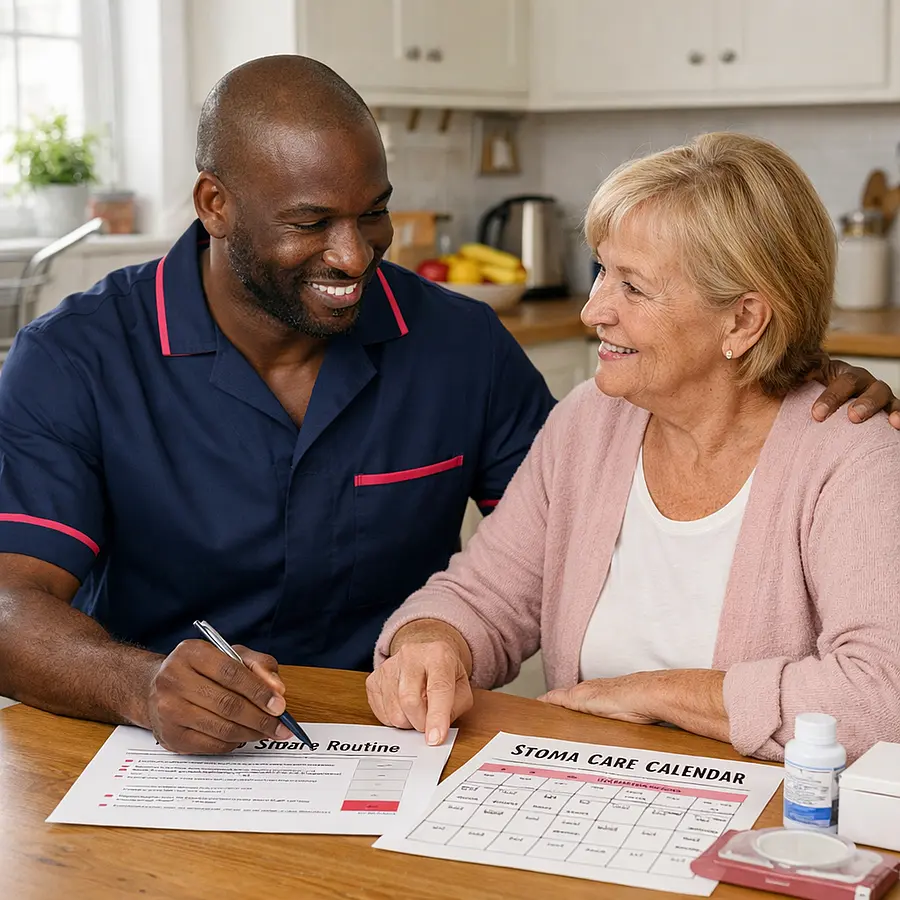
A realistic scene with a black male caregiver in a 00072b tunic with e51974 detailing reassuring a caucasian female service user in her own kitchen reviewing a home care routine and calendar for stoma management bright and tidy home warm smiles calm and empowering atmosphere.

When stoma support at home is especially helpful

Home support can be especially useful after hospital discharge, during illness, if mobility is reduced, or when a person feels anxious about leaks or pouch changes. We can also help with night-time care, meal and drink routines through support with preparing meals, and keeping the home comfortable with light household help.
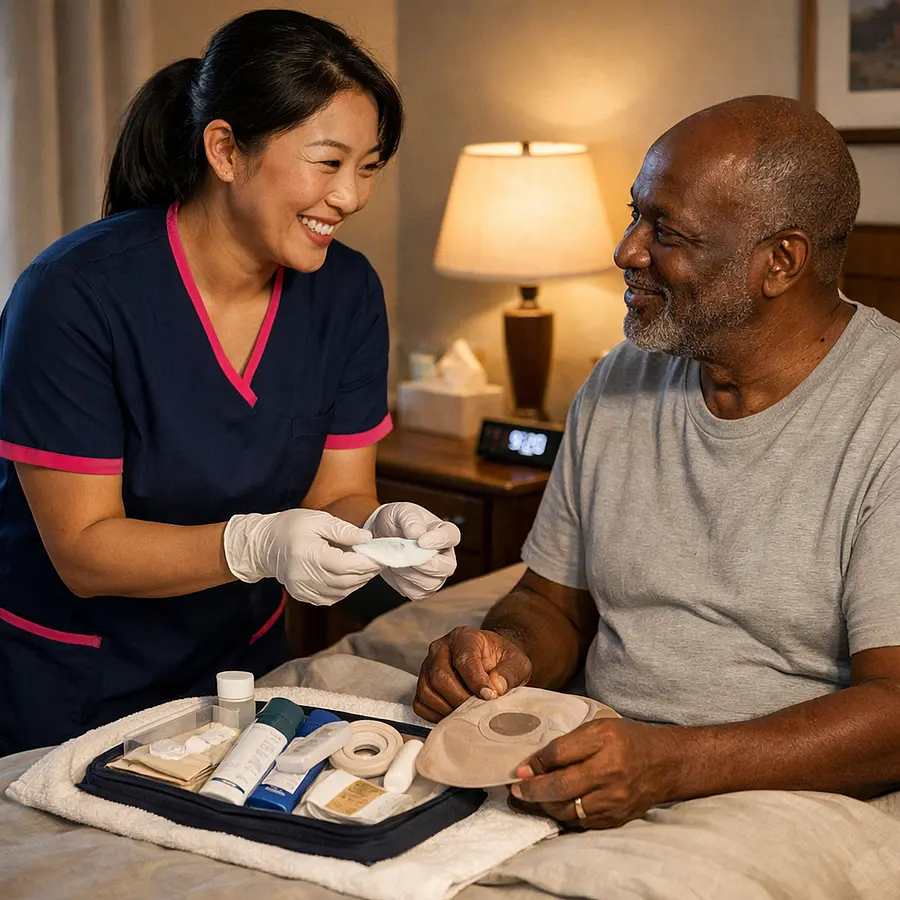
A realistic bedroom scene showing an asian female caregiver in a 00072b tunic with e51974 accent helping an older black male service user prepare a bedside stoma care kit for overnight reassurance soft evening light caring eye contact joyful yet calm sense of support.

Common stoma symptoms and concerns

While a stoma itself is not an illness, people may experience soreness around the site, skin irritation, leaks, odour worries, changes in output, tiredness, low confidence, or anxiety about going out. If something changes suddenly, looks unusual, or causes pain, professional advice should be sought promptly. Good daily routines often help prevent small concerns becoming bigger ones.

A realistic consultation style home scene with a caucasian male caregiver in a tunic uniform 00072b and e51974 listening attentively to an asian female service user who looks reassured while discussing skin irritation concerns natural lighting respectful distance professional and warm tone.

How we provide stoma care at home

We support people with the practical parts of daily stoma care while protecting dignity at every step. That might include gentle help with pouch changes, prompting routines, monitoring comfort, recording concerns, and supporting confidence with showering and dressing. We always aim to encourage independence wherever possible rather than doing more than is needed.
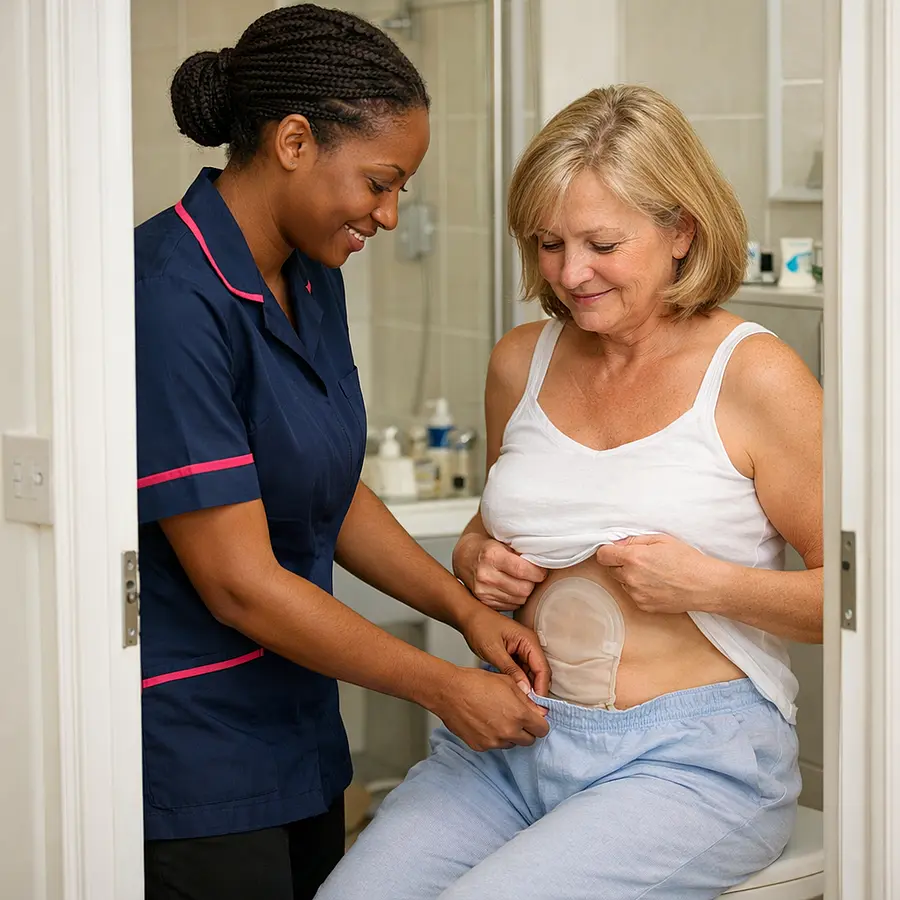
A realistic bathroom doorway scene with a black female caregiver wearing a 00072b tunic with e51974 accent respectfully assisting a middle aged caucasian female service user with dressing and stoma routine preparation both smiling gently modest and dignified composition bright clean home setting.

Practical stoma support tailored to the person

No two people adapt in exactly the same way. Some need short-term reassurance after surgery, while others benefit from regular longer-term visits. We can help with hydration reminders, ordering routines, and support with medication if pain relief or related treatment is part of the plan. Care is shaped around comfort, routine, and personal preferences.

A realistic living room image of an asian male caregiver in a 00072b tunic with e51974 piping helping an older black female service user review medication prompts and stoma supply notes cheerful expressions cosy home surroundings trust and reassurance clearly conveyed.

Building confidence through stoma reablement

Reablement-focused stoma care means helping someone regain skills and confidence after surgery or a setback. We can break routines into manageable steps, offer encouragement, and support practice without rushing. Over time, this can help a person feel more capable managing parts of their care, getting dressed comfortably, and returning to familiar routines at home and beyond.
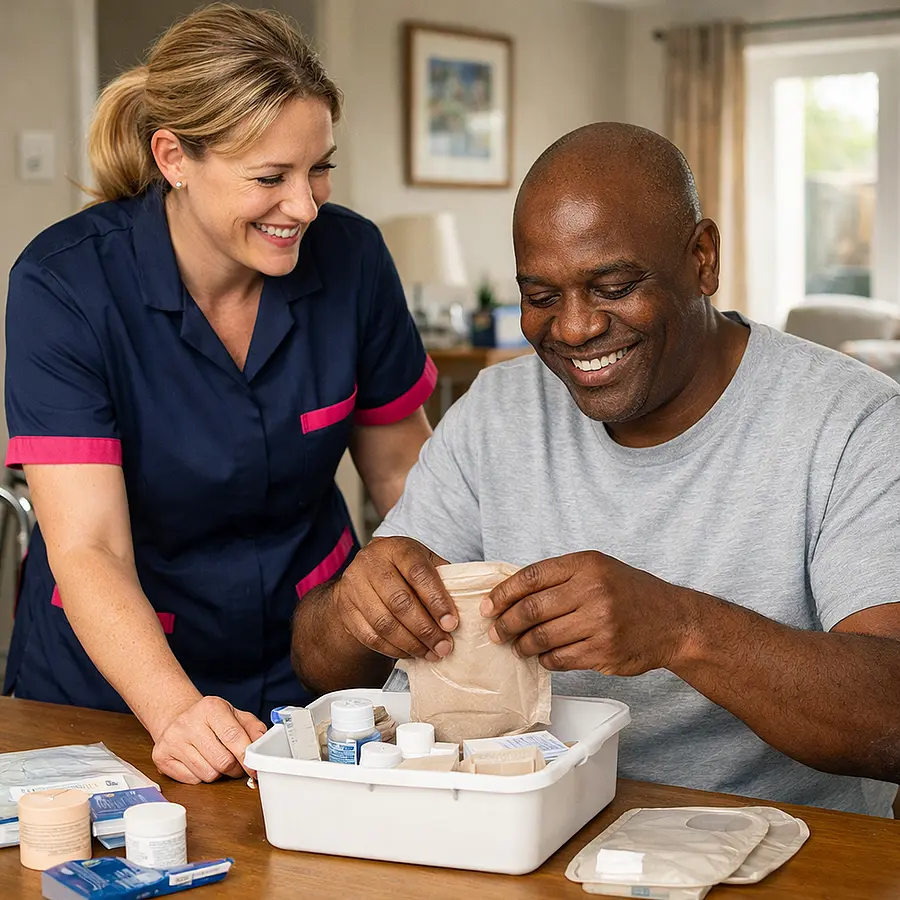
A realistic rehabilitation style home scene with a caucasian female caregiver in 00072b tunic and e51974 accent encouraging a black male service user to independently organise his stoma kit at a table both smiling with pride warm daylight positive and realistic setting.

Enjoying hobbies with stoma care in place

Having a stoma does not mean giving up enjoyable activities. With planning, many people continue gardening, meeting friends, short walks, crafts, or community groups. Our carers can offer companionship support, help prepare a travel kit, and assist with confidence-building before outings. Small steps often make hobbies feel possible again and reduce isolation at home.

A realistic garden scene with a black male caregiver in a 00072b tunic with e51974 accent standing beside an older asian female service user tending potted plants both cheerful and relaxed subtle suggestion of a discreet outing bag nearby warm sunshine and supportive mood.

Making everyday activities easier with stoma support

Sometimes it is the smaller things that matter most, like choosing comfortable clothes, planning meals before an outing, or having a backup pouch ready. We can help with meal preparation, confidence around personal routines, and practical planning for trips. Helpful resources like days out planning advice can also make life feel less restricted.

A realistic hallway scene with an asian female caregiver in 00072b tunic with e51974 trim helping a caucasian male service user prepare a small bag for a day out including water and care supplies both smiling confidently realistic and warm home setting.

How a family member can offer stoma support

Loved ones can help by being calm, respectful, and led by the person’s wishes. That might mean helping organise supplies, keeping routines simple, offering lifts to appointments, or being there for emotional reassurance. It also helps to learn what is normal for that person, so any changes in comfort, output, or mood are noticed early and acted on appropriately.
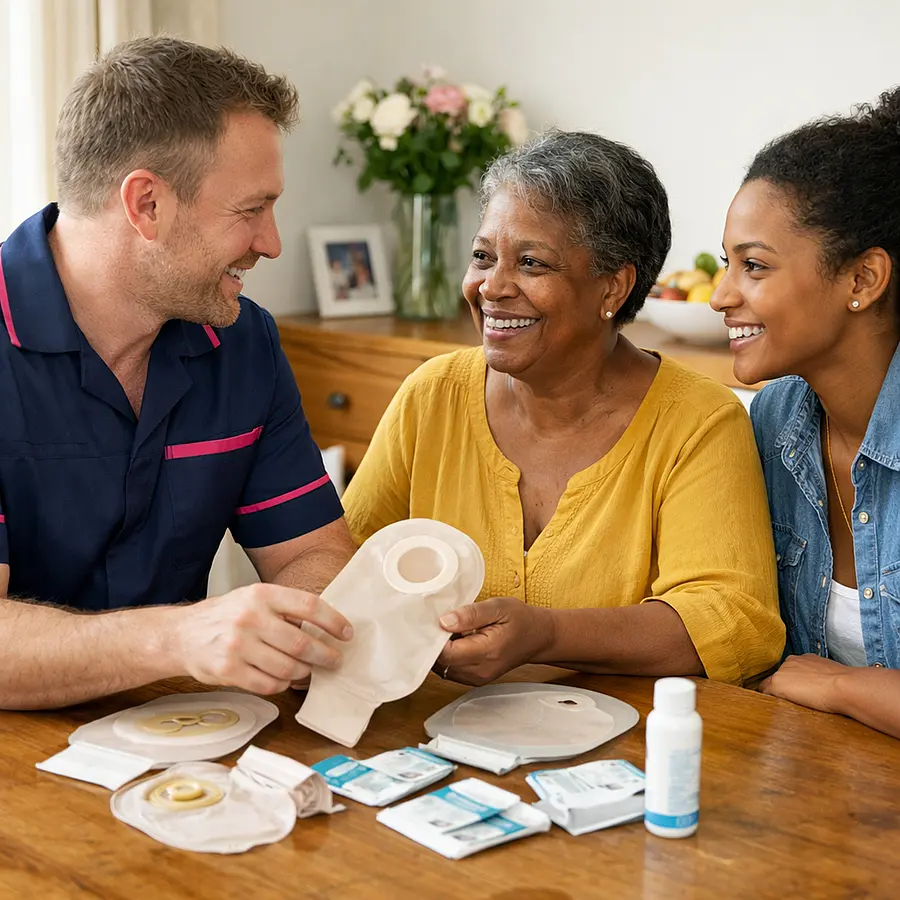
A realistic family home scene showing a caucasian male caregiver in a 00072b tunic with e51974 accent talking warmly with a black female service user and her adult daughter around a dining table discussing stoma supplies and routine supportive smiles bright and homely atmosphere.

Helpful routines for stoma care and family life

Simple routines can make a big difference. Keeping supplies in one place, noting pouch changes, encouraging fluids where appropriate, and allowing extra time before outings can all reduce stress. Families may also value support with everyday household tasks or overnight support at home so they can rest while their loved one remains comfortable and safe.

A realistic evening home scene with a black female caregiver in 00072b tunic and e51974 accent reviewing a simple stoma routine checklist with an asian elderly male service user and his spouse calm lighting caring smiles restful and organised atmosphere.

How can you care for a loved one with stoma care needs?

Start with dignity and communication. Ask what help is wanted rather than assuming, keep practical supplies stocked, and encourage independence wherever possible. If your loved one is recovering from surgery or managing other health issues, linking in wider support can help, including post-operative care at home or colostomy-related support where relevant.
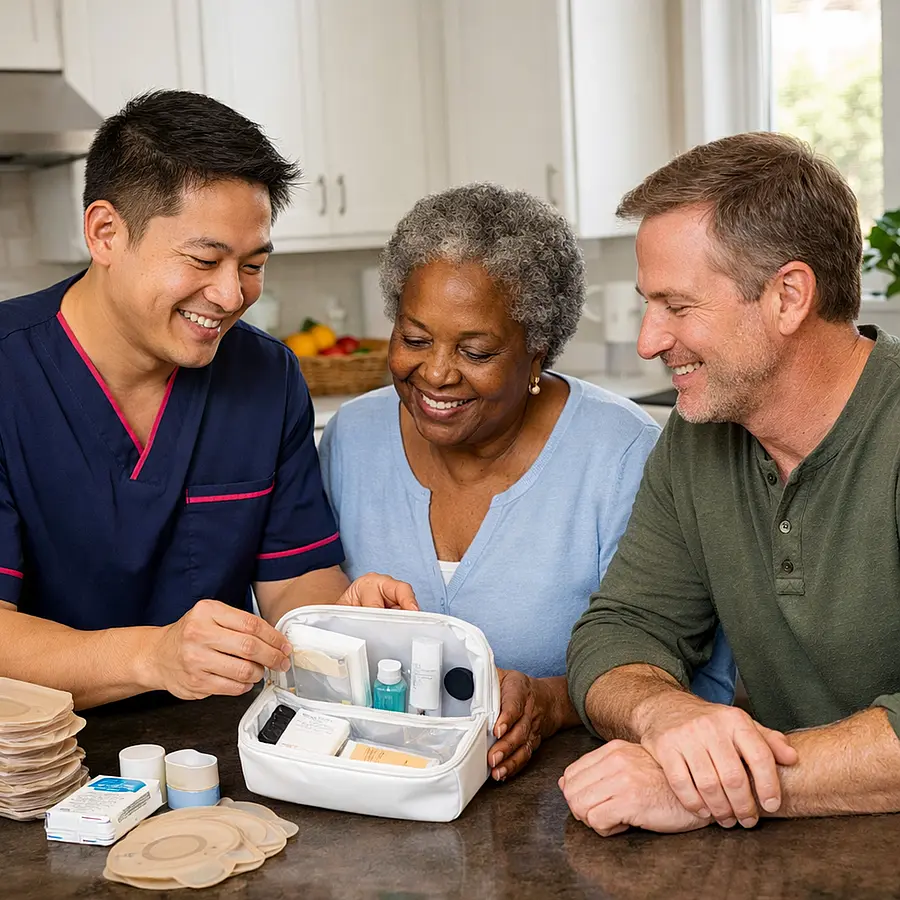
A realistic home kitchen image with an asian male caregiver in 00072b tunic with e51974 details showing a caucasian adult son and his older black mother how to organise stoma supplies discreetly everyone relaxed and reassured bright welcoming setting.

Why choose us for stoma care at home?

We understand that stoma care is about much more than a clinical task. It is about confidence, comfort, privacy, and helping someone live well in familiar surroundings. Our approach is compassionate, practical, and flexible, whether someone needs occasional visits or regular daily help. We work to make home life feel steadier, safer, and more manageable for everyone involved.

A realistic and uplifting home care scene with a caucasian female caregiver in a 00072b tunic with e51974 accent sharing a warm moment with an asian female service user in a comfortable lounge both smiling with trust and relief professional yet personal atmosphere realistic photography style.
Hands of young adult and senior women over green b
Contact Us

Contact us to arrange Stoma Care at home

If you're looking for support with daily living for some one with a stoma, we're here to help. Our friendly team is ready to offer guidance, answer your questions, and arrange stoma care tailored to your or your loved ones' needs in their own home. Reach out today for personalised advice and support.

Elderly hands on a walking sitck

We're becoming a fully regulated service

While we are not currently regulated, meaning there are some services we cannot currently provide, we are in the process of registering to become a fully regulated service.

CQC

Stoma Care FAQ's

You’re bound to have questions when exploring your home care options, so we’ve answered some of the most common ones below.

Extra advice should be sought if there is pain, repeated leaking, bleeding, significant skin damage, sudden changes in output, swelling, a change in the stoma’s appearance, or anything else that seems unusual or distressing. Emotional changes matter too. If a person becomes very withdrawn, frightened, or unable to manage daily life, that is also a sign that extra support may be needed. Home carers can assist with observation and routine, but they do not replace clinical advice when something appears wrong. Acting early is often the best approach, as small concerns can usually be addressed more easily before they become bigger problems.

Embarrassment is very common, especially in the early stages after surgery or when someone has had an upsetting leak or skin issue. It helps to respond calmly, avoid making the stoma the centre of every conversation, and focus on dignity and normality. Gentle reassurance, private practical support, and allowing the person to set the pace can make a big difference. Many people worry that life will never feel normal again, but confidence often improves over time with the right help. Support at home can reduce pressure and make it easier to rebuild self-esteem in a familiar environment, where routines can be managed discreetly and respectfully.

Eating and drinking routines can play an important role in daily comfort for someone living with a stoma. While individual dietary advice should come from healthcare professionals, practical support at home can still make a big difference. This may include preparing regular meals, encouraging drinks where appropriate, helping someone notice what foods they tolerate well, and reducing the stress of cooking when energy is low. Some people feel nervous about eating after surgery or before going out, so gentle support and planning can be reassuring. A simple, settled routine around meals and fluids can help someone feel more in control and more comfortable day to day.

Yes, many people benefit from stoma support soon after discharge from hospital. The first few days or weeks at home can feel daunting, especially if routines still feel unfamiliar or if the person is tired, sore, or worried about leaks. Home support can help create a calm daily pattern, assist with personal care, encourage fluids and meals, and offer reassurance while confidence builds. It can also help family members feel less overwhelmed. While any clinical concerns should still be discussed with a stoma nurse or healthcare professional, regular support at home can make recovery feel safer, more settled, and much easier to manage.

Stoma care at home usually involves helping a person manage their pouch, maintain good hygiene, check the skin around the stoma, and settle into a routine that feels comfortable and manageable. It can also include support with washing, dressing, preparing drinks and meals, ordering or organising supplies, and keeping a note of any changes that may need professional advice. For many people, the biggest part of stoma care is not just the physical routine but the confidence to manage daily life without worry. Home care can make that adjustment feel less stressful by offering respectful, practical help that fits around the person’s preferences and level of independence.

Yes, many people living with a stoma also have other health needs, such as reduced mobility, frailty, cancer recovery, or medication routines. In those cases, stoma care is usually only one part of the wider support needed at home. A joined-up approach works best, where practical daily help, comfort, hydration, meal routines, and emotional reassurance all fit together. For example, someone may need help with dressing, support to move safely around the home, and reminders for medicines alongside their stoma routine. Tailored home care can make this feel more manageable by reducing the pressure of juggling several needs at once and keeping support consistent.

Yes, and that can be just as important as physical support. Many people with a stoma feel isolated at first, especially if they have stopped socialising or feel self-conscious about going out. Companionship can provide a sense of normality, emotional reassurance, and encouragement to stay connected to hobbies, routines, and other people. A supportive presence can make it easier to talk about worries, take small steps outside the home, or simply enjoy everyday conversation. Practical help matters, but so does morale. Feeling less alone often improves confidence and helps a person adjust to life with a stoma more positively.

Yes, stoma care often sits alongside support with personal hygiene, especially if someone is recovering from surgery, has reduced mobility, or lacks confidence. This might include help with washing, showering, dressing, or simply preparing everything needed so the person can do as much as possible for themselves. Good hygiene support should always be respectful and discreet, with attention paid to comfort and dignity. For many people, feeling clean, comfortable, and properly dressed can make a big difference to confidence after stoma surgery. Home care can therefore be about much more than the pouch itself; it can help someone feel more like themselves again in everyday life.

No, stoma care varies depending on the type of stoma, the person’s health, their mobility, their confidence, and how much support they want. Some people only need occasional practical help or reassurance, while others may need regular visits as part of a broader care package. One person may be confident changing their pouch but need support with showering or preparing meals, while another may want help with routines, rest, and emotional adjustment. Good stoma care should always be tailored to the individual. The aim is to support independence where possible, while also making sure the person feels comfortable, dignified, and safe in their own home.

Family carers often do a great deal behind the scenes, from shopping for supplies to helping with routines and worrying about what might go wrong. Having professional support in place can ease that pressure significantly. It can provide practical help with personal care, meal preparation, daily routines, and reassurance after surgery or during periods of low confidence. It also gives family members someone to share responsibility with, which can help prevent exhaustion. When carers are less stretched, they are often able to focus more on their relationship with their loved one rather than feeling stuck in a constant cycle of tasks and worry.

Elderly hands on a walking sitck

Call us to find out more about Stoma Care

East Midlands

We proudly provide high-quality home care across the East Midlands

Our Reviews

We’re proud of the trust families place in us. Here’s what some of the people we support, and their loved ones, say about our home care services.

"Great support for my mum after she lost her confidence after a fall and hospital stay."

Sarah L

"They have been a great help with keeping on top of my dads laundry and general house cleaning as he is bed bound and have been being changed daily."

Emily R

"Really helped me with keeping on top of my house work since my parkinson's has progressed."

Mark T

Senior woman hand in caregiver hands

Join The Good News Newsletter

Be the first to discover exclusive offers, and service updates. Your journey to independent living starts here - where everything truly is fine.


Contact The Good Place

We’d love to hear from you! Whether you have questions, want to learn more about our home care service, or are ready for us to start supporting you or your loved one, our good people are here to help. If you are looking to make a complaint, you can contact our Registered Manager or Nominated Individual directly.

Send Us a Message


Elderly hands on a walking sitck

Working in Partnership

We work closely within the community to provide safe, compassionate, reliable home care that supports independence, dignity, and improved wellbeing while remaining at home.

Derbyshire County Council
Staffordshire County Council
NHS