

Warm realistic scene of a black female caregiver in a navy 00072b tunic with e51974 piping sitting beside an older white male in his living room both smiling as they look over catheter care instructions together showing reassurance and trust in a homely setting.

Catheter Care

Catheter care at home supports safe, dignified living by combining practical help, infection prevention and emotional reassurance. Our trained carers can assist with hygiene, bag changes, routines and confidence-building so you or your loved one can stay comfortable at home. Contact us today to discuss personalised catheter care support that fits around your life and priorities.

Understanding catheter care at home

Catheter care can feel overwhelming at first, whether it’s for you or someone you love. We’re here to make it simpler, safer and more comfortable. With sensitive home care support, we can help with daily catheter routines, skin care, comfort, confidence and spotting early signs of problems, all while encouraging independence and dignity.

Warm realistic scene of a black female caregiver in a navy 00072b tunic with e51974 piping sitting beside an older white male in his living room both smiling as they look over catheter care instructions together showing reassurance and trust in a homely setting.

What catheter care actually involves

Catheter care means looking after a tube that drains urine from the bladder, plus the surrounding skin and equipment. It includes hygiene, comfortable positioning, emptying and changing drainage bags, and watching for infection or blockages. Our carers can build catheter support into wider personal hygiene and washing routines at home, always at your pace.

Realistic close up scene of an Asian male caregiver in a 00072b tunic with e51974 trim helping an older white female service user check her leg drainage bag discreetly in a bedroom both calm and reassured with soft natural lighting.

Different types of urinary catheters

There are several types of urinary catheters. Some are inserted through the urethra and stay in place, others go directly into the bladder through the abdomen (suprapubic catheters), and some are used just for occasional drainage. Each type has slightly different daily care needs. We’ll work with your nurse’s guidance so routines match your specific catheter and health needs.
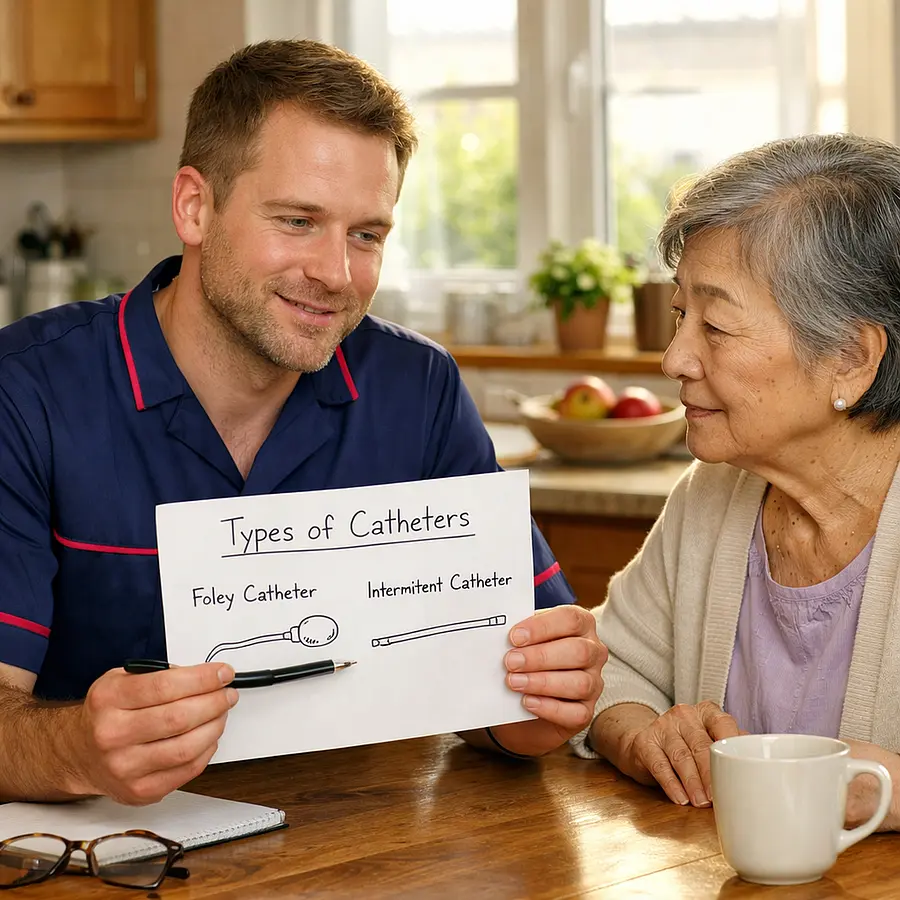
Realistic image of a white male caregiver in a 00072b tunic with e51974 accents sitting at a kitchen table with an older Asian woman calmly explaining the difference between catheter types using a simple diagram warm daylight and a friendly reassuring atmosphere.

Why catheter care is so important

Good catheter care protects against infections, discomfort and leakage, helping you feel more confident day to day. Regular emptying, bag changes and gentle cleaning can make a big difference to sleep, comfort and independence. Our care team can blend catheter support with wider home care services such as help with washing, meals and daily routines so life feels easier overall.

Realistic scene of a white female caregiver in a 00072b tunic with e51974 trim sitting with an older white couple on their sofa the caregiver gently facilitating a conversation while both partners hold hands atmosphere supportive and calm.

Can catheter care be managed at home?

Yes, most people with a catheter can be fully supported at home with the right advice and daily routines. Many tasks are simple once you’re shown how. We can work alongside community nurses to support cleaning, bag changes and fluid reminders, while also helping with medication and symptom monitoring at home when needed.

Realistic image of an Asian female caregiver in a 00072b tunic with e51974 accents supporting an older black gentleman using a walking frame in his lounge a discreet catheter bag visible under loose clothing both relaxed and chatting.

Living independently with catheter support

With thoughtful planning, catheter care rarely needs hospital visits. Our carers can visit as little or as often as you like, from quick check-ins to regular visits or overnight reassurance when you’re worried about leaks or night-time trips. We focus on privacy, gentle explanations and working at your pace, so you stay in control of your routine.

Night time realistic scene of a white female caregiver in a 00072b tunic with e51974 piping adjusting a bedside urine drainage bag for an older Asian man in bed soft lamp light calm and reassuring expressions.

Catheter-related problems and warning signs

It’s important to watch for changes such as cloudy or strong-smelling urine, pain, fever, bladder discomfort, or urine stopping or bypassing the catheter. Leaks, redness or soreness around the catheter site can also be warning signs. Our carers are trained to spot concerns early and help you contact your nurse or GP promptly so things don’t escalate.

Realistic image of a family living room where an elderly Black woman sits in an armchair with a blanket holding hands with her adult son while a White female caregiver in a 00072b tunic with e51974 accent chats with them warmly everyone appearing connected and supported.

Emotional impact of living with a catheter

Changes to bladder control can feel embarrassing or upsetting, and many people worry about smells, leaks or visible bags. This can lead to isolation and low mood. Our carers offer gentle reassurance, practical tips and friendly companionship and conversation during visits, so catheter care becomes just one part of a full, enjoyable day, not the focus.

Realistic scene of an Asian male caregiver in a 00072b tunic with e51974 accents sharing a laugh over tea with an older black woman in her kitchen catheter bag discreetly hidden showing warmth acceptance and normal everyday life.

How we provide catheter care at home

Our carers can help with gentle washing around the catheter site, emptying and changing drainage bags, supporting fluid intake, and following any nurse-led plans. We always protect dignity and privacy, using towels and screens where possible. Catheter care can be combined with wider support for bathing, dressing and continence needs so everything feels joined-up and calm.

Realistic bathroom scene with a white female caregiver in a 00072b tunic with e51974 trim supporting an elderly Asian woman sitting safely on a shower chair towels used for privacy both smiling and relaxed while discussing catheter care steps.

Daily routines that support comfort and safety

Consistency makes catheter care easier. We can help build a daily pattern of checking tubing, emptying bags regularly, drinking enough and planning toilet breaks when you’re out. Alongside this, we can support balanced meals and drinks that are gentle on the bladder, as well as medication reminders that fit neatly around catheter routines at home.

Realistic kitchen scene with a black male caregiver in a 00072b tunic with e51974 piping helping an older white man pour water into a jug sliced fruit nearby both smiling while they chat about a written catheter care schedule on the counter.

Catheter care that supports hobbies and interests

Catheter care should fit around the things you enjoy, not the other way round. We can help plan bag changes and checks around hobbies, family time and appointments, so you feel confident leaving the house. Our carers can also provide support to get out for walks, clubs or social visits, with quiet, discreet help if the catheter needs attention.

Realistic outdoor park scene with an Asian female caregiver in a 00072b tunic with e51974 accents walking beside an elderly black gentleman using a stick both laughing as they watch dogs playing catheter bag concealed under clothing relaxed and confident.

Building confidence after hospital or surgery

Returning home with a new catheter can feel daunting. We can visit more often at first, helping you practise emptying bags, getting dressed and moving around safely. Over time, many people need less help as confidence grows. Where mobility or other conditions make things harder, we can blend catheter support with broader mobility and reablement care at home.

Realistic hallway scene with a white male caregiver in a 00072b tunic with e51974 trim guiding an older white woman with a frame discreet catheter visible under a long dress both focused yet positive showing early rehabilitation at home.

Support for carers and loved ones

If you’re supporting someone with a catheter, you might feel anxious about doing things wrong. We can share clear, simple explanations and demonstrate tasks step by step, so you feel more confident. Our visits can also give you a break, whether that’s time to rest, work or see friends, while we provide friendly company and monitoring at home.

Realistic living room scene of an Asian male caregiver in a 00072b tunic with e51974 piping demonstrating catheter bag emptying using a demo bag while a middle aged white daughter watches closely beside her elderly mother all looking reassured.

How family members can make catheter care easier

Little things make a big difference: keeping a clear path to the bathroom, laying out clean clothes, and having wipes, bags and spare equipment close by. Encouraging regular drinks, without pressure, also helps. We can work with you to build a simple household routine, and our carers can provide light domestic help such as laundry and bedding changes when accidents happen.

Realistic bedroom scene of a black female caregiver in a 00072b tunic with e51974 trim helping a teenage girl change bed linen for her elderly grandfather all smiling the environment tidy with catheter supplies neatly organised on a bedside table.

How to care for a loved one with a catheter

Start by understanding any nurse instructions and keeping important phone numbers handy. Agree together how much help is wanted with washing, emptying bags and checking skin. Ask permission before each task and offer choices where possible. If it feels too much, we can step in with planned visits or night-time support so you can rest.

Realistic image of an Asian male caregiver in a 00072b tunic with e51974 trim sitting at a dining table with an elderly Black couple going through a care plan document together all three smiling and engaged in discussion.

Protecting dignity while giving intimate care

Supporting someone with intimate care can feel sensitive for everyone involved. Simple steps like using towels for cover, explaining each stage and keeping conversations warm and everyday help preserve dignity. Our carers are experienced in discreet support with washing, dressing and continence, always focused on comfort, consent and respect for personal boundaries at every visit.

Realistic bathroom doorway view where a black male caregiver in a 00072b tunic with e51974 piping holds up a large towel as a privacy screen for an older white woman both smiling and relaxed environment bright and respectful.

Why choose our catheter care at home?

We understand how personal catheter care is. Our carers are trained, discreet and kind, taking time to listen and adapt to your comfort levels. We work alongside nurses and families, building a plan that fits your lifestyle and other health needs. Support can be combined with wider home care and condition-led services for truly joined-up support.

Realistic image showing a tired middle aged White woman sipping tea at a kitchen table while a kind looking Asian female caregiver in a 00072b tunic with e51974 trim talks with her supportively a calendar and care notes visible beside them.

Joined-up support for multiple health conditions

Many people who need a catheter are also living with other conditions such as mobility issues, diabetes or dementia. Our care is designed to support the whole person. We can combine catheter routines with specialist condition-led home care plans, so you’re not repeating information or juggling lots of separate services every day.


Realistic home office scene of an Asian male caregiver in a 00072b tunic with e51974 trim reviewing a digital care plan on a laptop beside an elderly black woman and her daughter discussing how catheter care fits with her other conditions all engaged and reassured.
Hands of young adult and senior women over green b
Contact Us

Contact us to arrange Catheter Care at home

If you're looking for support with daily living for some one with a catheter, we're here to help. Our friendly team is ready to offer guidance, answer your questions, and arrange catheter care tailored to your or your loved ones' needs in their own home. Reach out today for personalised advice and support.

Elderly hands on a walking sitck

We're becoming a fully regulated service

While we are not currently regulated, meaning there are some services we cannot currently provide, we are in the process of registering to become a fully regulated service.

CQC

Catheter Care FAQ's

You’re bound to have questions when exploring your home care options, so we’ve answered some of the most common ones below.

Yes, catheter care is often part of a wider picture. Many people we support also need help with washing, dressing and grooming, light domestic tasks at home, or condition-led care for illnesses such as Parkinson’s, stroke or cancer. We build a personalised care plan with you, so catheter tasks are woven naturally into your day rather than feeling like a separate, stressful extra. This might mean checking tubing while helping you change clothes, or emptying the bag before you head out to a club. Our flexible approach means we can adapt as your needs or health change.

District or community nurses are usually responsible for inserting and changing catheters, as well as providing medical guidance. Our role sits alongside theirs. We handle day‑to‑day support such as hygiene, bag emptying, comfort and observation, and follow the instructions that nurses or hospital teams provide. With your consent, we can share information about any concerns we notice, such as changes in urine, discomfort or mobility. This joined‑up approach helps potential issues to be picked up early. For some people with multiple conditions, we also coordinate with other condition‑led care services so everything feels connected.

Feeling overwhelmed is very common, especially if you are juggling work, children or your own health. You do not have to manage alone. We can provide regular visits for catheter care, respite time so you can rest, or more intensive support if your loved one also has complex conditions. Information on funding and assessments is available through our care costs and funding guidance. Many families find that even a small amount of regular help makes a big difference to stress levels and family relationships.

Feeling embarrassed is completely understandable, especially when continence changes happen suddenly or at a younger age. It can help to acknowledge those feelings gently, without rushing to “cheer up” the person. Using everyday language, keeping conversations respectful and normalising the catheter as just another medical aid, like glasses or a walking stick, can reduce shame over time. Our carers are used to supporting people through these emotions, offering quiet reassurance and normal conversation during care tasks. We also encourage activities that have nothing to do with health, like hobbies and gentle outings, supported by friendly companionship visits, so the person’s identity feels bigger than their catheter.

In many cases, yes, but it depends on the type of catheter and any specific advice from your nurse or doctor. Showers are often preferred because you can keep the catheter and bag positioned safely without submerging the area for too long. Some people are advised to avoid soaking in baths, especially with new or healing suprapubic sites. Our carers can assist with bathing, showering and general hygiene, helping to protect your privacy and dignity while following the guidance you’ve been given. We’ll also help you choose towels, mats and equipment that make everything safer.

If a catheter falls out or stops draining and the person feels pain, this is often urgent and you should follow the emergency advice provided by your nurse or hospital team, which may include calling 111 or 999 depending on symptoms. Do not attempt to reinsert the catheter yourself. Our carers are trained to stay calm, keep the person as comfortable as possible, protect clothing and bedding, and contact the appropriate service immediately. We will also support you emotionally during and after the event, as it can be quite frightening for families.

When someone has dementia, catheters can sometimes feel confusing or distressing, leading them to pull at the tubing. Gentle explanations, distraction and clothing that covers the catheter can help. Our dementia‑aware carers use calm reassurance, familiar routines and meaningful activities to reduce agitation. We can also work with specialist dementia care teams and nurses to review alternative options if needed. Above all, we focus on comfort, safety and preserving dignity, supporting you as a family to manage what can be a very worrying situation.

In most cases, yes. Once the catheter has been inserted and checked by a nurse or doctor, the ongoing day-to-day care can usually happen at home. This includes tasks like washing around the catheter site, emptying and changing drainage bags, checking that urine is flowing freely and keeping an eye out for early signs of infection. Many families choose support from our home care team so they are not carrying the responsibility alone. We can provide regular visits, review routines with you, and liaise with community nurses if anything changes. With clear instructions, good hygiene and a calm, unhurried approach, home really can be the most comfortable and reassuring place to manage catheter care.

Dementia can make it harder for someone to understand why a catheter is there, and they may pull at tubing because it feels unfamiliar, uncomfortable or simply in the way. We approach this with patience and gentle reassurance, not confrontation. Practical steps can include clothing that covers the tubing, repositioning the bag for comfort, or providing soothing activities to keep hands busy. Our team can integrate catheter routines into broader specialist dementia care at home, using familiar routines, calm communication and collaboration with nurses to reduce distress for everyone involved.

Each visit is shaped around your needs, but there are some common tasks we can support with. These may include helping you wash and dry the skin around the catheter site, ensuring the tube and bag are positioned comfortably, emptying or changing drainage bags and recording urine if requested by your nurse. We can remind you to drink regularly, support toilet or commode transfers, and help with changing clothes or bedding if leaks occur. At the same time, we’ll chat with you about how you’re feeling, check for any signs of infection or discomfort, and offer reassurance and practical tips for between visits, all while protecting your dignity and privacy.

We proudly provide high-quality home care across the East Midlands, in an around the towns and cities detailed below.

Elderly hands on a walking sitck

Call us to find out more about Catheter Care

East Midlands

We proudly provide high-quality home care across the East Midlands

Our Reviews

We’re proud of the trust families place in us. Here’s what some of the people we support, and their loved ones, say about our home care services.

"Great support for my mum after she lost her confidence after a fall and hospital stay."

Sarah L

"Really helped me with keeping on top of my house work since my parkinson's has progressed."

Mark T

"They have been a great help with keeping on top of my dads laundry and general house cleaning as he is bed bound and have been being changed daily."

Emily R

Senior woman hand in caregiver hands

Join The Good News Newsletter

Be the first to discover exclusive offers, and service updates. Your journey to independent living starts here - where everything truly is fine.


Contact The Good Place

We’d love to hear from you! Whether you have questions, want to learn more about our home care service, or are ready for us to start supporting you or your loved one, our good people are here to help. If you are looking to make a complaint, you can contact our Registered Manager or Nominated Individual directly.

Send Us a Message


Elderly hands on a walking sitck

Working in Partnership

We work closely within the community to provide safe, compassionate, reliable home care that supports independence, dignity, and improved wellbeing while remaining at home.

NHS
Derbyshire County Council
Staffordshire County Council