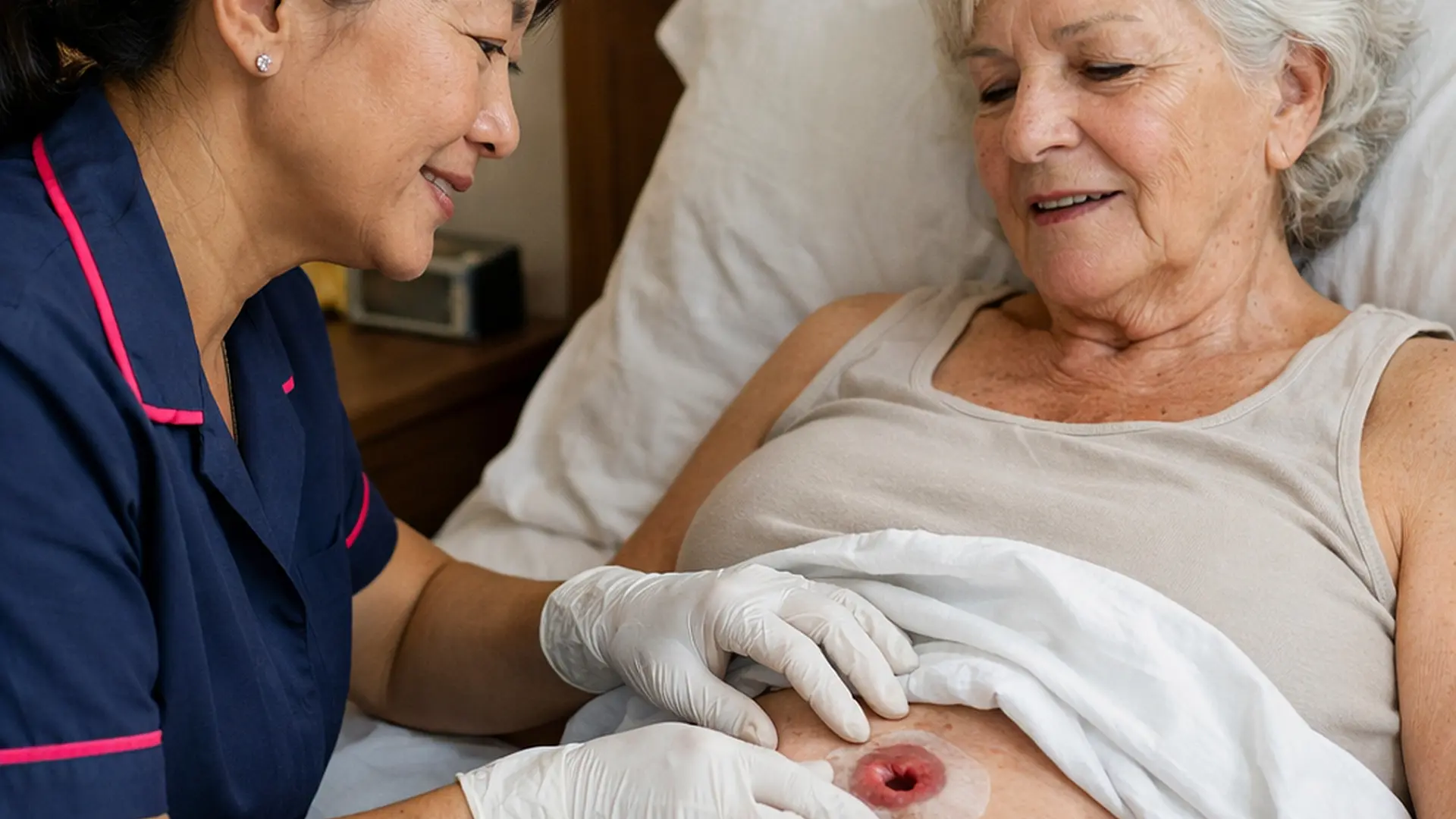
Realistic close scene of a middle aged Asian female caregiver in a 00072b tunic with e51974 piping gently examining the stoma area of an older white woman in a private bedroom using gloves and maintaining dignity with a sheet both talking calmly bright but discreet lighting.

Colostomy Care

Colostomy care at home can feel manageable and dignified with the right support around you. Our flexible home care visits provide practical stoma help, gentle encouragement, and wider day-to-day assistance so you or your loved one can live confidently at home. Get in touch to discuss how our friendly team can tailor colostomy support to your needs.

Understanding colostomy care at home

Colostomy care can feel overwhelming at first, whether it’s your own stoma or a loved one’s. We’re here to reassure you that with the right support, routine, and gentle guidance, life at home can feel safe and dignified. Our home care team can help with daily stoma routines, comfort, and confidence-building every step of the way.
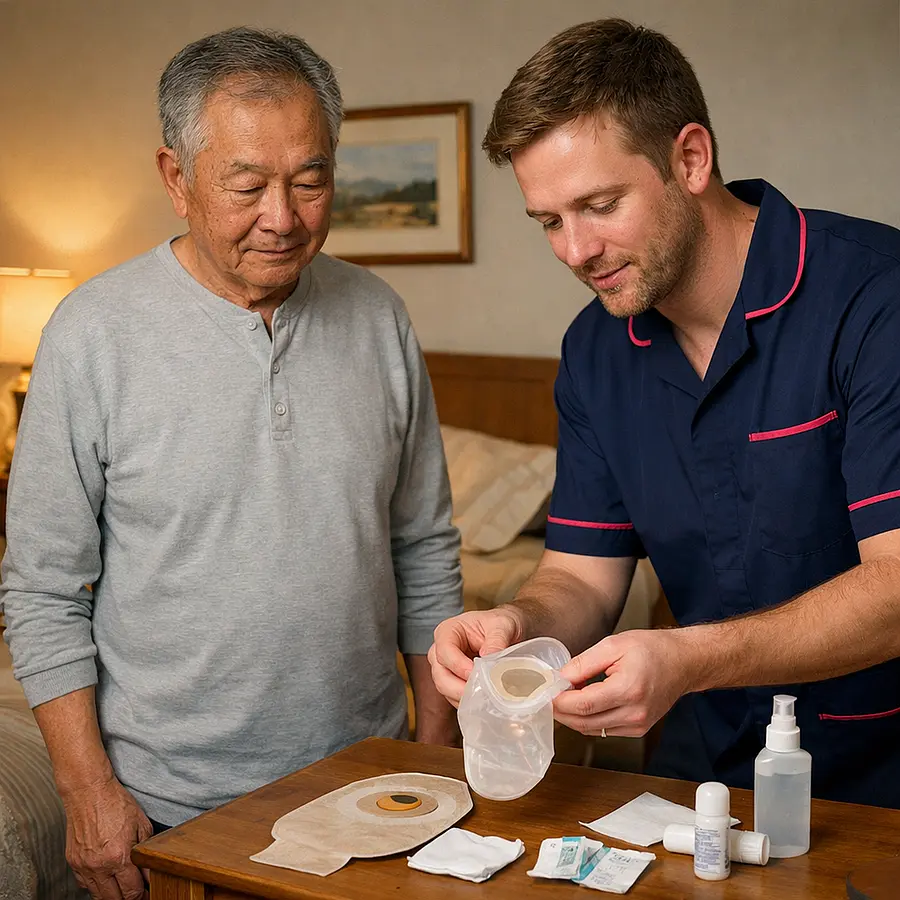
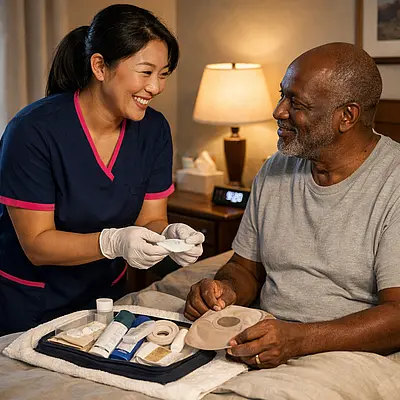
Realistic image of an older Asian man in a cosy bedroom standing near the bed with a calm expression while a younger white male caregiver in a 00072b tunic with e51974 piping gently demonstrates stoma bag supplies on a bedside table warm and reassuring atmosphere.

What is colostomy care?

Colostomy care is the day-to-day management of a stoma created from the colon, including emptying and changing bags, monitoring skin, and preventing leaks or soreness. It often follows bowel surgery or long-term bowel conditions. We can visit at home to support these practical tasks and help you feel more confident managing everything yourself over time.
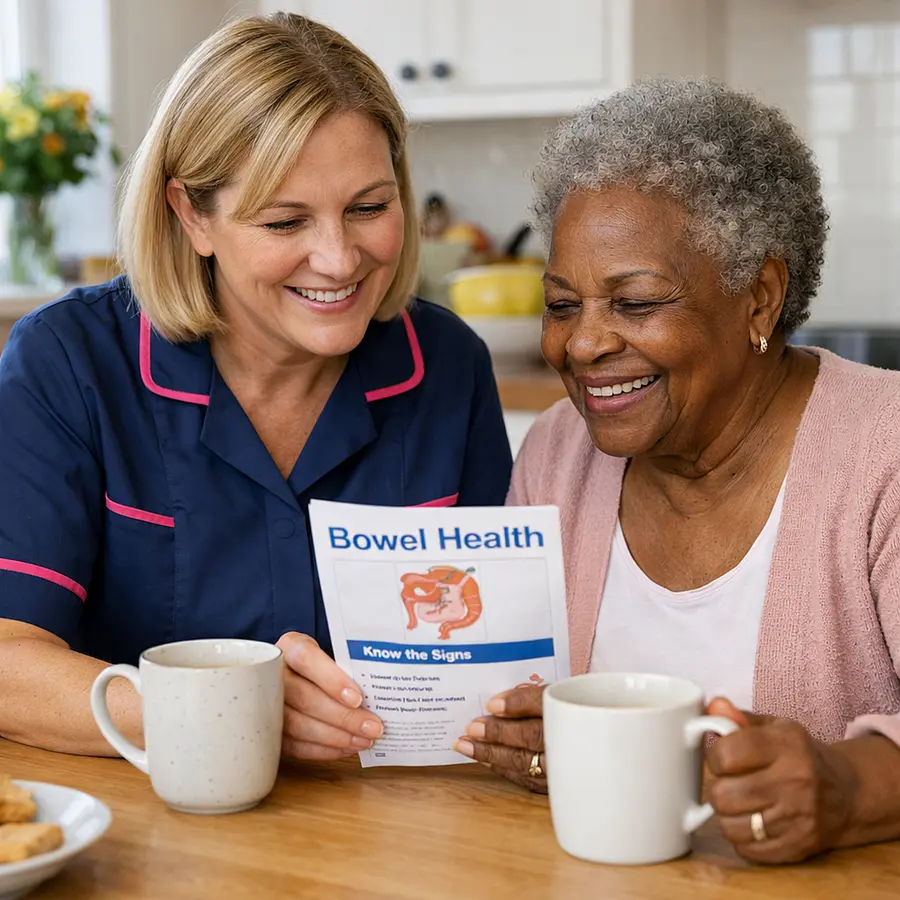
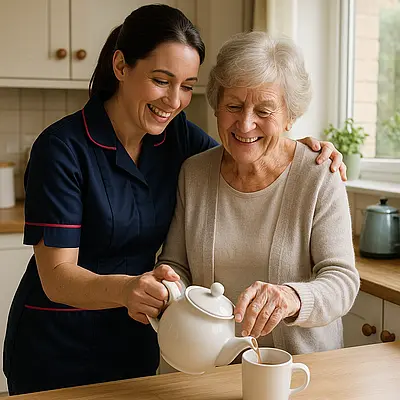
Real life style photo of a middle aged white female caregiver in a 00072b tunic with e51974 accents at a kitchen table chatting with an older Black woman while looking at a simple bowel health leaflet both smiling with cups of tea bright kitchen homely feel.

Colostomy care and why it’s needed

A colostomy may be temporary or permanent, often following bowel cancer, diverticular disease, injury, or other bowel problems. The stoma allows waste to leave the body into a bag. Good colostomy care protects the skin, reduces odour and leakage worries, and supports independence. At home, our focus is always dignity, privacy, and practical reassurance.

Realistic image of an older white man relaxing in his living room armchair while an Asian female caregiver in a 00072b tunic with e51974 trim notes visit details on a tablet both comfortable and at ease soft lamp light tidy homely environment.

What colostomy care involves day to day

Day-to-day colostomy care usually includes emptying or changing the stoma bag, gently cleaning around the stoma, checking for leaks, and keeping the surrounding skin healthy. There may also be dietary changes and fluid monitoring. We can support you to build a routine that fits your usual habits, from morning wash times to bedtime checks and reassurance.

Detailed photo of a Black male caregiver in a 00072b tunic with e51974 accents helping an older Asian woman sit comfortably on her bed open stoma supplies neatly arranged on the bedside cabinet both smiling gently daylight coming through the window calm and reassuring scene.

Can colostomy care be managed at home?

Yes, many people manage colostomy care very successfully at home. With the right guidance and a bit of practice, most tasks become part of a normal routine. Our carers can visit as often as needed, from short calls for bag changes to longer visits that include help with washing and getting dressed alongside stoma support.
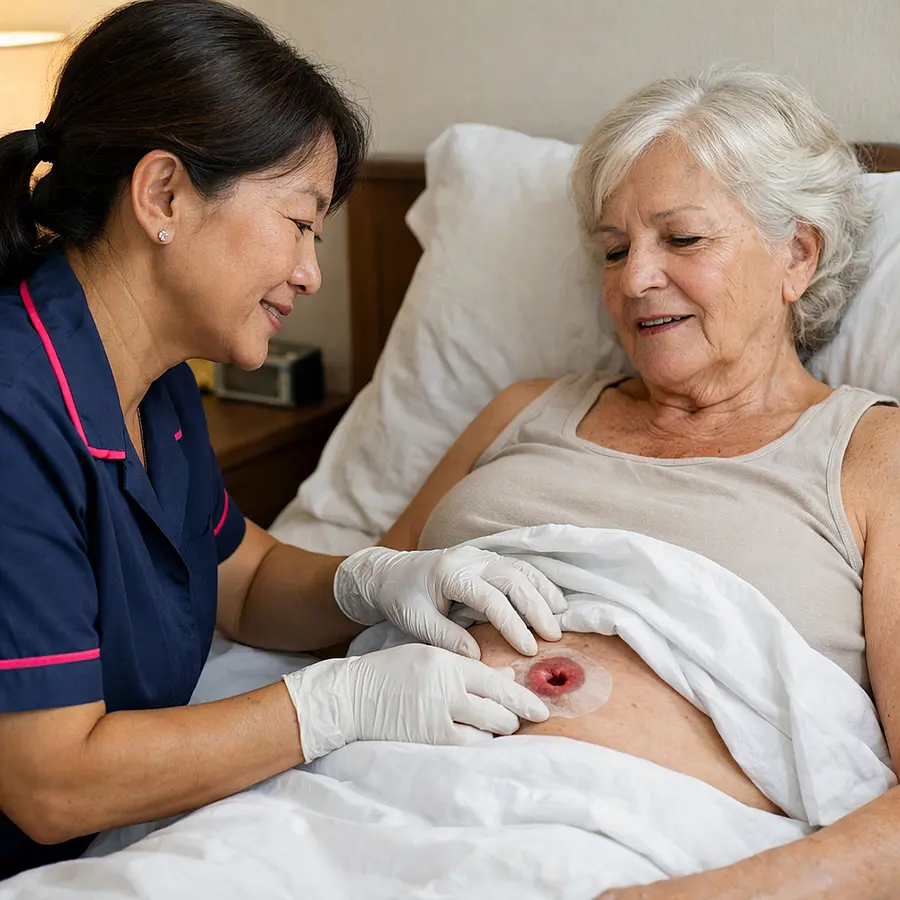
Realistic close scene of a middle aged Asian female caregiver in a 00072b tunic with e51974 piping gently examining the stoma area of an older white woman in a private bedroom using gloves and maintaining dignity with a sheet both talking calmly bright but discreet lighting.

Home-based support for colostomy care

For some, especially after recent surgery, colostomy care can feel daunting. Our home visits can bridge the gap from hospital to home, helping you gain confidence safely. We can combine stoma support with light meal preparation, gentle prompts with drinks, and help to keep your bathroom well stocked and organised for easier daily routines.

Warm realistic photo of an Asian male caregiver in a 00072b tunic with e51974 trim helping an older Black woman choose clothing from her wardrobe considering comfort around her stoma both smiling and talking bedroom tidy and bright.

Living well with colostomy care at home

Staying at home means you can recover and adapt in familiar surroundings, at your own pace. Our carers can work alongside community nurses and hospital teams, helping you follow professional guidance safely. Where bowel needs are more complex, we can also link support with broader bowel care at home, ensuring your overall comfort and confidence each day.

Realistic image of a white female caregiver in a 00072b tunic with e51974 accents serving a light healthy lunch to an older Asian man at a dining table water jug nearby to encourage hydration both chatting warmly sunlit kitchen diner.

Colostomy symptoms and what to watch for

Most of the time, a well-managed colostomy should be painless and predictable. Watch for skin soreness, redness, persistent itching, unusual odours, sudden changes in stool, bleeding, or frequent leaks. Tummy cramps, nausea, or a swollen stoma should also be flagged quickly. Our carers can help you notice small changes early and seek professional advice promptly when needed.

Real life style image of a Black male caregiver in a 00072b tunic with e51974 details walking in a park with an older white woman using a light walking stick small discreet bag with stoma supplies over her shoulder both laughing together on a bright day.

Emotional impact of colostomy symptoms

Changes such as odour, noise, or leaks can knock confidence and make people avoid going out or seeing friends. It’s completely understandable to feel self-conscious. Our carers offer not only practical support but also friendly companionship, gentle encouragement, and reassurance that these worries are common and manageable with the right routine and products.
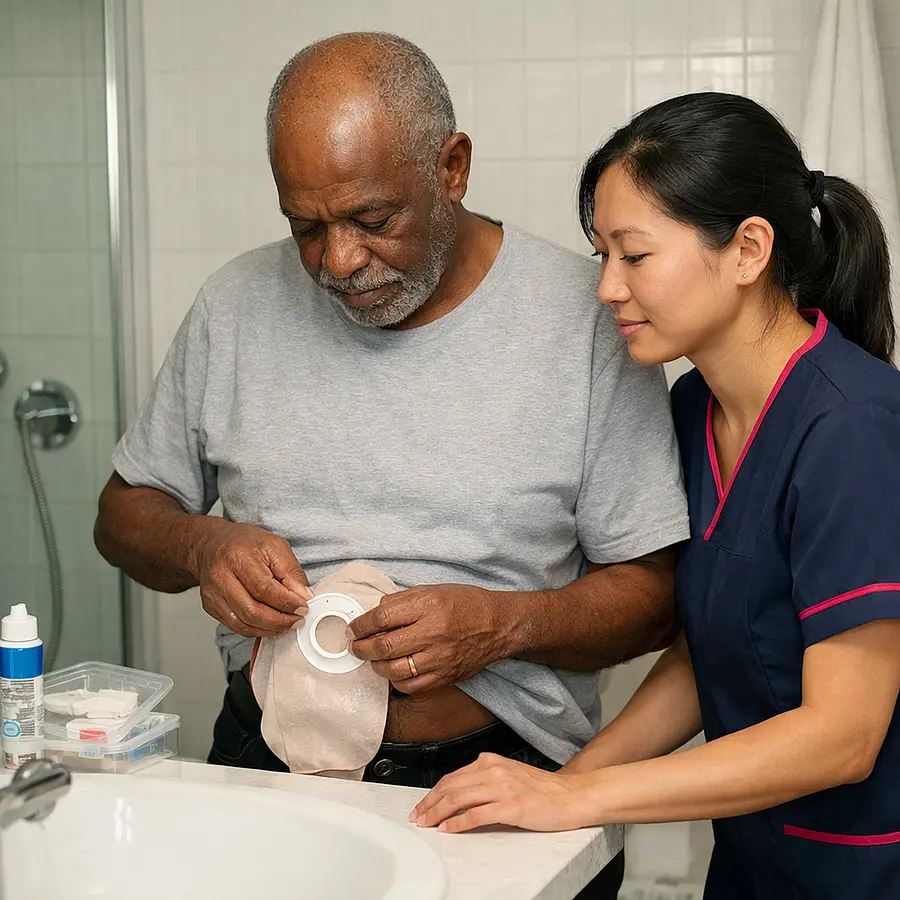
Realistic image of an Asian female caregiver in a 00072b tunic with e51974 details guiding an older Black man to practise his own stoma bag change at a bathroom sink caregiver supervising closely but allowing independence both focused and calm.

How we provide colostomy care support at home

Our team offers flexible colostomy care at home, from short, focused visits for bag changes to longer calls that combine stoma support with light housework and laundry. We follow personalised care plans, respect privacy, and work at your pace, gradually encouraging independence where possible while always being nearby when extra help is needed.

Real life style image of an older Black woman sitting at a kitchen table with her adult daughter and a male caregiver in a 00072b tunic with e51974 accents all looking at printed stoma care instructions together supportive expressions bright kitchen.

Specialist colostomy care alongside other needs

Many people with a colostomy are also living with long-term conditions. We can blend stoma support with condition-led arthritis care for reduced mobility or recovery after bowel cancer treatment. This joined-up approach means one trusted team supporting you with personal routines, bowel needs, and wider health conditions, all in the comfort of your own home.

Realistic image of a white male caregiver in a 00072b tunic with e51974 trim showing a simple medication chart to a middle aged Black woman and her elderly father in their lounge all focused and relaxed cosy home environment.

Flexible visits for colostomy care

Every person’s needs are different. Some may only need help once a day, while others benefit from more frequent visits or occasional overnight reassurance after recent surgery or during flare-ups. We’ll work with you and any professionals involved to agree visit times, tasks, and goals that fit naturally into your lifestyle and existing home routines.
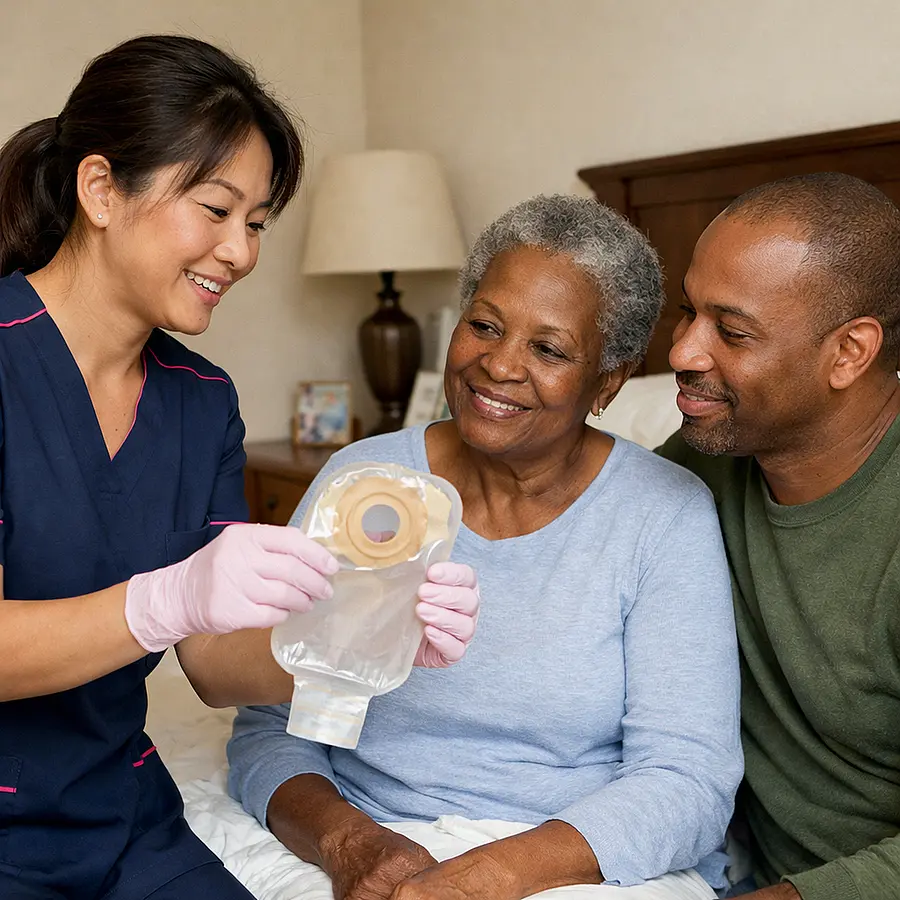
Warm realistic photo of an Asian female caregiver in a 00072b tunic with e51974 details demonstrating stoma bag handling with gloves to an attentive adult son beside his older Black mother in a bedroom everyone engaged and reassured.

Colostomy care that supports hobbies and interests

Good colostomy care should fit around the person, not the other way round. We’ll help plan bag changes, clothing choices, and bowel routines so hobbies can continue, whether that’s gardening, gentle walks, or crafting groups. With the right planning, trips out become less stressful, and our carers can provide practical help or company on outings if you’d like.
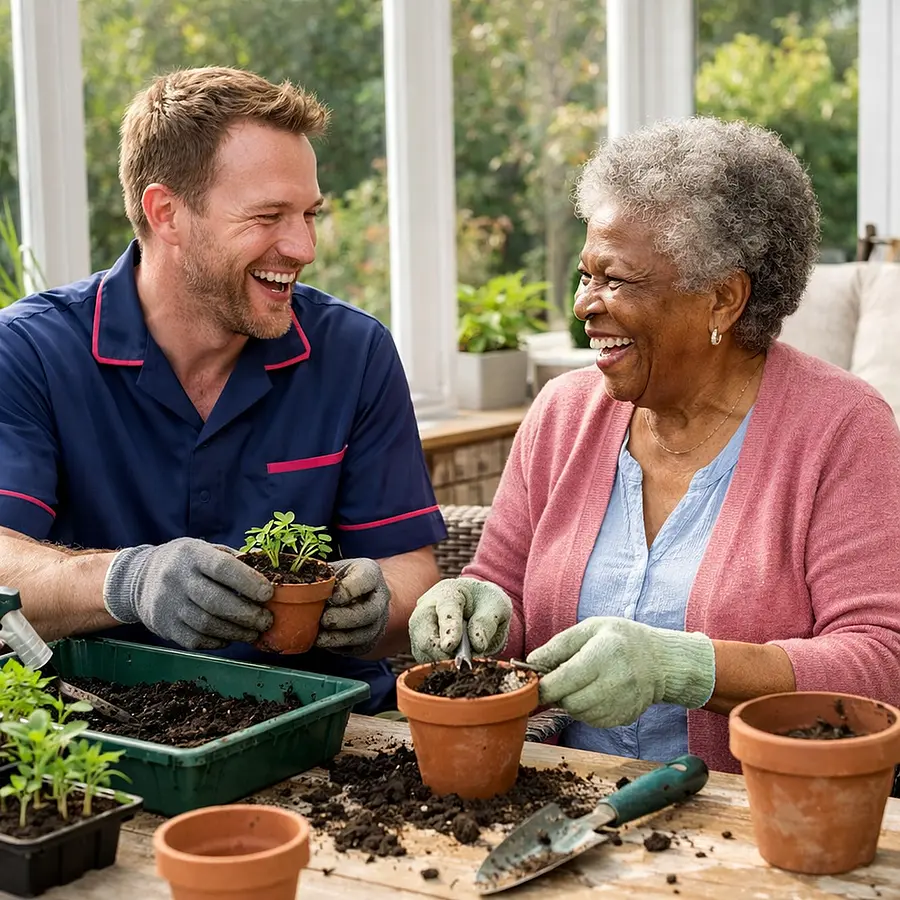
A white male caregiver in a 00072b tunic with e51974 accents sits in a sunny conservatory helping an elderly black woman pot small plants. Both laugh as they work gardening tools nearby capturing how home cancer care can support meaningful hobbies.

Reablement-focused colostomy care

For many people, the goal is to become as independent as possible with colostomy care. Our approach focuses on reablement: breaking tasks into manageable steps, offering prompts rather than taking over, and building confidence slowly. We can use simple checklists and mirror work to help people practice until they feel able to manage most tasks themselves.

Warm realistic scene of a Black female caregiver in a 00072b tunic with e51974 trim smiling reassuringly while sitting beside an older white male at his kitchen table discussing colostomy supplies and a daily care checklist bright homely kitchen natural daylight calm and confident atmosphere.

Confidence-building colostomy care at home

After surgery, it’s common to worry about leaving the house or staying overnight with family. We can support you to experiment with different bag types, clothing and routines. Using resources like living confidently with a colostomy at home, we’ll help you gradually stretch what feels possible, always at a pace that feels safe for you.

Realistic scene of a white female caregiver in a 00072b tunic with e51974 trim sitting with an older white couple on their sofa the caregiver gently facilitating a conversation while both partners hold hands atmosphere supportive and calm.

How loved ones can support colostomy care

If you’re supporting a family member, your calm presence is often more important than any practical skill. You can help by keeping supplies organised, offering reassurance during bag changes, and encouraging a regular routine. Our carers can show you simple, respectful ways to help while still protecting your loved one’s dignity and independence wherever possible.

Warm realistic photo of a white female caregiver in a 00072b tunic with e51974 trim sitting on a sofa with a middle aged Asian couple all talking gently tissues and tea on the table soft lighting creating a safe supportive atmosphere.

Practical ways to help someone with a colostomy

Helpful tasks might include collecting prescriptions, ordering stoma supplies, or preparing gentle meals that suit their digestion. You could also support with household jobs like laundry and changing bedding after leaks, reducing embarrassment. Our carers can share tips on storage, packing a discreet “just in case” bag, and building routines that feel realistic for your family.
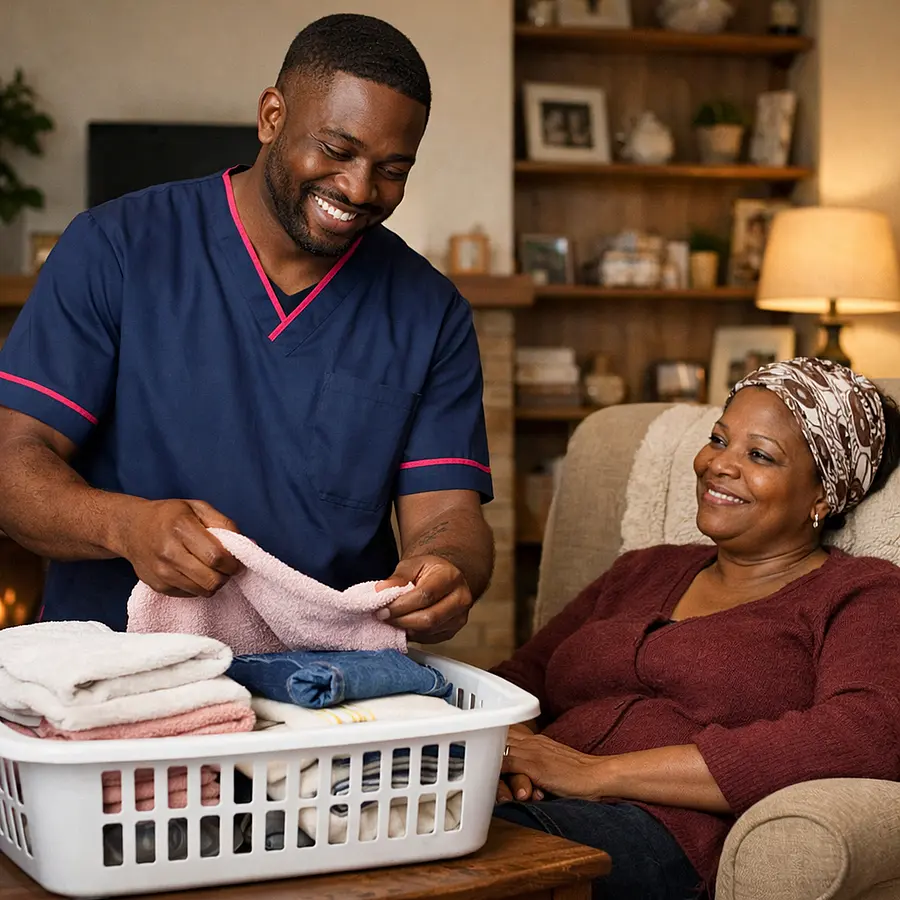
Realistic image of a black male caregiver in a 00072b tunic with e51974 trim folding laundry in a cosy lounge while a middle aged black woman with a headscarf rests in an armchair nearby both exchanging relaxed smiles.

Emotional support from family and friends

A colostomy can change how someone feels about their body and relationships. Simply listening without judgement and checking in about how they’re coping can make a big difference. If things feel tense, our carers provide a neutral, reassuring presence and regular emotional support through conversation, giving both you and your loved one room to breathe.

Realistic scene of an Asian female caregiver in a 00072b tunic with e51974 trim sitting at a dining table with a middle aged Black woman offering tissues and listening warmly while they talk a teapot and two mugs on the table bedroom doorway to a resting patient in the background.

How you can care for a loved one with a colostomy

Caring for someone with a colostomy means balancing respect for privacy with gentle practical help. You might support with bathing, clothing choices, and organising medical appointments. We can complement your role by providing expert stoma support, helping to manage medication routines, and stepping in when you need a break or feel unsure about any aspect of care.

Warm realistic photo of a middle aged Black female caregiver in a navy 00072b tunic with e51974 trim sitting beside an older white woman in her living room discussing a colostomy care routine with a notepad both smiling and relaxed homely surroundings soft natural light.

Looking after yourself when you’re supporting colostomy care

Family carers often put their own needs last. Try to build in rest, time with friends, and activities you enjoy so you don’t burn out. We can share guidance from our wider help and guidance resources and offer regular visits, giving you space to recharge while knowing your loved one is receiving sensitive, skilled support at home.

A black male caregiver in a 00072b tunic with e51974 trim talks gently with an anxious looking middle aged white woman in a hallway while an older man rests in a nearby room. Their body language shows empathy and reassurance emphasising emotional support for families during cancer.

Why choose us for colostomy care at home?

We understand that colostomy care is deeply personal. Our carers are trained, discreet, and focused on preserving dignity at every visit. We take time to listen, adapt to your routines, and work closely with health professionals. Whether you need short-term recovery support or longer-term help, we’ll tailor visits around your life and your goals.

Realistic scene of a Black female caregiver in a 00072b tunic with e51974 trim using a walking frame to assist an elderly Black man to move from his bed to an armchair by the window both concentrating but smiling sunlight streaming in and a small table set with tea.

Our holistic approach to colostomy support

Colostomy care is just one part of feeling well at home. We look at the whole picture: diet, mobility, sleep, social life, and emotional wellbeing. Support might include help with bathing and dressing, simple meal ideas, or planning days out. We’ll stand alongside you and your family, adjusting care as needs and confidence change.


Realistic image of a white male caregiver in a 00072b tunic with e51974 piping talking kindly with a tired looking middle aged Asian woman at her kitchen table caregiver offering a leaflet and a warm smile mug of tea and notepad nearby.
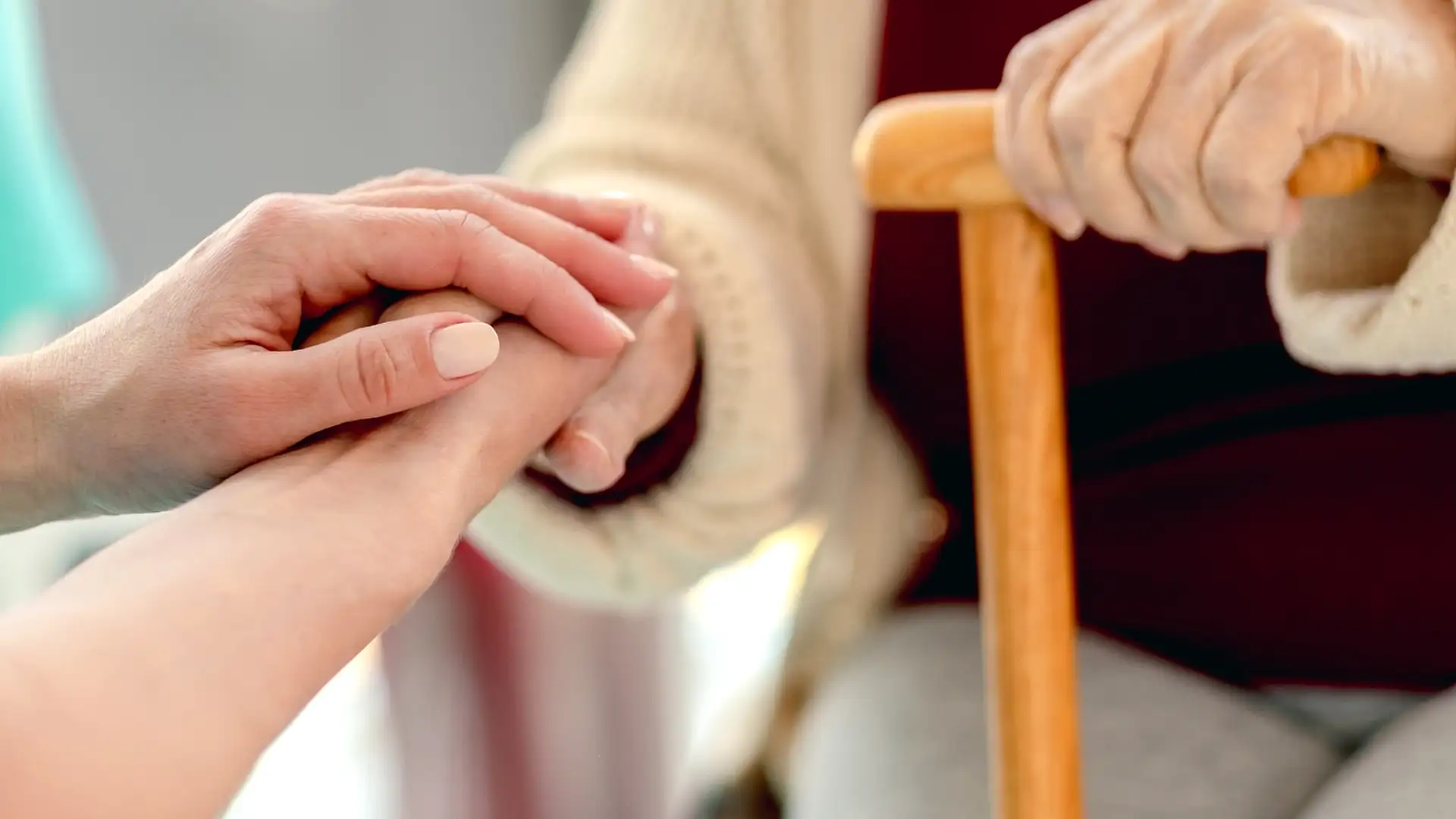
Hands of young adult and senior women over green b
Contact Us

Contact us to arrange Colostomy Care at home

If you're looking for support with daily living for some one with a colostomy, we're here to help. Our friendly team is ready to offer guidance, answer your questions, and arrange colostomy care tailored to your or your loved ones' needs in their own home. Reach out today for personalised advice and support.

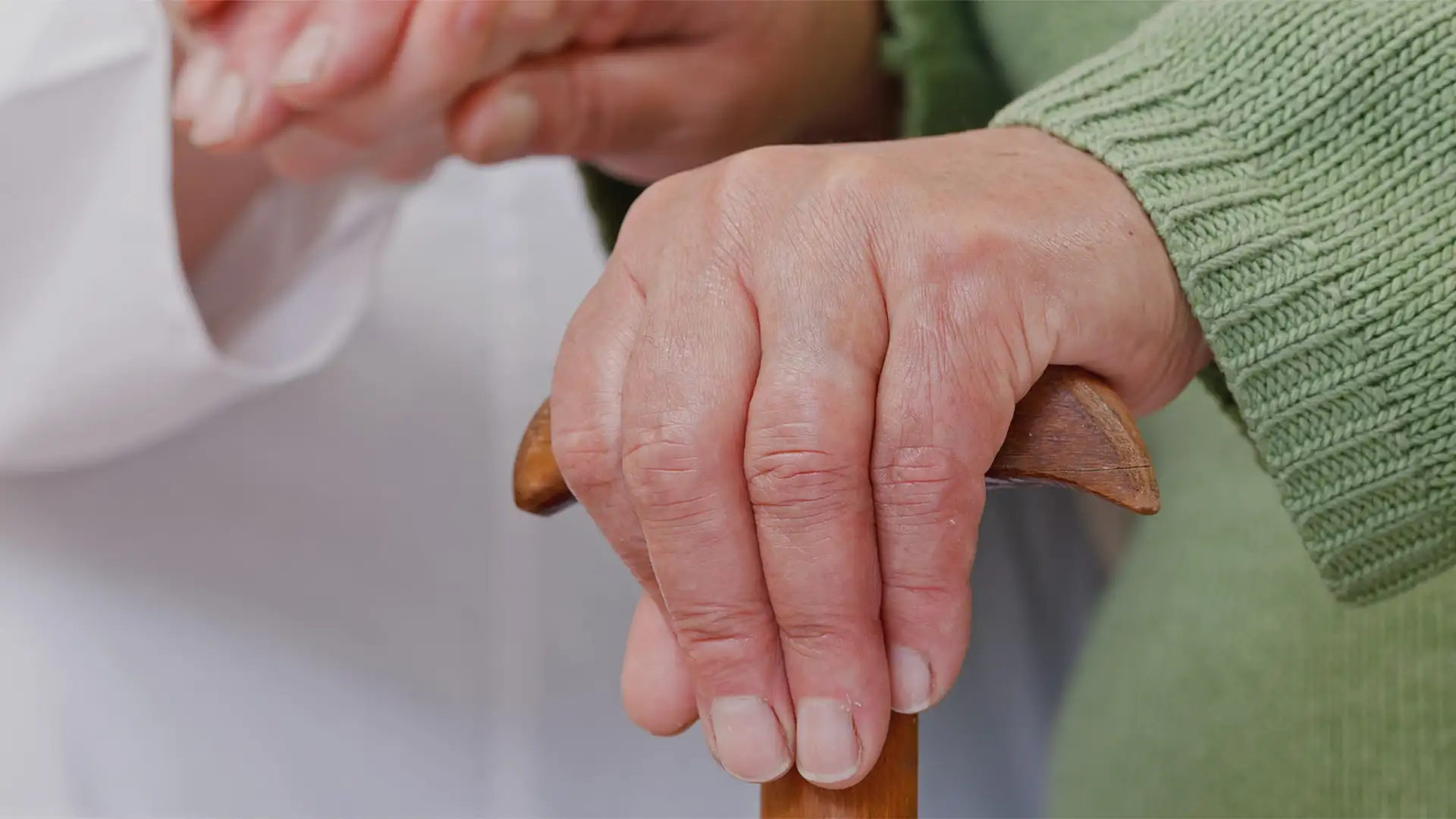
Elderly hands on a walking sitck

We're becoming a fully regulated service

While we are not currently regulated, meaning there are some services we cannot currently provide, we are in the process of registering to become a fully regulated service.

CQC

Colostomy Care FAQ's

You’re bound to have questions when exploring your home care options, so we’ve answered some of the most common ones below.

Colostomy care can be more complex when someone has dementia or memory difficulties. They may forget they have a stoma, pull at the bag, or become distressed during changes. We combine stoma knowledge with gentle, dementia-aware approaches drawn from our dementia care support. That might mean using clear step-by-step explanations, keeping routines consistent, offering soothing distraction during uncomfortable moments, and simplifying clothing. Family involvement is especially important, and together we can adapt the environment and routine so colostomy care feels as calm and predictable as possible.

How often you empty or change a colostomy bag depends on the type of bag, your diet, and your bowel pattern. Many people empty a drainable bag when it is one-third to half full, which might be several times a day. Closed bags are usually changed more often. Nurses or stoma specialists will give personalised advice. Our carers follow that guidance, helping you notice patterns over time so you can plan bag changes around meals, outings, and sleep. The aim is to avoid overfilling, which can cause leaks and discomfort, and to build a rhythm that feels predictable.

You might consider home care if colostomy tasks feel overwhelming, are taking a toll on relationships, or are being avoided because of fear or embarrassment. It can also help if there are other health issues, such as frailty, mobility problems, or fatigue from treatment. A good starting point is simply to talk to us about your situation, what is going well, and what feels hard. Together we can explore options from occasional visits to more regular support, so you can make an informed choice that feels right for your family.

Most people find a comfortable way to sleep with a colostomy bag after some trial and error. Many choose to sleep on their back or opposite side to the stoma initially, using pillows to support a position that feels safe. Ensuring the bag is emptied before bed and not overfilled during the night can reduce leaks and anxiety. Some people feel reassured by using mattress protectors or spare bedding nearby. Our overnight home support can help with night-time bag checks or changes, especially soon after surgery, so both the person and their family can rest more easily.

It’s very common for needs to change with a colostomy. You might need intensive support just after surgery, then much less once routines settle, or the opposite if new health issues arise. Our care is designed to be flexible: visit times, tasks, and focus can be reviewed regularly. If you later require more complex help, such as end-of-life support or additional condition-led care, we can adapt alongside you. The aim is to provide the right level of help at the right time, always respecting your choices and preferences.

The cost of home colostomy care depends on how often you’d like visits, their length, and whether you need broader support like personal care, domestic help, or condition-led care. It may be worth exploring local funding options or an assessment of needs. Our wider information on care costs and funding can help you understand what support might be available and how to plan care that fits your budget.

A colostomy is an opening (stoma) created surgically in the abdomen so that stool can leave the body into a colostomy bag instead of passing through the rectum. It may be temporary or permanent. People may need a colostomy because of bowel cancer, diverticular disease, Crohn’s, injury, or other bowel conditions. At home, the focus is on keeping the stoma and skin healthy, managing bags confidently, and maintaining a lifestyle that still feels familiar and enjoyable, with support from family and trained carers if needed.

Overnight help can be especially valuable soon after surgery or during periods of illness when leaks, pain, or anxiety are more likely. Through our night-time home care, a carer can be present to offer reassurance, help with bag checks or changes, support with toileting, and reduce the fear of “something going wrong” when everyone is asleep. This can give both the person with the colostomy and their family a more restful night.

Food and drink can significantly influence stoma output, including consistency, frequency, and wind. High-fibre or gas-forming foods, like certain beans or fizzy drinks, may cause more wind or ballooning in some people, while low-fibre choices can increase constipation risk. Hydration is especially important to keep stool from becoming too thick. Everyone is different, so it’s about noticing patterns and adjusting gently. Our carers can support by preparing meals and snacks that suit guidance from your stoma team, encouraging regular drinks, and helping to record any foods that cause discomfort or upset.

Yes, colostomy care is very often managed at home and can be both safe and comfortable with the right guidance. Hospital or community nurses usually show you the basics before discharge, and our home carers can then help you put those skills into everyday practice. We support with preparing a clean area, emptying and changing bags, checking the skin around the stoma, and spotting early signs of problems. With a good routine, most people find colostomy care quickly becomes just another part of their day rather than something to fear.

We proudly provide high-quality home care across the East Midlands, in an around the towns and cities detailed below.

Elderly hands on a walking sitck

Call us to find out more about Colostomy Care

East Midlands

We proudly provide high-quality home care across the East Midlands

Our Reviews

We’re proud of the trust families place in us. Here’s what some of the people we support, and their loved ones, say about our home care services.

"They have been a great help with keeping on top of my dads laundry and general house cleaning as he is bed bound and have been being changed daily."

Emily R

"Great support for my mum after she lost her confidence after a fall and hospital stay."

Sarah L

"Really helped me with keeping on top of my house work since my parkinson's has progressed."

Mark T

Senior woman hand in caregiver hands

Join The Good News Newsletter

Be the first to discover exclusive offers, and service updates. Your journey to independent living starts here - where everything truly is fine.


Contact The Good Place

We’d love to hear from you! Whether you have questions, want to learn more about our home care service, or are ready for us to start supporting you or your loved one, our good people are here to help. If you are looking to make a complaint, you can contact our Registered Manager or Nominated Individual directly.

Send Us a Message


Elderly hands on a walking sitck

Working in Partnership

We work closely within the community to provide safe, compassionate, reliable home care that supports independence, dignity, and improved wellbeing while remaining at home.

Staffordshire County Council
Derbyshire County Council
NHS