

Understanding continence care at home
Toileting and continence care are deeply personal parts of everyday life, and changes in this area can feel embarrassing or overwhelming. With sensitive, respectful support at home, we help people stay clean, comfortable, and confident. Our carers focus on dignity, privacy, and routine, making these tasks gentler for both you and your loved one.

What is continence care?
Toileting and continence care means helping someone manage bladder and bowel needs safely, comfortably, and hygienically. It can involve prompting to use the toilet, support transferring, cleaning, managing incontinence pads or catheters, and protecting skin. Our role is to remove worry and discomfort, so everyday life can continue with fewer interruptions and more confidence.

Key aspects of continence care at home
Good continence care covers more than simply getting to the toilet on time. It includes understanding medical conditions, fluid intake, diet, medications, mobility, and skin health. We work with existing care plans and professional advice, helping with regular toilet breaks, clothing choices, bedding protection, and discreet laundry, all while protecting dignity and independence.

Can continence care be managed at home?
Many people assume continence problems mean residential care, but with the right support, most needs can be managed safely at home. We can help with regular prompts, transfers, hygiene, equipment, and night-time checks. Working alongside healthcare professionals, we adapt routines as needs change, helping your loved one stay where they feel most comfortable.

Equipment that supports continence care at home
Simple equipment can transform toileting and continence care. Raised toilet seats, grab rails, commodes, urinals, bed pans, waterproof mattress covers, and absorbent pads all reduce stress and effort. We can help you use and position this equipment safely, keep it clean, and build it naturally into your loved one’s daily routine and bedroom or bathroom setup.

How continence care can be supported by a loved one
Supporting continence as a family member starts with patience and kindness. Try to keep language neutral, avoid expressing frustration, and never rush. Respect privacy by asking how involved your loved one wants you to be. We can show you gentle techniques and routines that make assistance feel less clinical and more like everyday help.

Practical tips for supporting continence care as a family carer
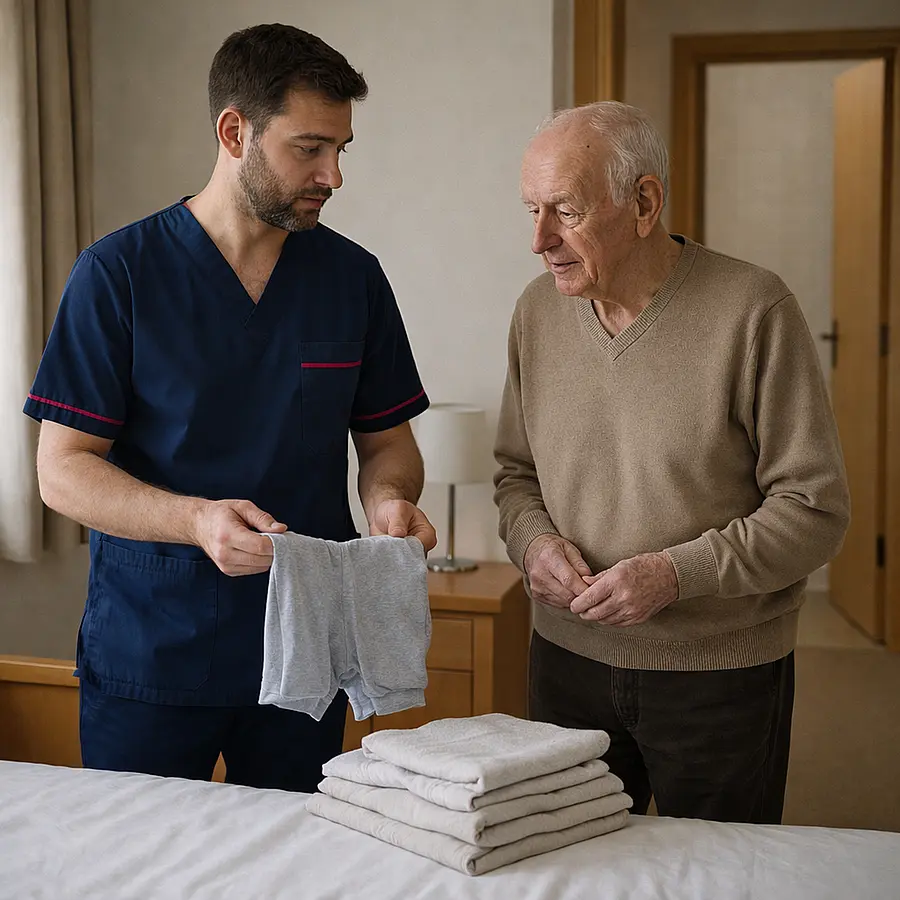
Establish regular toilet visits, especially on waking, after meals, and before bed. Encourage comfortable, easy-to-remove clothing. Keep pathways clear and bathrooms well lit. Have spare bedding and clothes ready. Try to notice patterns in accidents without blaming. Our carers can work alongside you, offering hands-on guidance and sharing what has worked for others.
Looking after your own wellbeing while providing toileting support
Supporting toileting can be emotionally draining. You might feel awkward or overwhelmed, especially with a parent or partner. Taking breaks, sharing tasks, and having professional support can ease the pressure. We can step in for regular visits or respite, so you can rest, recharge, and stay a loving relative rather than feeling like the nurse.

Toileting and continence care that supports hobbies and interests
Worries about accidents can cause people to stop hobbies, outings, or seeing friends. With the right continence plan, these activities can often continue. We build toileting routines around your loved one’s favourite hobbies, using pads, spare clothing, and bathroom checks so they can attend groups, garden, or enjoy day trips with more confidence.

Staying social with continence-friendly routines
Planning ahead makes social time less stressful. We help plan toilet stops before and during outings, choose seats near facilities, and pack discreet supplies. At home, we time drinks and medication thoughtfully. With calm reassurance and a backup plan, your loved one can still enjoy visitors, clubs, and family events without constant anxiety about accidents.

Continence care that protects dignity and independence
Protecting dignity is central to everything we do. We encourage people to do as much as they safely can, stepping in only where needed. Using towels, robes, and clear communication keeps exposure to a minimum. We knock, explain each step, and listen to preferences, so toileting never feels demeaning, even when support is required regularly.

How you can care for a loved one needing toileting help
Caring for a loved one with continence issues involves emotional as well as practical support. Listen without judgement, acknowledge their feelings, and reassure them that many people experience similar problems. Together, we can develop consistent routines, adapt the home, and create a realistic plan that makes accidents less frequent and more manageable when they do happen.

Toileting and continence care routines that work
Routine is one of the most powerful tools in continence care. We help set regular toilet times, review fluid intake, and align visits with your loved one’s natural patterns. Over time, this can reduce urgency and accidents. We also regularly review what’s working, adjusting the plan as health, mobility, or medications change.

When to seek professional continence support
If accidents become frequent, your loved one is in pain, or skin becomes sore, it’s time to seek professional input. We can support you to speak with healthcare professionals, follow treatment plans, and spot early signs of problems. Our home care visits provide both practical help and reassurance, reducing pressure on you and your family.