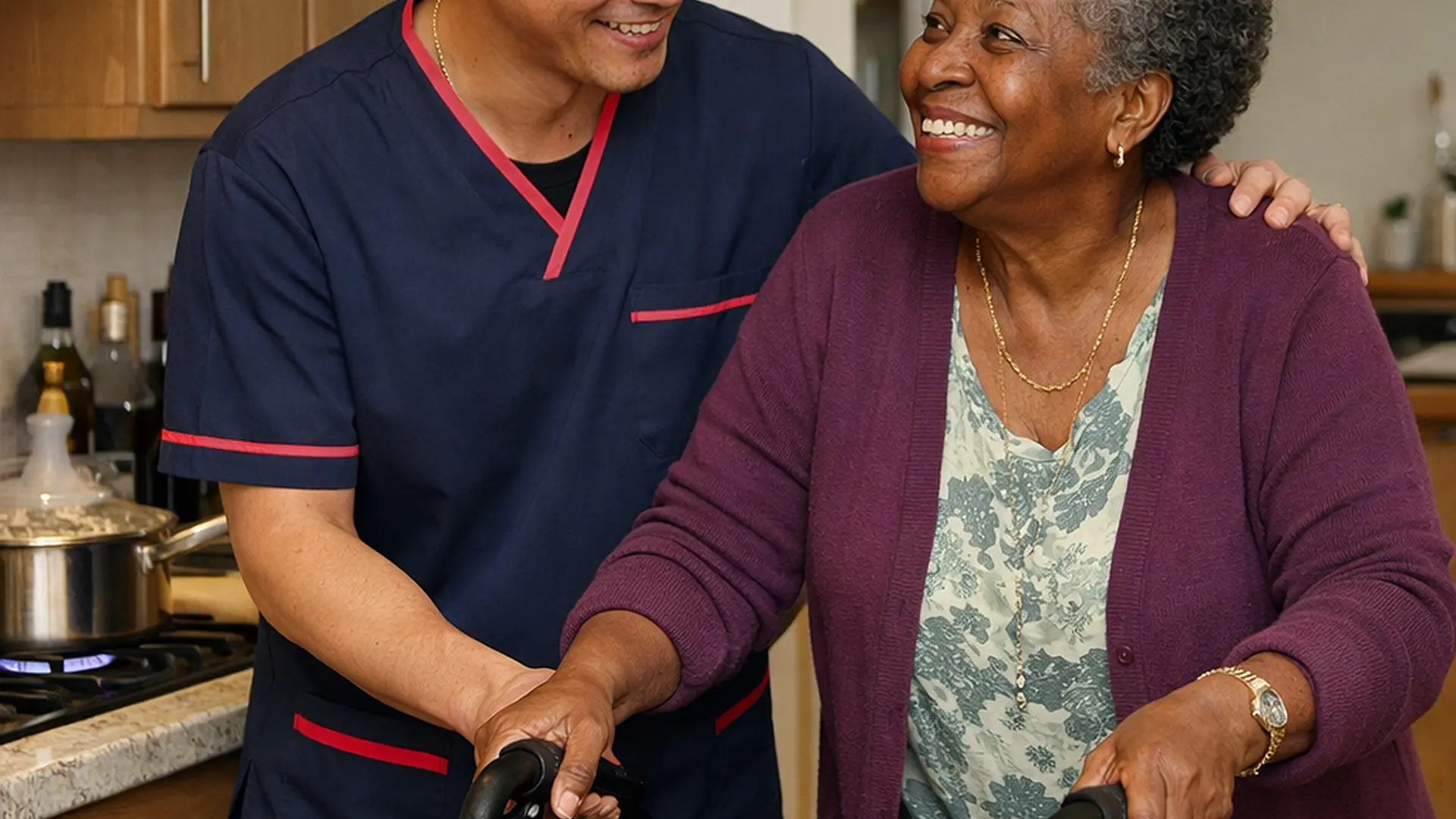
Realistic image of an Asian male caregiver in a 00072b tunic with e51974 accents supporting an older black woman as she uses a rollator in her kitchen a pot simmering on the hob both smiling demonstrating integrated mobility and daily living support.

Mobility Care

Mobility care at home helps you or your loved one stay safe, independent and confident with everyday movement, from standing and walking to bathing and cooking. Our flexible home care services are tailored to changing mobility needs, offering practical help and reassurance. Contact us today to explore supportive, person-centred mobility care in your own home.

Understanding mobility care at home

Mobility care is all about staying as independent, safe, and confident as possible when walking, standing, or moving around becomes harder. We support people at home with everyday tasks, gentle movement, and reassurance, so life still feels familiar and fulfilling. Our home care team can adapt support to changing needs, giving you and your family peace of mind.

Warm realistic scene of a middle aged Black female caregiver in a 00072b tunic with e51974 trim supporting an older White male client as he walks carefully through his living room using a walking frame both smiling with soft daylight and homely furnishings conveying reassurance and independence.

What mobility care means day to day

Mobility difficulties can be linked to many conditions, from arthritis and frailty to stroke or Parkinson’s. Our support is shaped around you: confident transfers, safe walking indoors, and help with washing, dressing and general personal hygiene. We build trust and consistency, so every movement feels steadier, calmer, and less overwhelming for you and your loved ones.
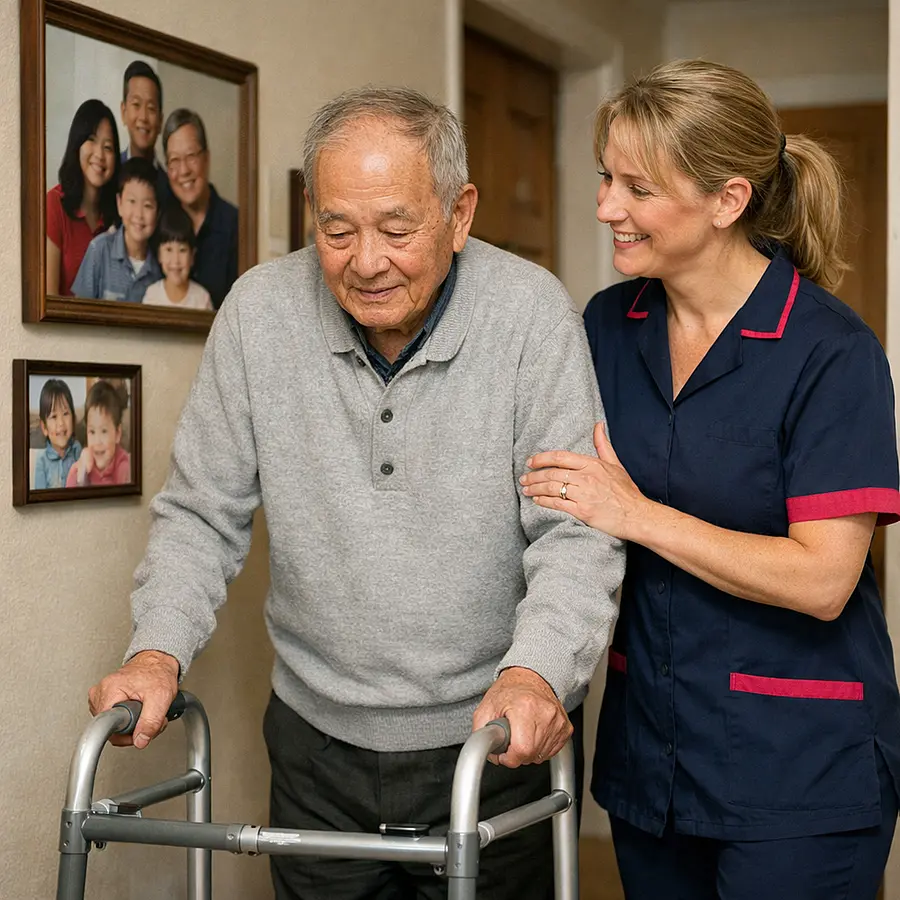
Realistic image of an elderly Asian man using a walking frame in his hallway while a white female caregiver in a 00072b tunic with e51974 details walks beside him gently guiding and encouraging him family portraits on the wall for a homely feel.

What is mobility care in home settings?

At home, mobility care focuses on safe movement in familiar spaces: getting out of bed, using the bathroom, preparing food, or moving between rooms. We can work alongside physiotherapists or nurses, support existing exercise plans, and help manage related conditions like arthritis or frailty, always at your pace and comfort level.

Real life style image of a Black male caregiver in a 00072b tunic with e51974 details walking in a park with an older white woman using a light walking stick small discreet bag with stoma supplies over her shoulder both laughing together on a bright day.

Who might benefit from specialist mobility care?

People may need extra mobility support after a fall, surgery, illness, or as part of a longer-term condition such as Parkinson’s, stroke, or multiple sclerosis. We can provide regular visits or more intensive support, helping manage fatigue, pain, and confidence, while always aiming to maintain or gently improve what someone can safely do for themselves.

Detailed realistic hallway view with grab rails where an older Asian man uses a walking stick accompanied closely by an Asian female caregiver in a 00072b tunic with e51974 detailing giving steady arm support as they walk slowly both appearing focused yet positive.

Can mobility difficulties be supported at home?

Yes. Many people with reduced mobility prefer to stay in their own homes, surrounded by familiar routines and possessions. We help make this possible with tailored support, from safe transfers and positioning to light household tasks and laundry. We can also liaise with healthcare professionals, making sure home life and clinical advice work smoothly together.
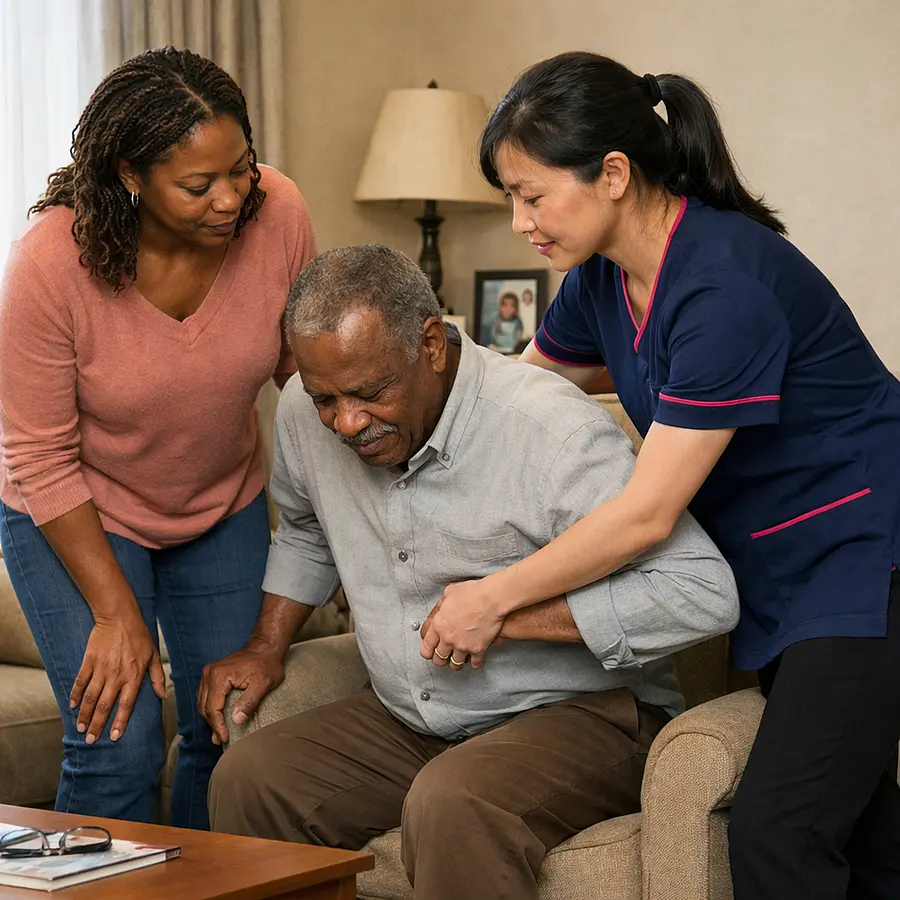
Realistic scene of an Asian female caregiver in a 00072b tunic with e51974 piping showing a middle aged black woman how to safely assist her older father to stand from a chair demonstrating proper technique in a modest living room.

Home-based mobility care for different lifestyles

Home care can be as flexible as you need it to be. Some people choose a short daily visit to get up, washed and settled with breakfast. Others benefit from longer visits or night-time supervision and support. Whatever your routine, we’ll build a plan that respects your habits, preferences, and privacy while keeping you safe.
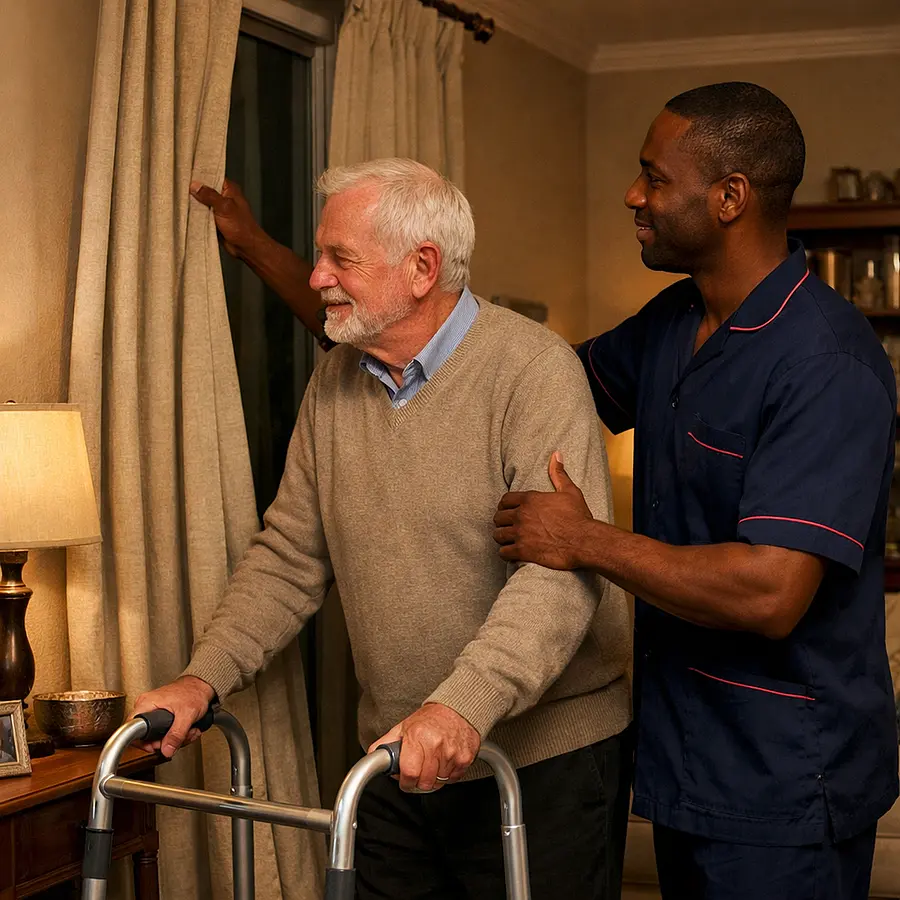
Evening living room image realistic with an older White man using a walking frame being assisted by a Black male caregiver in a 00072b tunic with e51974 piping closing curtains and checking the room is safe both calm and content under warm lamplight.

Mobility challenges and common symptoms

Mobility issues can show up as unsteadiness, slower walking, difficulty getting out of chairs, struggling with stairs, or feeling anxious about falling. Pain, stiffness, muscle weakness, or dizziness are also common. Some people notice changes after illness or surgery; others have gradual decline. We can help you recognise early signs and arrange support before small wobbles turn into avoidable accidents or hospital stays.

Realistic close up of an elderly Asian woman hesitating at the bottom of a staircase holding the banister while a young White female caregiver in a 00072b tunic with e51974 accents stands beside her offering a reassuring hand and smile.

Linked health conditions that affect mobility

Reduced mobility often connects with other health issues such as age-related frailty, hip or knee replacement recovery, breathlessness, or diabetes. Our carers take a whole-person approach, noticing how different conditions interact and adjusting support to reduce risk of falls, pressure sores, and hospital admissions while protecting dignity and independence.

Realistic dining area image of a Black female caregiver in a 00072b tunic with e51974 trim reviewing medication and a notebook with an older White woman using a walking stick both seated at a table discussing health conditions in a calm bright home.

How we can support mobility care at home

Our carers can assist with safe movement, including getting in and out of bed, using the toilet, and moving between chairs. We also support gentle exercises recommended by therapists, and provide companionship and emotional encouragement. By working step by step, we help rebuild confidence, reduce fear of falling, and make everyday tasks feel achievable again.
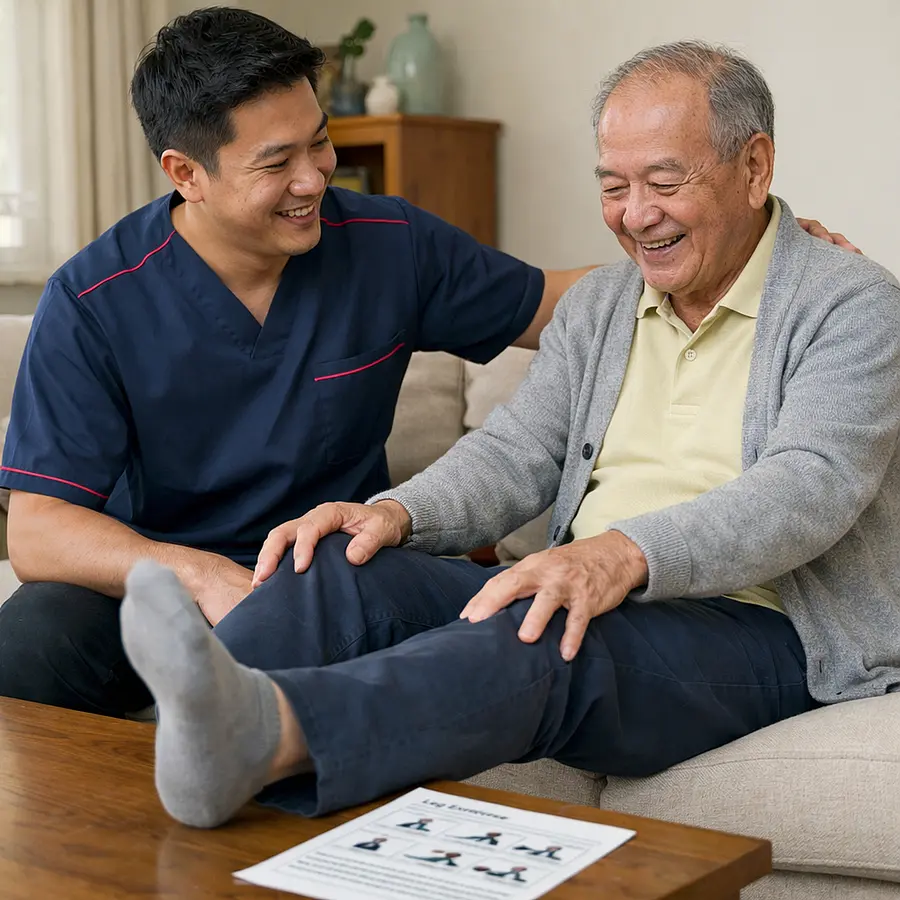
Realistic scene of an Asian male caregiver in a 00072b tunic with e51974 detail gently guiding an elderly Asian man through seated leg exercises in his lounge both smiling with a clear exercise sheet on the coffee table and supportive body language.

Practical mobility help around the home

Mobility care often includes help with preparing meals and drinks safely, support with housework, bed changing and light cleaning, and assistance to attend appointments or social activities. We can also remind or support with taking medication on time, making sure every part of the day works together to conserve energy and reduce strain.

Bright kitchen image realistic showing a White male caregiver in a 00072b tunic with e51974 trim helping an elderly Black woman seated at the table chop vegetables safely with a walking frame nearby and plenty of clear space around them.

Ongoing mobility care that adapts with you

Mobility needs can change over time. We regularly review your care plan so support can increase, reduce, or shift focus as needed. That might mean introducing overnight reassurance and repositioning, more frequent daytime visits, or extra help after hospital stays. Our aim is always to match the right level of support to what matters most in your life.
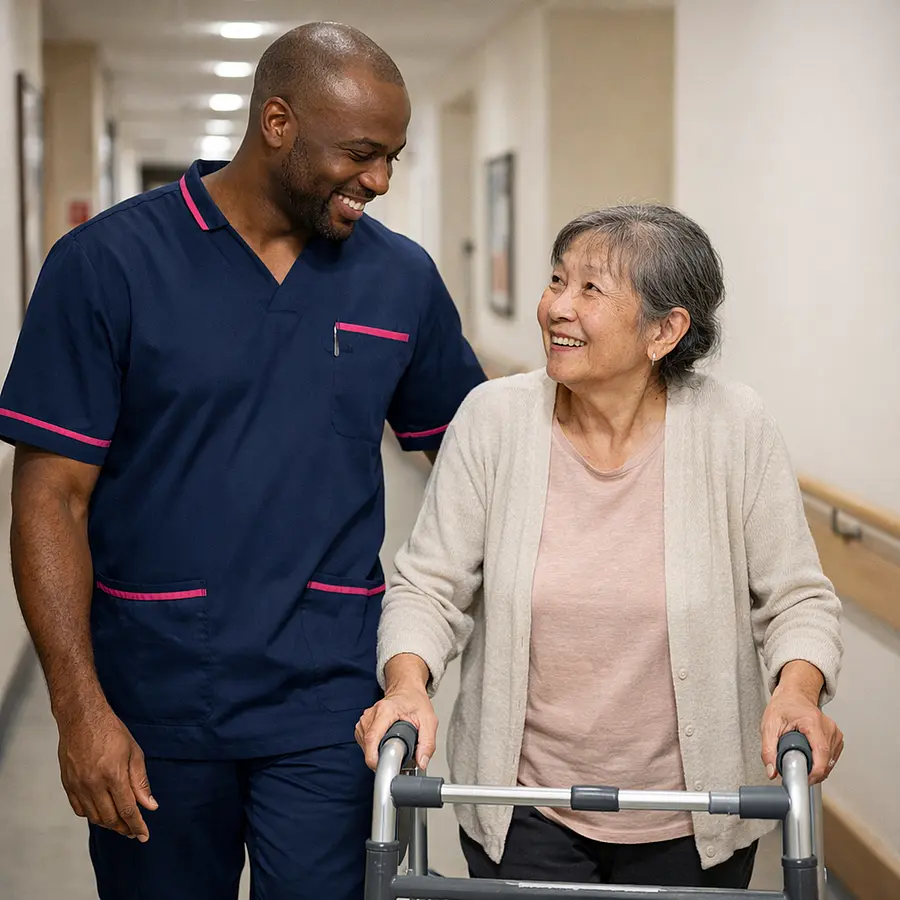
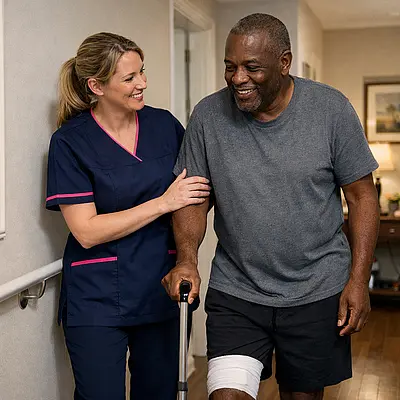
Realistic scene of a black male caregiver in a 00072b tunic with e51974 accents walking slowly down a hallway with a frail Asian woman using a walking frame both smiling and chatting reflecting reablement after lung cancer treatment.

Mobility care that supports hobbies and interests

Maintaining hobbies is vital for wellbeing, even when mobility changes. We can help you access the garden, attend a local club, or set up favourite crafts at the kitchen table. Our carers offer social interaction and conversation, encouraging you to keep doing what you love, whether it’s reading groups, faith activities, or simply feeding the birds from the patio door.

Realistic garden patio scene where an elderly Asian woman sits in a chair with a blanket potting small plants on a table supported by an Asian female caregiver in a 00072b tunic with e51974 trim both laughing together in gentle sunshine.

Reablement-focused mobility care after illness or injury

After a fall, fracture, or surgery, confidence can drop quickly. Our reablement approach focuses on small, realistic goals such as walking to the bathroom, standing to make a drink, or practising steps with handrails. We work alongside guidance like returning home safely after a hip fracture, always balancing safety with gentle independence-building.
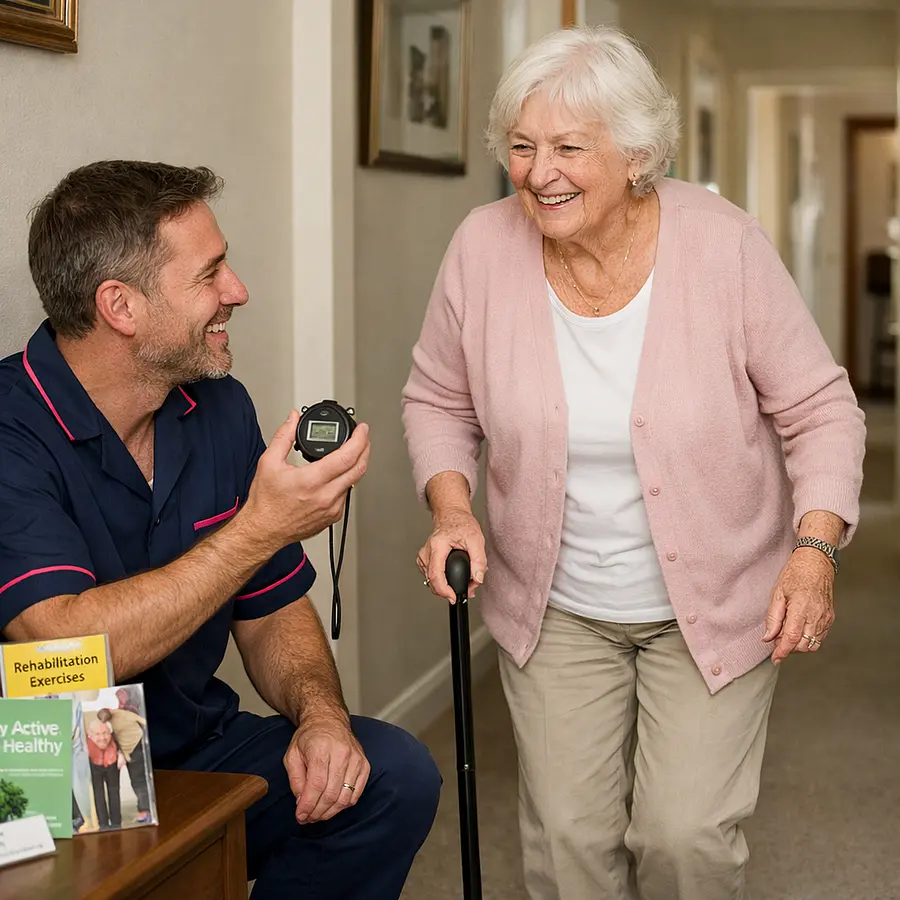
Realistic scene of a white male caregiver in 00072b tunic with e51974 accents timing an elderly white woman with a stopwatch as she walks a short distance in her hallway using a stick both smiling at her progress rehabilitation leaflets visible on a side table.

Meaningful days with limited mobility

Life doesn’t have to shrink when walking gets harder. With planning and support, many people still enjoy outings, family visits, or local groups. Our carers can help you follow ideas like planning meaningful days out with mobility challenges, ensuring transport, access, medication, and rest breaks are all considered so the day feels enjoyable, not exhausting.

Realistic scene of an elderly White couple being accompanied by a Black female caregiver in a 00072b tunic with e51974 accent as they sit on a park bench one using a wheelchair everyone chatting happily with greenery and an accessible path in view.

How loved ones can support mobility safely

Family members play a huge role in supporting mobility. Simple actions like decluttering walkways, ensuring good lighting, and checking footwear can make a big difference. We can show you safe ways to assist with standing and transfers, and share guidance such as simple home adaptations to reduce trip hazards, protect your back, and keep your loved one feeling secure.
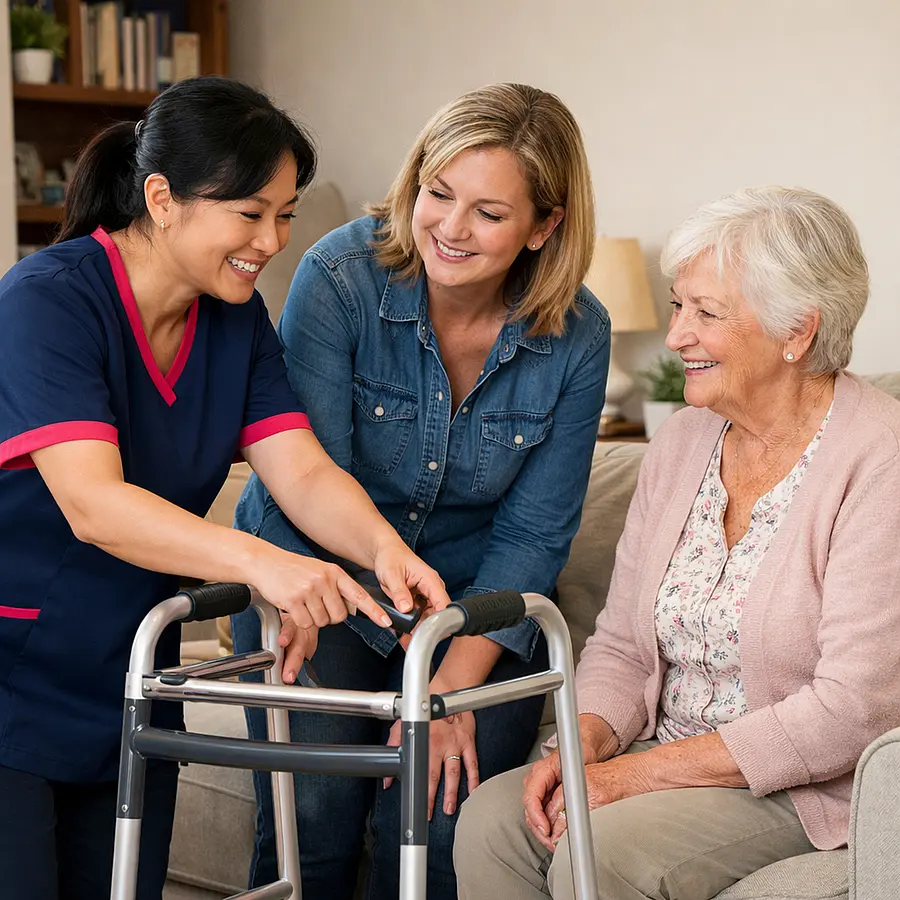
Realistic lounge scene with an Asian female caregiver in a 00072b tunic with e51974 trim showing a middle aged White daughter how to position a walking frame correctly for her elderly mother all three smiling and relaxed.

Emotional support from family and friends

Mobility changes can be frustrating and upsetting. Loved ones can help by listening, offering reassurance, and giving choices wherever possible. Planning small outings, shared TV time, or gentle indoor activities together helps combat loneliness. If you feel unsure where to start, our carers can model conversations and approaches that blend encouragement with empathy, reducing tension around accepting help and mobility aids.
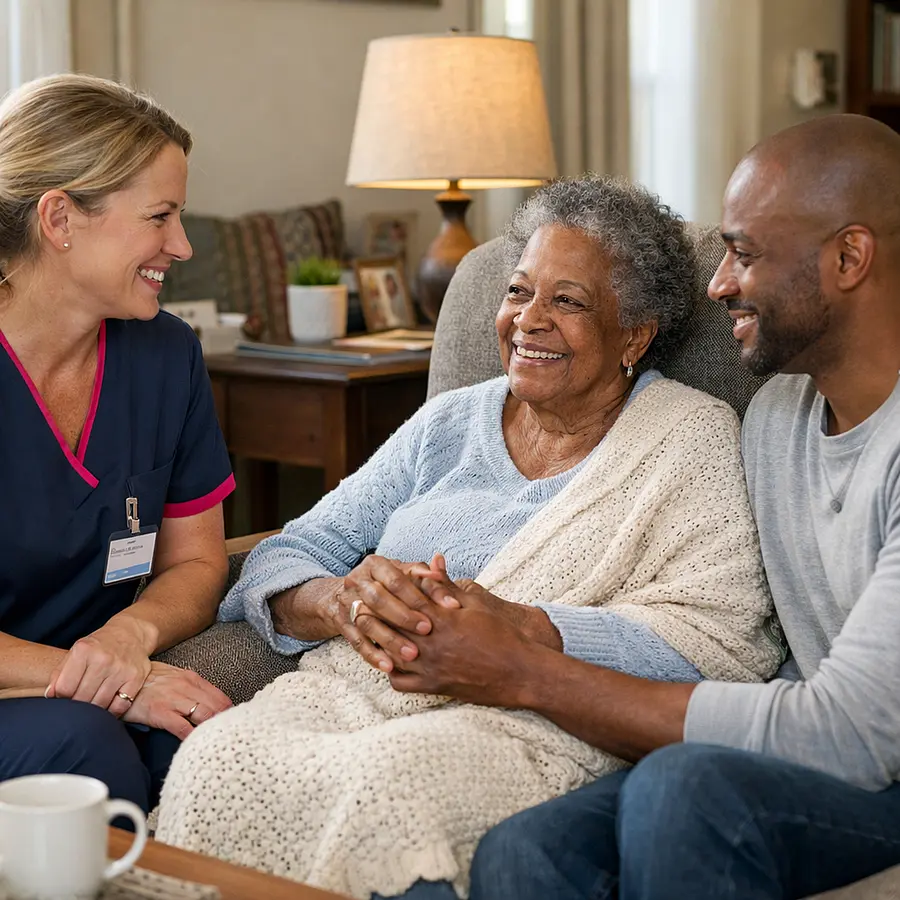
Realistic image of a family living room where an elderly Black woman sits in an armchair with a blanket holding hands with her adult son while a White female caregiver in a 00072b tunic with e51974 accent chats with them warmly everyone appearing connected and supported.

How you can care for a loved one with mobility needs

Caring for someone with mobility challenges involves balancing support and independence. You might help with bathing, dressing, and toileting, organise medication and pain relief, and prepare meals that are easy to manage. We can step in to share the load, offering regular visits or respite so you can rest, work, or focus on being a partner, child, or friend again.

Realistic kitchen image of a middle aged Asian man supporting his elderly Asian father to sit at the table while a Black male caregiver in a 00072b tunic with e51974 detailing serves a simple meal all three sharing a relaxed conversation.

Looking after yourself while you’re caring

It’s easy to put your own needs last when supporting someone with reduced mobility. Over time, this can lead to back strain, exhaustion, or burnout. We can provide flexible visits, including sit-in support so you can have time out. Talking openly about what’s hard and accepting help is not a failure; it’s a vital part of sustainable, loving care.

Realistic image showing a tired middle aged White woman sipping tea at a kitchen table while a kind looking Asian female caregiver in a 00072b tunic with e51974 trim talks with her supportively a calendar and care notes visible beside them.

Why choose us for mobility care at home?

We understand that every step, transfer, and movement matters. Our carers are trained in safe techniques, moving and handling, and supporting complex conditions, from later-life frailty to acquired brain injury. We take time to understand your goals, listen to your worries, and build a consistent team you and your family can really trust.

Realistic front door scene where an elderly White man with a walking stick greets a smiling Black female caregiver in a 00072b tunic with e51974 accent both shaking hands warmly as she arrives for a home visit.

Trusted home care tailored to your mobility needs

From occasional check-ins to more intensive support, we shape mobility care around your lifestyle, medical needs, and family situation. We can also signpost wider guidance like care needs assessments and funding options. If you’re unsure what help is possible, we’ll talk it through with you and create a practical plan that feels achievable and reassuring.


Realistic image of an Asian male caregiver in a 00072b tunic with e51974 trim sitting at a dining table with an elderly Black couple going through a care plan document together all three smiling and engaged in discussion.
Hands of young adult and senior women over green b
Contact Us

Contact us to arrange Mobility Care at home

If you're looking for support with daily living for some one with mobility problems, we're here to help. Our friendly team is ready to offer guidance, answer your questions, and arrange mobility care tailored to your or your loved ones' needs in their own home. Reach out today for personalised advice and support.

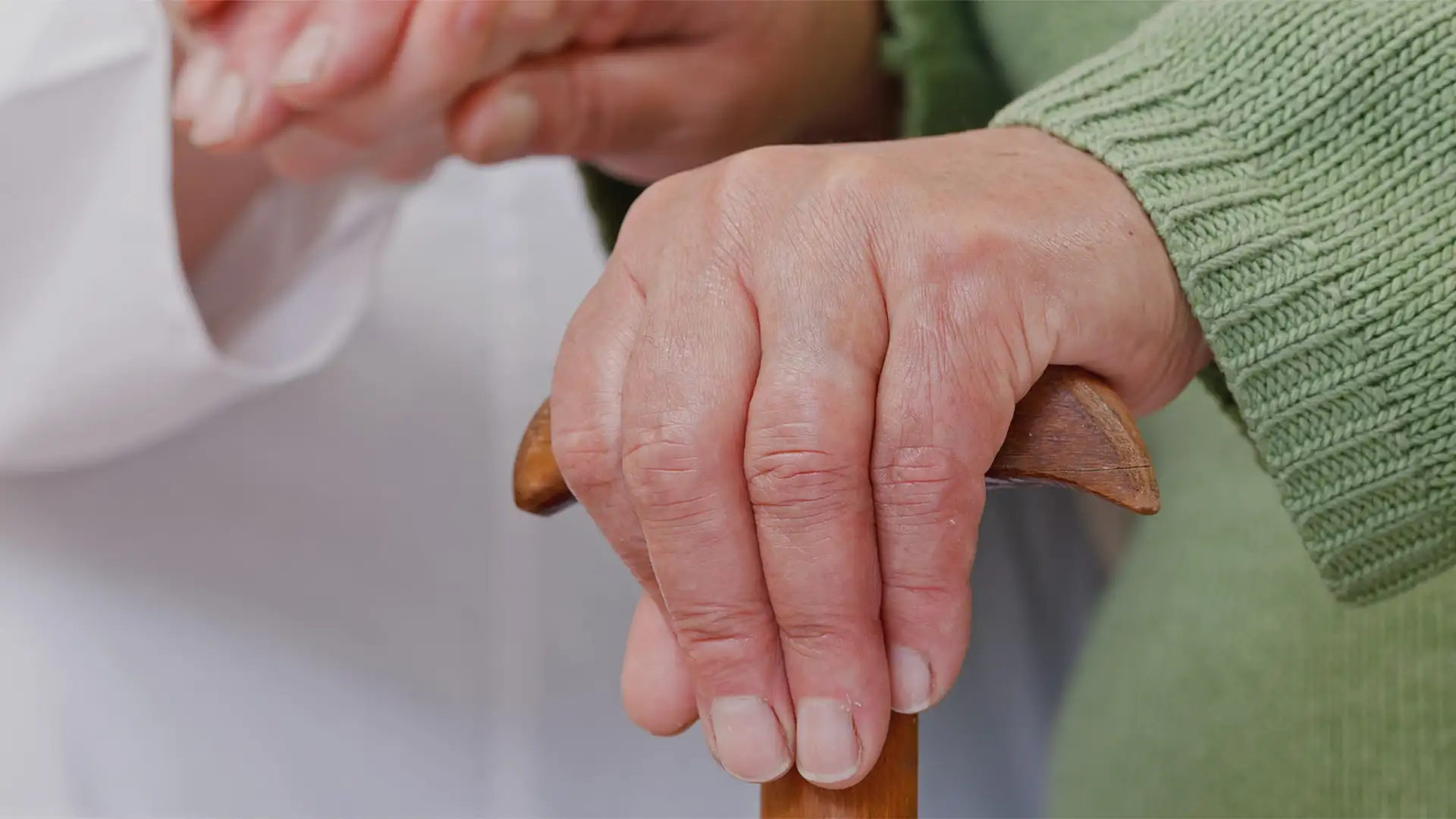
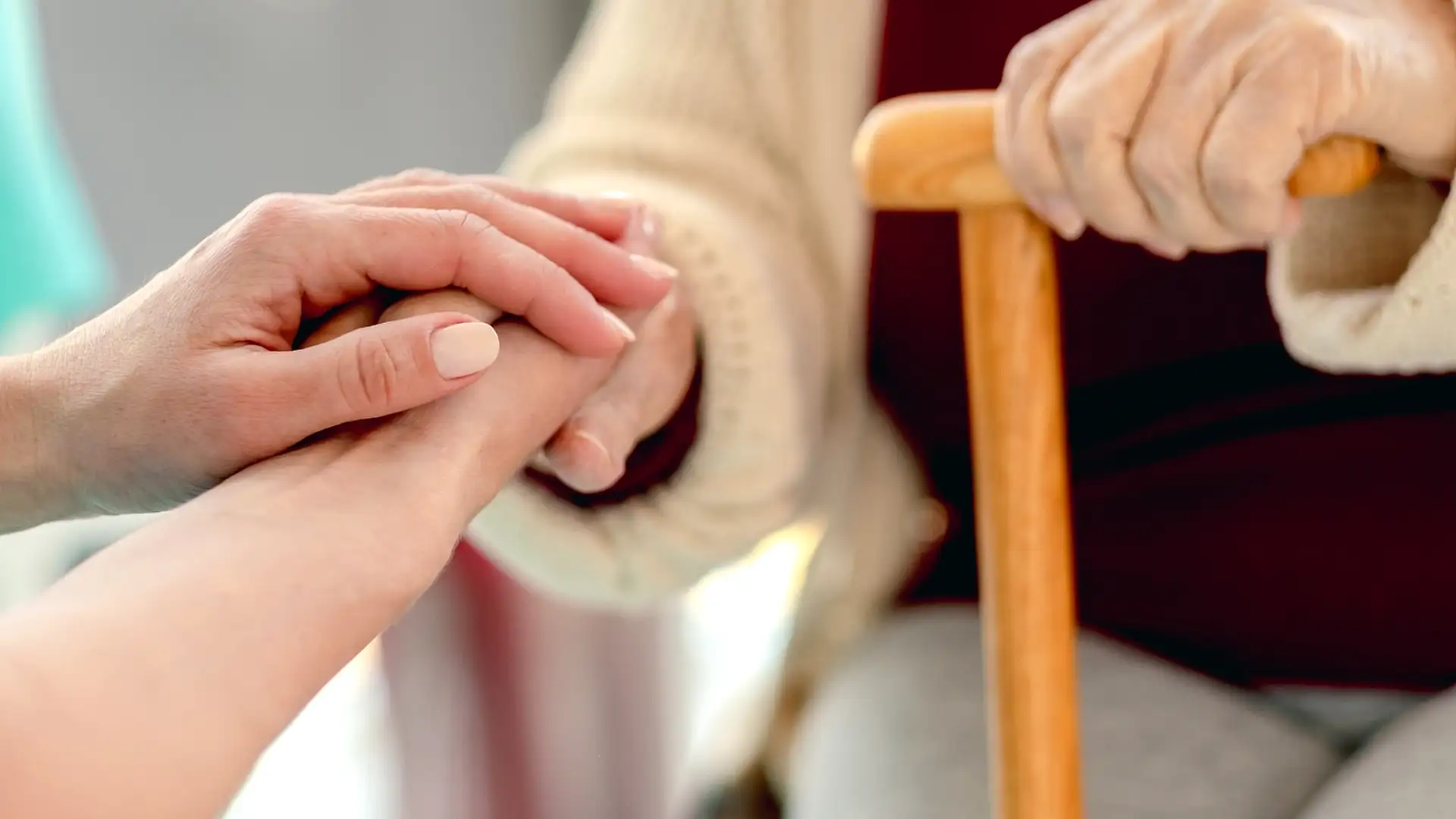
Elderly hands on a walking sitck

We're becoming a fully regulated service

While we are not currently regulated, meaning there are some services we cannot currently provide, we are in the process of registering to become a fully regulated service.

CQC

Mobility Care FAQ's

You’re bound to have questions when exploring your home care options, so we’ve answered some of the most common ones below.

Yes, many people choose short-term mobility support after operations such as hip or knee surgery, fractures, or serious illness. The first few weeks at home can feel daunting, especially if your strength and balance haven’t fully returned. We can provide focused rehabilitation-style support, helping you follow the exercises or walking plans recommended by your healthcare team. This might include assistance getting in and out of bed, practising the stairs, or walking to the bathroom safely. Our visits can be stepped down as your confidence grows, so you only receive the level of help you actually need at each stage of recovery.

Yes, we regularly support people who live with both dementia and mobility changes. Dementia can affect judgement, spatial awareness, and memory, so someone may not recognise hazards or may forget to use their walking aid. We take time to understand the person’s history, preferences, and usual routines, using calm prompts and reassurance rather than rushing. We can also draw on resources such as guidance around daily life with dementia to shape our approach. By combining dementia-sensitive communication with safe moving techniques, we aim to reduce distress, support familiar routines, and keep the person as independent and comfortable as possible.

The right level of support is different for everyone. Some people need just one or two visits a week to build confidence or practise certain movements, while others benefit from multiple daily visits for help with getting up, using the bathroom, or going to bed. After talking with you and, if you wish, your family, we’ll suggest a pattern of visits that fits your needs, lifestyle, and budget. Your plan isn’t fixed; it can be increased or reduced as your mobility changes over time. Regular reviews help us check that the support still feels right for you and that you remain as independent as possible.

Mobility care at home is personalised support that helps you move safely and confidently in your own environment. It can include assistance with getting in and out of bed, moving between rooms, using the toilet or shower, and getting in and out of chairs. Good mobility care doesn’t just focus on physical movement; it also looks at your routines, hobbies, and emotional wellbeing. We’ll consider any health conditions you live with, such as arthritis, Parkinson’s, or frailty, as well as your goals – for example, walking to the garden or safely climbing the stairs. Our aim is to protect independence while preventing avoidable falls and injuries.

Yes, we can combine mobility support with help around personal hygiene and dressing. Many people find it hardest to move safely in the bathroom or when getting dressed, especially if they feel stiff or tired. We can support you with getting in and out of the shower, stepping into the bath if appropriate, using handrails, and transferring on and off the toilet. We always work in a way that protects dignity, privacy, and choice, encouraging you to do what you can while stepping in where you need more help. By focusing on safe movement during these tasks, we can reduce falls risk and make daily routines feel more manageable.

Absolutely. When mobility is limited, it’s easy for days to become repetitive or lonely. Our carers can offer regular companionship visits alongside practical mobility help. That might involve chatting over a cup of tea, playing games, reading together, or supporting phone and video calls with friends and family. Where it feels safe, we can also accompany you on short walks or outings to keep you connected with your community. Emotional wellbeing is just as important as physical health, and many people find these friendly visits make each day feel brighter and more purposeful.

Yes, many people we support live with more than one health condition. We can integrate mobility help with condition-specific care, such as arthritis support, post-stroke care, Parkinson’s support, or diabetes care. This means we’ll be mindful of pain levels, fatigue, blood sugar fluctuations, or changes in thinking and memory that might affect how you move. By looking at your health as a whole, rather than addressing each condition separately, we can create a safer, more coherent plan that supports your day-to-day life at home.

Some signs that it may be time to explore support include recent falls or near-misses, new bruises, growing fear of moving around the house, or avoiding usual activities like bathing, cooking, or going upstairs. Family members might notice furniture walking, holding onto walls, or increased breathlessness after short distances. You don’t need to wait for a serious fall before seeking help. Early support can protect confidence and reduce risk. An initial conversation doesn’t commit you to anything; it simply gives you the chance to explore options and decide what feels right for you and your family.

Yes, carefully planned mobility support can significantly reduce the risk of falls. We start by understanding your current mobility, past falls or near-misses, and any medical conditions that may affect balance or strength. Then we look at your home layout, lighting, and flooring to spot trip hazards. During visits, we can support you with safe transfers, show you how to use walking aids correctly, and encourage gentle movement to maintain muscle strength. We’ll also work with you and your loved ones to build safer routines, such as not rushing to answer the door or phone. While no plan can remove all risk, structured support can make everyday movement much safer and calmer.

Our home care is flexible, so we can focus support around the times when mobility is most challenging. Many people find mornings and evenings hardest – for example, getting out of bed, using the bathroom, or settling safely at night. We can tailor visits to cover these specific times, with the option of waking or sleeping night care if you’re particularly anxious about night-time falls. As your situation changes, we can adjust visit times and frequency so your support always feels relevant and genuinely helpful, rather than one-size-fits-all.

We proudly provide high-quality home care across the East Midlands, in an around the towns and cities detailed below.

Elderly hands on a walking sitck

Call us to find out more about Mobility Care

East Midlands

We proudly provide high-quality home care across the East Midlands

Our Reviews

We’re proud of the trust families place in us. Here’s what some of the people we support, and their loved ones, say about our home care services.

"Really helped me with keeping on top of my house work since my parkinson's has progressed."

Mark T

"They have been a great help with keeping on top of my dads laundry and general house cleaning as he is bed bound and have been being changed daily."

Emily R

"Great support for my mum after she lost her confidence after a fall and hospital stay."

Sarah L

Senior woman hand in caregiver hands

Join The Good News Newsletter

Be the first to discover exclusive offers, and service updates. Your journey to independent living starts here - where everything truly is fine.


Contact The Good Place

We’d love to hear from you! Whether you have questions, want to learn more about our home care service, or are ready for us to start supporting you or your loved one, our good people are here to help. If you are looking to make a complaint, you can contact our Registered Manager or Nominated Individual directly.

Send Us a Message


Elderly hands on a walking sitck

Working in Partnership

We work closely within the community to provide safe, compassionate, reliable home care that supports independence, dignity, and improved wellbeing while remaining at home.

NHS
Staffordshire County Council
Derbyshire County Council