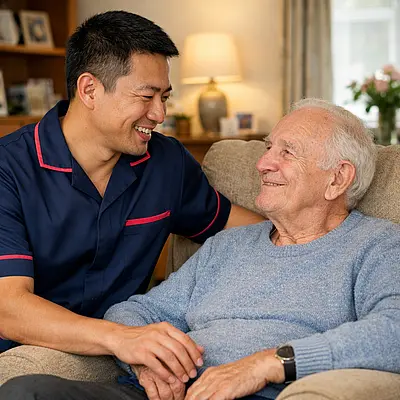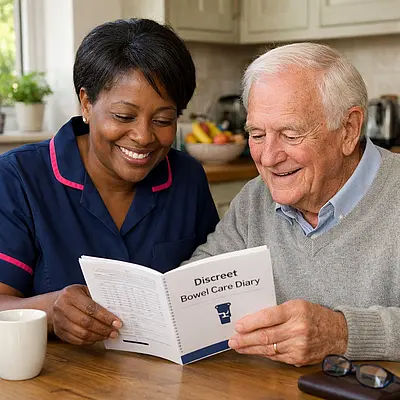
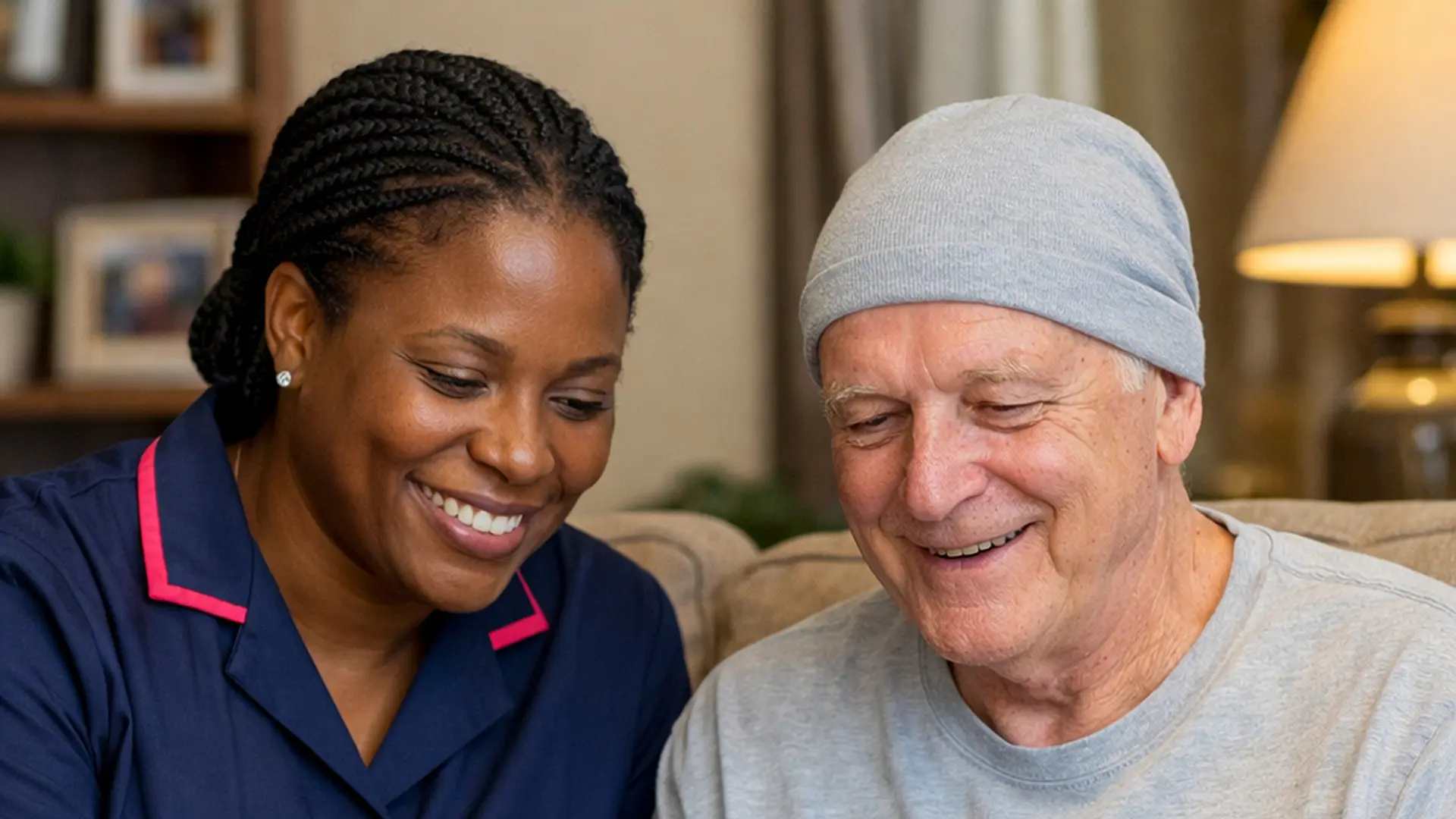
Warm, realistic scene of a Black female caregiver in a navy #00072b tunic with #e51974 accents, sitting beside a white male client in his living room, both smiling as they look at some paperwork about his cancer treatment, conveying reassurance and calm home support.

Bowel Cancer Care

Bowel cancer care at home focuses on comfort, dignity and independence while you receive specialist medical treatment. Our flexible domiciliary support can include personal care, bowel and stoma help, meal preparation, mobility support and companionship, tailored around your routine. If you or a loved one needs bowel cancer care at home, contact our good people today to discuss how we can help.

Understanding bowel cancer care at home

Bowel cancer care can feel overwhelming, whether you have just received a diagnosis or are supporting a loved one. Our home care services focus on keeping you comfortable, independent, and involved in everyday life. From personal care to practical help and emotional reassurance, we tailor support around medical advice so you can manage bowel cancer in the familiar surroundings of home.

Warm, realistic scene of a Black female caregiver in a navy #00072b tunic with #e51974 accents, sitting beside a white male client in his living room, both smiling as they look at some paperwork about his cancer treatment, conveying reassurance and calm home support.

What bowel cancer actually means

Bowel cancer (also called colorectal or colon cancer) happens when abnormal cells grow in the large bowel or rectum. It can develop slowly over many years, often from small growths called polyps. A diagnosis may follow tests like colonoscopies or scans. While treatments happen through your medical team, our role is to make daily life at home safer, easier, and less exhausting during every stage.

Realistic image of an Asian male caregiver in a 00072b tunic with e51974 piping sitting with an older Asian woman at her kitchen table both relaxed and engaged showing educational reassuring home support.

Types and stages of bowel cancer care

Bowel cancer can appear in different parts of the colon or rectum and is usually described by stages, from early localised disease to cancer that has spread. Your hospital team will explain treatment options like surgery, chemotherapy or radiotherapy. At home, we adapt care as needs change, supporting with continence, fatigue, mobility and recovery after hospital, alongside wider cancer care at home.

Caucasian female caregiver in a 00072b tunic with e51974 trim using a calendar and notepad with an older Black man in his lounge planning upcoming hospital appointments and home support both smiling gently suggesting organised person centred care.

Causes and risk factors for bowel cancer

Bowel cancer doesn’t usually have a single cause. Age, family history, certain genetic conditions, inflammatory bowel disease, diet, alcohol, smoking and low activity levels can all increase risk. Many people, however, have no obvious cause. Understanding risk helps families notice changes earlier. If you or a loved one is affected, our home care can complement medical treatment, focusing on comfort, nutrition and everyday wellbeing.

Realistic image of a Black male caregiver in a 00072b tunic with e51974 accents walking slowly in a garden with an elderly white woman pointing out flowers while they talk about lifestyle and health conveying gentle encouragement and prevention awareness.

Bowel cancer care that recognises symptoms

Common symptoms include changes in bowel habits, blood in the stool, unexplained weight loss, persistent tummy pain or feeling very tired. Some people also experience bowel or stoma difficulties after treatment. While we never diagnose, our carers can help you monitor changes, encourage you to follow medical advice, and support with practical issues like toileting, bowel care at home and personal hygiene.
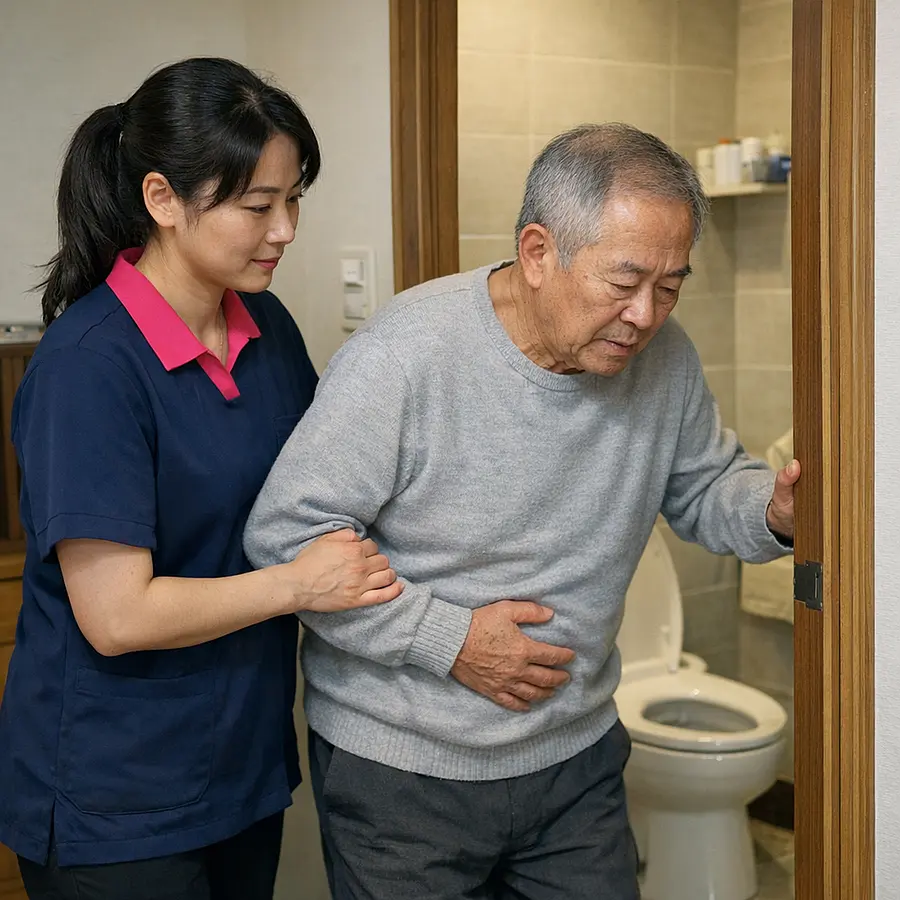
Asian female caregiver in a 00072b tunic with e51974 collar discretely supporting an older Asian man to the bathroom in his home both appearing calm and dignified emphasising sensitive help with bowel related symptoms.

Recognising advanced bowel cancer symptoms

When bowel cancer is more advanced, symptoms may include severe fatigue, pain, poor appetite, nausea, or breathlessness. Emotional changes such as anxiety and low mood are also common. Our role is to make home life more manageable: helping with medication prompts, gentle positioning, meals and personal care, and liaising with your wider healthcare team. We can also work alongside community palliative care services when appropriate.

Realistic image of a mixed group Black female caregiver in a 00072b tunic with e51974 trim chatting at a dining table with a middle aged white man and his adult daughter discussing family history and support options with warm inclusive atmosphere.

Who is at risk of bowel cancer

Bowel cancer is more common in people over 50, but it can affect younger adults too. Having close relatives with bowel cancer, certain genetic conditions, or long-term bowel diseases can increase risk. Lifestyle factors like diet and activity also play a part. Whatever your background, if you’re living with bowel cancer, our flexible home care services can be shaped around your circumstances.

Caucasian female caregiver in 00072b tunic with e51974 edging supporting a tired white man with a blanket on a sofa a hospital bag by the door both calmly discussing his upcoming chemotherapy session showing coordinated home and hospital care.

Bowel cancer care and other health conditions

Many people facing bowel cancer also live with other conditions such as diabetes, frailty or mobility issues. Coordinating everything can feel daunting for families. Our carers are experienced in complex, condition-led home care, supporting medication routines, nutrition, continence and safe movement around your home. We adapt visits as needs change, from light support to more intensive, ongoing care.
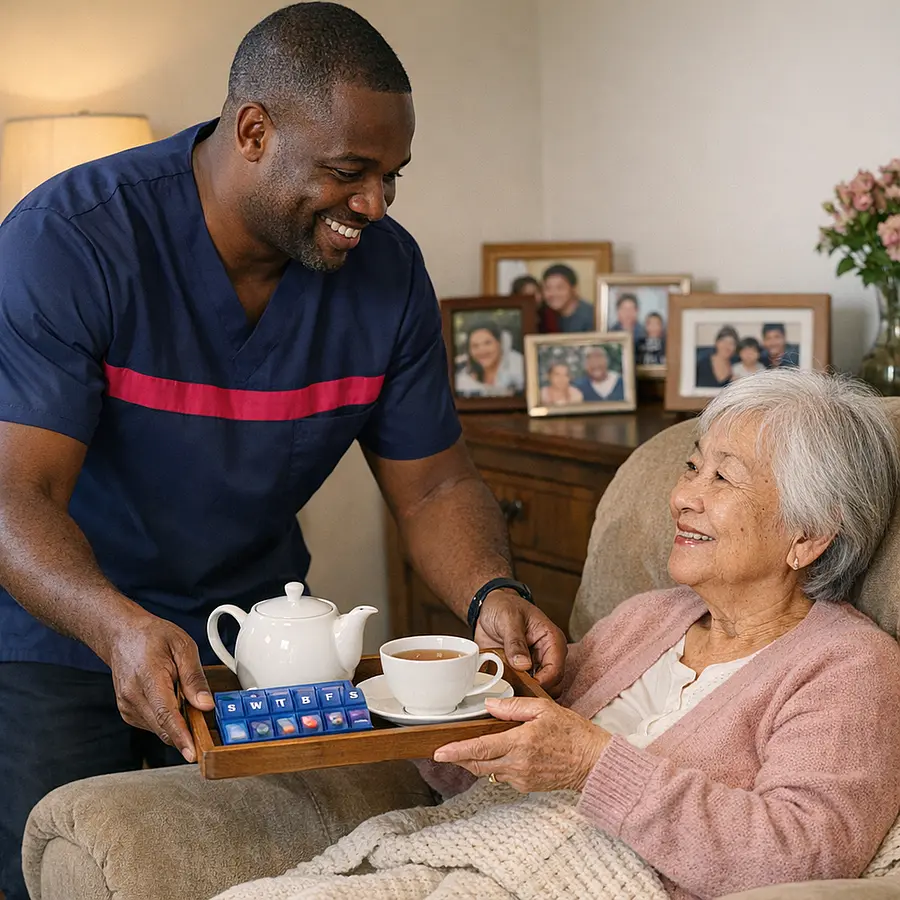
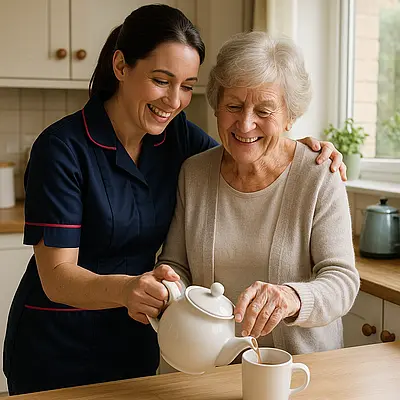
Realistic image of a Black male caregiver in a 00072b tunic with e51974 stripe bringing a tray with tea and medication organiser to an elderly Asian woman relaxing in her favourite armchair family photos around showing comfort of staying at home.

Can bowel cancer care be managed at home?

Many people prefer to stay at home throughout bowel cancer treatment and recovery. With the right professional support, bowel cancer can often be safely managed outside hospital. Our carers can assist with personal care, meal preparation, medication prompts and continence, while your clinical team oversees treatment. We work flexibly around appointments and therapies, helping you rest, recover and stay connected to normal life.

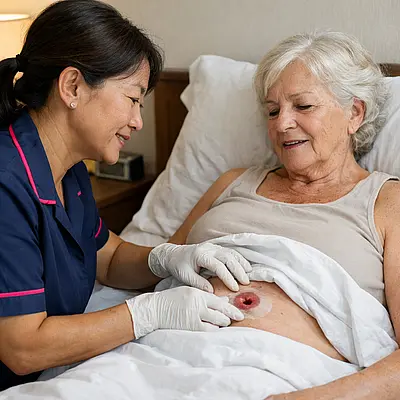
Asian female caregiver in a 00072b tunic with e51974 accents kneeling by an older white man seated in a bathroom chair passing him a towel with discretion and kindness highlighting dignified personal and stoma care.

Choosing home instead of hospital or care homes

Home can feel more peaceful and private than a hospital ward or care home, especially when coping with bowel issues. With our domiciliary care, you can choose the level of support you need, from occasional visits to round-the-clock help. We work with you and your family to reduce risks like falls, infection or dehydration, while maintaining dignity, routine and personal choice every day.
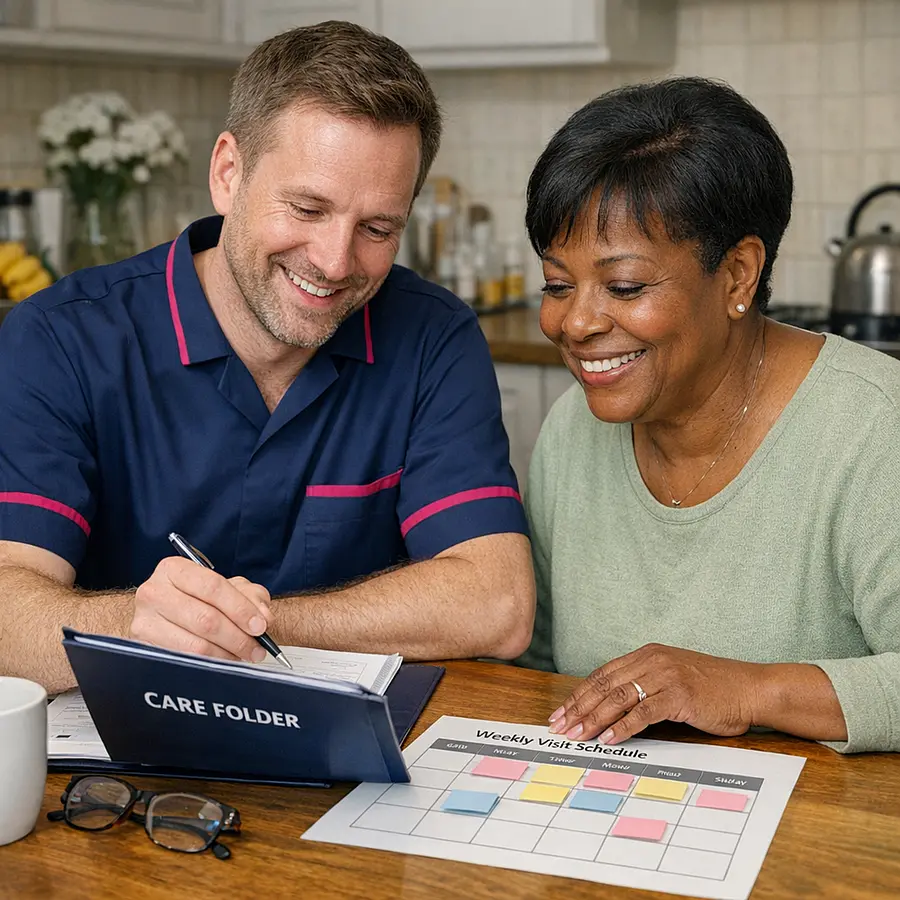
Caucasian male caregiver in a 00072b tunic with e51974 trim updating a care folder at a kitchen table with a middle aged Black woman both smiling as they adjust her weekly visit schedule symbolising flexible evolving support.

How we support bowel cancer care at home

Our support begins with listening. We’ll talk through your diagnosis, treatment plan and what everyday life looks like right now. Care might include help with washing, dressing, toileting, stoma or catheter and bowel stoma care, meal preparation, light housework and gentle mobility assistance. We can also offer companionship, reassurance and practical help for family members who are juggling work, caring and emotions.

Realistic image of a Black female caregiver in 00072b tunic with e51974 belt helping an older Asian woman choose clothes from a wardrobe in a bright bedroom chatting and smiling illustrating gentle support with personal care and confidence.

Bowel cancer care that adapts to changing needs

Bowel cancer journeys are rarely straightforward. Side effects may come and go, and energy levels can change quickly. We regularly review your care plan so it always reflects how you’re feeling now, not months ago. This might mean adding medication prompts, arranging overnight support, or building in more companionship time on tougher days, while stepping back slightly when you’re feeling stronger.

Asian male caregiver in a 00072b tunic with e51974 detailing standing in a kitchen with a white adult daughter showing her how to prepare a soft nutritious meal for her older father sitting nearby all sharing a warm moment.

Bowel cancer care and personal care routines

Maintaining personal care can feel more daunting when you’re dealing with bowel changes, leaks or a stoma. Our trained carers offer discreet, respectful help with washing, dressing, continence and personal care routines. We follow your preferences, protect privacy and encourage independence wherever possible, so you feel clean, comfortable and in control, rather than embarrassed or rushed through intimate tasks.

Caucasian female caregiver in 00072b tunic with e51974 trim sitting on a sofa between an older couple gently holding the hand of a tearful woman while her husband listens all in a cosy living room reflecting emotional support and understanding.

How loved ones can support bowel cancer care

If you’re a family member, you play a huge role. Simple things like attending appointments, helping track symptoms, preparing light meals, or reminding about medication can make a big difference. Many relatives also support with continence and emotional reassurance. We can share practical tips, step in when you need a break, and provide structured domestic help at home so your energy goes where it’s needed most.
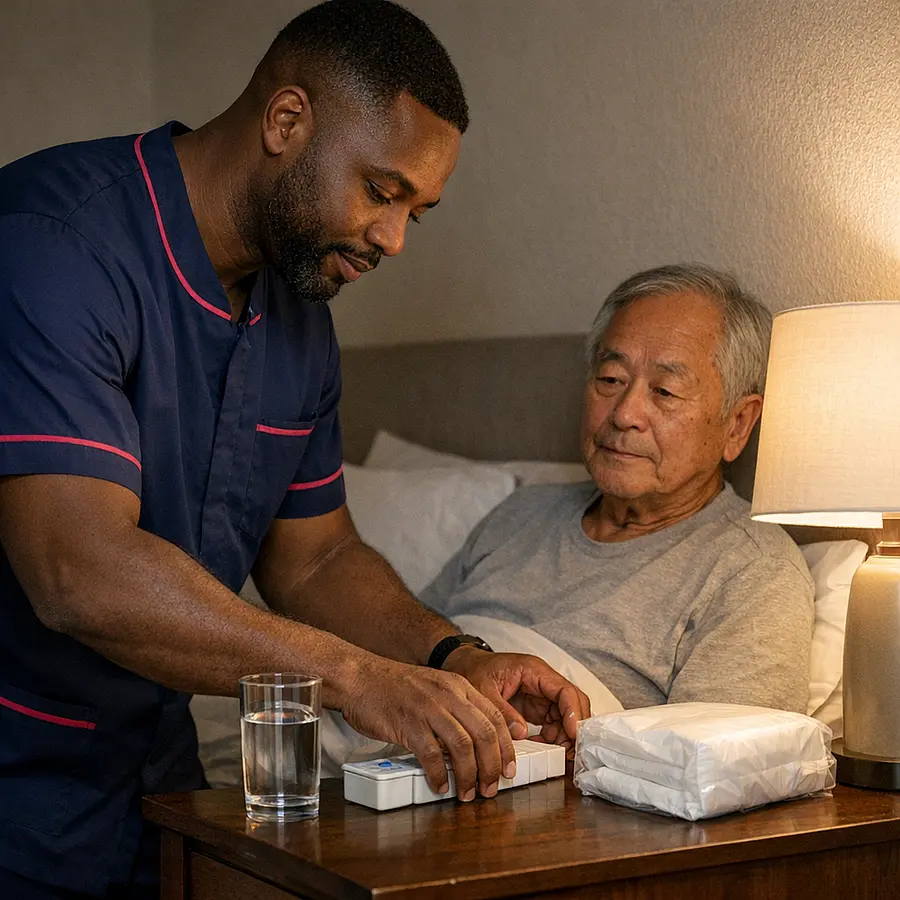
Black male caregiver in a 00072b tunic with e51974 piping quietly arranging night time essentials on a bedside table for an older Asian man including water medication box and continence pads lamp casting a gentle glow to show calm night preparation.

Emotional support for families coping with bowel cancer

Bowel cancer affects more than physical health; it can shake confidence, relationships and plans for the future. Loved ones might feel frightened, exhausted or unsure what to say. Carers can offer a listening ear, practical reassurance and gentle guidance through daily routines. We also encourage families to explore external information and support through trusted help and guidance resources, so nobody feels they must cope alone.
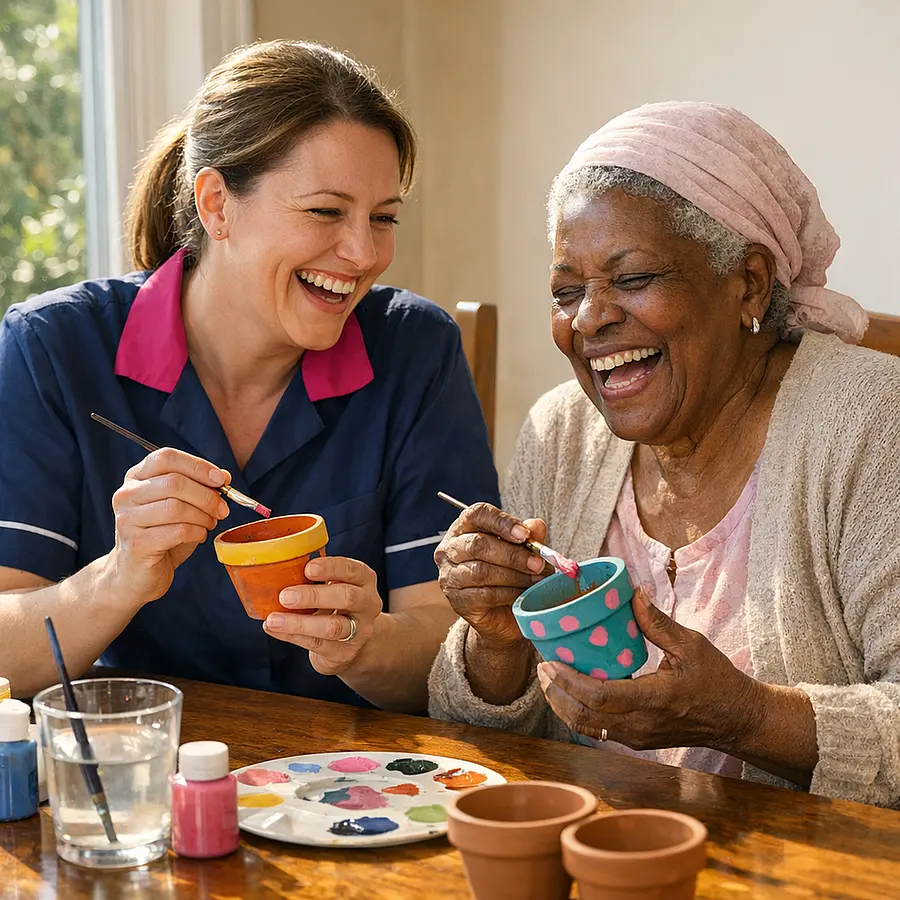
Caucasian female caregiver in a 00072b tunic with e51974 collar sitting at a dining table with an older Black woman both laughing while painting small plant pots sunlight streaming through the window emphasising joy in hobbies despite illness.

Practical tips for supporting at home

Small changes can make bowel cancer care at home easier. Keep paths clear for safe trips to the bathroom, stock soft, easy-to-digest foods, and have spare continence products and clothing nearby. A simple notebook for symptoms and questions helps at appointments. If nights are challenging, consider overnight home care support so everyone gets rest, and you’re not facing difficult moments alone.

Caucasian male caregiver in 00072b tunic with e51974 piping demonstrating safe transfer techniques to a middle aged Black woman who is caring for her older father all in a modest living room reinforcing partnership with family carers.

Bowel cancer care that supports hobbies and interests

Life with bowel cancer shouldn’t only be about appointments and symptoms. Holding onto hobbies, interests and social connections can really lift mood. Our carers can drive or accompany you to local groups, help you enjoy gentle gardening, reading, crafts or faith activities, or simply sit and chat over a favourite TV show. We combine practical cancer and companionship care so days still feel meaningful and enjoyable.

Caucasian female caregiver in a 00072b tunic with e51974 collar sitting at a dining table with an older Black woman both laughing while painting small plant pots sunlight streaming through the window emphasising joy in hobbies despite illness.

Staying active with bowel cancer care

Gentle movement can boost mood, appetite and sleep, even during treatment. This might be as simple as walking to the garden, stretching in a chair or doing light housework on good days. We work within medical advice to support safe activity, using any mobility equipment you have. Where mobility is a key concern, we can blend bowel cancer support with specialised mobility care at home.

Asian male caregiver in 00072b tunic with e51974 stripe encouraging an older white man using a walking stick to stroll slowly along a garden path both smiling showcasing gentle safe exercise during recovery.

Bowel cancer care that nurtures social life

It’s easy to withdraw when worried about needing the toilet suddenly or feeling unwell. We can help plan trips so you feel more confident – from knowing where accessible toilets are to packing a small bag with essentials. At home, we’ll support video calls, visits from friends, or trips for coffee, blending practical bowel care and social companionship so isolation doesn’t slowly take over.

Asian female caregiver in 00072b tunic with e51974 detail sitting at a kitchen table with a tired white woman gently encouraging her to drink tea and talk while the older patient rests in another room illustrating support for family carers.

How you can care for a loved one with bowel cancer

Caring for someone with bowel cancer often means balancing medical information, continence needs, emotional support and everyday tasks. Try to agree routines together: when they prefer help, what foods sit well, and how they’d like bowel care handled. Our carers can share practical strategies and provide household support, so you’re not carrying everything alone and can stay a partner or relative, not just a carer.

Bright living room where a black female caregiver in a 00072b tunic with e51974 accents helps an older man with arthritis use a tablet for a video call both smiling at the screen comfy seating framed family photos atmosphere of connection and gentle technological support.

Looking after yourself as a bowel cancer carer

When someone you love is unwell, your own needs can slip to the bottom of the list. Yet rest, food, fresh air and time to talk are essential if you’re to keep caring. Consider sharing tasks with other relatives, using respite home care, or arranging occasional companionship visits so you can step out. Looking after yourself isn’t selfish; it protects the person you’re supporting too.

Caucasian caregiver in a 00072b tunic with e51974 accents sitting with an adult daughter and her older mother on a sofa caregiver demonstrating a memory book all three engaged and smiling warm daylight entering the room representing collaborative family support.

Planning ahead for bowel cancer care needs

Care needs can change quickly, particularly around surgery or advanced illness. Talking early about what matters most – staying at home, pain control, visitors, cultural or spiritual needs – can reduce stress later. We can help you think through options such as increased support, night care, or more specialist end-of-life care at home if it’s needed, always guided by your wishes and medical advice.


A realistic lounge where a caucasian female caregiver in a 00072b tunic with e51974 trim sits beside an older woman on a sofa gently holding her hand as they talk continence leaflets on the coffee table showing emotional support and collaborative planning.
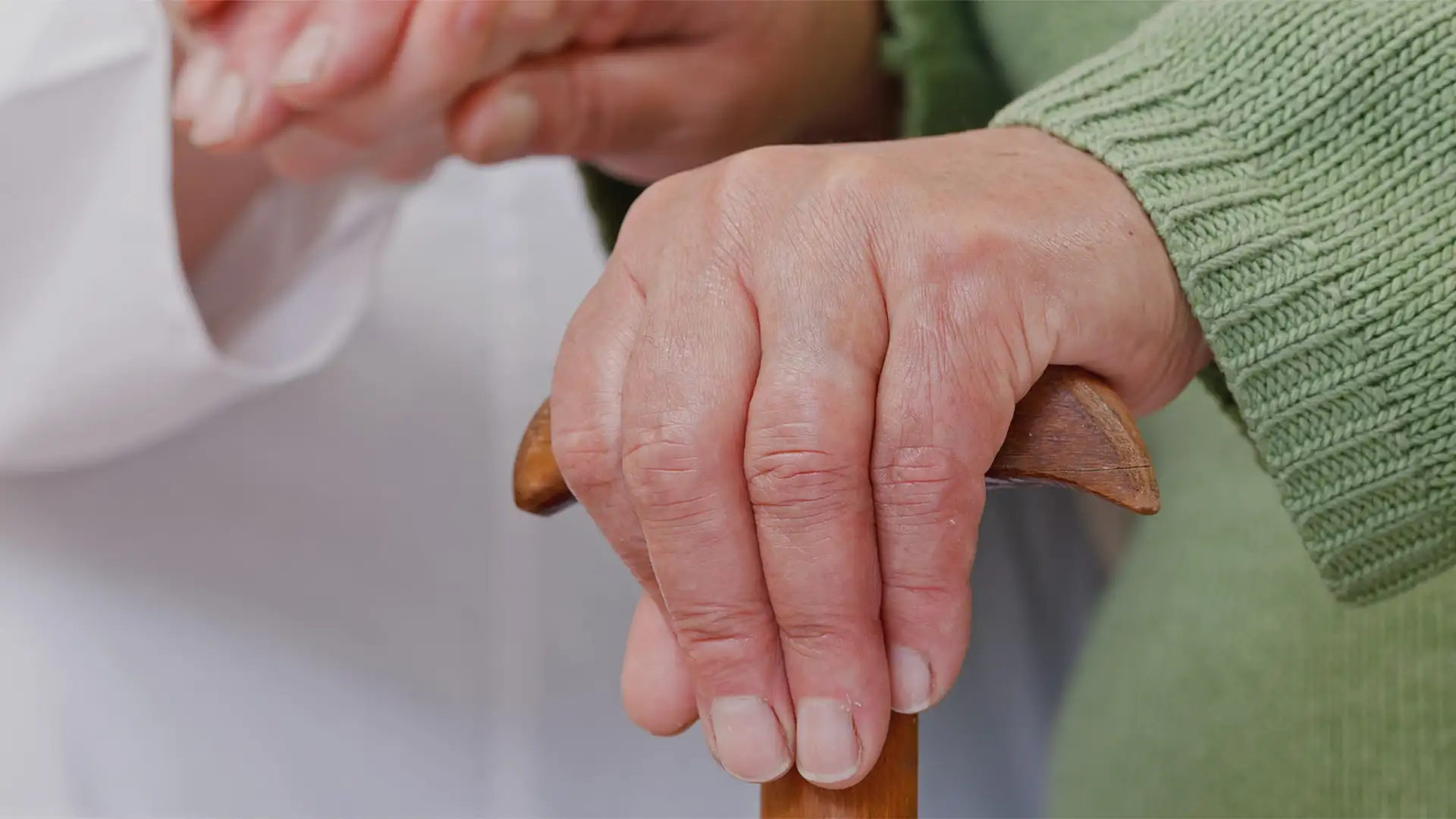
Hands of young adult and senior women over green b
Contact Us

Contact us to arrange Bowel Cancer Care at home

If you're looking for support with daily living for some one with bowel cancer, we're here to help. Our friendly team is ready to offer guidance, answer your questions, and arrange bowel cancer care tailored to your or your loved ones' needs in their own home. Reach out today for personalised advice and support.

Elderly hands on a walking sitck

We're becoming a fully regulated service

While we are not currently regulated, meaning there are some services we cannot currently provide, we are in the process of registering to become a fully regulated service.

CQC

Bowel Cancer Care FAQ's

You’re bound to have questions when exploring your home care options, so we’ve answered some of the most common ones below.

Some people experience longer-term continence problems after bowel cancer surgery or treatment, such as urgency, diarrhoea or leakage. Home carers can help you establish practical routines, keep supplies organised and make your home layout easier for quick bathroom access. They may assist with pads, clothing changes, cleaning and laundry, always with discretion. Over time, this support can reduce anxiety about accidents, restore confidence in going out and help you gradually adapt, particularly if continence issues are likely to be ongoing.

Embarrassment around bowel issues is extremely common and completely understandable. Experienced carers know how to provide practical help with kindness and discretion. They will take time to build trust, explain what they are doing, and move at a pace that feels safe for your loved one. Simple steps such as using towels for privacy, agreeing clear routines and having supplies close by can make a big difference. Over time, many people feel more relaxed and reassured, especially when they see that carers treat these tasks as normal and respectful parts of care.

Bowel cancer affects the whole household, not only the person with the diagnosis. Home care offers families practical relief and emotional breathing space. Carers can take on time-consuming tasks such as personal care, meal preparation, laundry, cleaning and supervising rest, giving relatives time to sleep, work or see friends. They can also share practical coping strategies for continence, nutrition and fatigue. Many families value simply having someone experienced to talk things through with, so worries feel less overwhelming and difficult decisions don’t need to be made alone.

Yes. When bowel cancer cannot be cured, many people wish to stay at home for as long as possible, sometimes right to the end of life. Home carers can work closely with palliative care nurses, GPs and other professionals, focusing on comfort, dignity and emotional support. This might include help with personal care, positioning, mouth care, continence, medication prompts and supporting family members through a very emotional time. The level of care can be increased quickly if needs change, including day and night support if required.

Home carers commonly support with safe medication routines, although their exact role depends on local regulations and your care plan. Support can include reminders at the right time, fetching medication, checking you have taken prescribed doses, recording what has been taken, and observing for any side effects to report to the clinical team. They may also assist with symptom-relieving medicines such as pain relief or anti-sickness tablets. For complex medication regimes, we can work alongside community nurses or specialist teams, helping you follow their instructions consistently at home.

It’s common for people with bowel cancer to live with other conditions, such as dementia, mobility challenges or frailty. Home care can be tailored to these combined needs. Carers may support with safe transfers, walking aids, memory prompts and structured routines, while also managing bowel care, washing and dressing. Care planning will take all diagnoses into account, often combining approaches used in dementia home care or mobility support with specialist bowel and cancer-related tasks.

Visit frequency is completely flexible. Some people only need short visits a few times a week for showering, meals or housekeeping. Others benefit from several visits a day, or continuous live-in or overnight care, particularly during intensive treatment or advanced illness. Care plans are regularly reviewed so that support matches your current situation, not a fixed contract. If you’re struggling more with pain, fatigue or continence, visits can be increased, and later reduced again as you regain energy or confidence.

Yes. Treatment for bowel cancer can affect appetite, taste, digestion and bowel movements. Carers can prepare small, frequent meals that are easier to manage, encourage fluid intake and follow any dietary guidance provided by your medical or dietetic team. They can notice patterns, such as foods that worsen diarrhoea or discomfort, and help you record this for clinicians. Support might also include shopping, meal planning and adapting favourite recipes, so you can still enjoy eating where possible without exhausting yourself.

Carers receive training in personal care, infection control, dignity, and specific bowel, catheter or stoma support tasks that fall within their role. Many also gain further experience by working alongside community nurses and specialist teams. Training emphasises hygiene, skin care, early recognition of problems, and clear record-keeping. Just as important is the focus on sensitivity and respect, since bowel and stoma care can feel very personal. Care plans clearly set out which tasks the carer will perform and when to escalate concerns to healthcare professionals.

Yes. Many people with bowel cancer live alone or have relatives who can only visit occasionally. Home care can be particularly valuable in these situations, offering reassurance that someone will check in regularly, support with bowel care, prepare meals and help with housework. Carers can also accompany you to appointments and coordinate with neighbours or friends. For those who feel anxious at night or during intensive treatment, increased daytime visits or overnight support can provide additional safety and peace of mind.

We proudly provide high-quality home care across the East Midlands, in an around the towns and cities detailed below.

Elderly hands on a walking sitck

Call us to find out more about Bowel Cancer Care

East Midlands

We proudly provide high-quality home care across the East Midlands

Our Reviews

We’re proud of the trust families place in us. Here’s what some of the people we support, and their loved ones, say about our home care services.

"They have been a great help with keeping on top of my dads laundry and general house cleaning as he is bed bound and have been being changed daily."

Emily R

"Really helped me with keeping on top of my house work since my parkinson's has progressed."

Mark T

"Great support for my mum after she lost her confidence after a fall and hospital stay."

Sarah L

Senior woman hand in caregiver hands

Join The Good News Newsletter

Be the first to discover exclusive offers, and service updates. Your journey to independent living starts here - where everything truly is fine.


Contact The Good Place

We’d love to hear from you! Whether you have questions, want to learn more about our home care service, or are ready for us to start supporting you or your loved one, our good people are here to help. If you are looking to make a complaint, you can contact our Registered Manager or Nominated Individual directly.

Send Us a Message


Elderly hands on a walking sitck

Working in Partnership

We work closely within the community to provide safe, compassionate, reliable home care that supports independence, dignity, and improved wellbeing while remaining at home.

Staffordshire County Council
NHS
Derbyshire County Council