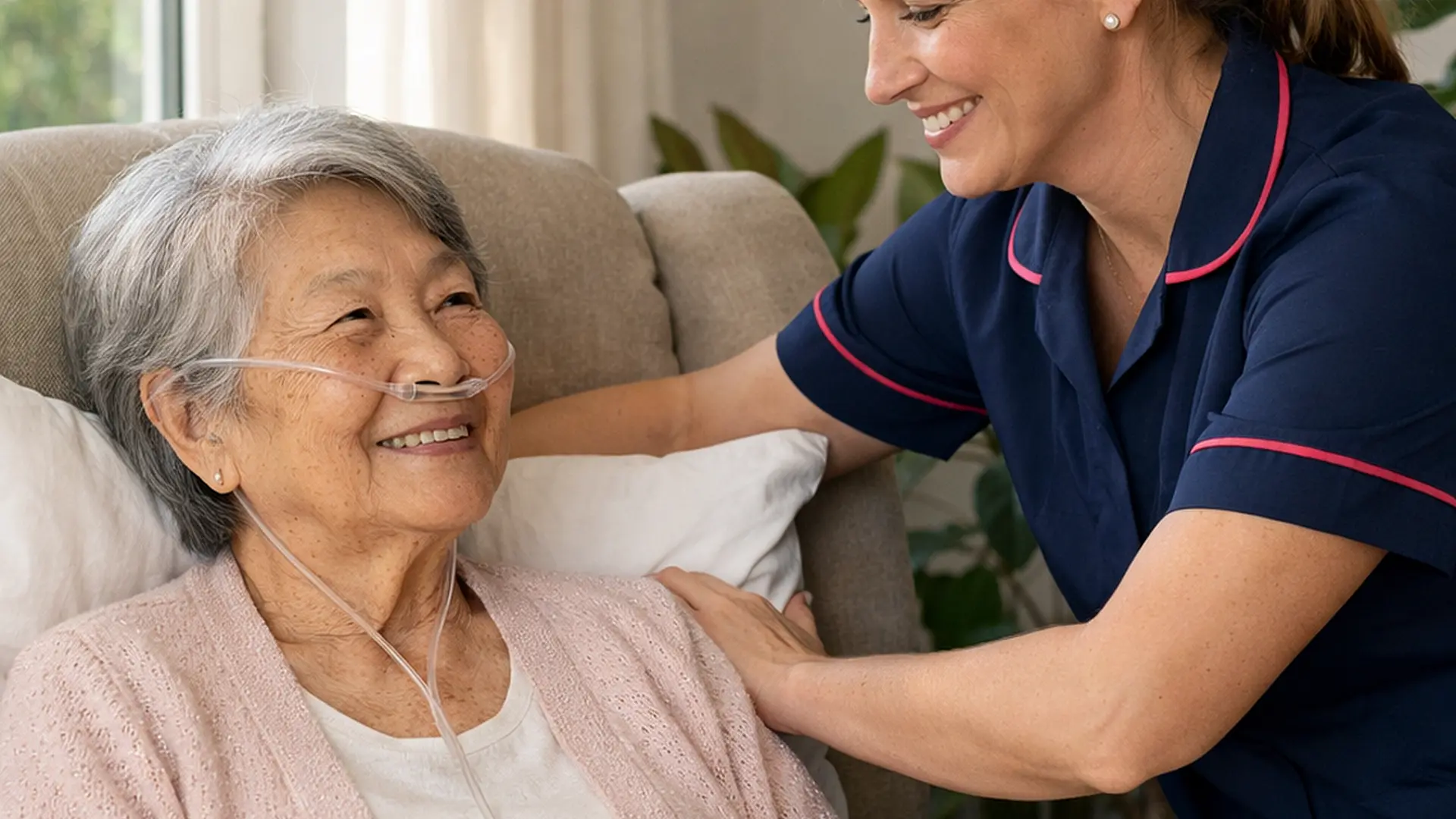
Realistic scene of a white female caregiver in a 00072b tunic with e51974 piping gently adjusting cushions for an elderly Asian woman seated in a reclining chair oxygen tubing visible sun streaming through window houseplants nearby both sharing a soft smile showing comfort and understanding.

Lung Cancer Care

Lung cancer care at home focuses on comfort, dignity and keeping life as familiar as possible, with flexible help for symptoms, routines and family life. From practical daily support to emotional reassurance, we tailor our domiciliary care around you—contact us to explore how we can support lung cancer care in your own home.

Understanding lung cancer care at home

Lung cancer can feel frightening and overwhelming, whether the diagnosis is new or treatment has been ongoing for some time. Our home care support focuses on comfort, dignity, and keeping life as familiar as possible. We can help with day-to-day tasks, emotional reassurance, and coordinating with healthcare professionals, so you and your family feel less alone and more supported at home.

Warm realistic scene of a black female caregiver in a 00072b tunic with e51974 trim sitting beside a middle aged white woman on a sofa reviewing paperwork together and smiling in a bright living room that suggests home based lung cancer care and reassurance.

What is lung cancer and how can it affect daily life?

Lung cancer happens when abnormal cells grow in one or both lungs, often affecting breathing, energy levels, and appetite. Treatments such as chemotherapy, radiotherapy, immunotherapy or surgery can be tiring and disruptive. At home, simple tasks like getting washed, preparing food, or managing hospital appointments can become challenging, which is where consistent, gentle home care support can make a big difference.
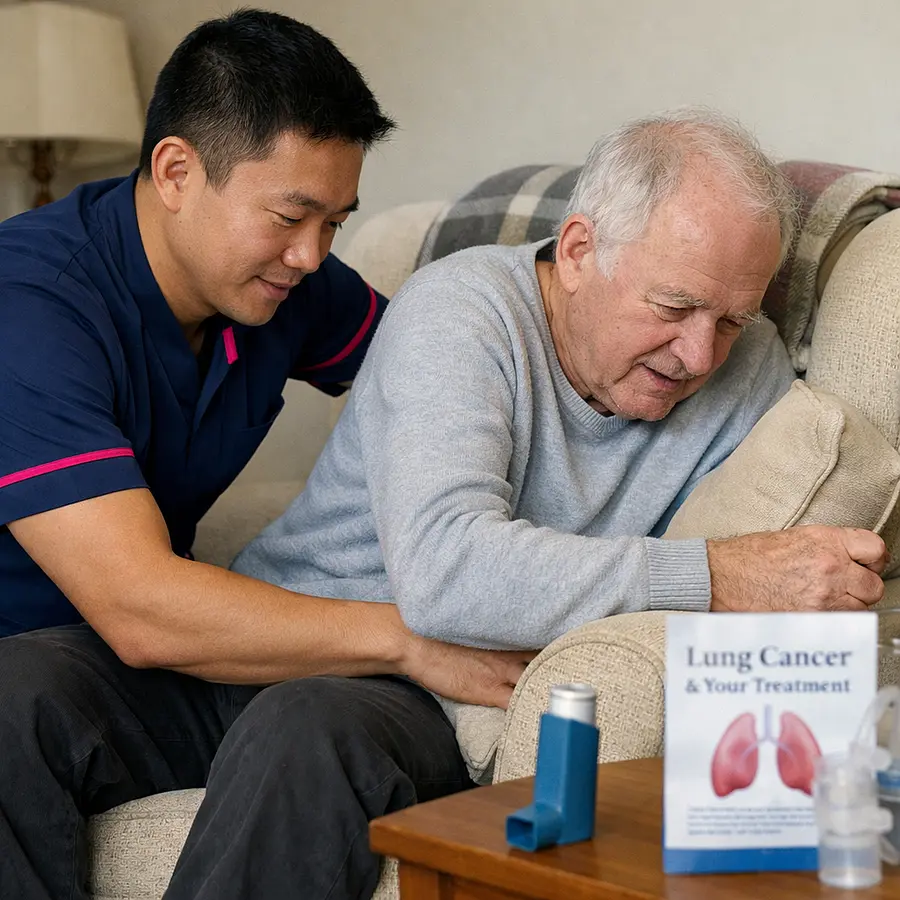
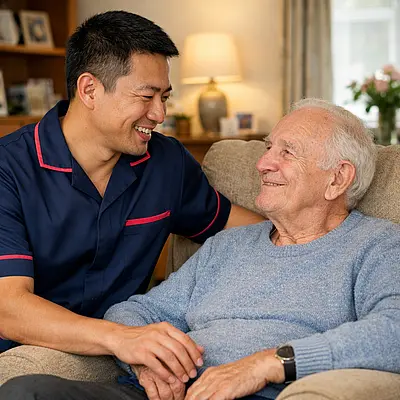
Realistic image of an Asian male caregiver in a 00072b tunic with e51974 accent helping an older white man adjust cushions in an armchair with an inhaler and treatment information on a side table illustrating day to day impact of lung cancer.

What lung cancer care usually involves

Lung cancer care is often a combination of medical treatment and everyday support. Hospital teams focus on diagnosis, treatment plans, scans and symptom management. At home, help may be needed with washing or getting dressed, gentle mobility, coordinating appointments, and emotional reassurance. Together, these elements aim to relieve symptoms, maintain independence, and support the person and their family through each stage.
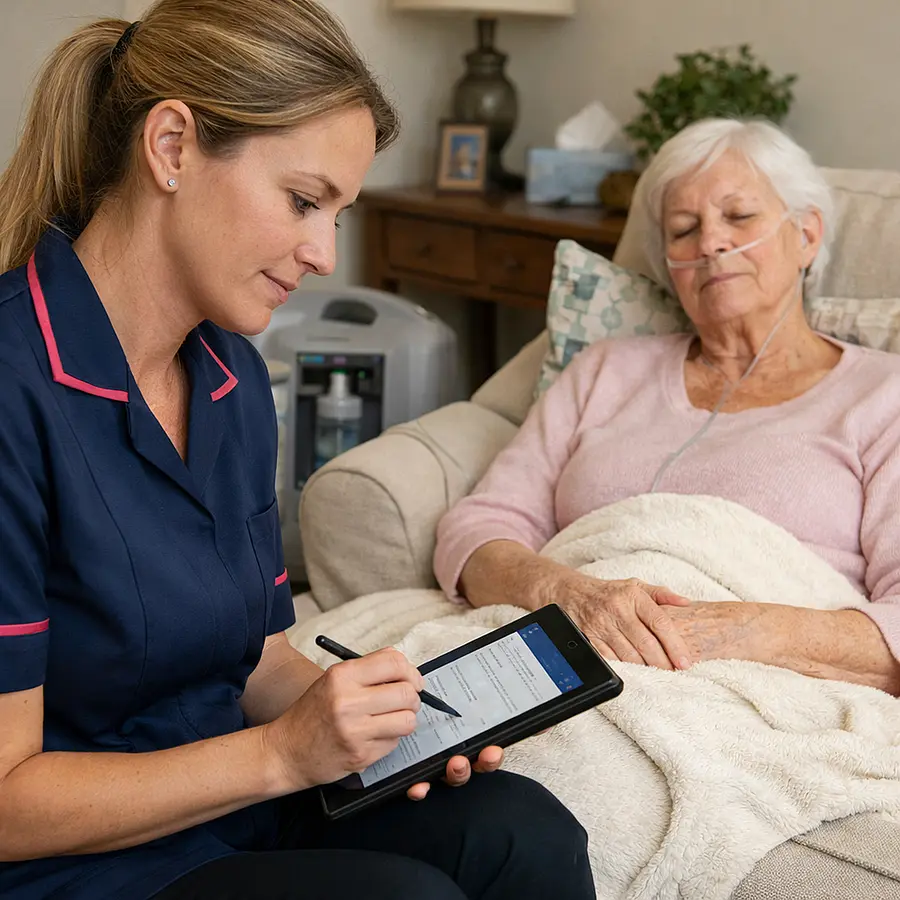
Realistic scene of a white female caregiver in a 00072b tunic with e51974 trim updating care notes on a tablet while a white older woman rests comfortably on a sofa with oxygen nearby illustrating changing levels of lung cancer support at home.

Can lung cancer care be safely provided at home?

Many people with lung cancer choose to stay in their own home, close to familiar routines and treasured possessions. With the right support, home can be one of the safest and most comforting places to be. We work alongside community nurses and hospital teams, adapting care as needs change, from light help after appointments to more intensive support, including liaison with palliative care services.
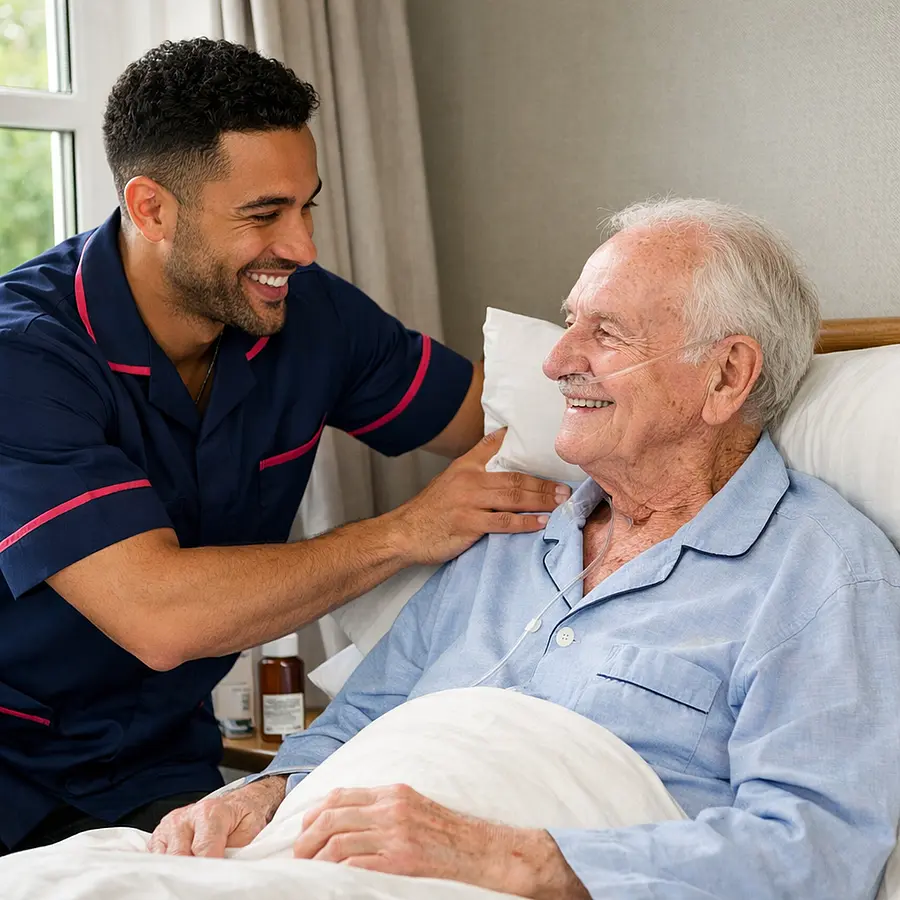
Realistic image of a mixed race male caregiver in a 00072b tunic with e51974 accents adjusting pillows behind a frail white older man sitting up in bed by a window both sharing a reassuring smile showing lung cancer care being delivered at home.

Home support during lung cancer treatment

Lung cancer treatment days can be exhausting. Having support at home means someone can help you get ready in the morning, accompany you to appointments if agreed, and settle you back in afterwards. We can assist with simple, nourishing meals, keeping track of information from the hospital, and adjusting routines if side effects like fatigue, nausea, or breathlessness become more noticeable.
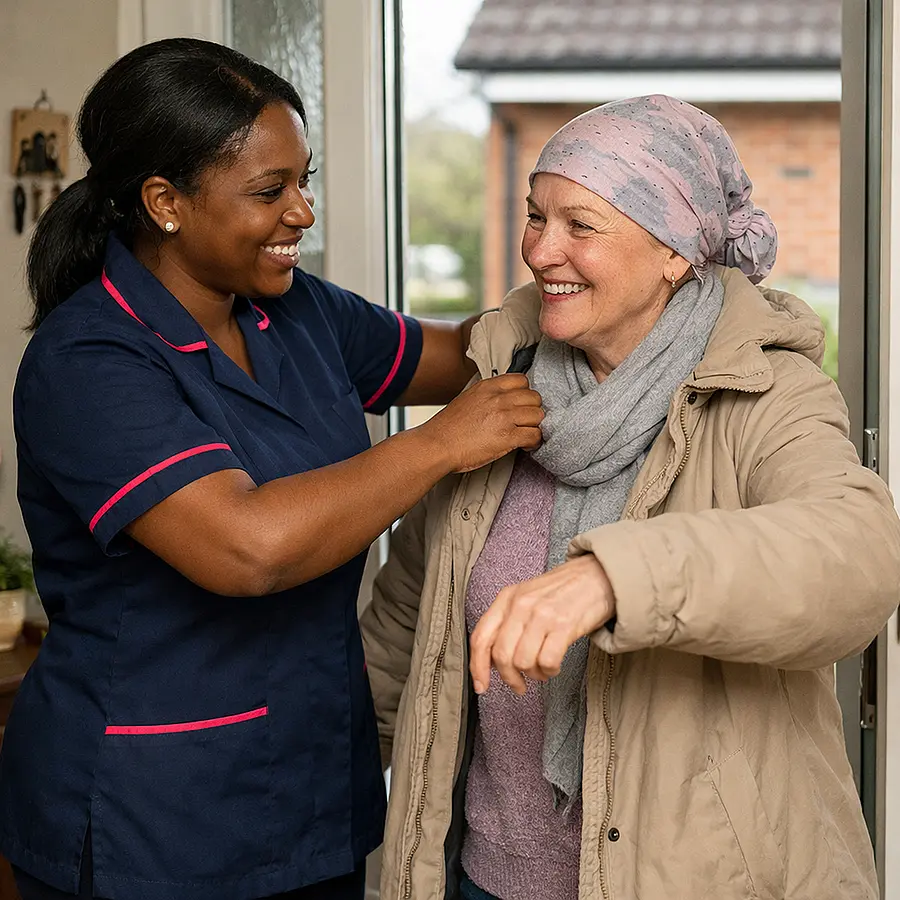
Warm realistic scene of a black female caregiver in a 00072b tunic with e51974 piping helping a white woman with a headscarf put on a coat near the front door both chatting and smiling before a hospital appointment.

Lung cancer symptoms you might notice

Symptoms can vary, but many people experience a persistent cough, breathlessness, chest discomfort, tiredness, weight loss, or a reduced appetite. Treatments can add side effects such as nausea, changes in taste, or poor sleep. At home we pay close attention to changes, support with timely medicines and inhalers, and encourage you to share new or worsening symptoms with your clinical team promptly.

Realistic close up of an Asian male caregiver in a 00072b tunic with e51974 trim listening carefully to a white older woman describing symptoms sitting together at a kitchen table with a notepad and inhaler nearby.

How lung cancer care at home can help day to day

Our role is to make everyday life simpler and more comfortable. We can support with bathing, showering and personal hygiene, positioning to ease breathlessness, and pacing activities so you conserve energy. We also help with light household tasks, meal ideas, and keeping your environment calm and tidy, so you can focus on resting, healing, and spending meaningful time with the people you care about.
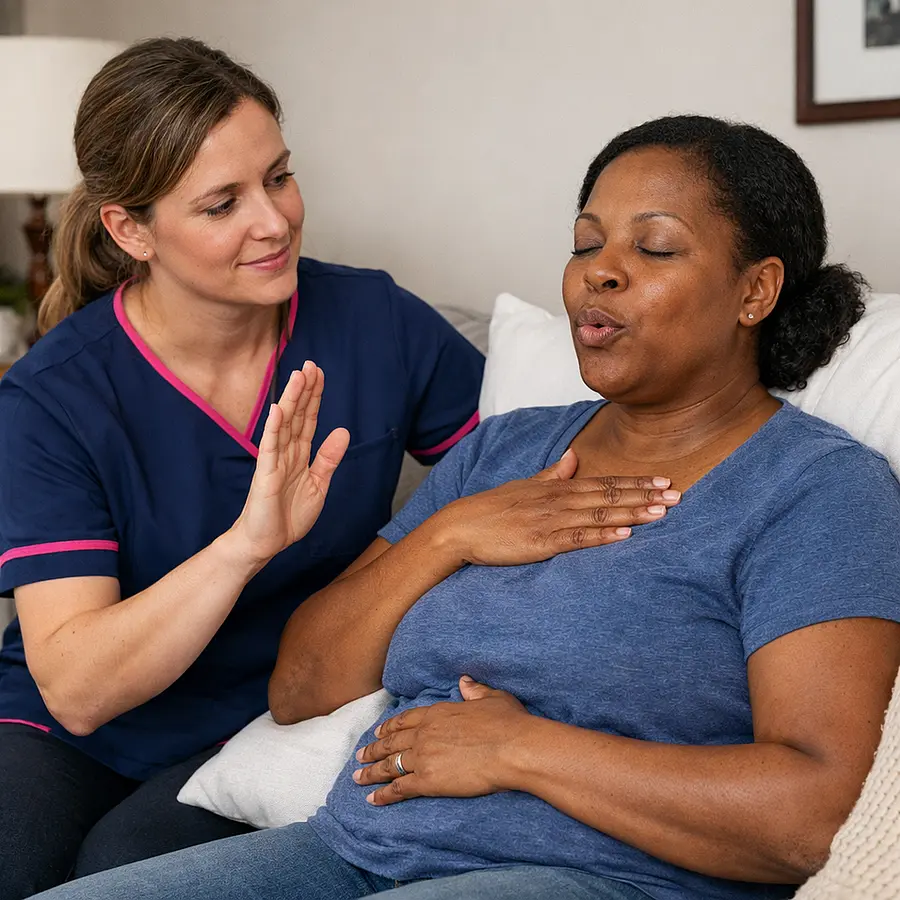
Realistic image of a white female caregiver in a 00072b tunic with e51974 accents helping a tired black woman sit upright with cushions on a sofa demonstrating breathing techniques with calm expressions.

Practical support with meals, medicines and housework

Lung cancer and its treatment can drain your appetite and energy, making everyday tasks feel like a mountain. We can prepare easy-to-eat dishes, offer support with medicine routines, and take care of light housekeeping jobs like laundry, washing up and tidying. Knowing someone reliable is handling the essentials can relieve stress for both you and your loved ones.
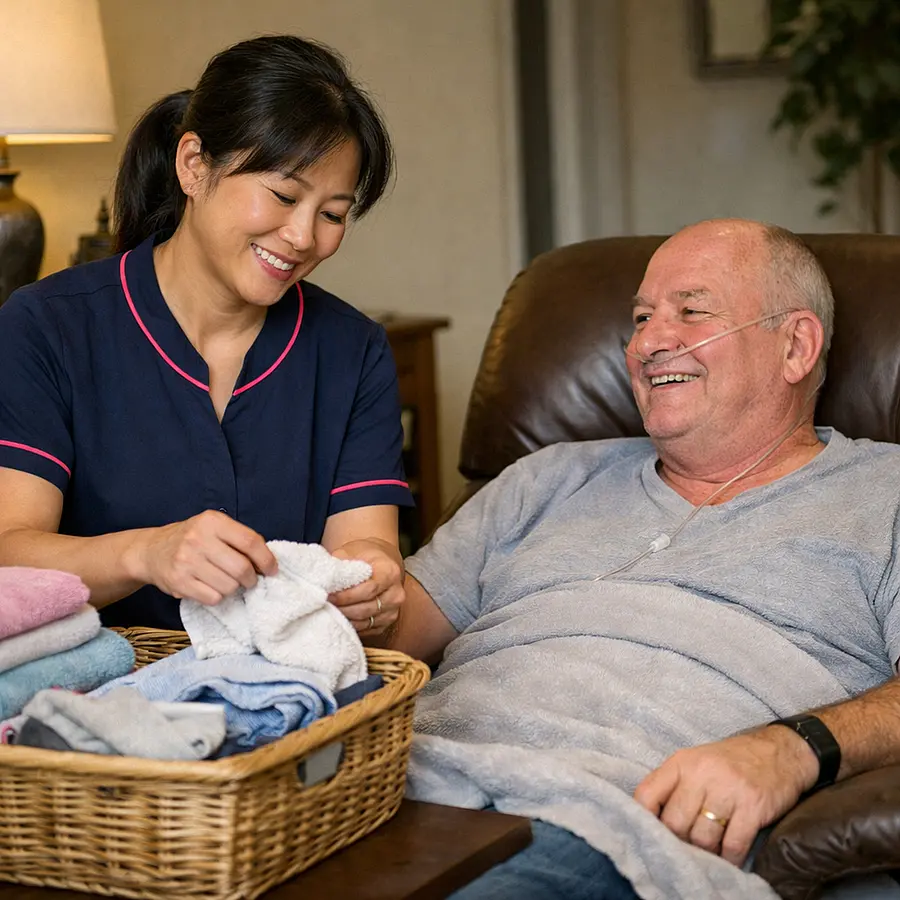
Realistic scene of an Asian female caregiver in a 00072b tunic with e51974 piping folding laundry beside a resting white man on a recliner both chatting pleasantly symbolising domestic support during lung cancer care.

Lung cancer care that maintains hobbies and interests

Life is about more than appointments and medicines. We take time to understand the hobbies that matter to you: perhaps listening to music, short walks in the garden, gentle crafting, or watching favourite sports. With thoughtful pacing and friendly companionship, we help you keep these moments in your week where possible, adapting activities so they remain enjoyable but not exhausting.
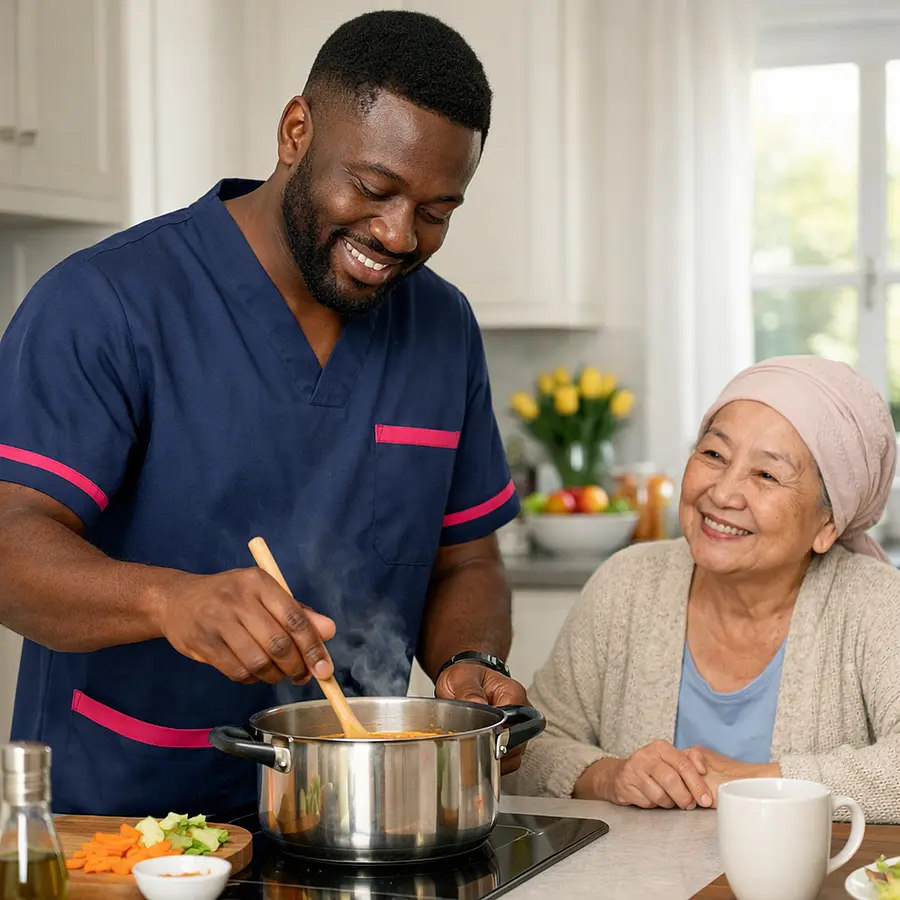
Realistic image of a black male caregiver in a 00072b tunic with e51974 accent cooking soup in a bright kitchen while an older Asian woman with a headscarf sits at the table watching and smiling.

Reablement-focused lung cancer support

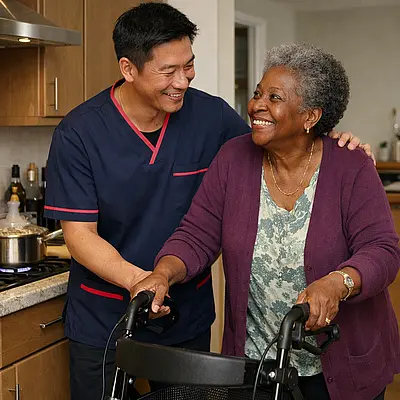
After a hospital stay or a change in treatment, confidence can dip sharply. Our reablement approach focuses on what you can still do, building back strength and independence step by step. That might mean practising moving from bed to chair, trying short walks indoors, or following gentle breathing techniques to ease anxiety around breathlessness, always at your pace and in line with medical advice.
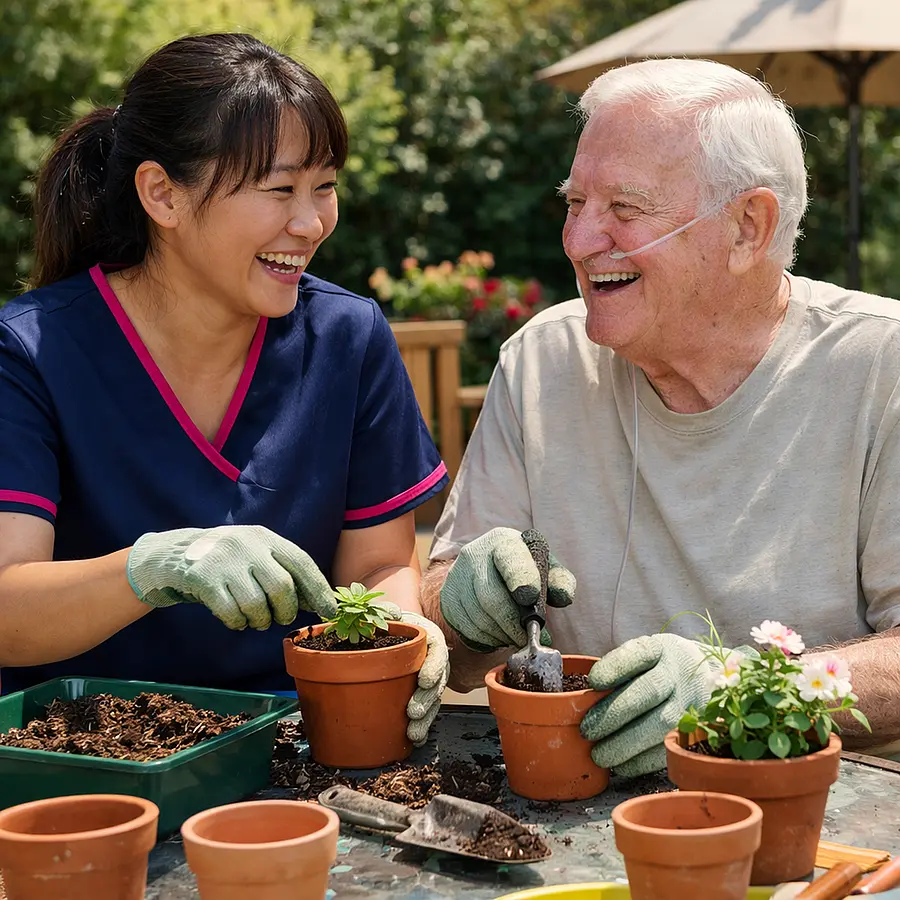
Realistic image of an Asian female caregiver in a 00072b tunic with e51974 trim helping an older white man pot small plants on a sunny patio table both laughing and relaxed illustrating hobbies supported during lung cancer care.

Lung cancer care that supports family routines

Lung cancer affects the whole household. Children, partners and close friends often juggle work, caring and their own emotions. We help shape a routine that works for everyone, offering flexible visit times, and practical and emotional support. Resources like family routine planning and guidance on care funding can also ease some of the pressure on loved ones.

Realistic scene of an Asian male caregiver in a 00072b tunic with e51974 trim talking kindly with a white middle aged woman and her older father in a lounge all seated together planning support.

How loved ones can support someone with lung cancer

If someone close to you has lung cancer, your presence alone can be incredibly powerful. Listening without rushing to “fix” things, helping them pace activities, and encouraging rest can all help. You might share transport to appointments, cook together when they feel able, or organise extra social support at home so they are not alone for long stretches if that feels difficult for them.

Realistic image of a white male caregiver in a 00072b tunic with e51974 piping showing a calm breathing exercise to a white woman while her adult daughter sits nearby holding her hand all appearing connected and reassured.

Emotional support for partners, relatives and friends

Caring for someone with lung cancer can be emotionally heavy. It’s common to feel scared, guilty, or pulled in many directions. We encourage loved ones to look after themselves too: taking breaks, accepting help, and seeking guidance from resources such as help and guidance articles. Our caregivers offer a listening ear and practical relief, so you’re not trying to carry everything alone.
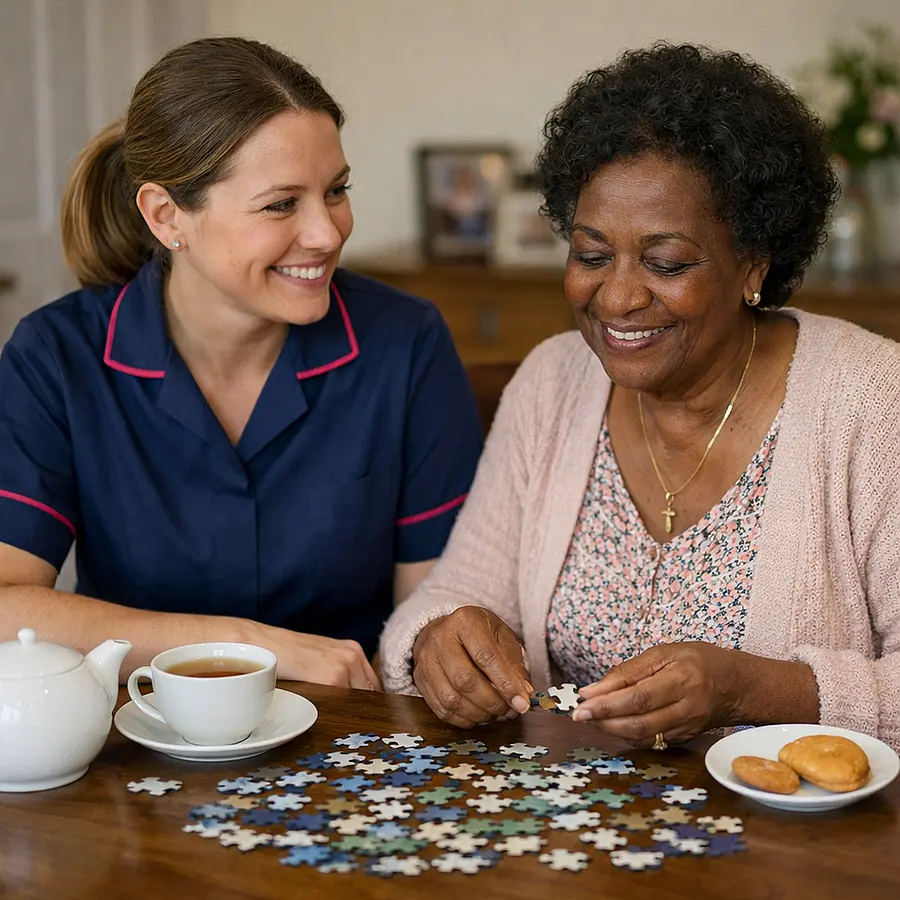
Realistic image of a white female caregiver in a 00072b tunic with e51974 piping sitting at a dining table with a black woman sharing tea and a jigsaw puzzle both smiling softly representing meaningful everyday moments.

How you can care for a loved one with lung cancer

Start by asking what matters most to them: comfort, independence, seeing certain people, or staying at home as much as possible. Help them stay organised with appointment diaries and medication charts, and consider arranging night-time support if symptoms are worse after dark. Working alongside our team means you can focus on your relationship, while we help with the more demanding day-to-day care tasks.
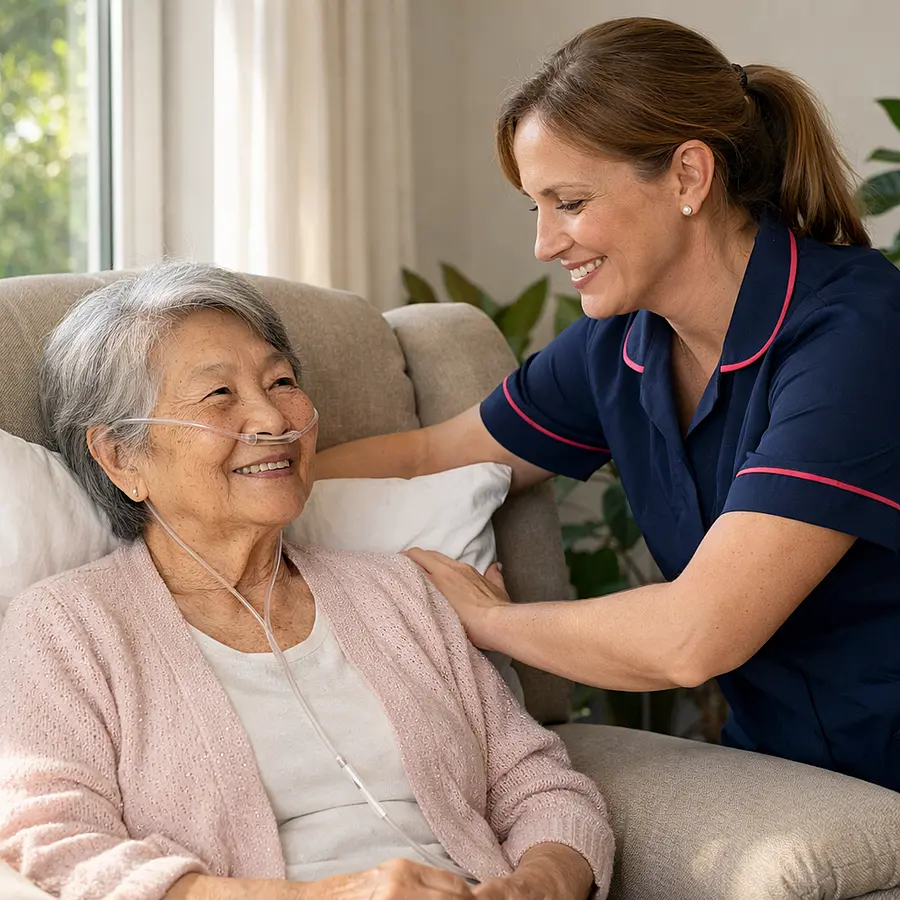
Realistic scene of a white female caregiver in a 00072b tunic with e51974 piping gently adjusting cushions for an elderly Asian woman seated in a reclining chair oxygen tubing visible sun streaming through window houseplants nearby both sharing a soft smile showing comfort and understanding.

Why choose us for lung cancer care at home

We understand that no two people experience lung cancer in the same way. Our care is built around your routines, preferences and clinical needs, whether you want a little help with cooking and snacks or more intensive, end-of-life care at home. You can expect respectful, consistent caregivers who listen carefully, adapt sensitively, and focus on what matters most to you and your family.

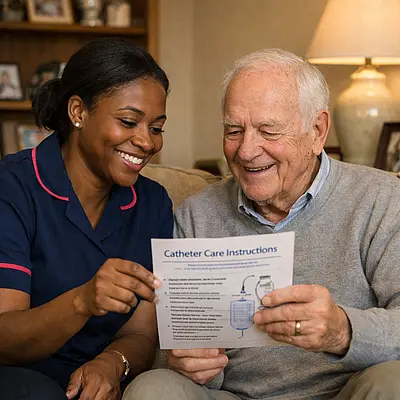
Realistic image of an Asian male caregiver in a 00072b tunic with e51974 trim sitting at a dining table with an elderly Black couple going through a care plan document together all three smiling and engaged in discussion.
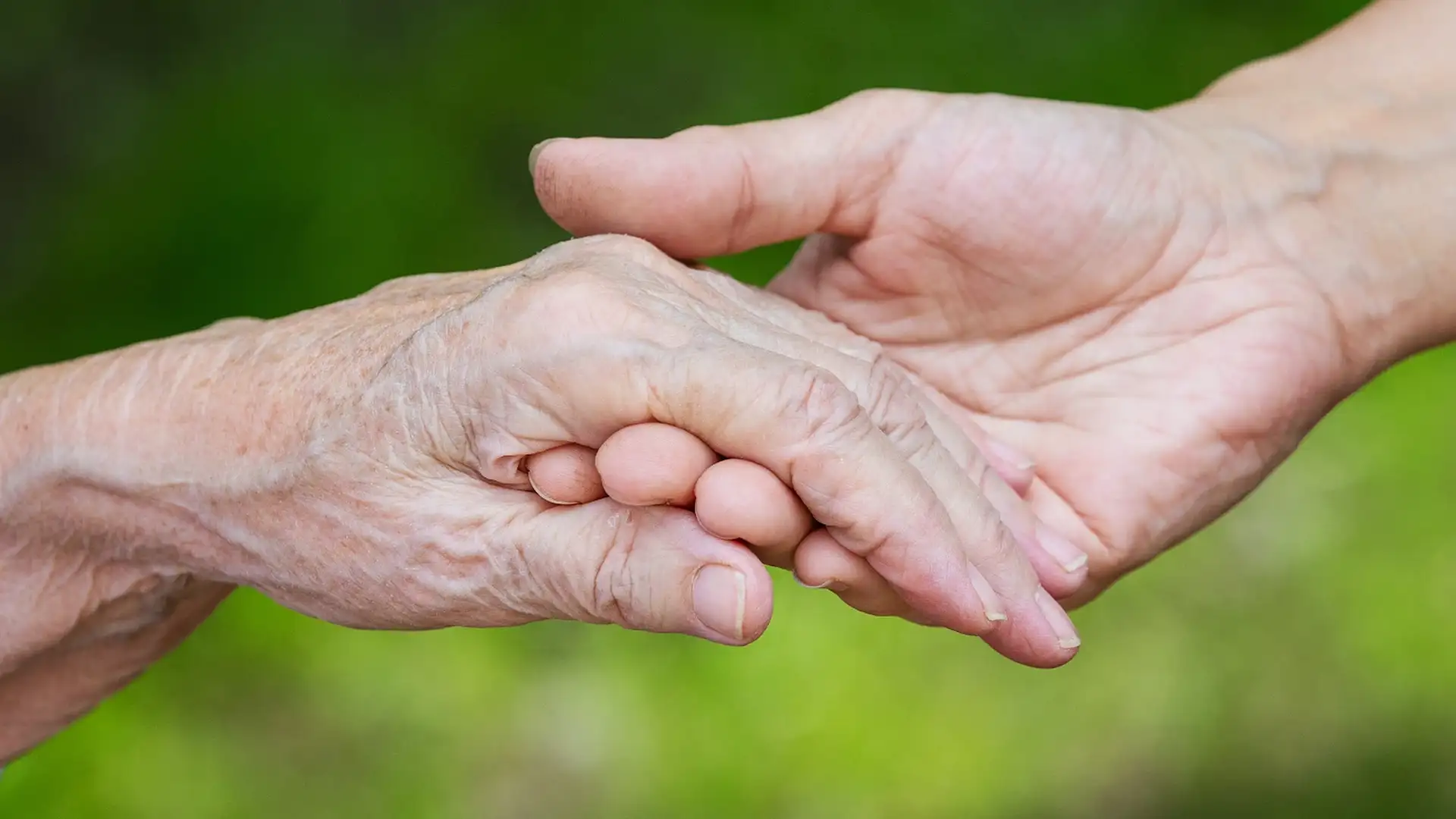
Hands of young adult and senior women over green b
Contact Us

Contact us to arrange Lung Cancer Care at home

If you're looking for support with daily living for some one with lung cancer, we're here to help. Our friendly team is ready to offer guidance, answer your questions, and arrange lung cancer care tailored to your or your loved ones' needs in their own home. Reach out today for personalised advice and support.

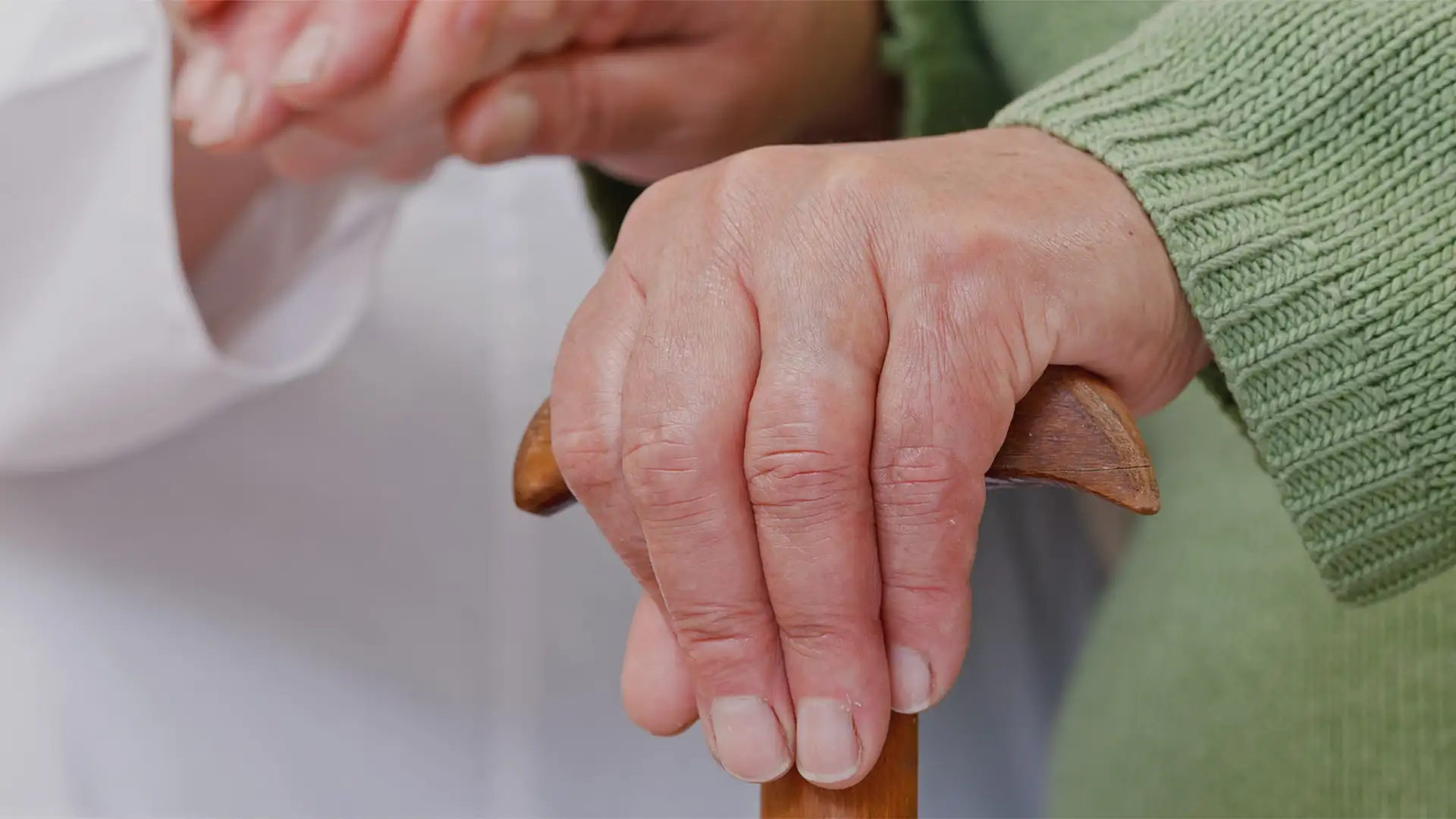
Elderly hands on a walking sitck

We're becoming a fully regulated service

While we are not currently regulated, meaning there are some services we cannot currently provide, we are in the process of registering to become a fully regulated service.

CQC

Lung Cancer Care FAQ's

You’re bound to have questions when exploring your home care options, so we’ve answered some of the most common ones below.

If lung cancer progresses, priorities often shift towards comfort, dignity and meaningful time with family. Many people still wish to remain at home if possible. We can work alongside community and specialist teams to deliver sensitive, end-of-life style care at home, focusing on comfort, emotional support and practical help. This may include more frequent visits, support with pain management plans, personal care in bed, and gentle reassurance overnight. We also support family members, explaining what changes they may notice and encouraging them to rest when we are there. Care arrangements remain flexible, so as needs change, the support can change with them.

Yes, many people find their appetite changes during lung cancer treatment due to nausea, taste changes, or fatigue. We can provide gentle meal support, focusing on small, frequent snacks and drinks that are easier to manage. This might mean preparing soft foods, fortifying meals when recommended, or having favourite snacks on hand for when appetite appears. We’ll also encourage hydration and keep track of preferences over time. We always work in line with any dietary advice given by your medical team or dietitian and adapt to what feels comfortable day by day.

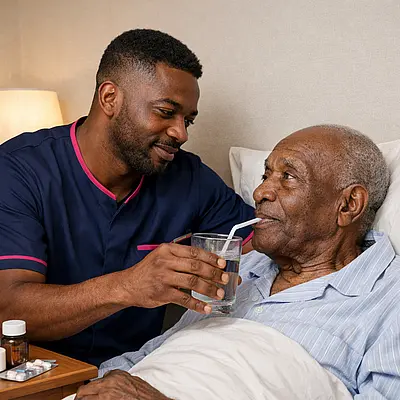
Yes, within agreed care plans. Many people manage complex medication routines during lung cancer treatment, including pain relief, anti-sickness tablets, inhalers, or steroids. Our medication support can include reminders to take tablets on time, help reading labels, and logging what has been taken. We can also prompt you to use inhalers or nebulisers as prescribed. We do not replace medical professionals, but we do work closely with them, recording any concerns or side effects we notice and encouraging you to seek clinical advice when needed. Having someone alongside you can reduce the stress of remembering everything yourself.

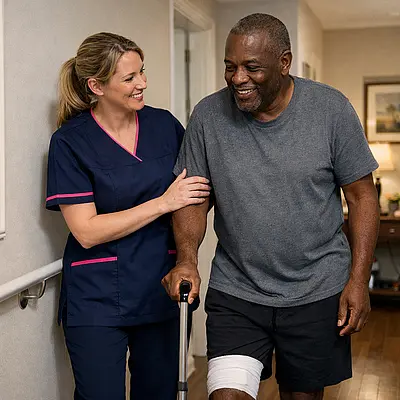
Yes, coming home from hospital can feel daunting, especially after surgery or a period of severe illness. We can offer short-term or longer-term support to help you settle back in. This may include meeting you on the day you return home, helping you get comfortable, supporting with washing and changing clothes, preparing food, and checking that you have medications and any equipment you need. Over the following days and weeks, we can assist with wound care routines as directed by nurses, gradually increasing your independence through gentle activity and encouragement.

Yes, many people we support live with several conditions alongside lung cancer, such as COPD, diabetes, heart disease or mobility problems. Our carers are experienced in handling combined needs, working from a person-centred plan that includes all relevant conditions. We can coordinate with your wider care network, including respiratory nurses, cancer specialists and community teams. By understanding the whole picture, we tailor support with personal care, mobility, meals and medications to keep things as simple and safe as possible at home.

No, our aim is to support your independence, not reduce it. We encourage you to do as much as feels safe and manageable, stepping in only where help is truly needed. For example, we might support you to stand safely while you wash your upper body yourself, or help with heavier household tasks while you manage lighter ones. Over time, if your abilities change, we can adjust the level of assistance. We always focus on your goals, whether that’s staying mobile, continuing hobbies, or simply feeling confident at home.

Family carers often carry a heavy emotional and practical load. Home care can share that responsibility so you don’t feel you must do everything alone. We can take on regular tasks such as washing, dressing, and general housework, and provide respite visits so you can rest, work, or spend time with children and friends. Many families also appreciate having a calm, experienced professional to talk to when they feel unsure. Our role is to fit around your family, not replace you, so you can focus more on simply being a partner, child, relative or friend.

Breathlessness can be frightening, but practical support can make it more manageable. We follow the advice of your clinical team and encourage simple techniques such as pacing, positioning and relaxation. This might involve arranging furniture so everything you need is within easy reach, helping you sit forward in a supported position, and using fans or open windows for fresh air when appropriate. We can take on energy-draining tasks, like cleaning or longer walks around the house, so you conserve breathing for the things that matter. We also help you notice any changes in your breathing so they can be discussed quickly with your nurse or doctor, reducing the risk of crises.

Dignity is central to everything we do. Before providing any personal care, we talk through your preferences: who you’re comfortable with, how you like tasks done, and what you can manage yourself. We use towels or clothing to keep you covered as much as possible, explain each step before we do it, and move at your pace. If breathlessness makes certain movements difficult, we adapt the approach, perhaps using seated washes or different equipment. You are always in control and can stop or change any part of the routine at any time.

Yes, many people with lung cancer are safely supported at home, often preferring familiar surroundings to repeated hospital stays. The key is good communication with your medical team, clear plans for symptoms like breathlessness or pain, and the right level of support. Our carers can help monitor changes, follow your clinician’s guidance, and provide practical assistance such as medication prompts, help with washing and dressing, and support with meals and hydration. We also work alongside district nurses and specialist teams when needed, so home becomes a base for care rather than a barrier to it. If things change, care can be increased, decreased or combined with hospital or hospice support.

We proudly provide high-quality home care across the East Midlands, in an around the towns and cities detailed below.

Elderly hands on a walking sitck

Call us to find out more about Lung Cancer Care

East Midlands

We proudly provide high-quality home care across the East Midlands

Our Reviews

We’re proud of the trust families place in us. Here’s what some of the people we support, and their loved ones, say about our home care services.

"They have been a great help with keeping on top of my dads laundry and general house cleaning as he is bed bound and have been being changed daily."

Emily R

"Great support for my mum after she lost her confidence after a fall and hospital stay."

Sarah L

"Really helped me with keeping on top of my house work since my parkinson's has progressed."

Mark T

Senior woman hand in caregiver hands

Join The Good News Newsletter

Be the first to discover exclusive offers, and service updates. Your journey to independent living starts here - where everything truly is fine.


Contact The Good Place

We’d love to hear from you! Whether you have questions, want to learn more about our home care service, or are ready for us to start supporting you or your loved one, our good people are here to help. If you are looking to make a complaint, you can contact our Registered Manager or Nominated Individual directly.

Send Us a Message


Elderly hands on a walking sitck

Working in Partnership

We work closely within the community to provide safe, compassionate, reliable home care that supports independence, dignity, and improved wellbeing while remaining at home.

Derbyshire County Council
Staffordshire County Council
NHS