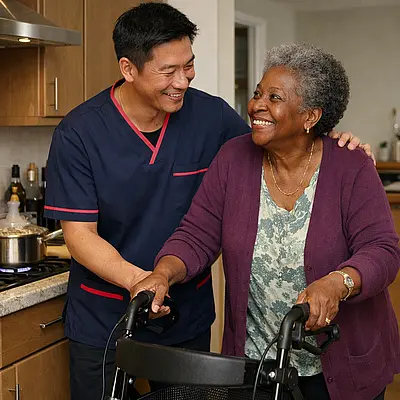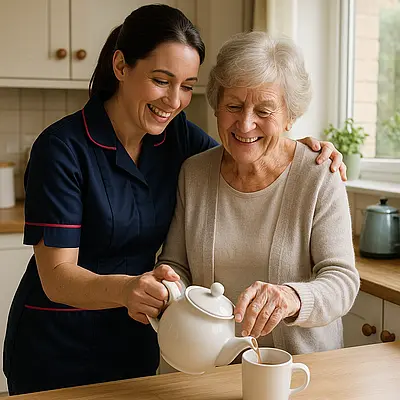
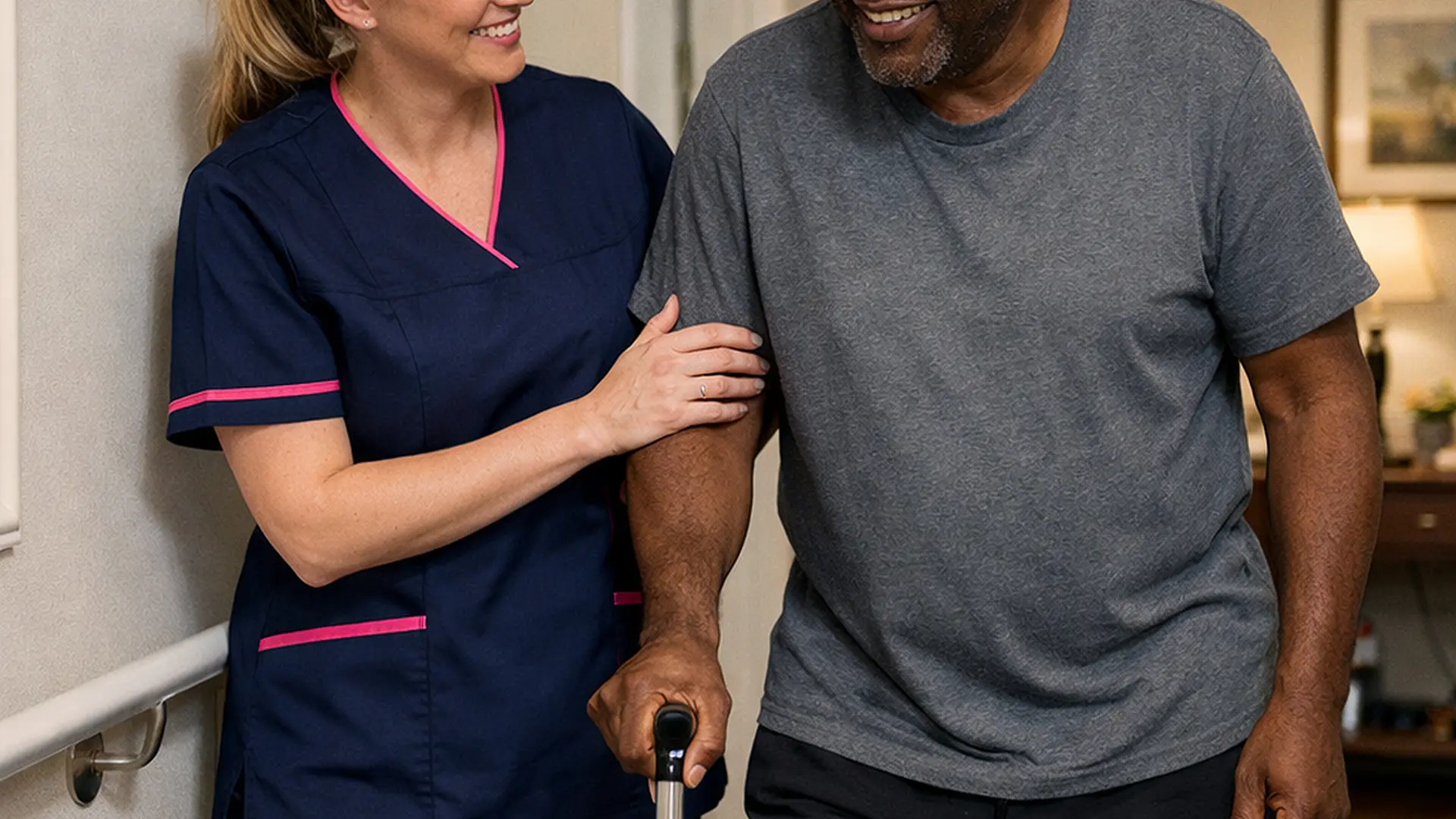
A realistic scene of a caucasian female caregiver in a 00072b tunic with e51974 accent helping a black male service user walk carefully through his hallway after surgery. Both appear relaxed and encouraged with handrails and a clean safe home environment conveying reassurance and recovery at home.

Postoperative Care

Postoperative care at home can help you or a loved one recover safely with support for daily routines, mobility, medication, meals, and reassurance. We offer flexible home care that promotes comfort and confidence after surgery. Contact us to talk through the right postoperative support for your situation.

Understanding postoperative care at home

Postoperative care is the support someone may need after an operation to recover safely, manage discomfort, and regain confidence at home. Our domiciliary care can help with routines, mobility, washing and dressing, support with medicines, meals, and reassurance, giving families practical help during the healing process.

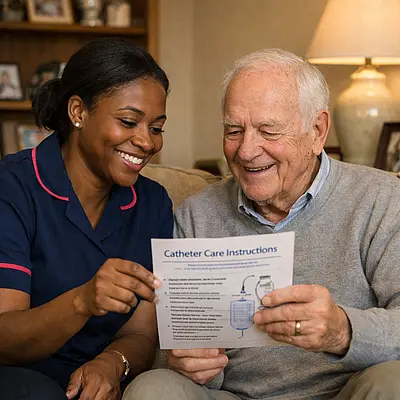
A realistic home care scene after surgery with a black female caregiver wearing a tunic uniform in 00072b with e51974 accents smiling warmly while supporting an older caucasian man in a tidy living room. The service user looks reassured and comfortable with walking aids nearby soft natural light and

What is postoperative support in everyday life?

In everyday life, postoperative support means helping someone follow discharge advice, pace themselves, and stay comfortable while they recover. This can include help getting in and out of bed, preparing drinks, reminding them about appointments, and noticing changes that may need attention. Good support can make recovery feel less overwhelming and more manageable for everyone involved.

A realistic image of an asian male caregiver in a 00072b tunic with e51974 trim helping a middle aged black woman settle comfortably on a sofa after surgery. Both are smiling gently showing reassurance and trust with a blanket medication chart and glass of water nearby in a bright homely setting.

What does recovery care usually involve?

Recovery care often involves a mix of practical and emotional support. Someone may need help with household tasks they would usually manage alone, encouragement to move safely, and support with eating well. Depending on the operation, they may also need input linked to mobility, tiredness, wound awareness, and building confidence as strength returns day by day.

A realistic post surgery home recovery scene with a caucasian male caregiver in a 00072b tunic with e51974 accents assisting an asian older woman at a kitchen table. Fresh food a recovery plan and a walking stick are visible. The mood is warm joyful and supportive with natural lighting and true to l

Can postoperative care be provided at home?

Yes, many people can recover well at home after surgery, especially when they have the right support in place. Home can feel more comfortable and familiar than other settings, which often helps rest and confidence. Our care can work alongside guidance from hospital teams and community professionals, helping people stay safe while adjusting to life after an operation.
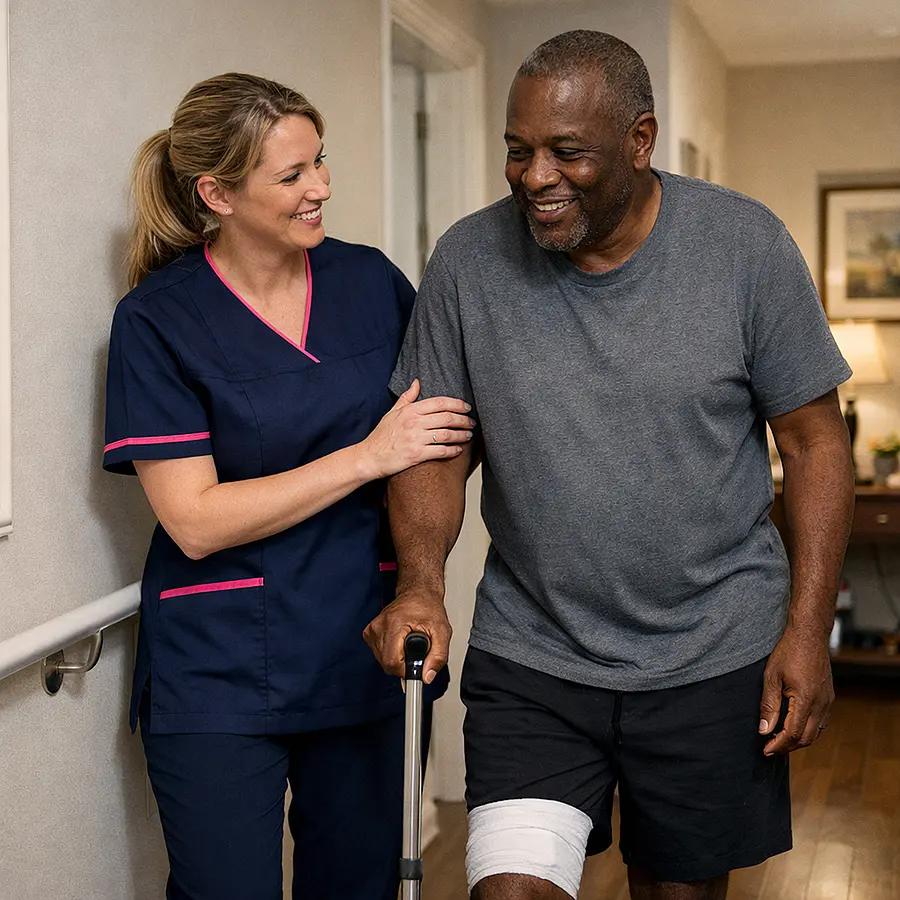
A realistic scene of a caucasian female caregiver in a 00072b tunic with e51974 accent helping a black male service user walk carefully through his hallway after surgery. Both appear relaxed and encouraged with handrails and a clean safe home environment conveying reassurance and recovery at home.

When is home recovery a good option?

Home recovery is often a good option when someone is medically well enough to leave hospital but still needs extra help. They may need support after abdominal surgery, joint replacement, cancer treatment, or a short hospital stay. We can help with preparing simple meals, friendly company, and routines that reduce strain while promoting independence.
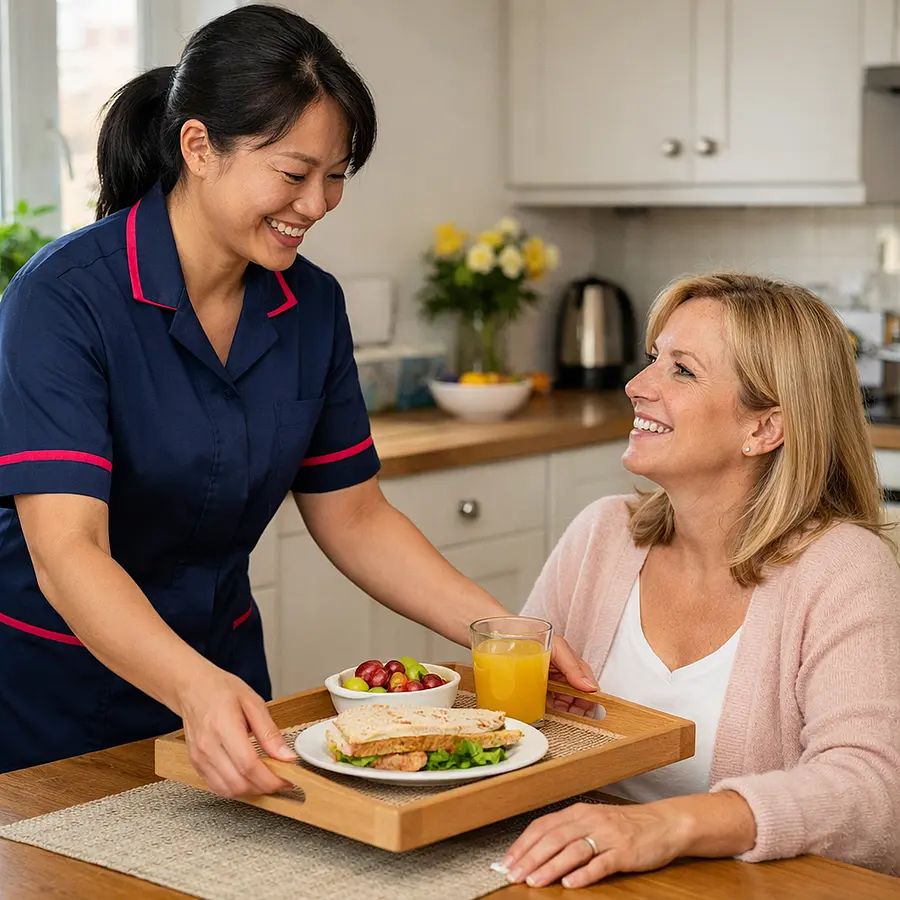
A realistic image of an asian female caregiver wearing a 00072b tunic with e51974 detail serving a light meal to a recovering caucasian woman at home. The service user is smiling and seated comfortably with a supportive cheerful atmosphere realistic textures and a bright kitchen dining space.

What to expect during post-surgery recovery

Recovery at home is rarely completely straightforward. Some days feel easier than others, and progress can come in small steps. It is common to need help with stairs, bathing, rest, and following advice on movement. For some people, support may also connect with services such as knee and hip replacement care or broader later-life care.

A realistic recovery at home image featuring a black male caregiver in a 00072b tunic with e51974 accents assisting an elderly asian man on the stairs. They share a reassuring smile with a handrail tidy hallway and soft daylight creating a safe warm believable home care setting.

Common postoperative symptoms after an operation

Symptoms after surgery vary, but many people experience tiredness, soreness, bruising, swelling, reduced mobility, constipation, poor appetite, and interrupted sleep. Some may feel low in mood or anxious about moving around. These changes can affect confidence as much as comfort, which is why steady support, patience, and a calm routine can make such a difference during recovery.
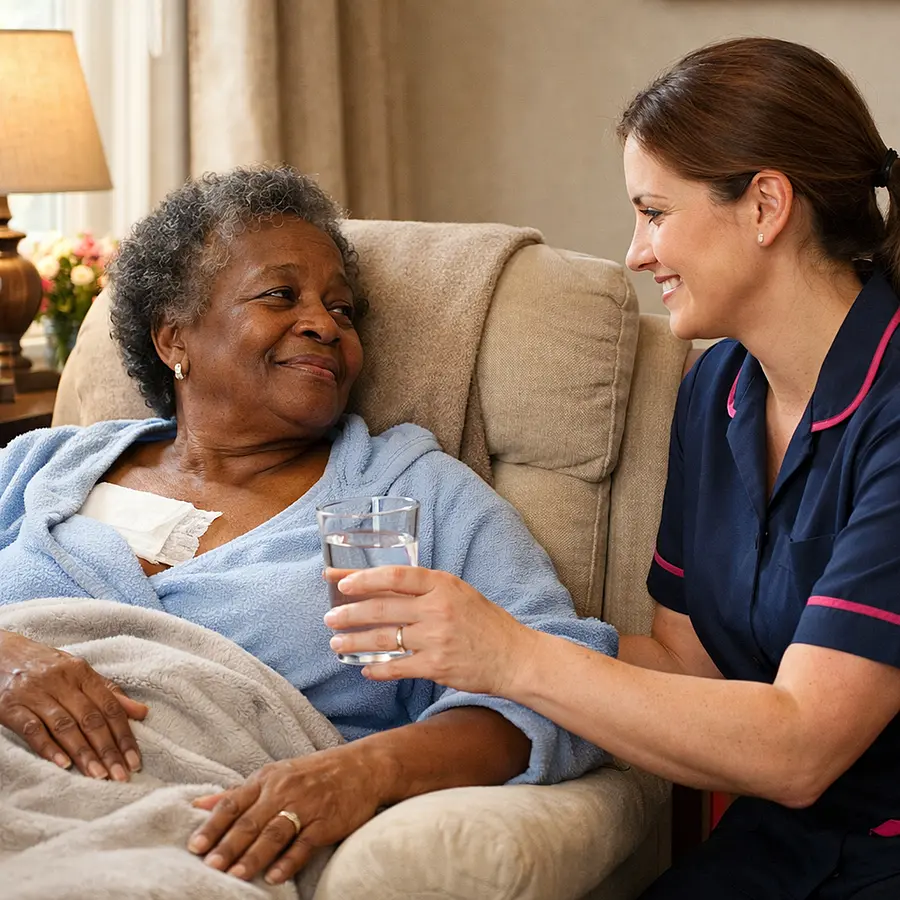
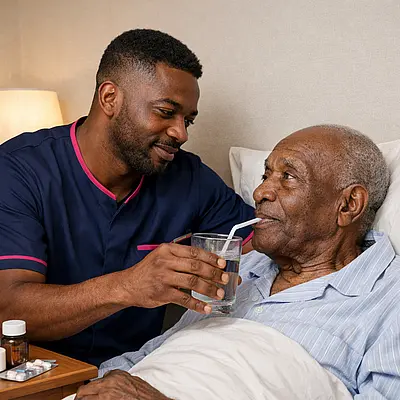
A realistic home care scene with a caucasian female caregiver in a 00072b tunic with e51974 trim checking on a black older woman resting in an armchair after surgery. The caregiver offers water and reassurance and the atmosphere feels calm warm and hopeful with realistic lighting and details.

How we provide postoperative care at home

We tailor support around the person, their operation, and the advice they have been given. That might include help with showering and personal hygiene, safe transfers, eating and drinking, and monitoring how they are coping day to day. We aim to support recovery without taking over, so people can rebuild independence at a pace that feels right.
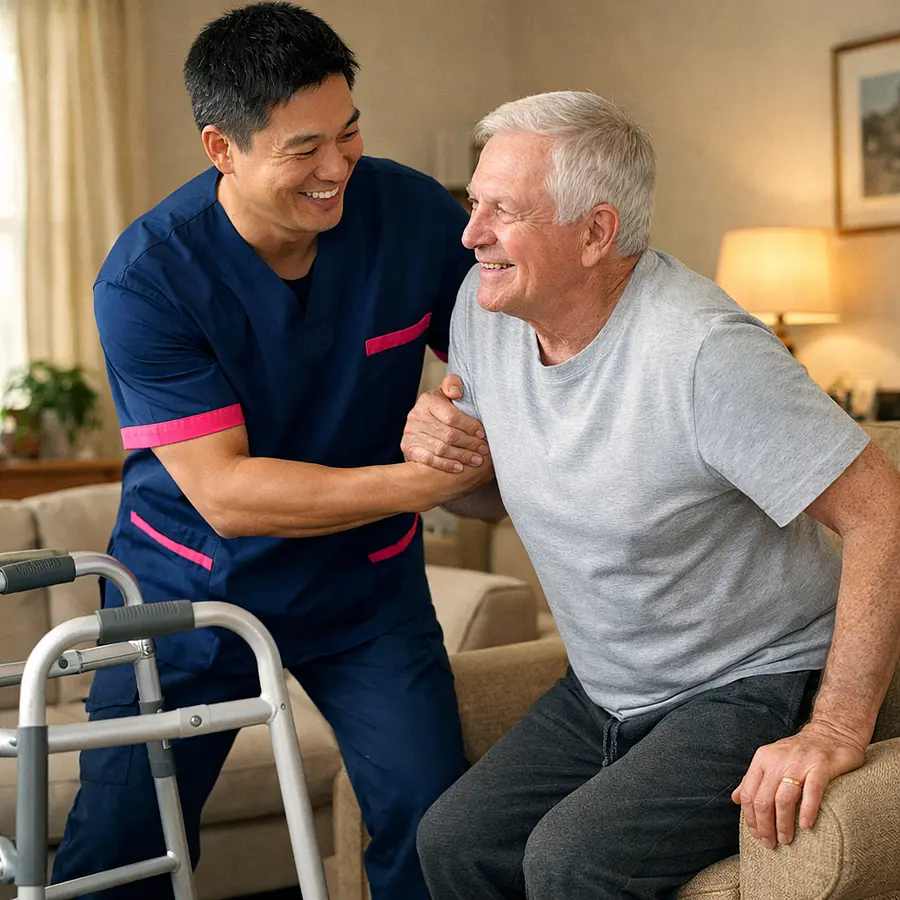
A realistic image of an asian male caregiver wearing a 00072b tunic with e51974 accents helping a caucasian male service user with safe movement from chair to standing after surgery. Both appear encouraged and positive in a comfortable living room with walking aid and natural warm lighting.

Practical recovery support for daily routines

Our carers can assist with everyday routines that may suddenly feel difficult after surgery. This may include prompting or administering medicines safely, light household jobs, changing bedding, collecting prescriptions, and helping organise the home to reduce trip hazards. Small pieces of support often have a big impact on comfort, safety, and peace of mind.

A realistic post operative home support scene with a black female caregiver in a 00072b tunic with e51974 accent tidying a bedroom and organising medications for an asian older man. The service user looks comforted and relaxed and the image conveys warmth dignity and practical support in a realistic

Flexible overnight recovery when reassurance matters

Some people feel most vulnerable at night, especially in the first days after surgery. We can provide night-time support at home for reassurance, help getting to the bathroom, position changes, and responding if discomfort or worry interrupts sleep. This can be especially helpful for families who need rest while still knowing their loved one is supported.
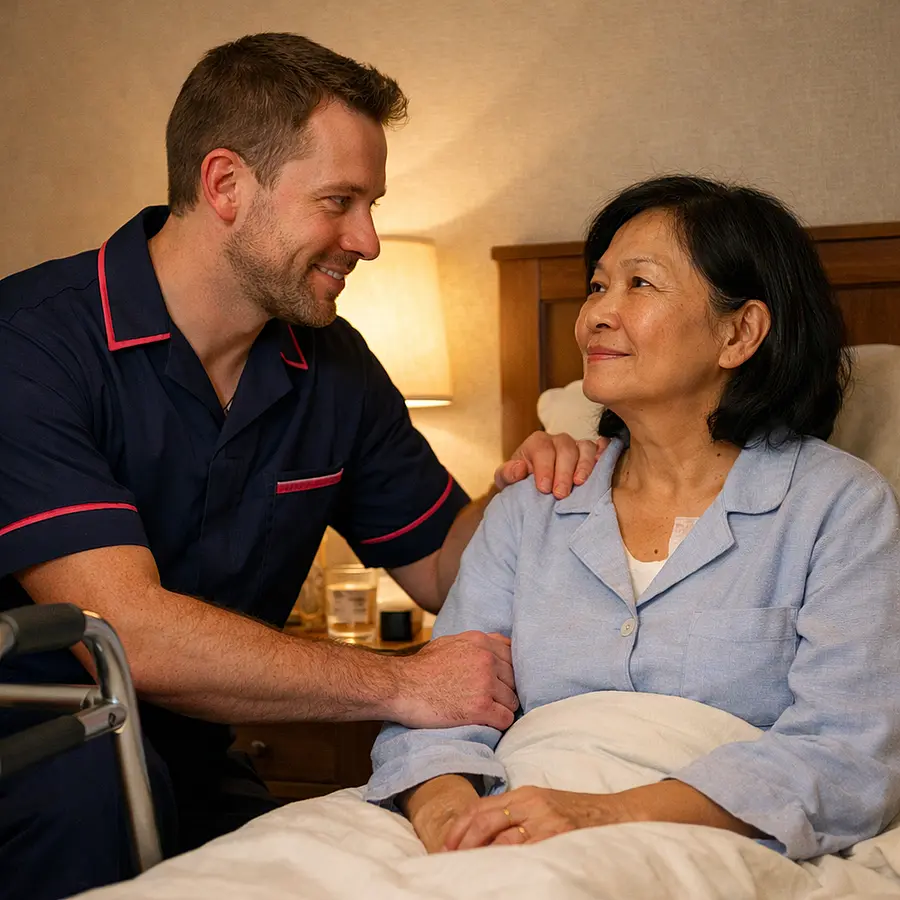
A realistic evening home care scene showing a caucasian male caregiver in a 00072b tunic with e51974 detailing reassuring an asian female service user in her bedroom after surgery. Soft bedside lighting a walking frame and calm facial expressions convey safety warmth and overnight support.

How reablement after surgery builds confidence

Reablement after surgery is about helping someone do more for themselves again, safely and gradually. Rather than rushing recovery, we focus on realistic steps, such as washing independently with support nearby, making a simple drink, or walking short distances indoors. This approach can be particularly valuable after a stay in hospital when confidence has dipped.
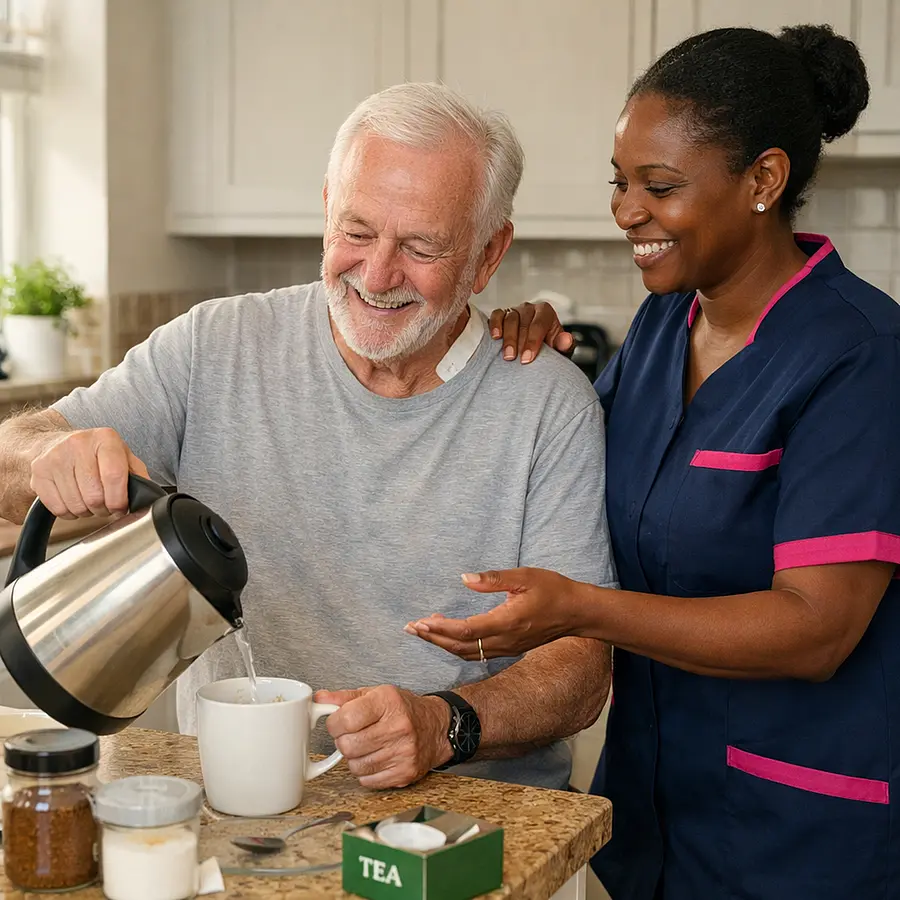
A realistic image of a black female caregiver in a 00072b tunic with e51974 accents encouraging a caucasian older man to make tea in his kitchen after surgery. Both are smiling warmly showing confidence building and independence with realistic household details and a bright reassuring atmosphere.

Supporting hobbies after surgery at home

Returning to hobbies can lift mood and remind someone that recovery is about living, not just resting. We can support gentle activities such as gardening in short bursts, puzzles, reading, crafts, or sitting outside with a drink. A carer offering warm companionship and conversation can make those small enjoyable moments easier to fit into the day.
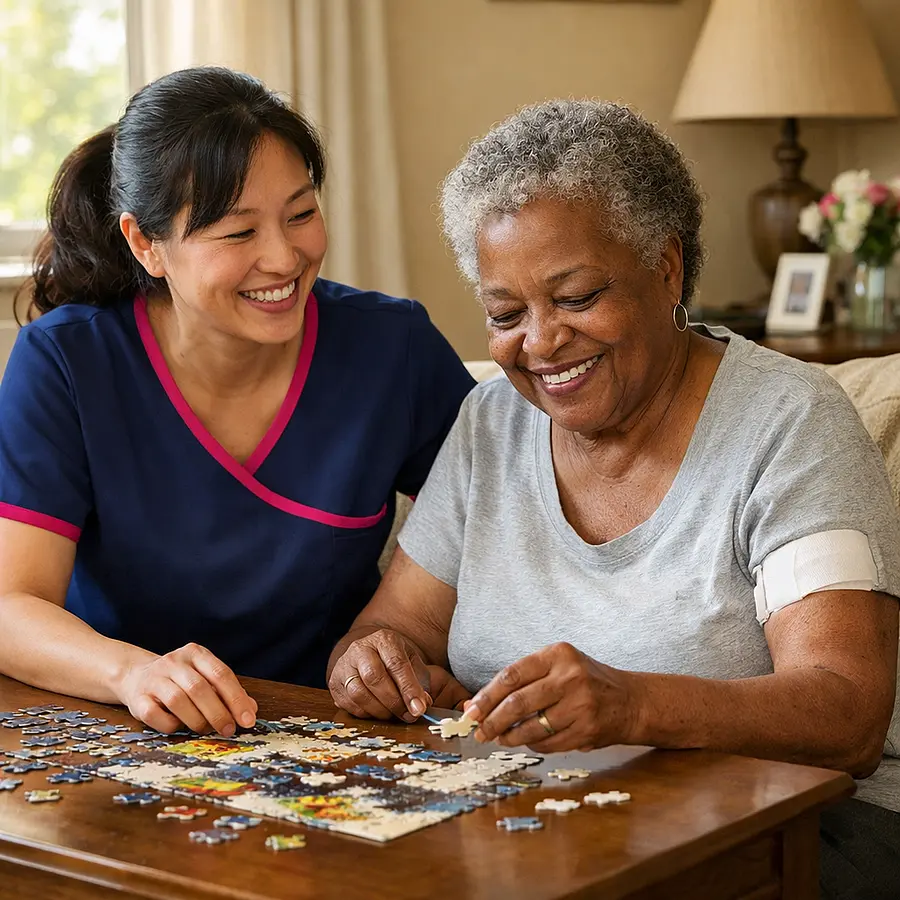
A realistic home care image featuring an asian female caregiver in a 00072b tunic with e51974 trim sitting beside a black older woman doing a jigsaw puzzle after surgery. They are smiling and relaxed with sunlight from a window and a cosy living room creating a warm joyful recovery scene.

Encouraging gentle independence during recovery

Recovery often improves when someone feels involved in their own routine. We can encourage small goals, like choosing clothes, helping prepare lunch, or walking to the garden and back. Where recovery links to longer-term needs, our support may sit alongside services such as stroke care or cancer care at home.
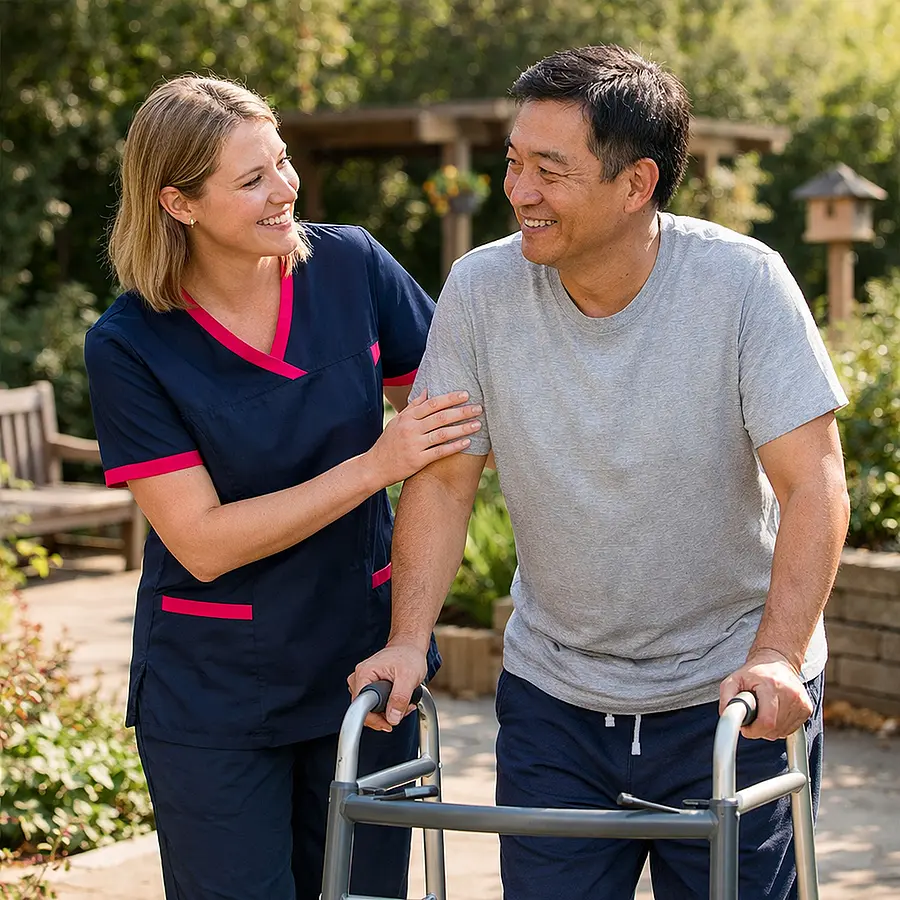
A realistic recovery garden scene with a caucasian female caregiver wearing a 00072b tunic with e51974 accents gently encouraging an asian male service user to walk outdoors after surgery. Both look positive and reassured with natural greenery mobility aid and a realistic warm daylight setting.

How a family can help with postoperative care

Loved ones can make a big difference by helping create a calm, organised recovery space and checking that essentials are within easy reach. They can offer lifts to appointments, keep an eye on mood and energy levels, and encourage rest without making the person feel helpless. Often, practical planning is just as valuable as emotional reassurance.

A realistic home recovery scene showing a black male caregiver in a 00072b tunic with e51974 detail speaking reassuringly with a caucasian daughter and her recovering asian mother. Everyone appears calm and supported in a bright living room with recovery items neatly arranged.

Ways relatives can offer support after surgery

It helps to listen carefully to what the person finds hardest, rather than assuming. One person may want help with meals, while another struggles more with washing, mobility, or remembering tablets. Families can also encourage hydration, notice changes in appetite, and share tasks with us, including meal support and help around the home.
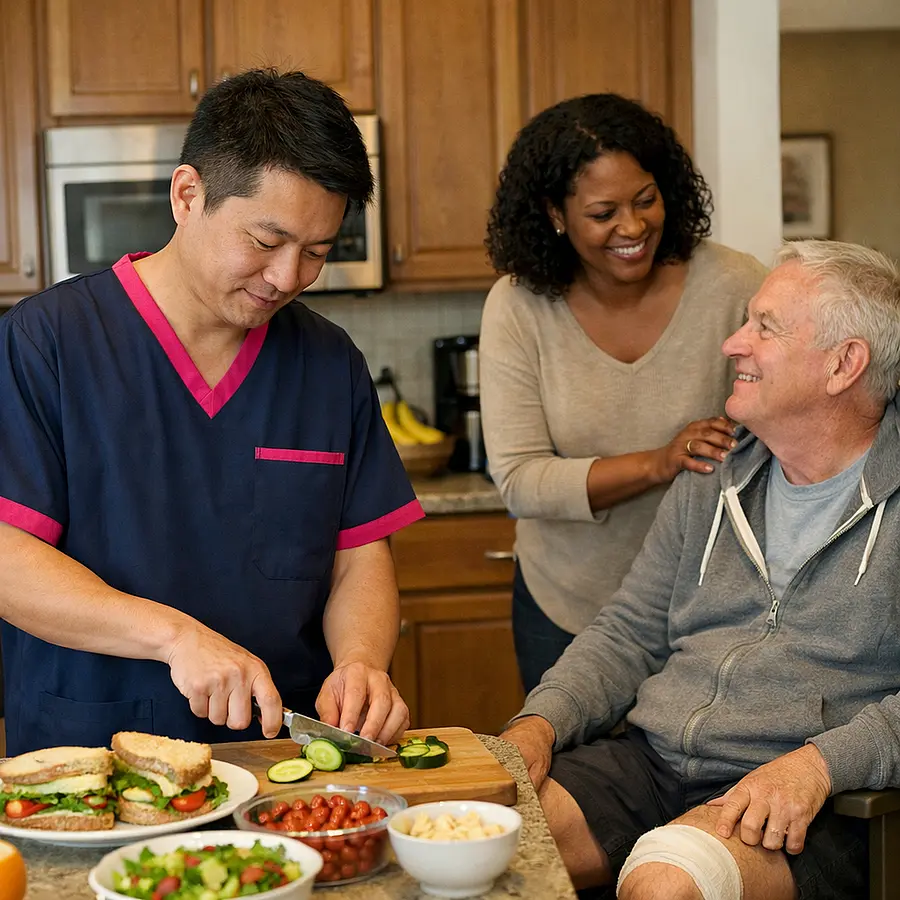
A realistic kitchen scene with an asian male caregiver in a 00072b tunic with e51974 trim preparing a light meal while a black family member and caucasian service user chat nearby. The atmosphere is warm cooperative and reassuring showing shared support after surgery in a realistic home.

How can you care for someone with post-surgery needs?

Start by following discharge instructions carefully and making note of any signs that recovery is not going as expected. Keep pathways clear, plan easy meals, and avoid letting one person carry every responsibility alone. If caring begins to affect work, sleep, or your own wellbeing, bringing in home care can protect both the carer and the person recovering.

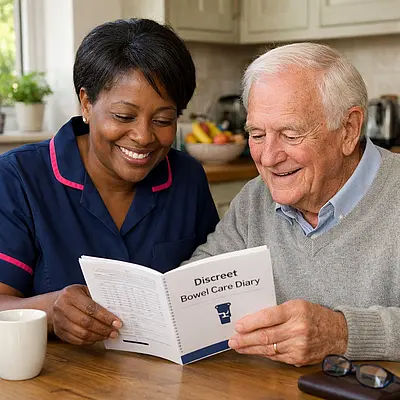
A realistic image of a caucasian male caregiver in a 00072b tunic with e51974 accent reviewing recovery notes with a black woman caring for her asian father after surgery. They look focused yet reassured seated in a tidy lounge with a calm supportive atmosphere and natural light.

Why families choose our postoperative support

Families choose us because we understand that recovery is personal. We provide practical help, reassurance, and flexibility that fits around changing needs, whether someone wants short-term help after an operation or longer support linked to another condition. Our aim is to make home feel safe, dignified, and encouraging while recovery continues at the person’s own pace.

A realistic and uplifting image of a black female caregiver in a 00072b tunic with e51974 detailing smiling with a recovering caucasian woman and her asian son in a comfortable home. The scene shows trust warmth and professional support with realistic dcor and a bright reassuring feel.

Choosing trusted care at home after surgery

Good home care after surgery should feel responsive, respectful, and easy to arrange. We take time to understand what matters most, from comfort and routine to confidence and family involvement. If you are exploring options, we can talk through what support could look like at home and help you plan a safer, more settled recovery.


A realistic consultation at home scene with an asian female caregiver in a 00072b tunic with e51974 accents talking kindly with a black older man and his caucasian partner about post surgery support. Everyone appears reassured and hopeful in a warm realistic sitting room.
Hands of young adult and senior women over green b
Contact Us

Contact us to arrange Postoperative Care at home

If you're looking for support with daily living for some one with postoperative needs, we're here to help. Our friendly team is ready to offer guidance, answer your questions, and arrange postoperative care tailored to your or your loved ones' needs in their own home. Reach out today for personalised advice and support.

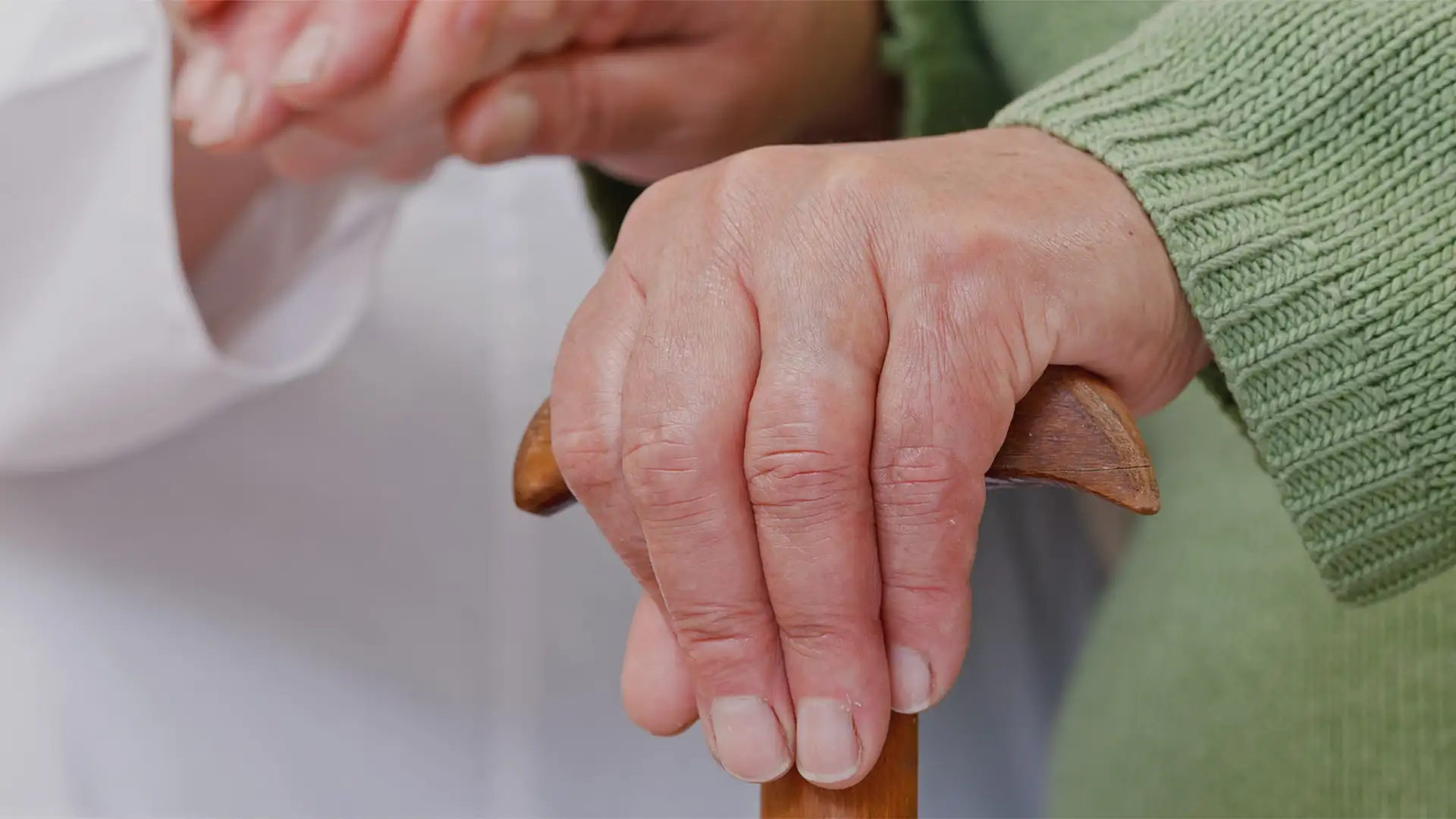
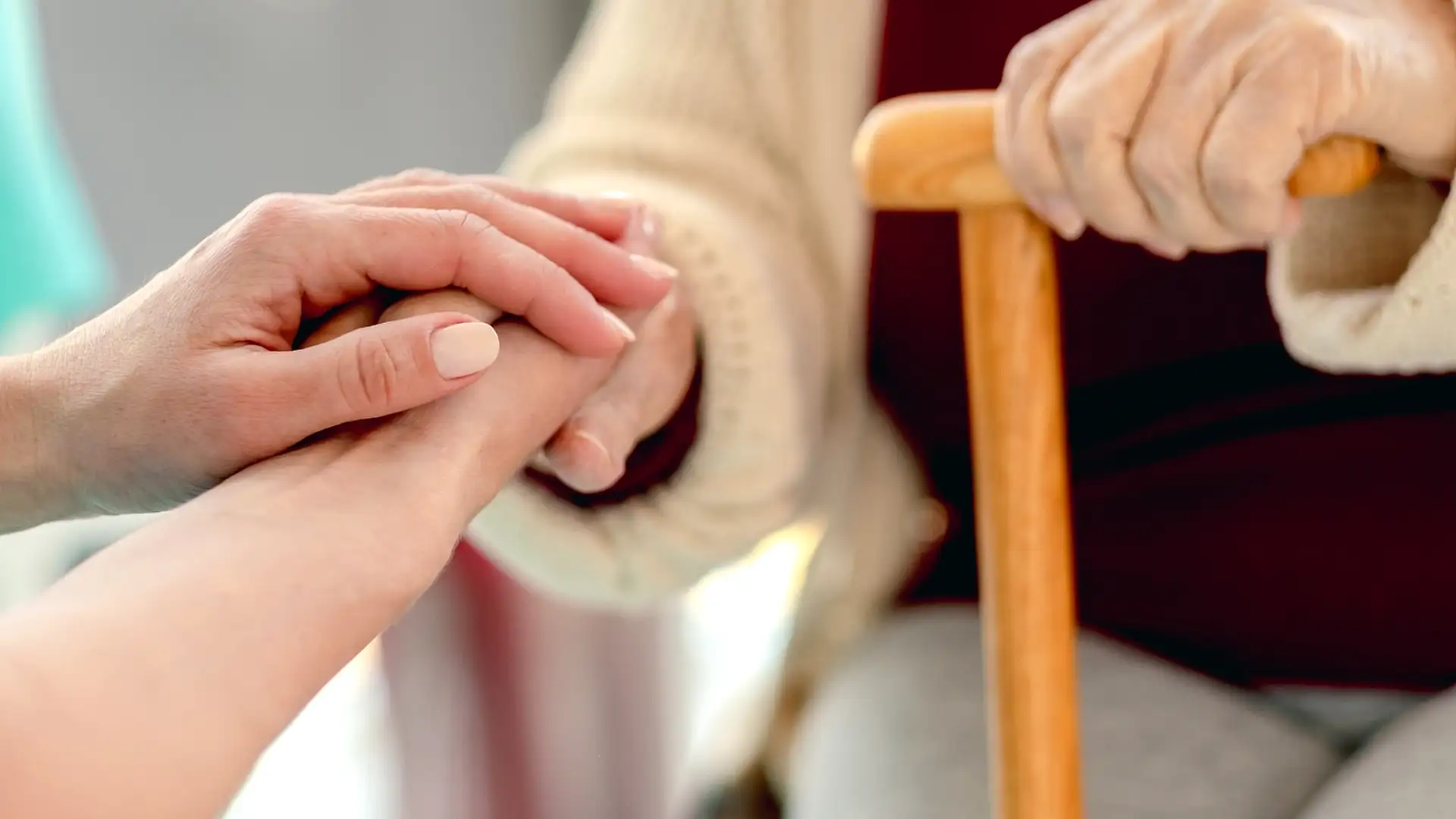
Elderly hands on a walking sitck

We're becoming a fully regulated service

While we are not currently regulated, meaning there are some services we cannot currently provide, we are in the process of registering to become a fully regulated service.

CQC

Postoperative Care FAQ's

You’re bound to have questions when exploring your home care options, so we’ve answered some of the most common ones below.

Postoperative care can reduce falls by making movement around the home safer and more structured. After surgery, people are often weaker, slower, sore, and less steady on their feet, especially if they have had pain relief, an anaesthetic, or reduced mobility before the operation. Support can include clearing hazards such as loose rugs, making sure walking aids are nearby, assisting with transfers from bed or chair, and encouraging short, sensible movement rather than rushing or overdoing things. A caregiver can also help with tasks that commonly lead to falls, such as reaching for items, carrying drinks, or getting to the toilet quickly. Having someone there to pace activity and provide reassurance often increases confidence as well, which can make people less likely to take unsafe risks on their own.

It is usually best to arrange postoperative support before discharge if possible, especially if you already know the person will need help with moving around, medicines, meals, or personal care. Planning early gives everyone more time to think about the home setup, likely routines, and what support will be most useful in the first few days. If discharge happens quickly, support can still often be arranged afterwards, but advance planning tends to make the transition smoother and less stressful. We recommend thinking about practical points such as who will collect prescriptions, whether there are stairs, if someone lives alone, and whether nights are likely to be difficult. Even if you are unsure how much help is needed, having a conversation early can help you prepare and avoid last-minute worry.

Yes, postoperative care can absolutely include help with washing, dressing, and other personal routines. After an operation, people may find bending, reaching, standing, or getting in and out of the bath difficult or uncomfortable. Support with bathing, dressing, and personal hygiene can make a big difference to safety and confidence, while also protecting dignity. Some people only need a little support nearby, while others need more active assistance in the early stages of recovery. We always aim to encourage as much independence as possible, so the person can do what they are able to do while knowing someone is there to help with what feels too difficult.

Many different people may benefit from post-surgery care at home. This includes older adults, people recovering from orthopaedic procedures, abdominal surgery, cancer-related operations, or anyone who is temporarily less mobile and less confident after a hospital stay. Some people live alone and need practical help, while others have family support but still need professional input for personal care, routines, or overnight reassurance. Even when someone seems fairly independent, tiredness and soreness can make basic tasks harder than expected. Home care can bridge that gap, helping recovery feel less stressful and reducing the pressure on relatives who are trying to manage everything themselves.

Yes, recovery after an operation often includes help with washing, dressing, and other personal routines, especially in the early days. Even simple tasks can feel difficult when someone is sore, tired, or worried about pulling on stitches, dressings, or healing areas. Support with a strip wash, shower preparation, changing clothes, drying safely, and getting ready for bed can make a huge difference to comfort and dignity. We always aim to work at the person’s pace and follow any instructions given by clinicians, such as avoiding soaking a wound or limiting certain movements. This kind of help can also conserve energy, so the person is not using all their strength on one task in the morning and then feeling exhausted for the rest of the day.

Yes, recovery care at home should adapt as someone improves. In the beginning, support may focus on more hands-on help, such as getting washed, moving safely, eating regular meals, and managing medicines. As healing progresses, the person may become more able to do some of these things independently, but still appreciate support with shopping, housework, or confidence outdoors. A flexible approach matters because recovery is not always a straight line. Some days are better than others, and support may need to increase temporarily if there is a setback or poor night. We aim to build care around what is useful now, not what was needed last week. That way, support stays proportionate, practical, and respectful of the person’s growing independence.

Postoperative medication support at home is about helping a person stay on track with prescribed routines safely and consistently. After surgery, there may be pain relief, antibiotics, blood-thinning medication, or other prescriptions to manage, sometimes at different times of day. It can be difficult to keep up, especially if someone is sleeping more, feeling sick, or finding it hard to concentrate. Support may involve prompts, helping organise medicines according to instructions, recording what has been taken, and noticing if doses seem to be missed or if pain is not being controlled well. While we do not replace clinical advice, practical medication support can help make sure routines are followed more reliably. Families often find this especially reassuring during the first week at home when everything still feels new.

Yes, postoperative recovery at home can work alongside other condition-led support, and that is often important. Many people are not only recovering from surgery; they may also be living with frailty, arthritis, cancer, diabetes, reduced mobility, or another long-term condition. Those existing needs do not disappear just because surgery has taken place. In fact, they can affect how quickly someone regains strength, appetite, confidence, or independence. A joined-up approach means recovery support can take the full picture into account rather than focusing only on the operation itself. For example, someone with arthritis may need extra help with dressing, while a person with diabetes may need careful attention to meals and routines. Looking at the whole person helps create a more realistic and supportive care plan.

In some situations, good support at home can make hospital discharge feel safer and more manageable. A person may be medically ready to leave hospital but still feel anxious about coping alone with mobility, meals, washing, or pain management. Having care arranged at home can reduce that worry and provide continuity once they return. Our role is not to replace medical advice, but to help the person follow it in everyday life. That could mean helping them settle in, making sure essentials are nearby, supporting routines, and giving families reassurance. Home support often helps people rest better and rebuild confidence in a familiar environment while recovering.

If someone lives alone, postoperative care can make the difference between feeling vulnerable and feeling supported. Coming home after an operation can be unsettling when there is nobody there to help with meals, prompts for medicine, getting washed, or simply offering reassurance if something feels wrong. Home support can create structure around the day, making sure the person is eating, drinking, moving safely, and not struggling in silence. It can also reduce the temptation to overdo things, such as trying to lift shopping or rush upstairs without help. For people who live alone, emotional support matters as much as the practical side. A regular, friendly presence can improve confidence and help recovery feel less isolating, especially in the evenings or after a difficult night.

We proudly provide high-quality home care across the East Midlands, in an around the towns and cities detailed below.

Elderly hands on a walking sitck

Call us to find out more about Postoperative Care

East Midlands

We proudly provide high-quality home care across the East Midlands

Our Reviews

We’re proud of the trust families place in us. Here’s what some of the people we support, and their loved ones, say about our home care services.

"Great support for my mum after she lost her confidence after a fall and hospital stay."

Sarah L

"They have been a great help with keeping on top of my dads laundry and general house cleaning as he is bed bound and have been being changed daily."

Emily R

"Really helped me with keeping on top of my house work since my parkinson's has progressed."

Mark T

Senior woman hand in caregiver hands

Join The Good News Newsletter

Be the first to discover exclusive offers, and service updates. Your journey to independent living starts here - where everything truly is fine.


Contact The Good Place

We’d love to hear from you! Whether you have questions, want to learn more about our home care service, or are ready for us to start supporting you or your loved one, our good people are here to help. If you are looking to make a complaint, you can contact our Registered Manager or Nominated Individual directly.

Send Us a Message


Elderly hands on a walking sitck

Working in Partnership

We work closely within the community to provide safe, compassionate, reliable home care that supports independence, dignity, and improved wellbeing while remaining at home.

Staffordshire County Council
Derbyshire County Council
NHS