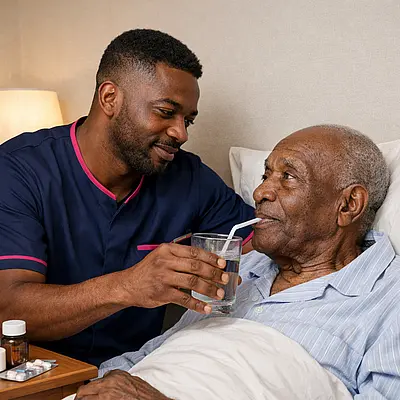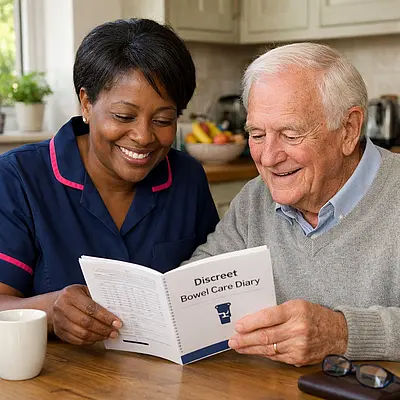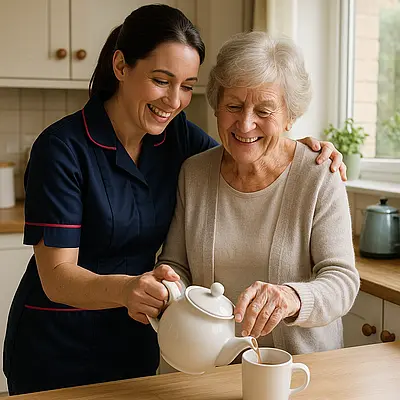

Realistic close up of an elderly Asian woman hesitating at the bottom of a staircase holding the banister while a young White female caregiver in a 00072b tunic with e51974 accents stands beside her offering a reassuring hand and smile.

Elderly Care

Elderly care at home offers flexible, dignified support so you or your loved one can stay independent, safe and comfortable in familiar surroundings. From personal care and companionship to condition-led support, our good people can build a package around your life. Contact us today to explore how we can help.

Elderly care at home explained

Elderly care is about helping older adults stay safe, comfortable, and independent for as long as possible. Through our flexible home care, we support with everyday tasks, emotional wellbeing, and confidence, so you or your loved one can keep living life on your own terms while we provide reassuring, practical help in the place you know best.
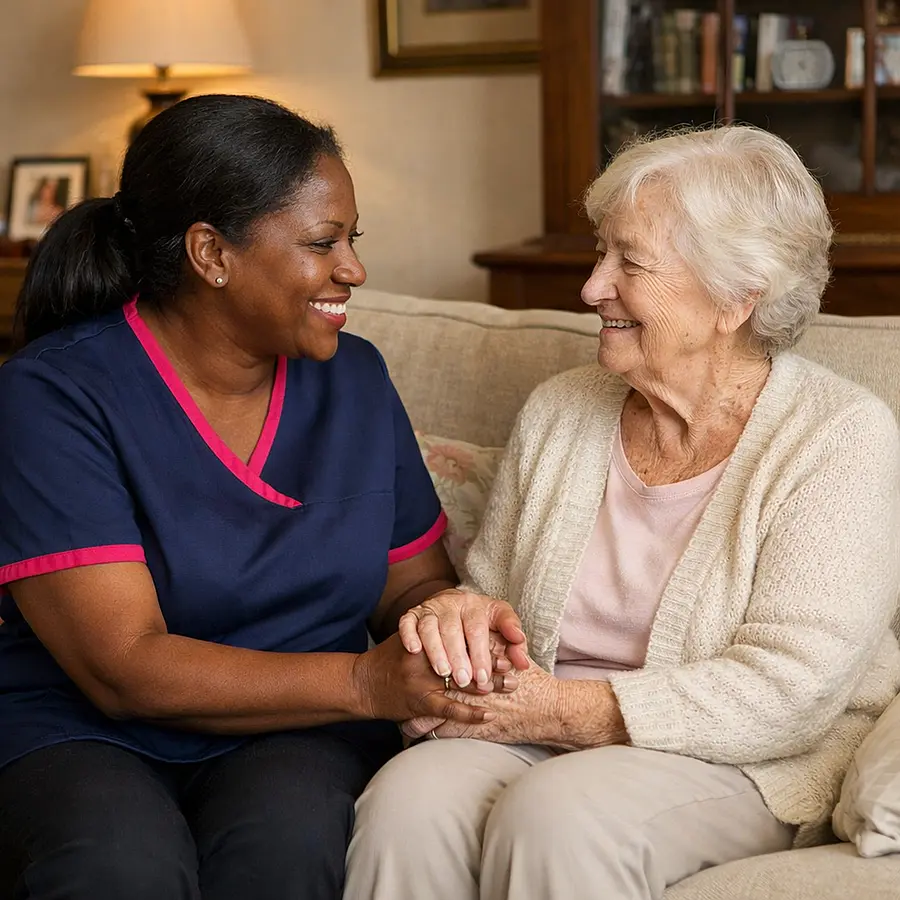
Warm realistic scene of a middle aged Black female caregiver in a navy 00072b tunic with e51974 trim sitting on a sofa beside an elderly white woman in her living room both smiling as they chat and hold hands conveying reassurance and trust in a homely setting.

What elderly care really means

Elderly care isn’t just about staying safe; it’s about living well. Our home care can include help with washing, dressing and everyday hygiene, preparing meals, taking medication, getting out and about, and simple companionship. We tailor support to each person’s routines, preferences and health needs, so care feels like a helping hand rather than a loss of independence.

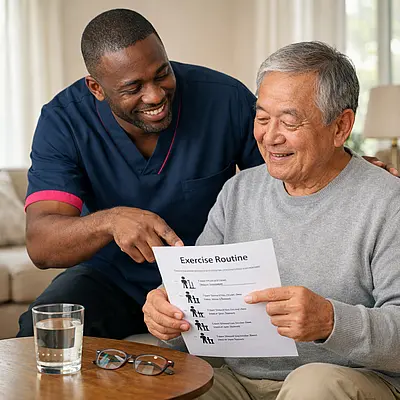
Realistic image of an older Asian man in a cosy kitchen smiling at a young white male caregiver wearing a 00072b tunic with e51974 accents as they discuss a written care plan at the table mugs of tea nearby atmosphere relaxed and collaborative.

Different types of elderly care at home

Elderly care at home can be as light or as in-depth as you need. Some people only want a friendly visit and help with household chores, while others need support with complex health conditions such as frailty, dementia or Parkinson’s. We can blend condition-led support with practical help like household tasks to create a rounded package of care.
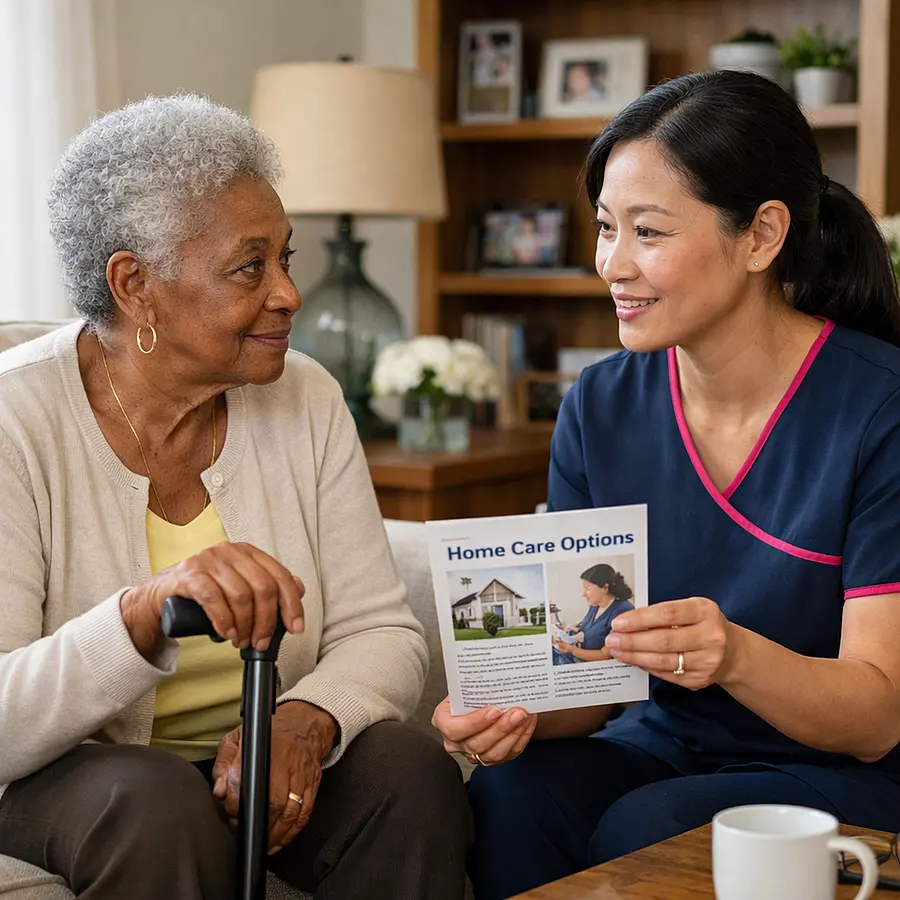
Realistic living room scene with an elderly Black woman using a walking stick listening attentively to an Asian female caregiver in a 00072b tunic with e51974 detailing who is gently explaining a leaflet about home care options both seated comfortably radiating calm and clarity.

Can elderly care be provided at home?

Yes. Many older adults can safely remain at home with the right support in place. Our domiciliary care adapts to changing needs, from occasional visits to regular daily calls or overnight reassurance. We work alongside community nurses and other professionals, helping to reduce hospital admissions and keep life familiar, comfortable and reassuring.

Realistic image of an elderly white man sitting on a sofa thoughtfully rubbing his knee with an Asian female caregiver in a 00072b tunic with e51974 accents kneeling nearby listening kindly and noting symptoms on a clipboard cosy living room setting.

Home-based elderly care versus moving into care

Moving into residential care isn’t the only option. With personalised support at home, many older people continue enjoying their routines, local community and treasured possessions. We can combine help with cooking and nutrition, mobility, and medication with condition-led input, whether that’s memory support or tailored frailty care.

Realistic kitchen image of an elderly Asian woman leaning on the counter while a white female caregiver in a 00072b tunic with e51974 accents serves a freshly cooked meal both smiling sun streaming through the window home environment tidy and familiar.

Common changes you may notice in later life

Ageing can bring slower movement, reduced strength, memory lapses, sight or hearing changes, and greater tiredness. Some people experience long-term conditions like frailty, arthritis or diabetes, or recover from strokes and surgery. These changes can make everyday tasks feel harder, but with sensitive, practical help, they don’t have to mean losing independence.

Realistic close up of an elderly white man sitting in an armchair reading glasses in hand while an Asian male caregiver in a 00072b tunic with e51974 trim gently passes him a walking aid both sharing a light hearted smile living room softly lit.

Signs an elderly person may need extra support

You might notice unopened mail, an empty fridge, weight loss, poor hygiene, or more frequent falls. Maybe they’re missing medications, feeling lonely, or avoiding going out. Our home care team can step in with tailored support – from regular friendly visits to help managing complex health needs – before things reach a crisis point.
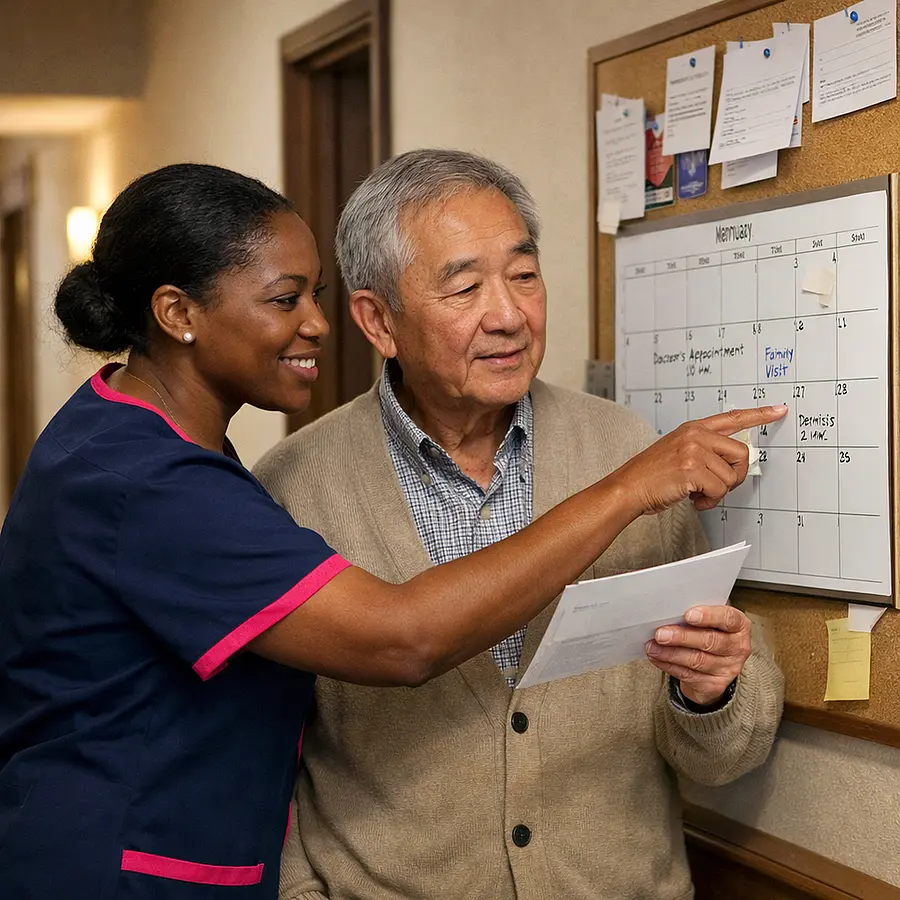
Realistic hallway scene with a Black female caregiver in a 00072b tunic with e51974 accents helping an elderly Asian man check his post and calendar on the wall both reviewing appointments together mood practical yet warm and reassuring.

How we provide elderly care at home

We start by listening: what matters most, what feels difficult, and what a good day looks like. Support might include help with bathing and dressing, safe mobility, meal prep, and support with tablets or eye drops. We then build a plan that fits around existing routines and family support, adapting as needs change.

Realistic dining table scene where a white male caregiver in a 00072b tunic with e51974 trim reviews a written care plan with an elderly Black couple using a pen and notepad all three smiling and engaged in equal conversation.

Everyday tasks we can help with

Our team can support with gentle washing, getting dressed, shaving, hair care and continence, as well as planning and cooking nutritious meals. We also help with laundry, light cleaning and changing bedding, plus safe movement around the home. Everything is done respectfully and at the person’s own pace, protecting dignity and autonomy.

Realistic image of an Asian female caregiver in a 00072b tunic with e51974 details helping an elderly white woman button a cardigan in a bright bedroom freshly made bed behind them both laughing gently atmosphere respectful and uplifting.

Specialist elderly care for complex conditions

Many older adults live with conditions like dementia, Parkinson’s, COPD, arthritis or diabetes. We offer condition-led support, drawing on services such as mobility-focused care, specialist dementia care, or frailty support. Our aim is to manage symptoms sensitively while preserving independence, confidence and enjoyment of life at home.
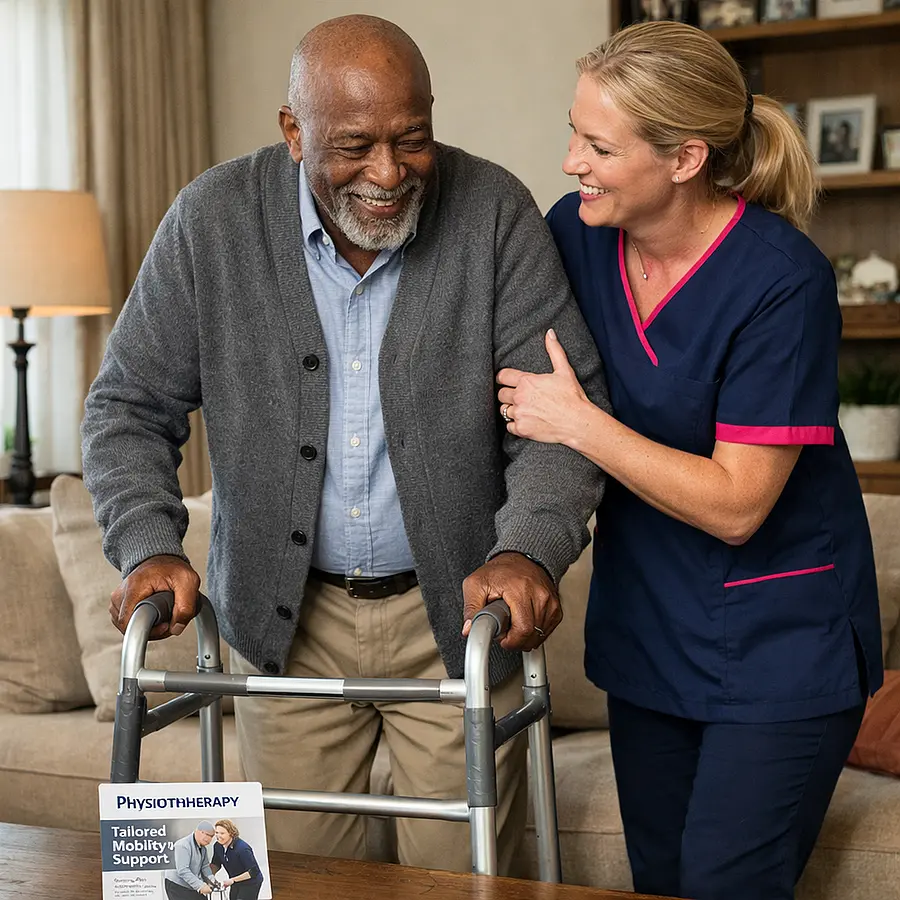
Realistic lounge scene with an elderly Black man using a frame to stand while a white female caregiver in a 00072b tunic with e51974 trim supports him both focused yet smiling a physiotherapy leaflet on the coffee table showing tailored mobility support.

Elderly care that nurtures hobbies and interests

Life isn’t just about personal care; it’s about purpose and joy. We build time for hobbies into each visit – whether that’s gardening, crosswords, knitting, or following a favourite sports team. Our companion visits can include outings, clubs, or simply sharing stories over a cuppa, helping older adults stay connected to the things that make them feel like themselves.
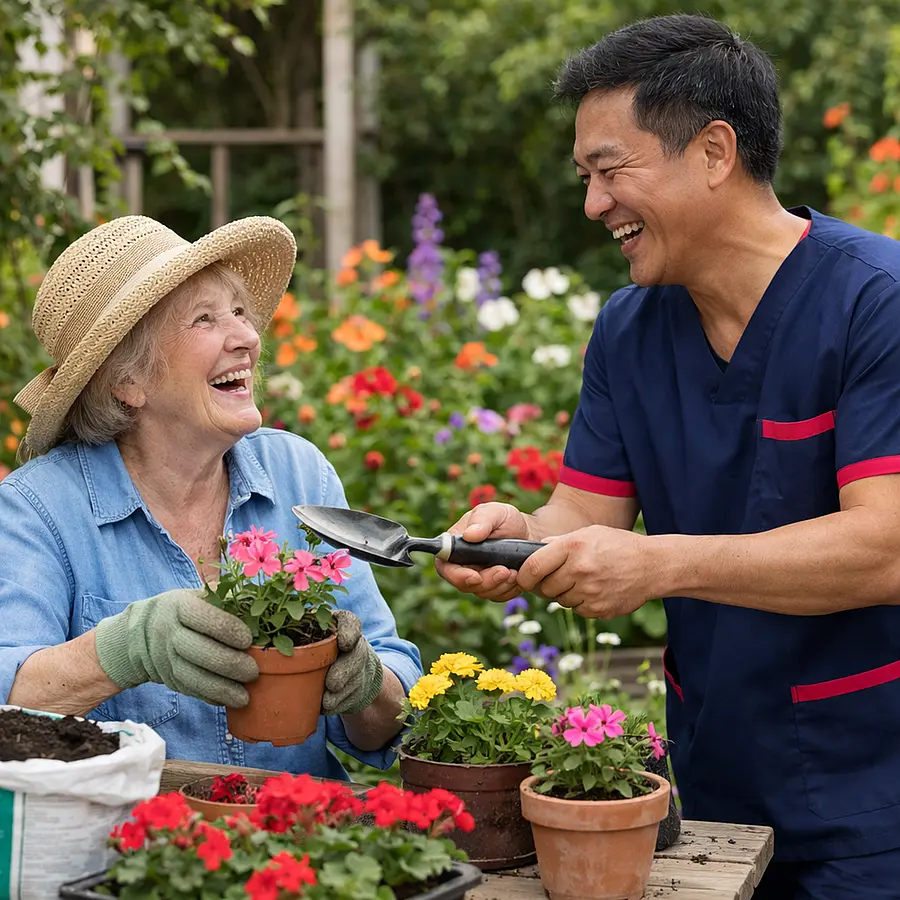
Realistic garden scene of an elderly white woman in a sun hat potting plants on a table while an Asian male caregiver in a 00072b tunic with e51974 accents passes her a trowel both laughing together bright flowers around them sense of shared enjoyment.

Reablement-focused elderly care after illness or falls

After a hospital stay, fall or illness, confidence can take a real knock. Our reablement-style support focuses on gently rebuilding strength and independence at home. Working alongside therapy goals, we can encourage safe movement, practice daily tasks, and follow fall-confidence plans, always pacing activities carefully so progress feels achievable, not overwhelming.
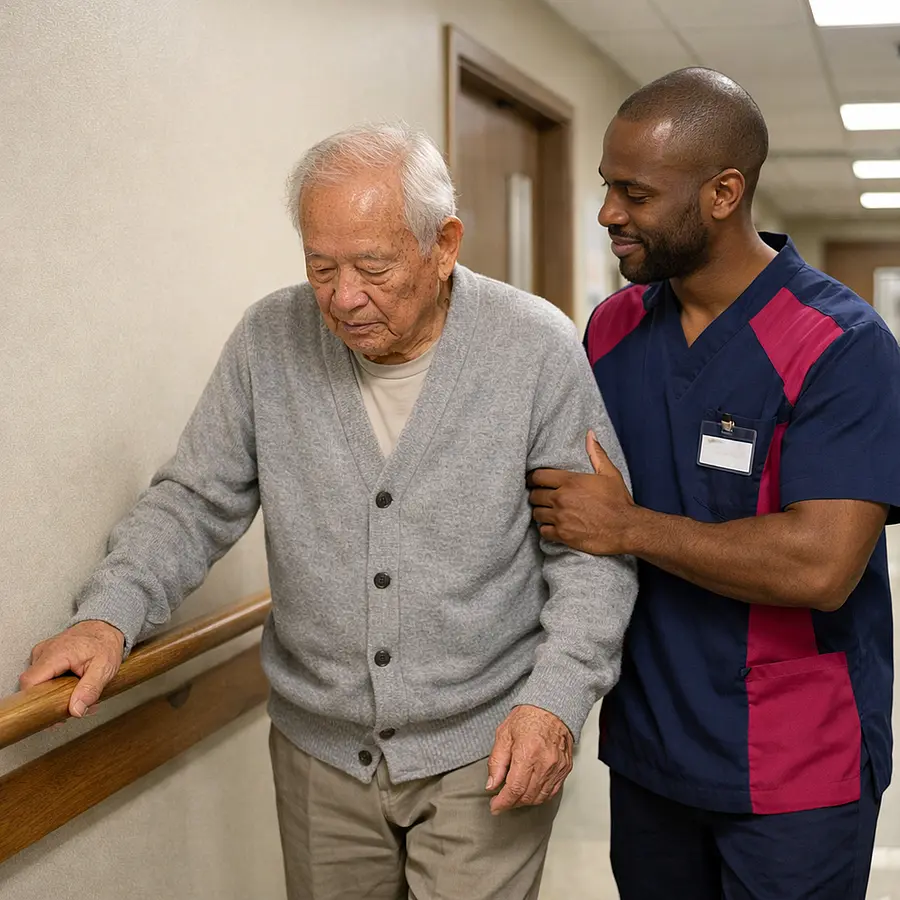
Realistic hallway image with an elderly Asian man using handrails while a Black male caregiver in a 00072b tunic with e51974 panels walks beside him offering steady arm support both concentrating yet encouraged demonstrating reablement after a fall.

Elderly care that supports safe days out

Getting out of the house can do wonders for mood and confidence. We can help plan and accompany trips, from coffee in town to family events. By considering mobility, toilets, transport and rest breaks, and drawing on ideas from guides to safe days out, we help older adults enjoy the wider world while feeling secure and supported.
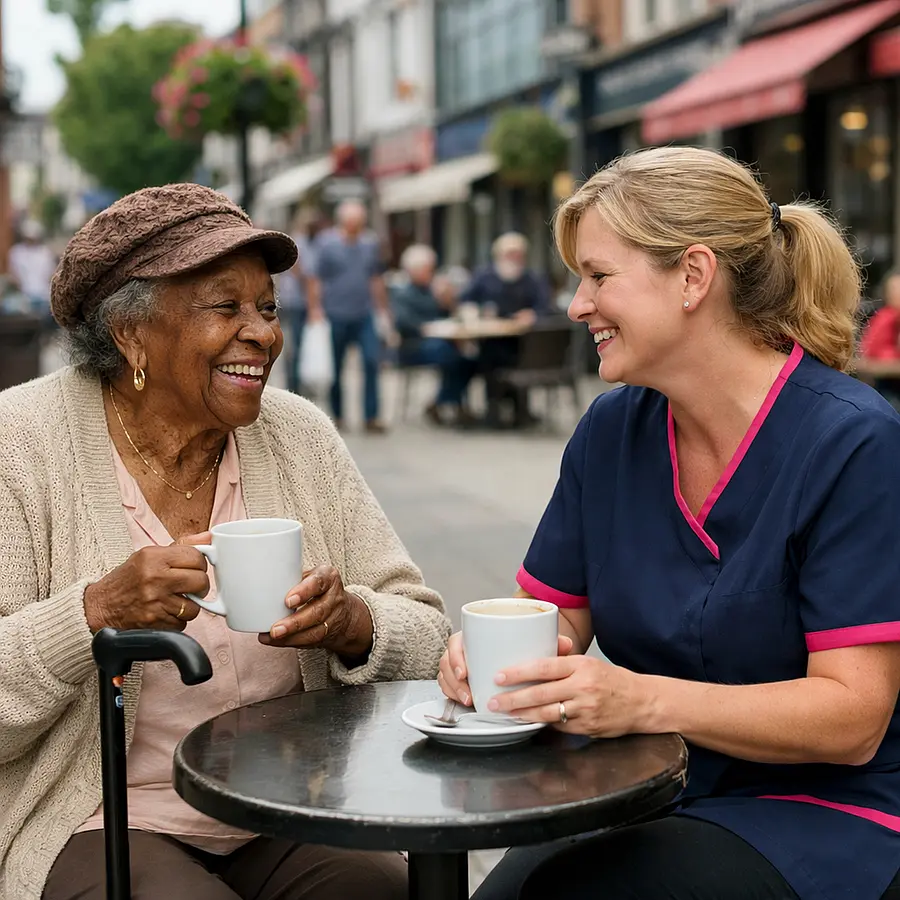
Realistic outdoor caf scene with an elderly Black woman using a walking stick seated at a small table chatting happily with a white female caregiver in a 00072b tunic with e51974 trim both with hot drinks bustling but calm high street in the background.

How loved ones can support an elderly relative

Simple, consistent contact can make a huge difference: regular calls, short visits, or shared meals. You can help by noticing changes, encouraging gentle activity, and supporting appointments. Many families also value our companionship care when they can’t be there, knowing someone trusted is checking in, listening, and supporting day-to-day wellbeing.

Realistic living room image of an elderly Asian woman her adult daughter and a Black male caregiver in a 00072b tunic with e51974 accents sitting together on a sofa looking at a shared notebook planning care tasks collaboratively with warm smiles.

Practical ways to help day-to-day

Offering lifts, setting up easy-to-use phones or tablets, organising medication boxes, and arranging online food shopping can all lighten the load. You might also explore simple home adaptations such as grab rails and better lighting. Combining family support with our professional home care often gives the best balance for everyone involved.

Realistic kitchen table scene with an elderly white man and his middle aged daughter setting up a pill organiser while an Asian female caregiver in a 00072b tunic with e51974 trim talks them through written instructions atmosphere organised and calm.

How to care for an elderly loved one without burning out

Caring for a relative is rewarding but demanding. It helps to share tasks with siblings, friends and professionals, and to protect time for your own rest and hobbies. Our night-time support or daytime visits can provide respite so you can sleep, work and recharge, knowing your loved one is safe and well-supported at home.
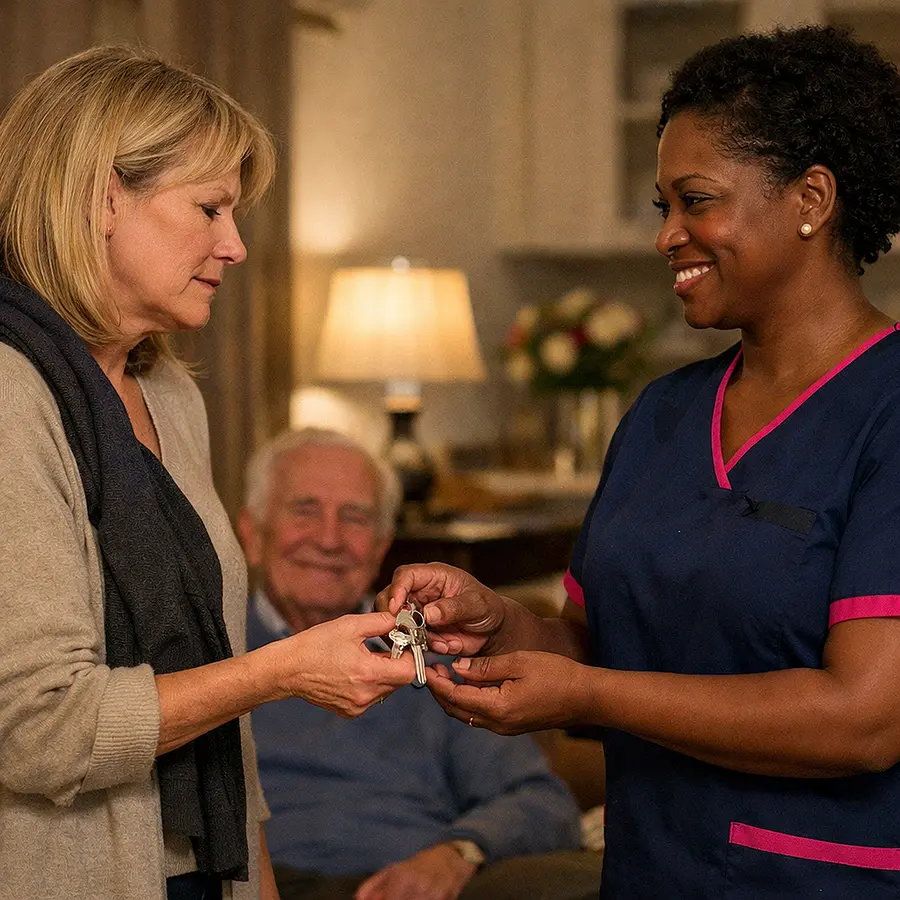
Realistic evening lounge scene where an exhausted middle aged woman hands over house keys to a reassuring Black female caregiver in a 00072b tunic with e51974 accents an elderly man smiling from his armchair symbolising shared caring responsibilities.

Balancing work, family and caring responsibilities

Many people juggle jobs, children and elderly parents. Planning ahead is key: agree who does what, use calendars for visits and appointments, and explore flexible working if possible. Our support, alongside tips from guides on balancing caring, can help you create a sustainable plan that keeps everyone’s wellbeing in view, including your own.

Realistic home office scene of a middle aged Asian man checking a family calendar on his laptop while talking by phone to a white female caregiver in a 00072b tunic with e51974 trim coordinating his elderly mothers visits atmosphere organised and reassuring.

Why choose us for elderly care at home

We understand that inviting someone into your home is a big step. Our carers are carefully recruited, trained and supported to deliver reliable, compassionate, person-centred care. From hands-on daily support to specialist condition-led services, we work alongside you and your family to provide flexible, respectful care that truly fits your life and priorities.
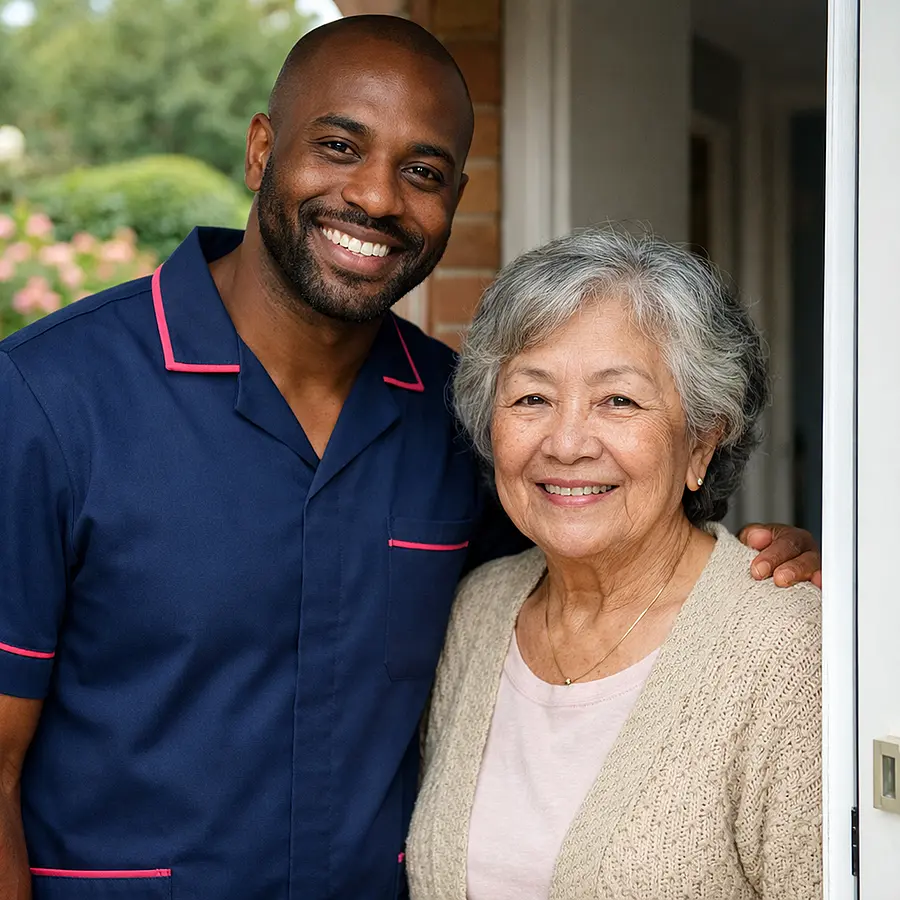

Realistic portrait style image of a smiling Black male caregiver in a 00072b tunic with e51974 piping standing beside an elderly Asian woman in her doorway both looking at the camera front garden visible conveying professionalism trust and warmth.
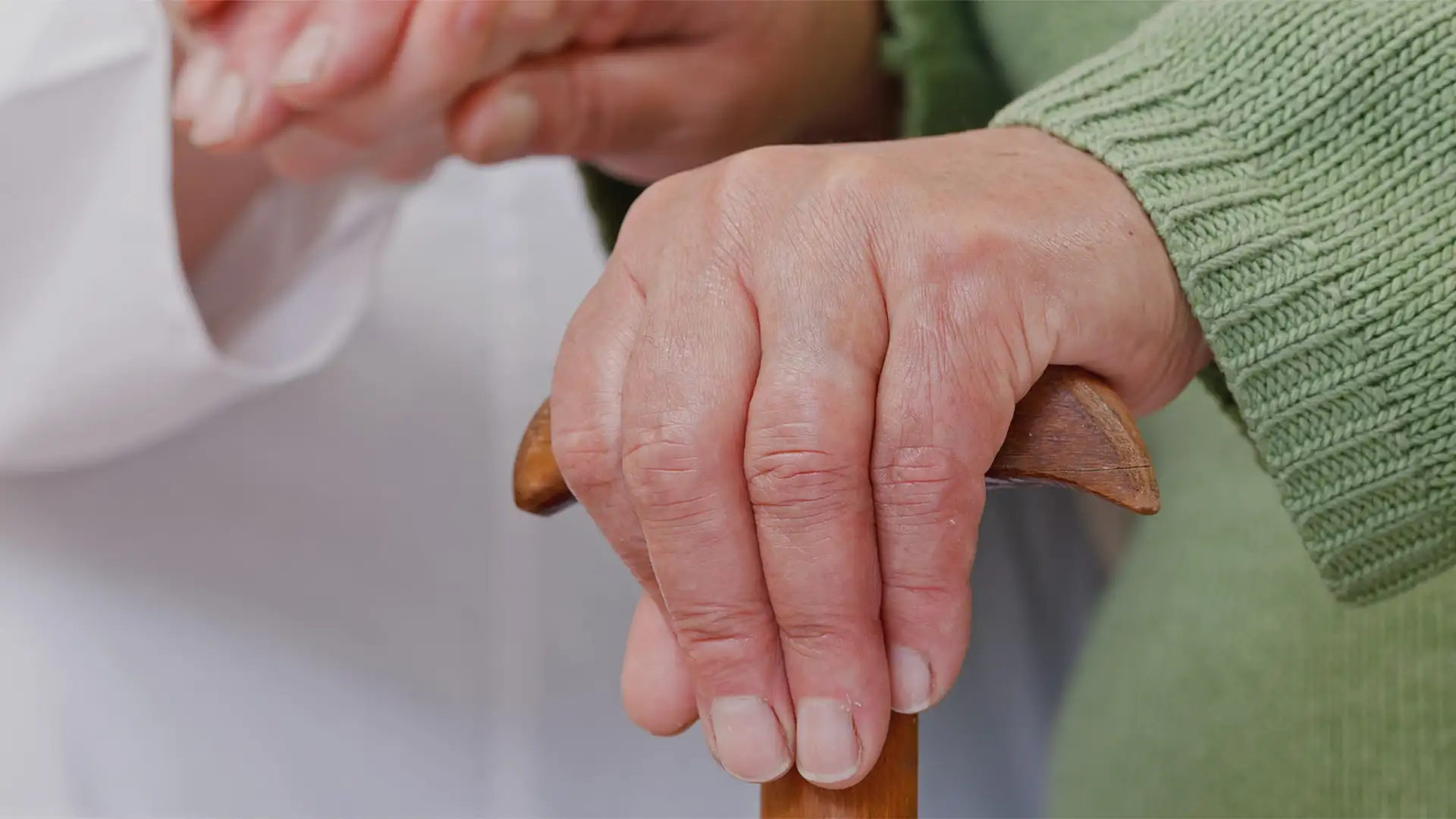
Hands of young adult and senior women over green b
Contact Us

Contact us to arrange Elderly Care at home

If you're looking for support with daily living for some one elderly, we're here to help. Our friendly team is ready to offer guidance, answer your questions, and arrange elderly care tailored to your or your loved ones' needs in their own home. Reach out today for personalised advice and support.

Elderly hands on a walking sitck

We're becoming a fully regulated service

While we are not currently regulated, meaning there are some services we cannot currently provide, we are in the process of registering to become a fully regulated service.

CQC

Elderly Care FAQ's

You’re bound to have questions when exploring your home care options, so we’ve answered some of the most common ones below.

A carer can support with many practical and emotional aspects of daily life. This might include help with washing, getting dressed, oral care and shaving; assistance to move safely around the home; preparing meals and drinks; prompting or administering prescribed medicines; and keeping on top of light housework, laundry and bed changes. Just as importantly, carers provide conversation, reassurance and regular social contact, which is vital for wellbeing. Some carers also accompany people to appointments, shops, social groups or faith activities, helping them stay connected to their community. The exact tasks are agreed in a personalised care plan.

Elderly care at home is personalised support that helps older adults stay safe, comfortable and independent in the place they know best. Instead of moving into a residential setting, care comes to the person. That might include help with washing, dressing, mobility, toileting, meals and drinks, housework, shopping, appointments and companionship. It can also include specialist, condition-led support for needs like dementia, frailty, Parkinson’s or after a stroke. The level of help is flexible – from a few visits a week to multiple daily calls or overnight reassurance, depending on what feels right for you and your family.

Elderly care at home is support provided in an older person’s own house or flat rather than in a residential setting. It can include help with personal care, medication prompts, preparing meals, housework and companionship. For some people this might mean a short daily visit; for others, several calls a day or even live-in or overnight support. The key benefit is that the person stays surrounded by their memories, routines and community, while receiving tailored professional help that adapts as their needs change. Families gain peace of mind, knowing someone reliable is checking in regularly and raising any concerns early.

Timescales depend on how urgent the situation is and what level of support is needed, but we understand that families often contact us when things feel pressing. After an initial conversation to understand your needs, we’ll arrange an assessment visit to build a care plan and agree visit times. In many cases, we can start with a basic package quite quickly and then refine it over the following days as we get to know your loved one. If there has been a sudden change, such as hospital discharge, we’ll always do our best to respond promptly and safely.

Look for gradual changes in how your parent manages day-to-day life. Warning signs include less interest in cooking, weight loss, expired food in the fridge, poor hygiene, wearing the same clothes repeatedly, more frequent falls or near-misses, or difficulty keeping on top of bills and appointments. Emotional changes like withdrawal, low mood or increased anxiety also matter. If you’re finding you need to pop in more often, or you’re worrying when you’re not there, it may be time to discuss home care. Starting with a small amount of support early can feel less overwhelming and helps maintain independence for longer.

It’s common for older adults to feel anxious or defensive about accepting care, especially if they link it with losing independence. Start with gentle conversations focused on what they find difficult or tiring, rather than insisting on “care”. Suggest trying a small amount of help, perhaps framed as support for you rather than them: “It would really reassure me if someone could pop in when I’m at work.” Meeting a carer for an informal visit before care begins can also help. We’re used to working sensitively with people who are unsure, building trust gradually and always respecting their choices and rights.

Yes, light domestic support is often a key part of elderly care. A tidy, hygienic environment reduces the risk of falls and infections and can lift someone’s mood. Carers can help with tasks like vacuuming, washing up, changing bedding and doing laundry through our home help services. We’ll agree what’s most important to your loved one – perhaps keeping the kitchen safe and organised, or making sure clothes and bedding are fresh. This support can be combined with personal care, meal preparation and companionship in the same visit.

Yes. Many older adults live with one or more health conditions such as dementia, Parkinson’s, arthritis, COPD or diabetes. Home care can be tailored to each diagnosis as well as the person’s preferences. For example, we might combine memory prompts and calm routines with mobility support or help managing breathlessness. Our wider condition-led care services include specialist support for a range of long-term conditions, and we can work alongside community nurses and therapists. This joined-up approach means your loved one receives consistent, thoughtful care in the place they know best.

Yes. Supporting with bathing and personal hygiene is a core part of many elderly care packages. Our carers are trained to support with washing, showering, continence care, skincare and dressing in a way that feels respectful and unhurried. We know that accepting help with such personal tasks can feel daunting at first, so we always take time to build trust and maintain privacy. Using our dedicated personal care services, we can also suggest simple adaptations like non-slip mats or shower chairs to make the bathroom safer. The goal is to help the person feel clean, comfortable and dignified every day.

Residential care involves moving to a care home where staff are present 24/7 and routines are shared with other residents. Elderly home care allows someone to remain in their own environment, with support visiting as often as needed. At home, routines, mealtimes and bedtimes are built around the person rather than the home’s schedule. Familiar surroundings can be especially helpful for people with memory problems, as they reduce disorientation. Home care also lets couples stay together and maintain relationships with neighbours and local services. While both options have benefits, many families find starting with home care preserves independence and offers a more personalised approach.

Elderly hands on a walking sitck

Call us to find out more about Elderly Care

East Midlands

We proudly provide high-quality home care across the East Midlands

Our Reviews

We’re proud of the trust families place in us. Here’s what some of the people we support, and their loved ones, say about our home care services.

"Great support for my mum after she lost her confidence after a fall and hospital stay."

Sarah L

"They have been a great help with keeping on top of my dads laundry and general house cleaning as he is bed bound and have been being changed daily."

Emily R

"Really helped me with keeping on top of my house work since my parkinson's has progressed."

Mark T

Senior woman hand in caregiver hands

Join The Good News Newsletter

Be the first to discover exclusive offers, and service updates. Your journey to independent living starts here - where everything truly is fine.


Contact The Good Place

We’d love to hear from you! Whether you have questions, want to learn more about our home care service, or are ready for us to start supporting you or your loved one, our good people are here to help. If you are looking to make a complaint, you can contact our Registered Manager or Nominated Individual directly.

Send Us a Message


Elderly hands on a walking sitck

Working in Partnership

We work closely within the community to provide safe, compassionate, reliable home care that supports independence, dignity, and improved wellbeing while remaining at home.

NHS
Derbyshire County Council
Staffordshire County Council