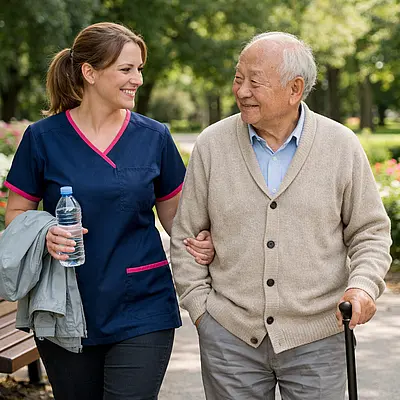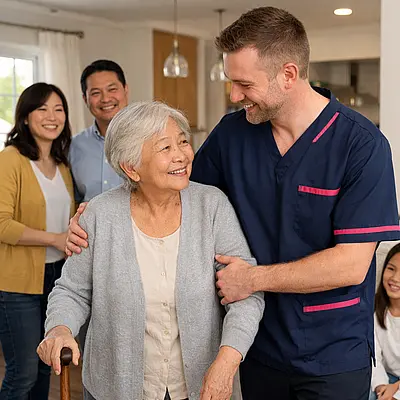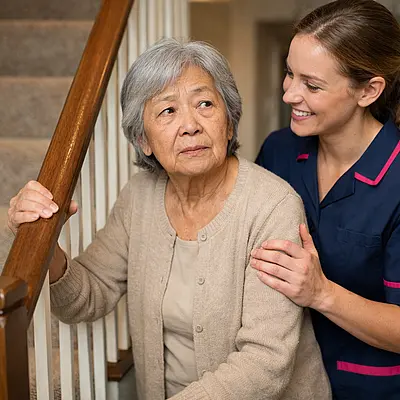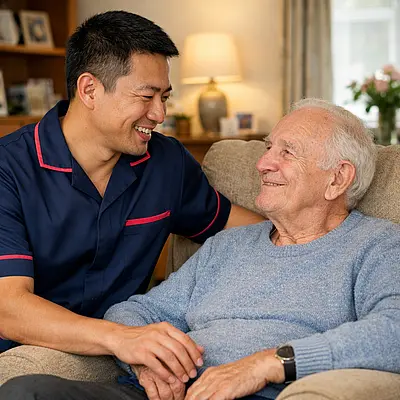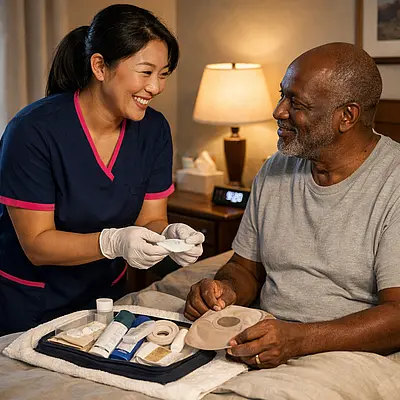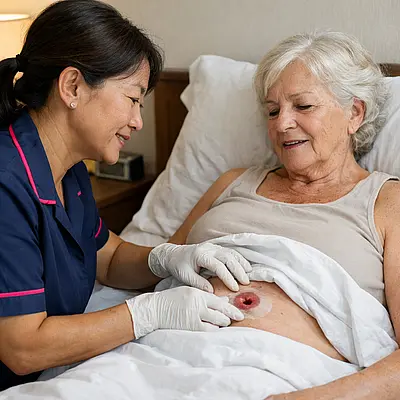
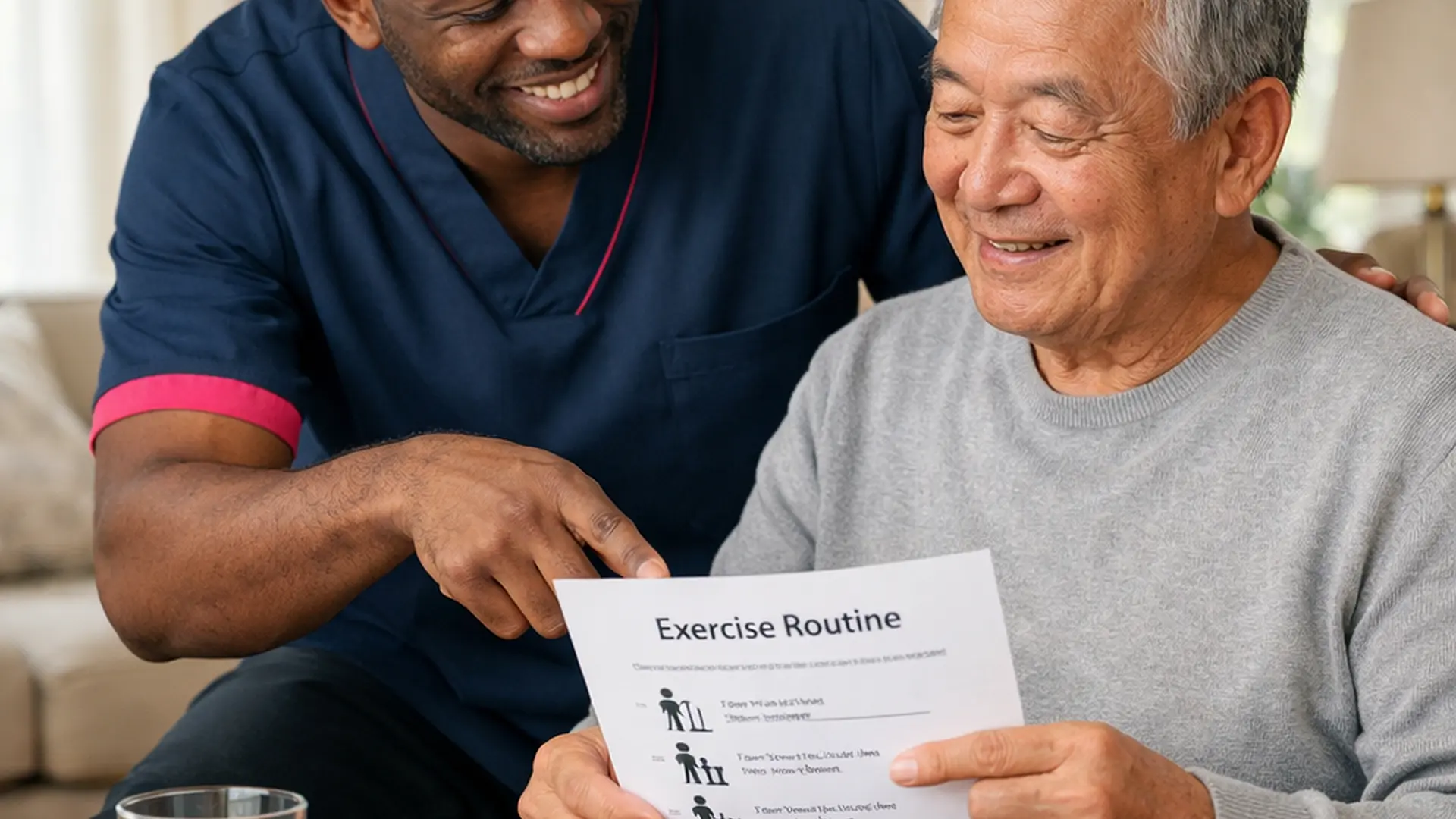
A realistic home support image showing a black male caregiver in a 00072b tunic with e51974 accent encouraging an asian older man to follow a simple written exercise routine while seated glass of water and reading glasses nearby bright lounge warm smiles calm and reassuring realistic atmosphere

Gentle exercise ideas for older adults at home

Discover gentle exercise ideas for older adults at home, with simple tips to improve strength, balance and confidence safely. Learn how daily routines and tailored home care support can make movement easier. Contact us to discuss caring support for you or your loved one.

Getting started with gentle exercise ideas for older adults at home

Gentle exercise ideas for older adults at home can help improve strength, balance, confidence, and day-to-day comfort without needing a gym or complicated equipment. Whether you are supporting a parent, partner, or yourself, small movements done regularly can make everyday tasks feel easier and safer while supporting independence at home.
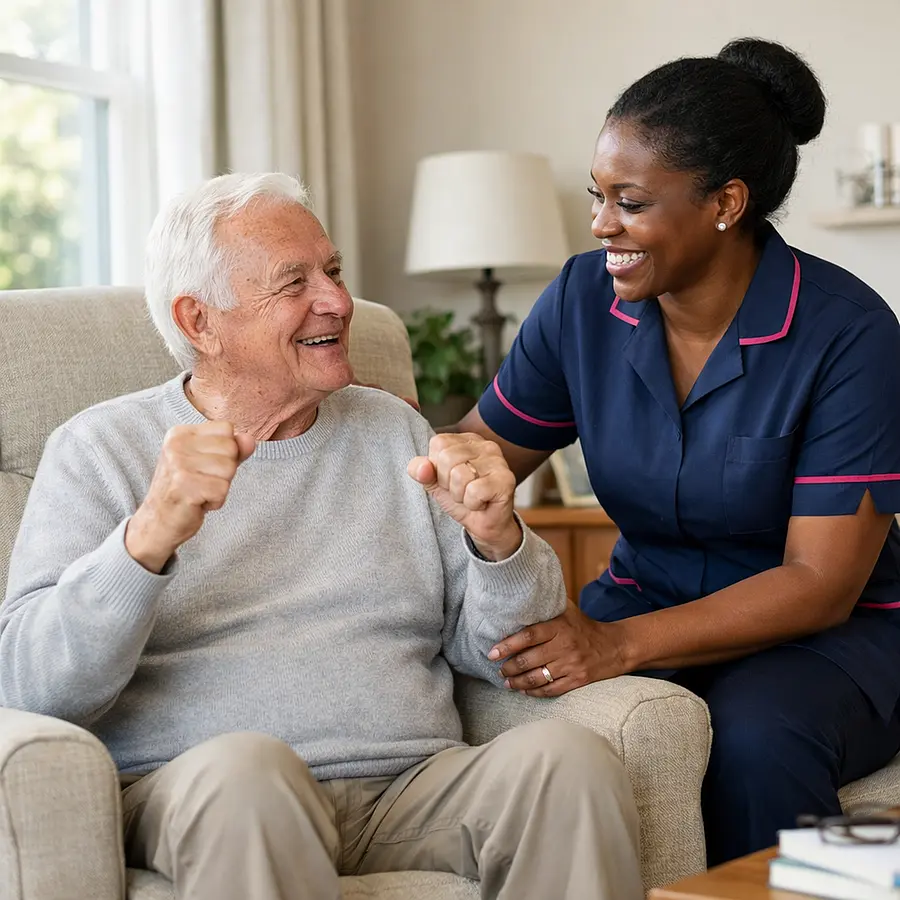
A realistic home care scene in a bright living room a black female caregiver wearing a tunic uniform in 00072b with e51974 accent smiling warmly beside an elderly caucasian man seated comfortably encouraging simple seated movement natural daylight tidy home setting joyful and reassuring atmosphere r

Why gentle home exercise matters in later life

As we get older, muscles can weaken, joints may feel stiffer, and confidence can dip after illness, pain, or a fall. Gentle home exercise supports circulation, flexibility, posture, and balance. It can also lift mood and create a helpful routine, especially when paired with regular meals, rest, and a calm daily structure.
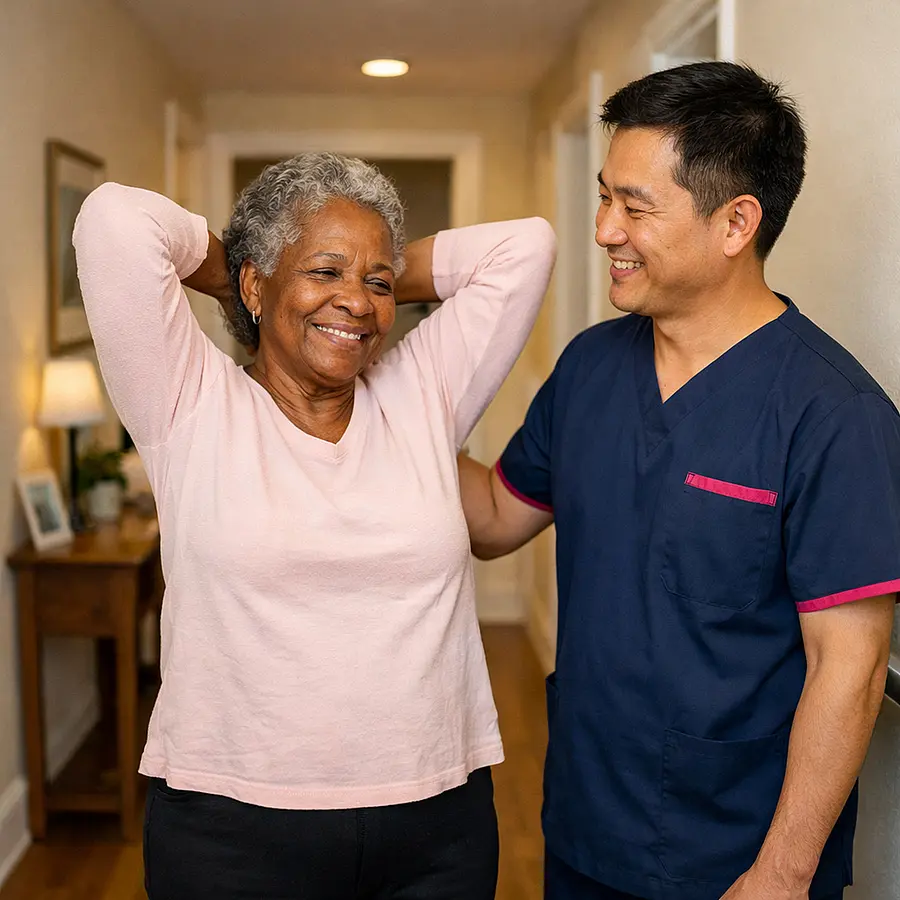
A realistic hallway exercise moment at home with an asian male caregiver in a 00072b tunic with e51974 accent standing close by and reassuring an elderly black woman as she gently stretches her shoulders warm smiles safe uncluttered space supportive and homely atmosphere realistic and natural

Reducing exercise risks at home for older adults

The main risks are overdoing it, losing balance, moving too quickly, or exercising in an unsafe space. Breathlessness, dizziness, chest pain, or sudden weakness should never be ignored. Clear floors, supportive footwear, a sturdy chair, and advice from a GP or clinician can all help make movement safer and more comfortable.
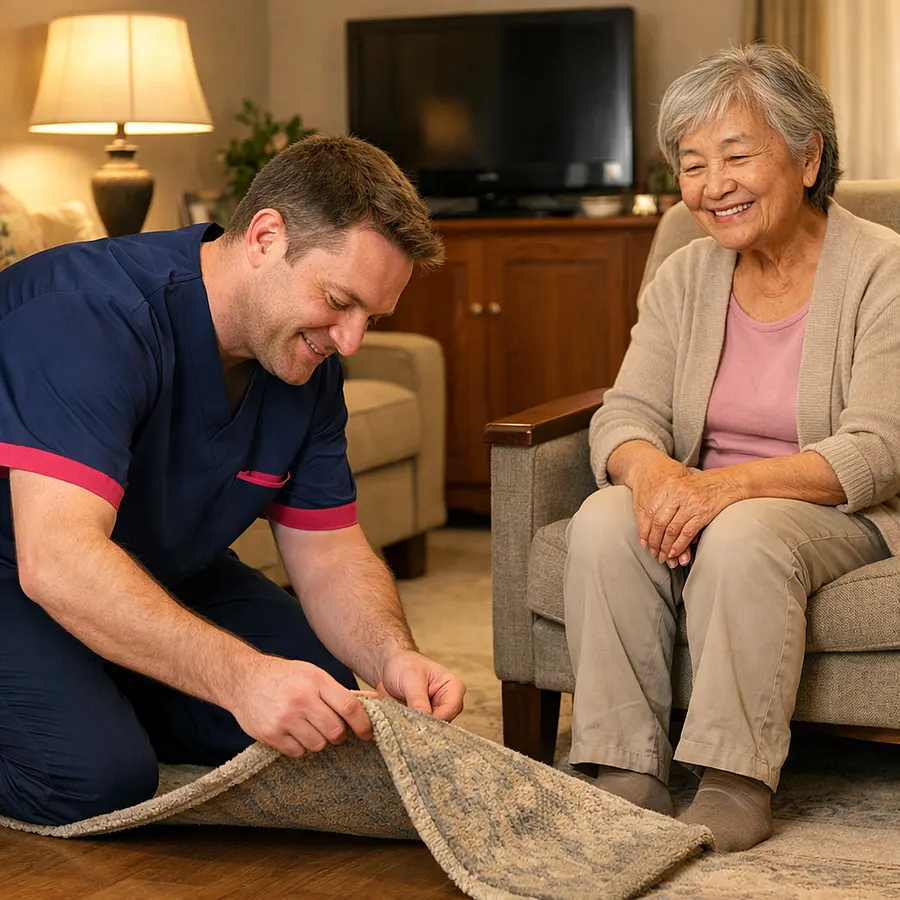
A realistic safety focused home care image showing a caucasian male caregiver in 00072b tunic with e51974 accent removing a rug edge hazard while an elderly asian woman watches with a relieved smile from a sturdy chair warm lighting safe living room caring and reassuring mood

Preparing for gentle exercise at home safely

Before starting, choose a quiet room with space to move, keep water nearby, and wear clothes that do not restrict movement. A dining chair pushed against a wall can give useful support. If someone needs help with washing, dressing, or personal hygiene support before exercise, planning that first can make the session feel calmer.
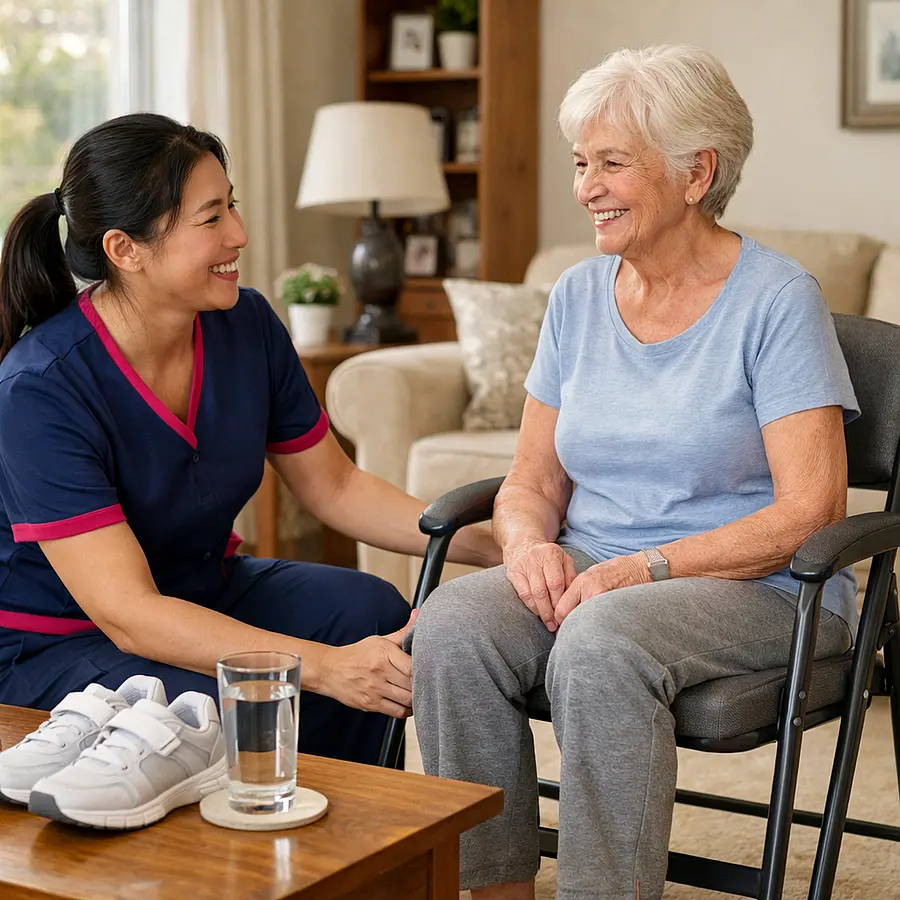
A realistic morning routine at home with an asian female caregiver in 00072b tunic with e51974 accent helping an elderly caucasian woman set up a sturdy chair water glass and comfortable shoes before exercise both smiling bright lounge realistic warm home care scene

Trying seated leg exercises in the living room

Seated leg exercises are a good starting point. Sit tall in a sturdy chair, place both feet flat on the floor, then slowly straighten one knee and lower it again. Repeat on each side five to ten times. You can also lift heels and then toes to gently work the lower legs and support circulation.
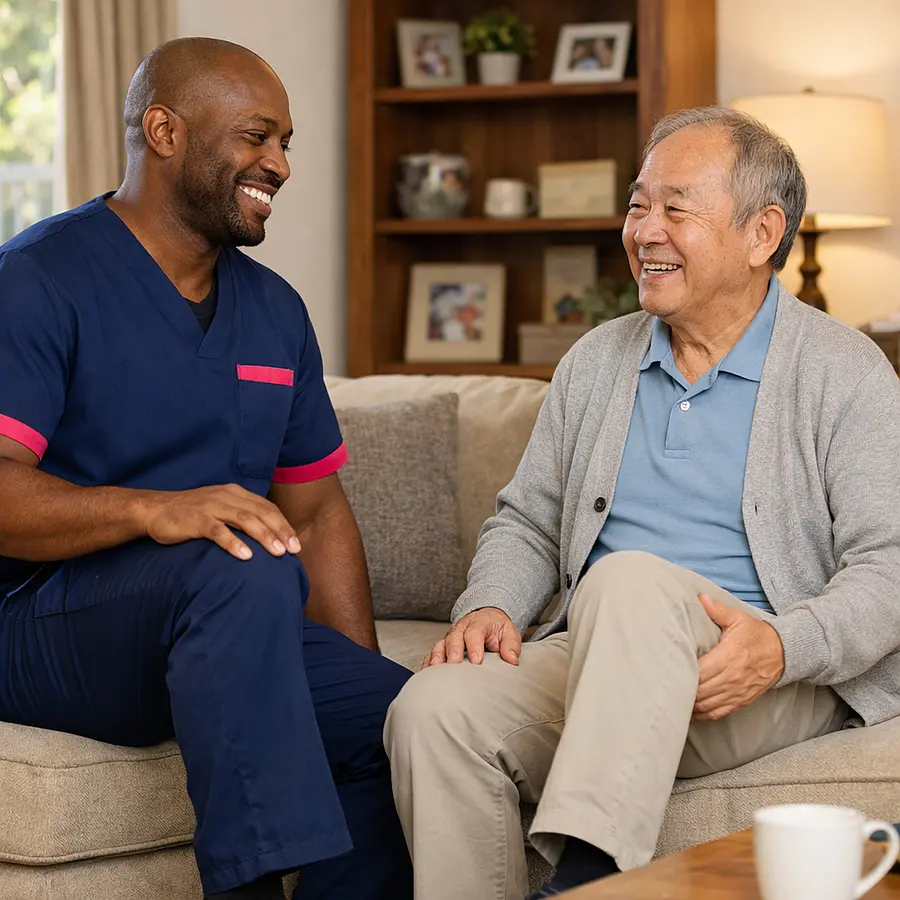
A realistic seated exercise session with a black male caregiver wearing 00072b tunic with e51974 accent demonstrating gentle knee lifts to an elderly asian man in a cosy living room both relaxed and smiling supportive home care tone realistic detail and natural light

Building confidence with chair-based strength exercises

Chair-based strength work can be simple and effective. Sit near the front of the chair, cross arms if safe, and practise standing up slowly before sitting down with control. Start with a few repetitions. This movement can help with getting up from the sofa, toilet, or bed and makes everyday mobility feel more manageable.
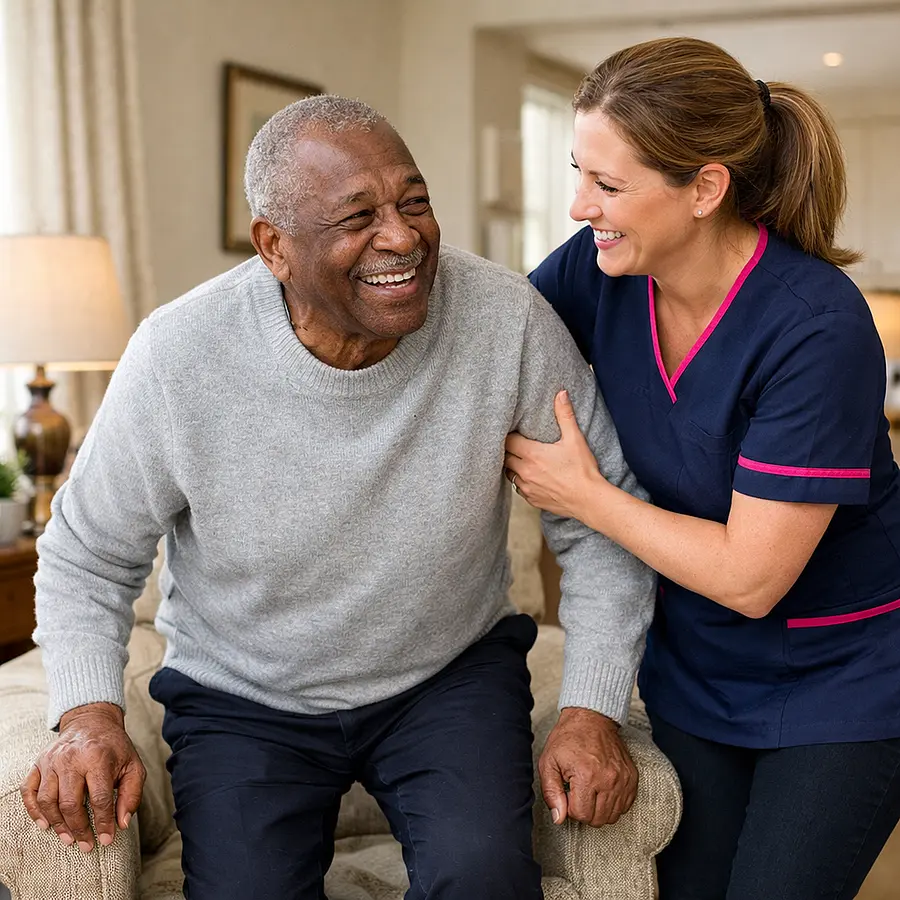
A realistic sit to stand practice scene showing a caucasian female caregiver in 00072b tunic with e51974 accent standing close and encouraging an elderly black man as he rises from a chair joyful expressions safe home environment realistic and reassuring

Improving stability through gentle balance exercises

For balance practice, stand behind a kitchen chair and lightly hold the back. Try lifting one heel, then the other, or gently marching on the spot for a few seconds. Another option is standing with feet hip-width apart and shifting weight slowly from side to side. Stay close to support and never rush.
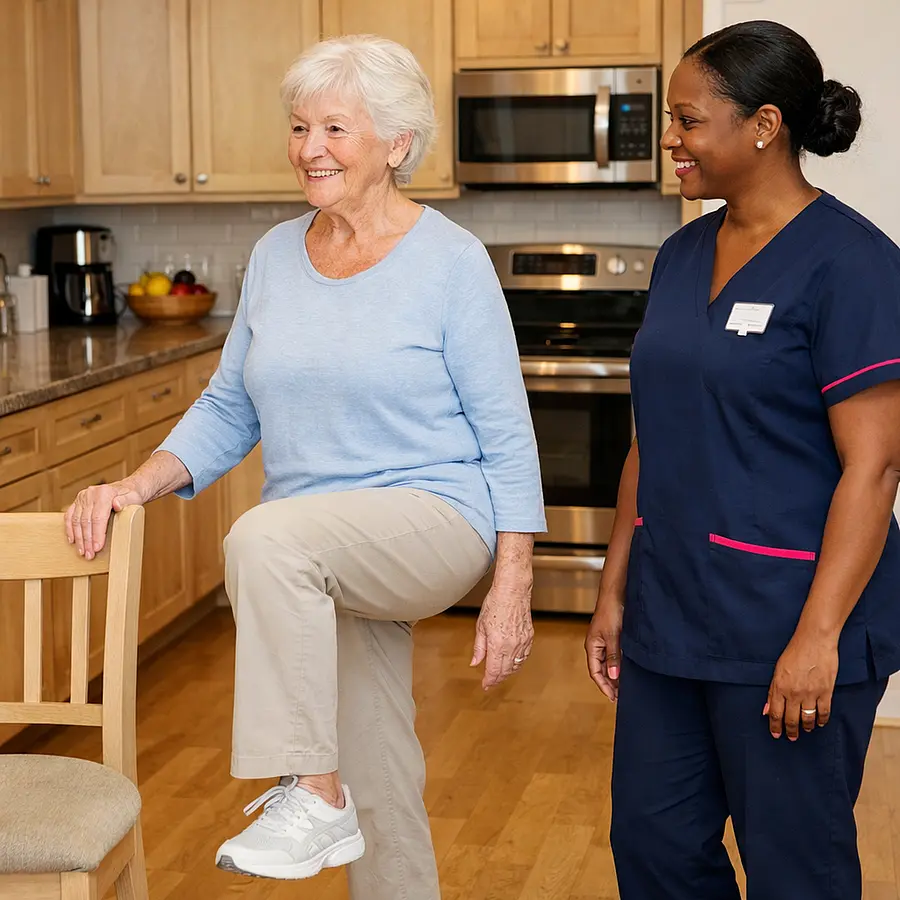
A realistic kitchen based balance exercise scene with a black female caregiver in 00072b tunic with e51974 accent nearby as an elderly caucasian woman lightly holds a chair and marches gently on the spot warm smiles safe clutter free floor realistic home care photography

Using gentle stretching exercises to ease stiffness

Stretching can help if mornings feel stiff or joints feel tight after sitting. Roll the shoulders gently, turn the head slowly from side to side, and reach arms forward and up only as far as comfortable. Ankle circles and gentle calf stretches at a wall can also help, especially before a short walk indoors.
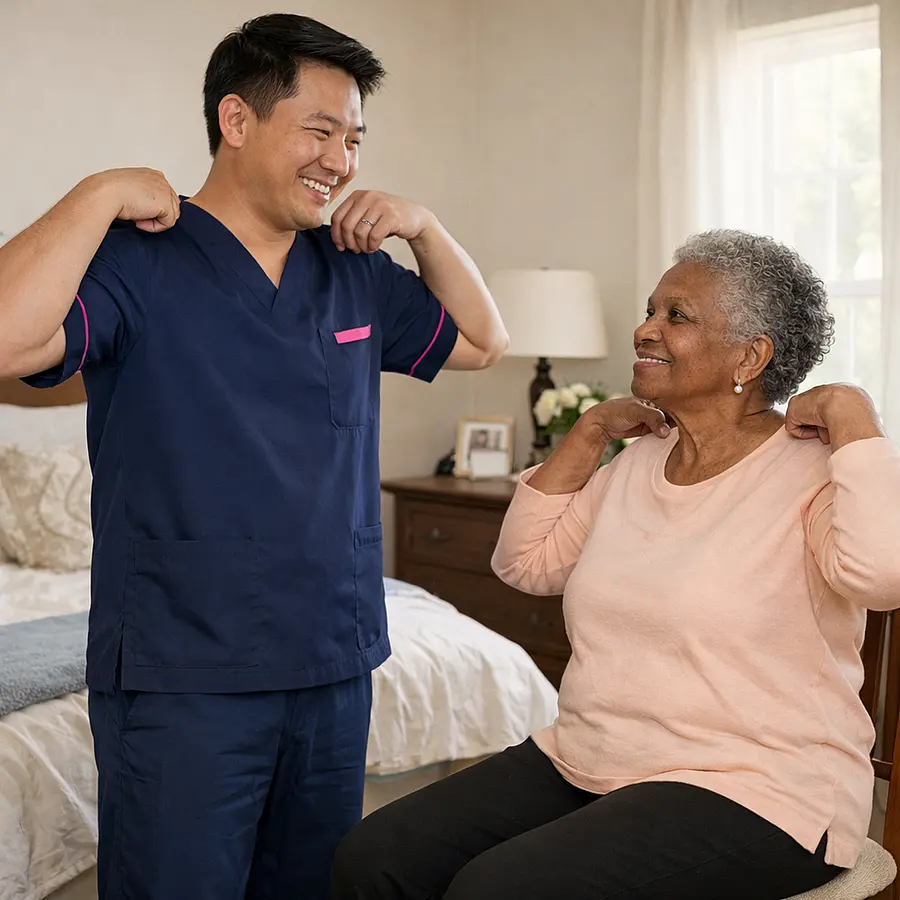
A realistic stretching routine in a tidy bedroom with an asian male caregiver in 00072b tunic with e51974 accent demonstrating shoulder rolls to an elderly black woman seated on a chair both smiling gently soft natural light warm and supportive home care setting

Supporting breath and posture with easy movement routines

Good posture can make breathing easier and movement feel smoother. Sit or stand tall, relax the shoulders, and breathe in slowly through the nose, then out gently through the mouth. Add arm lifts or small side bends if comfortable. This can be especially useful for people managing breathlessness at home.
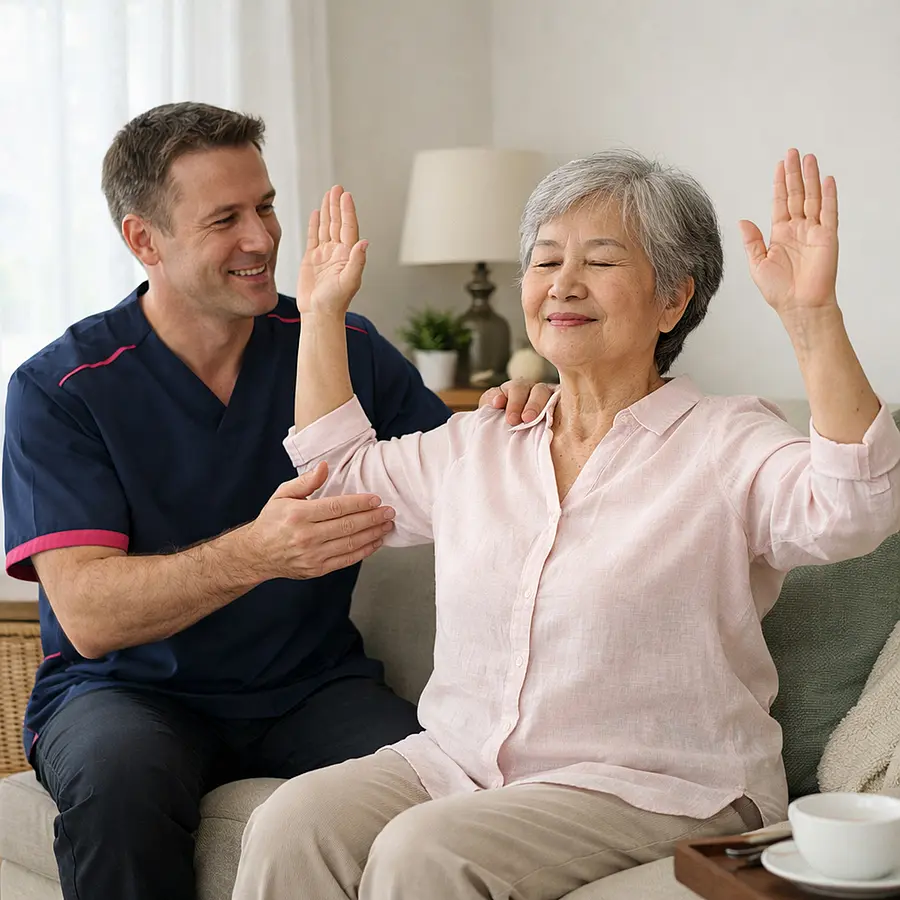
A realistic seated breathing and posture exercise scene with a caucasian male caregiver in 00072b tunic with e51974 accent guiding an elderly asian woman to sit tall and lift her arms gently peaceful smiles airy room realistic home care feel

Creating a routine around daily home exercise

Consistency matters more than intensity. A short routine after breakfast or before lunch often feels manageable. Some people feel stronger after a light snack or once regular tablets are taken, so timing can help. If support is needed with taking medication safely, building exercise around that routine can keep the day flowing better.
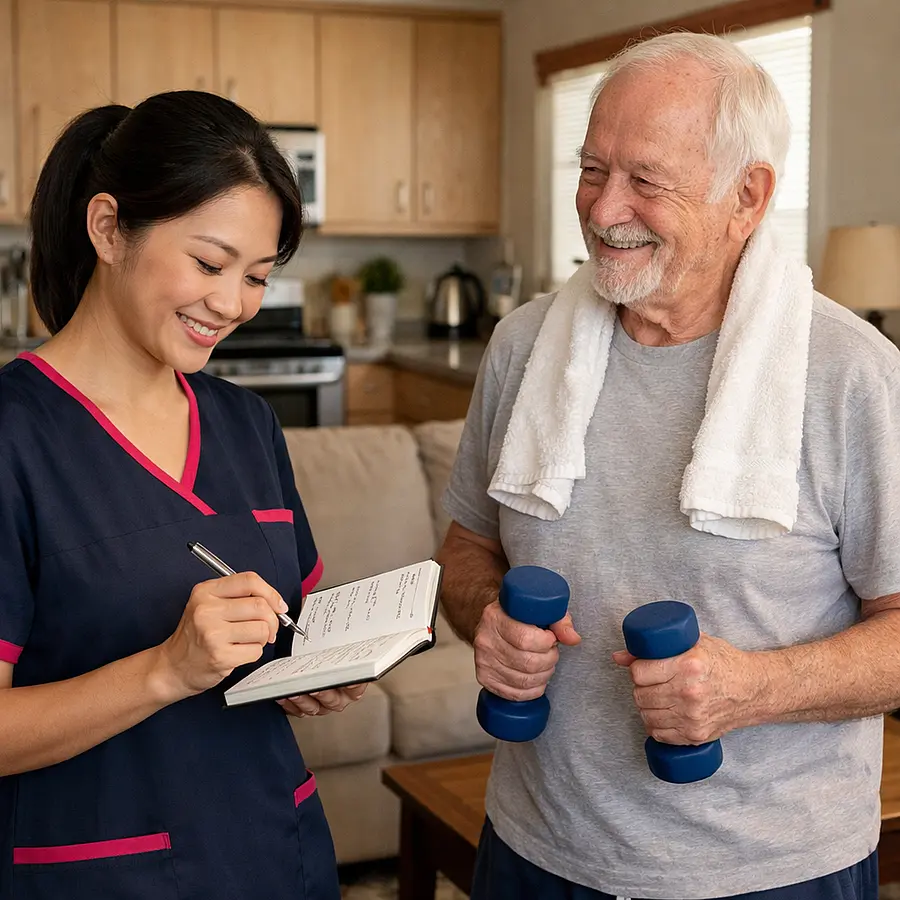
A realistic daytime routine image with an asian female caregiver in 00072b tunic with e51974 accent checking a simple daily planner while an elderly caucasian man prepares for gentle exercise calm kitchen lounge setting warm supportive expressions realistic style

Combining movement and everyday tasks at home

Exercise does not always need to feel formal. Walking to the kitchen several times, practising safe stair steps with guidance, folding laundry standing at a table, or watering indoor plants can all encourage movement. Lighter household routines may be easier when extra help with domestic tasks at home reduces overall fatigue.
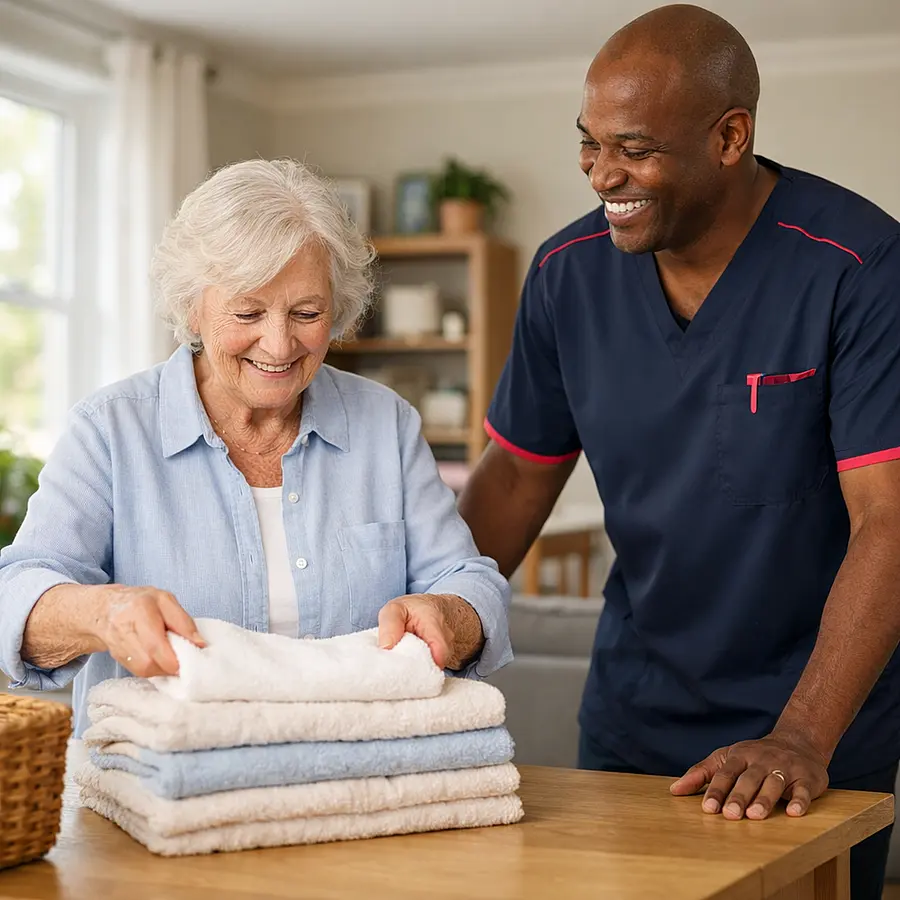
A realistic home activity scene with a black male caregiver in 00072b tunic with e51974 accent smiling as an elderly caucasian woman folds towels while standing safely at a table bright home interior gentle movement warm and reassuring realistic photograph

Making gentle exercise sessions more enjoyable

Many older adults keep going when exercise feels social rather than clinical. Favourite music, a familiar routine, or moving alongside a loved one can help. Some people enjoy a chat before and after, especially if loneliness has affected motivation. Friendly companionship support can make gentle activity feel like a positive part of the day.
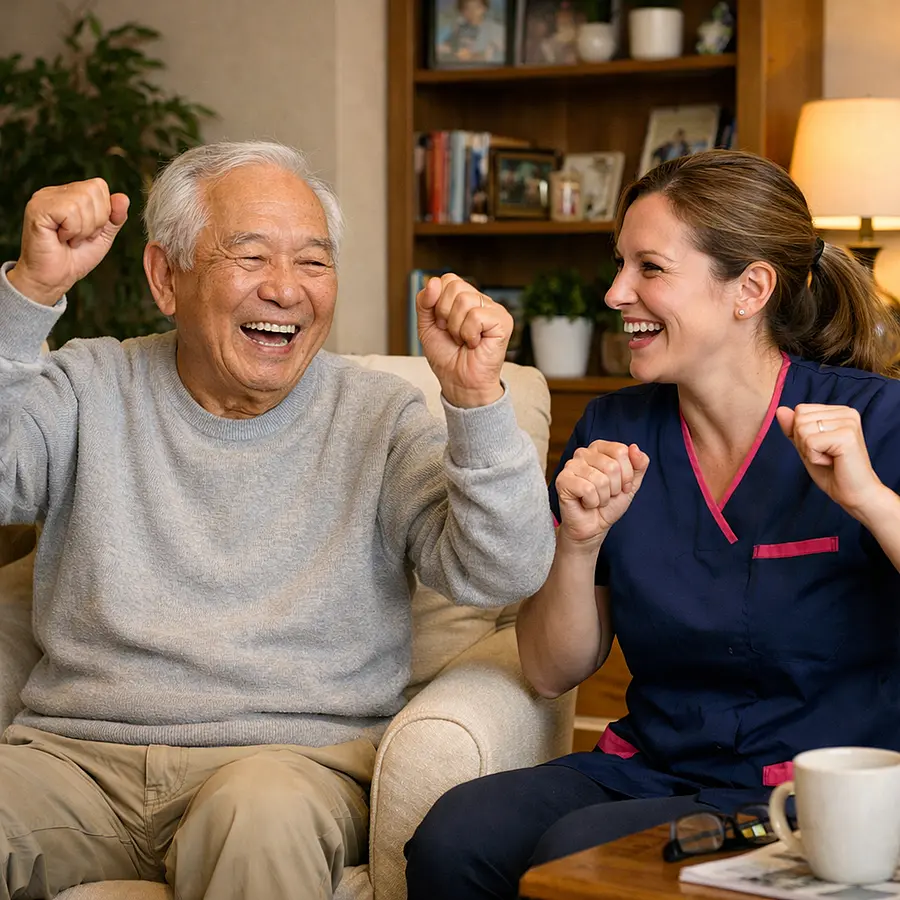
A realistic joyful exercise moment with a caucasian female caregiver in 00072b tunic with e51974 accent and an elderly asian man smiling while doing seated arm movements to music in a cosy lounge warm and friendly home care atmosphere realistic detail

Using gentle exercise ideas after time spent sitting

If someone spends long periods sitting, begin with very short bursts. Try ankle pumps while watching television, shoulder rolls during advert breaks, or standing and stretching once every hour. These tiny habits can stop the day from feeling too sedentary and may support comfort, circulation, and confidence without feeling overwhelming.
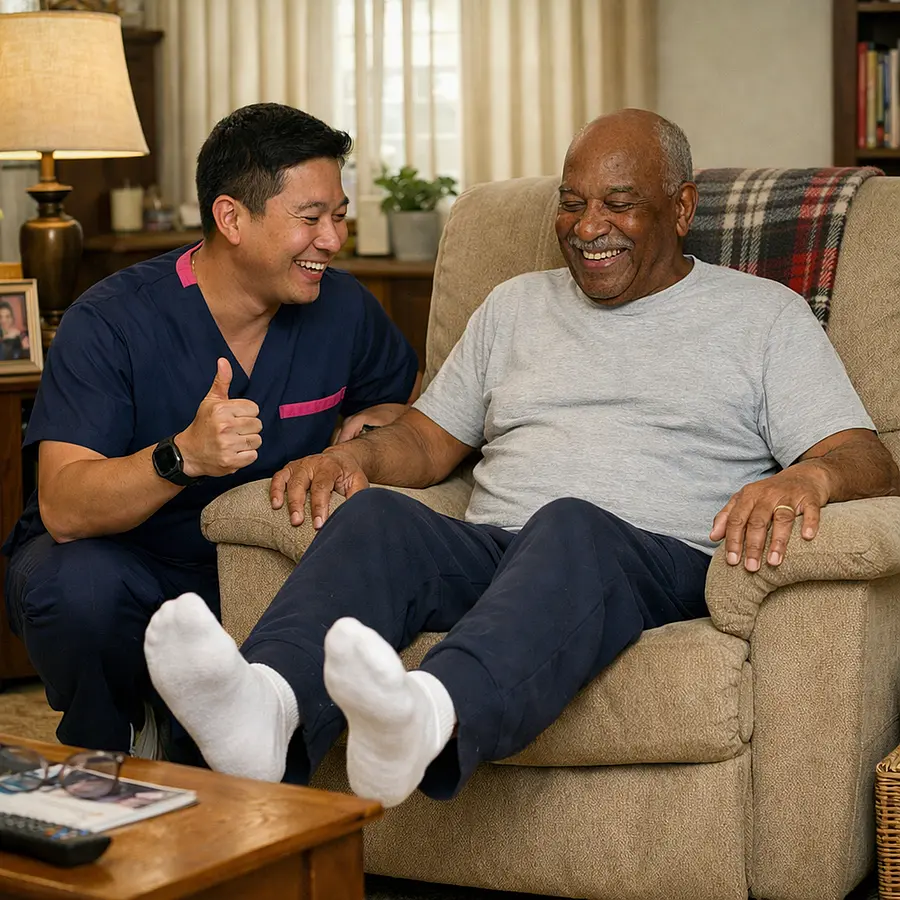
A realistic television break exercise scene with an asian male caregiver in 00072b tunic with e51974 accent encouraging an elderly black man to do ankle pumps from an armchair cheerful expressions lived in room warm realistic home care image

Seeing gentle exercise progress in everyday life

Progress often shows up in ordinary moments first. Someone may stand from a chair more easily, walk to the bathroom with better balance, or feel less stiff getting dressed. Families sometimes notice improved mood too. Keeping a simple note of what feels easier each week can be more encouraging than counting exact repetitions.
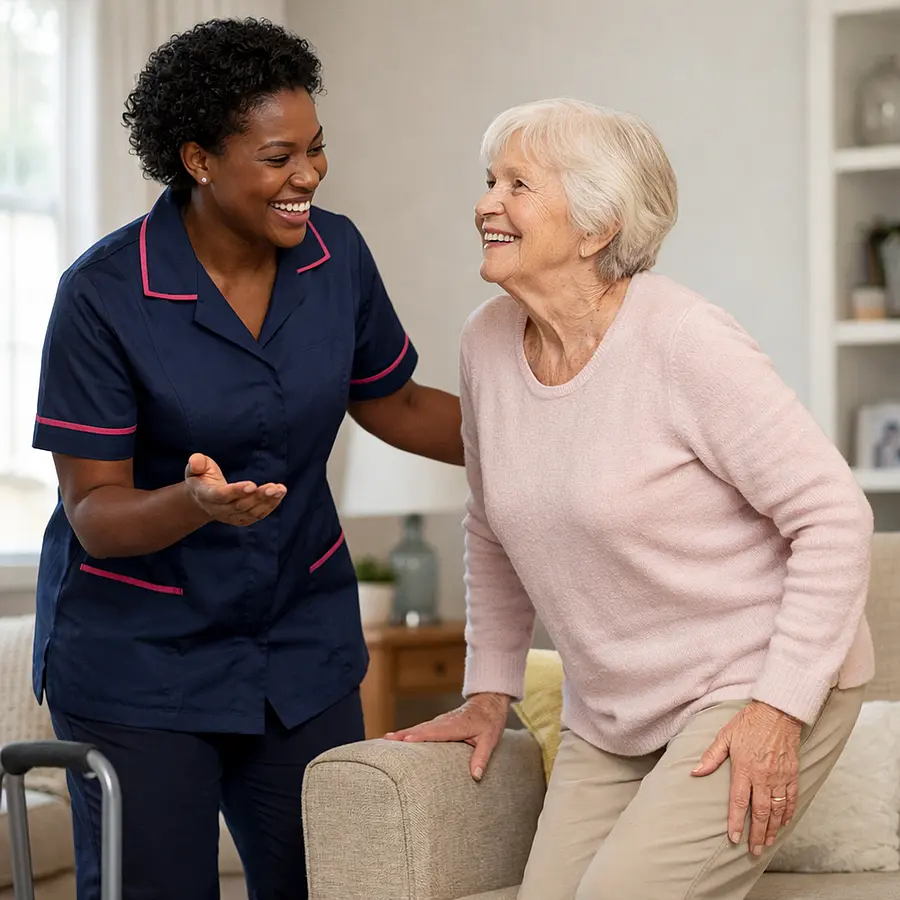
A realistic progress focused home care image with a black female caregiver in 00072b tunic with e51974 accent smiling as an elderly caucasian woman stands more confidently from a chair encouraging body language bright room realistic and uplifting

Adapting gentle movement at home for health conditions

Exercises may need adjusting for arthritis, frailty, Parkinson’s, stroke recovery, or memory difficulties. For example, slower movements, shorter sessions, or seated options may work better. Clear one-step instructions can help if memory is affected. Condition-led support, including arthritis care or mobility support, can make routines more realistic.
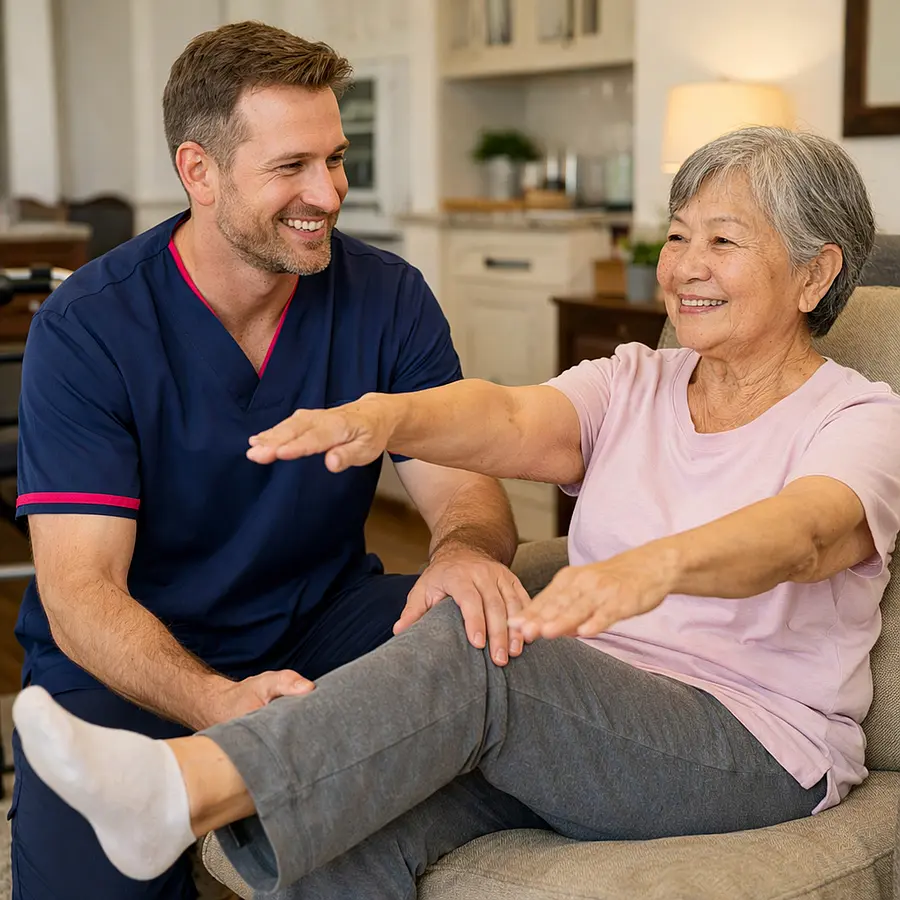
A realistic adapted exercise scene with a caucasian male caregiver in 00072b tunic with e51974 accent guiding an elderly asian woman with gentle seated arm and leg movements calm pace supportive smiles safe accessible home environment realistic photography

Planning exercise and meals for better energy

Energy levels are often better when movement is planned around food and hydration. A banana, toast, yoghurt, or a glass of water beforehand may help some people feel steadier. After exercise, a balanced snack or lunch can support recovery. Help with meal preparation at home can make this routine easier to maintain.

A realistic kitchen scene with an asian female caregiver in 00072b tunic with e51974 accent preparing a light snack and water for an elderly black man after gentle exercise warm smiles clean bright home realistic caregiving atmosphere

Keeping gentle exercise routines going after a setback

It is common to lose momentum after a cold, hospital stay, or fall. Starting again with two or three very small movements can rebuild confidence without feeling daunting. For some families, reading more about building confidence after a fall in later life can help shape a safer restart.
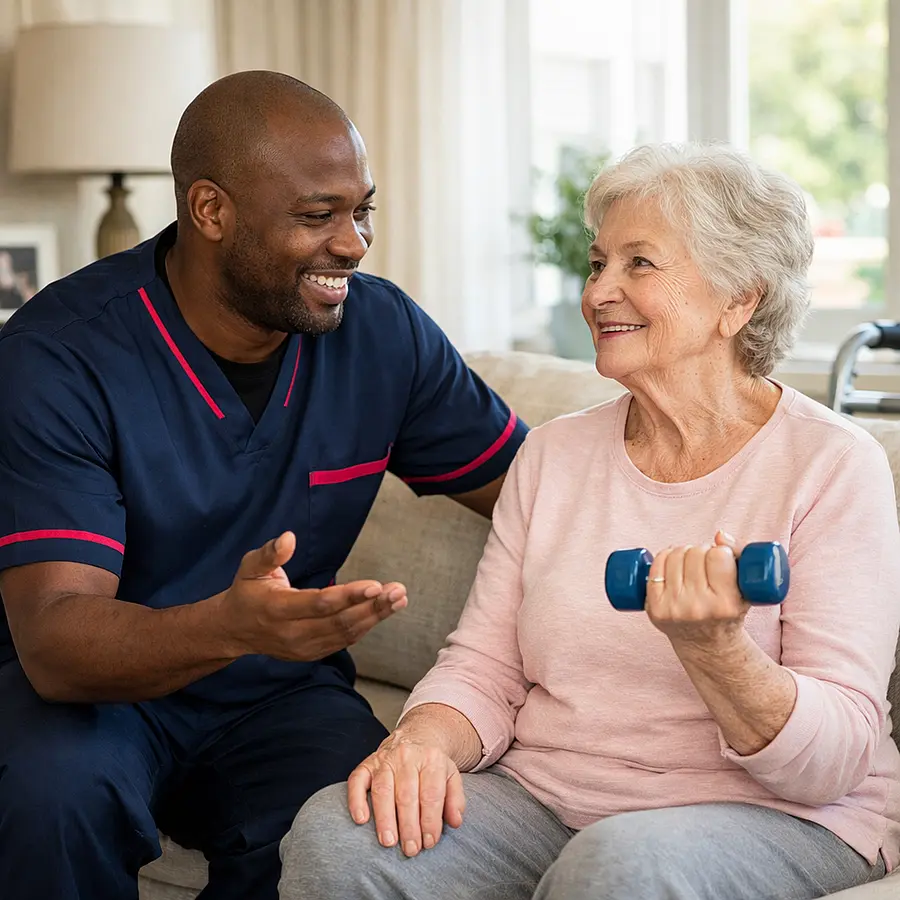
A realistic post setback support image with a black male caregiver in 00072b tunic with e51974 accent gently encouraging an elderly caucasian woman to begin small seated exercises again warm smiles soft daylight reassuring realistic home care scene

How professional support for gentle exercise can help

Professional care can make home exercise safer, more consistent, and less stressful for families. We can help someone get washed and dressed, prepare a drink or light bite, prompt medications, and support a gentle routine that suits their health needs. If nights are difficult, overnight support can also help someone feel more settled for the next day.
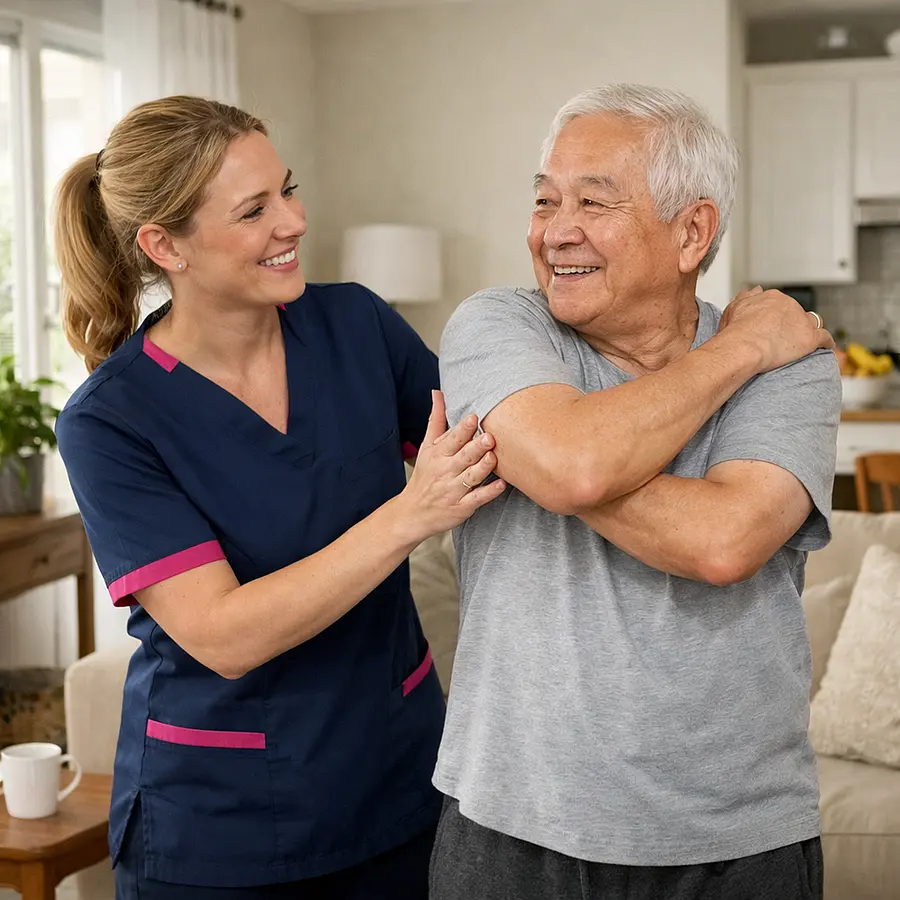
A realistic professional care image with a caucasian female caregiver in 00072b tunic with e51974 accent supporting an elderly asian man through a calm morning exercise routine cheerful and reassuring expressions tidy home realistic home care photography

Why choose us for gentle exercise support at home

We understand that movement in later life is about more than exercise alone. It is about confidence, dignity, routine, and feeling safe in your own surroundings. Our support is shaped around the person, whether that means encouragement with mobility, help around the home, or thoughtful care that makes each day feel more manageable and positive.
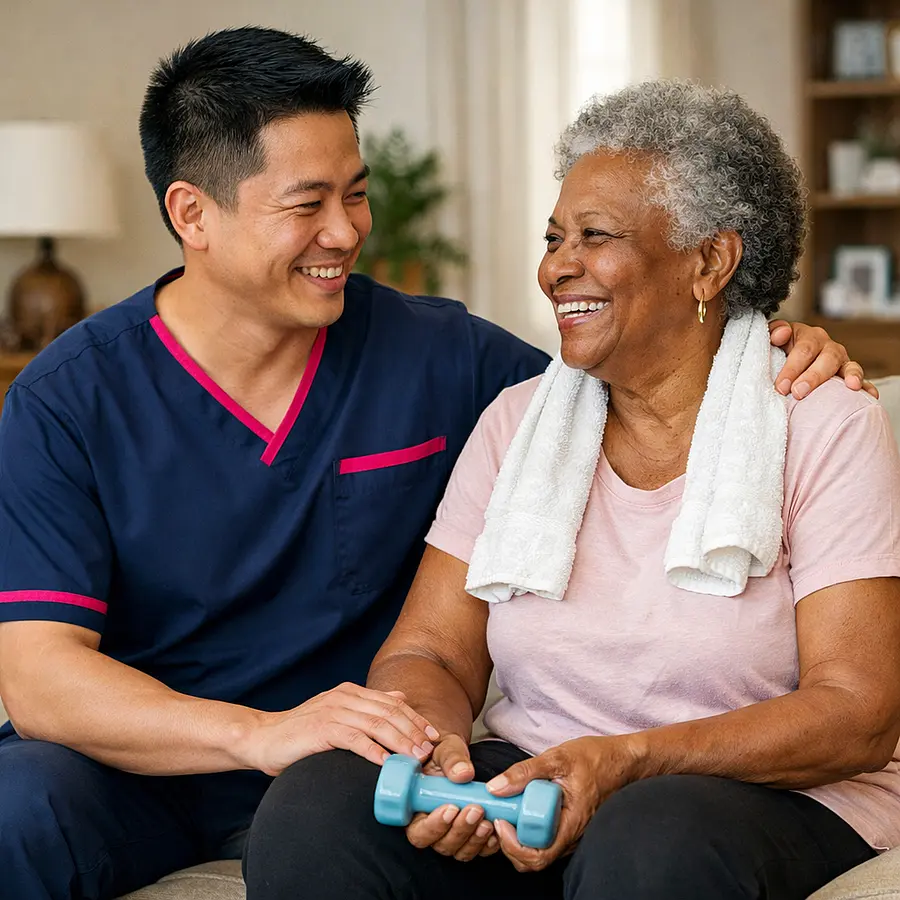
A realistic welcoming home care portrait showing an asian male caregiver in 00072b tunic with e51974 accent sharing a warm smile with an elderly black woman after a gentle exercise session comfortable living room joyful reassuring atmosphere realistic and natural
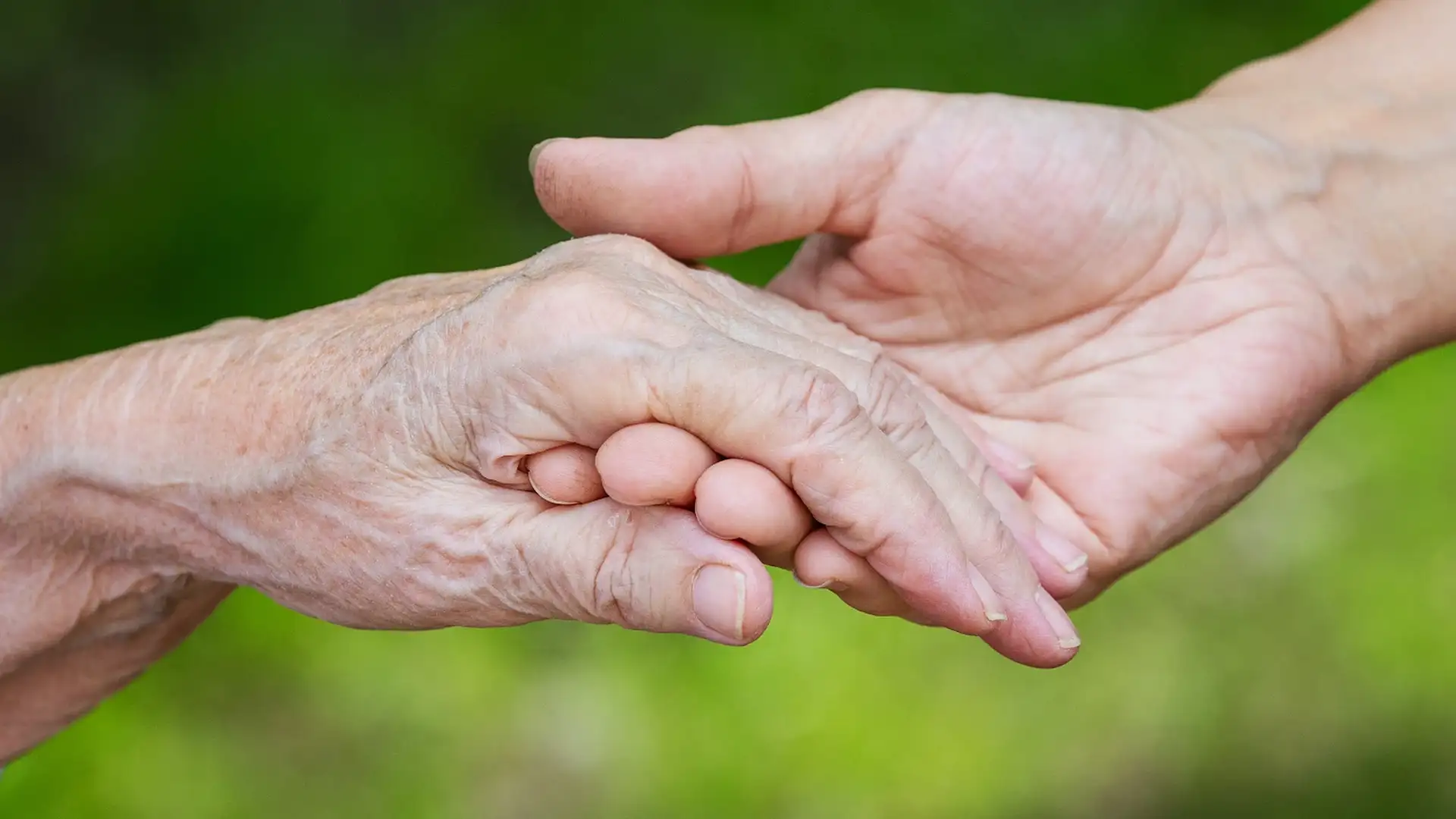
Hands of young adult and senior women over green b
Contact Us

Contact us to arrange Elderly Care at home

If you're looking for support with daily living for some one elderly, we're here to help. Our friendly team is ready to offer guidance, answer your questions, and arrange elderly care tailored to your or your loved ones' needs in their own home. Reach out today for personalised advice and support.

Gentle exercise ideas for older adults at home FAQ's

You’re bound to have questions when exploring your home care options, so we’ve answered some of the most common ones below.

A supportive approach usually works better than a strict one. Try linking movement to something familiar and manageable, such as standing up during television breaks, taking a short walk to the kitchen, or doing ankle circles while chatting over tea. It can help to focus on practical benefits they care about, like getting out of a chair more easily, staying steady on their feet or keeping up confidence at home. Praise small steps and avoid turning it into a test. If your parent is hesitant, doing the movements together can make things feel more relaxed. We can also provide regular visits that combine encouragement with day-to-day support, helping routines feel positive and achievable rather than overwhelming.

Frailty does not automatically mean someone should avoid movement. In fact, carefully chosen gentle exercise can be an important way to maintain confidence and everyday function. The routine may need to be slower, shorter and more closely supported, with plenty of rest built in. For a frail older adult, useful starting points might include ankle pumps, seated arm movements, supported standing practice and very short walks between rooms. The emphasis should be on safety, comfort and preserving independence where possible. We support older people with changing strength and energy levels through our frailty care at home, helping routines stay realistic and person-centred.

Supervision is especially important when someone has poor balance, memory difficulties, recent falls, weakness after illness, pain that affects movement, or low confidence. It can also help if the person is unsure how to perform exercises correctly or tends to forget steps in the routine. Supervision does not always mean hands-on support for every movement, but it may involve being close by, giving calm prompts, checking posture, and making sure the space is safe. Families often find supervision reassuring as well, particularly if they worry that a loved one may overreach or rush. Professional support can be useful where exercise is part of a wider routine involving mobility help, personal care, medication prompts, meals, and general wellbeing throughout the day.

Absolutely. Limited mobility does not mean movement has to stop. Many exercises can be adapted for a chair or bed, including seated marches, toe taps, arm lifts, shoulder rolls, and gentle trunk turns. The focus should be on what the person can do safely, not what they used to do before their mobility changed. Small regular movements can still help circulation, flexibility, comfort, and confidence. For someone using a frame or walking aid, standing exercises may still be possible with the right support and setup. Families may also find useful guidance in gentle strength and balance exercises you can do in your living room.

Gentle exercise can support balance by helping the body practise weight shifting, standing confidence and controlled movement. Activities such as side steps along a kitchen counter, heel raises, mini squats and standing on one foot with support nearby may all help improve steadiness over time. Even chair-based exercises can support balance indirectly by strengthening the legs and core, which are important for walking and standing. Balance work should always be introduced carefully, especially if someone is nervous or has had recent falls. A familiar routine, safe surroundings and gentle encouragement often make a big difference. For related advice, you may also find our strength and balance exercise guidance helpful.

A gentle exercise routine does not need to be long to be worthwhile. For many people, five to ten minutes is enough at first, particularly if they are rebuilding strength, confidence or stamina. The session can include just three or four movements repeated slowly and safely. Over time, this may increase to fifteen or twenty minutes if comfortable, or be split into shorter periods across the day. What matters most is regularity, not intensity. A routine that feels manageable is far more likely to become part of everyday life. We can support this by helping people stay organised, safe and encouraged during daily care visits, especially when routines need to fit around other health needs and appointments.

That depends on the person and the type of exercise, but many older adults find it easier to move after a light meal or snack rather than on an empty stomach. Very energetic movement straight after a large meal may feel uncomfortable, so a gentle routine is often best timed around normal daily patterns. For example, someone might do a few seated stretches after breakfast or practise standing exercises before lunch while energy is still good. Hydration is also important, as feeling thirsty or low in energy can make movement harder. We often help people create simple, consistent routines that combine movement with meal preparation support and regular drinks throughout the day.

Extra help may be needed if someone is becoming less steady, avoiding movement through fear, struggling to get up from chairs, becoming more breathless, or needing more support with everyday tasks. It is also worth asking for help after a fall, hospital stay, or if memory problems make routines harder to follow. Families often notice a gradual change before the person themselves does, such as spending more time sitting, eating less, or finding personal care more tiring. Seeking help early can prevent small issues becoming larger ones. Professional home care can provide practical support and reassurance, while healthcare professionals can advise on medical or therapy needs if there are concerns about pain, mobility, strength, or overall safety.

If you are looking for help with gentle exercise ideas for older adults at home as well as day-to-day support, we can talk through what would make life easier and safer. Some families need a little encouragement built into short visits, while others want broader help with routines such as companionship, meal preparation, washing and dressing, or household tasks. We take time to understand the person’s abilities, concerns and preferences so support feels personal rather than one-size-fits-all. If you are unsure where to begin, contacting us is a good first step and we can guide you through the options.

In many cases, yes. Gentle movement can be helpful for people living with arthritis because it may ease stiffness, support joint mobility and help maintain strength around the joints. The important thing is choosing low-impact, controlled movements and avoiding anything that causes sharp or lasting pain. Chair-based stretches, ankle circles, slow leg extensions, shoulder movements and short supported walks are common starting points. Timing can matter too, as some people prefer to move after a warm shower or later in the day when joints feel looser. If arthritis is affecting everyday life, our arthritis support at home can help people stay comfortable while managing routines safely.

We proudly provide high-quality home care across the East Midlands, in an around the towns and cities detailed below.

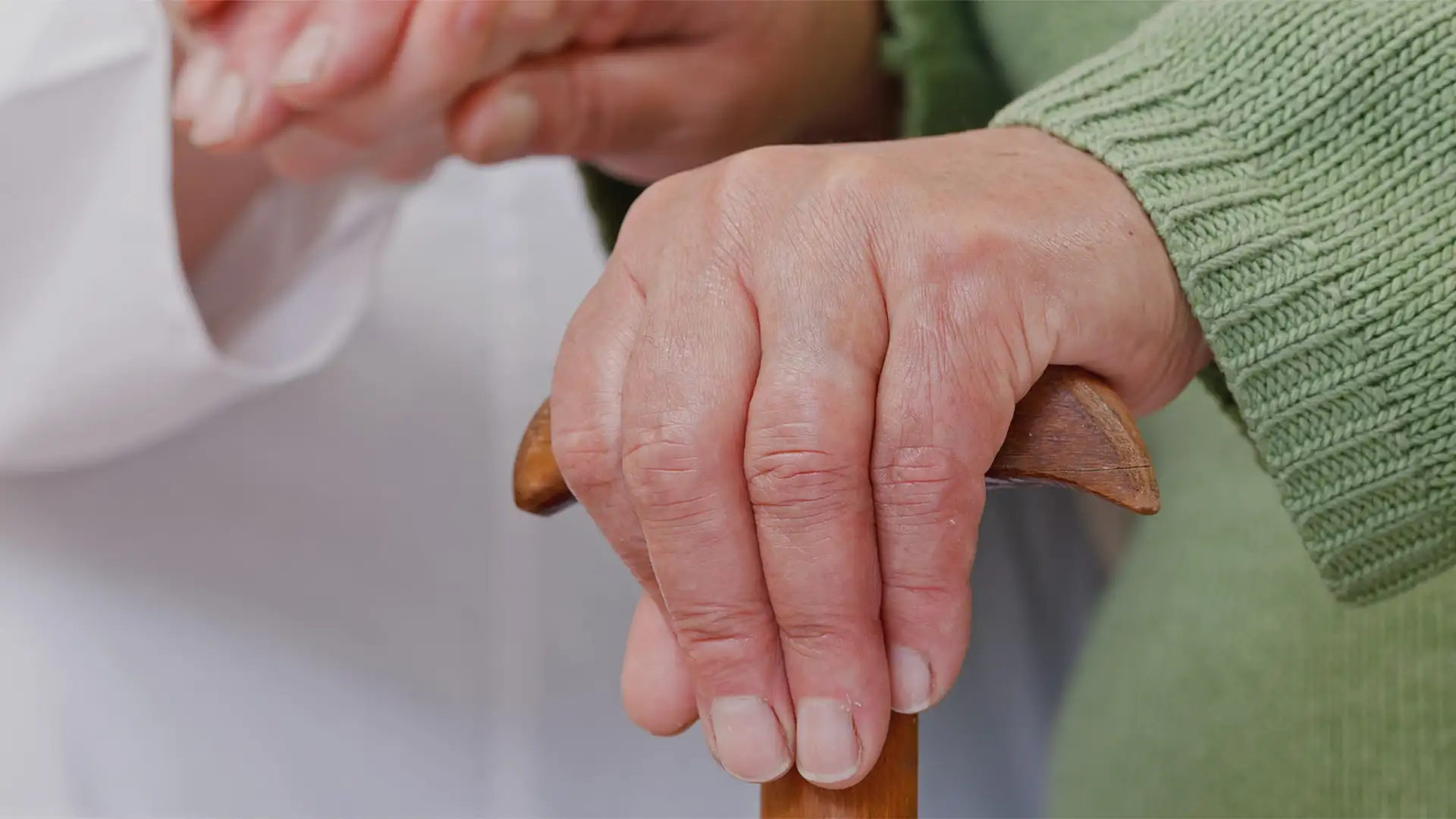
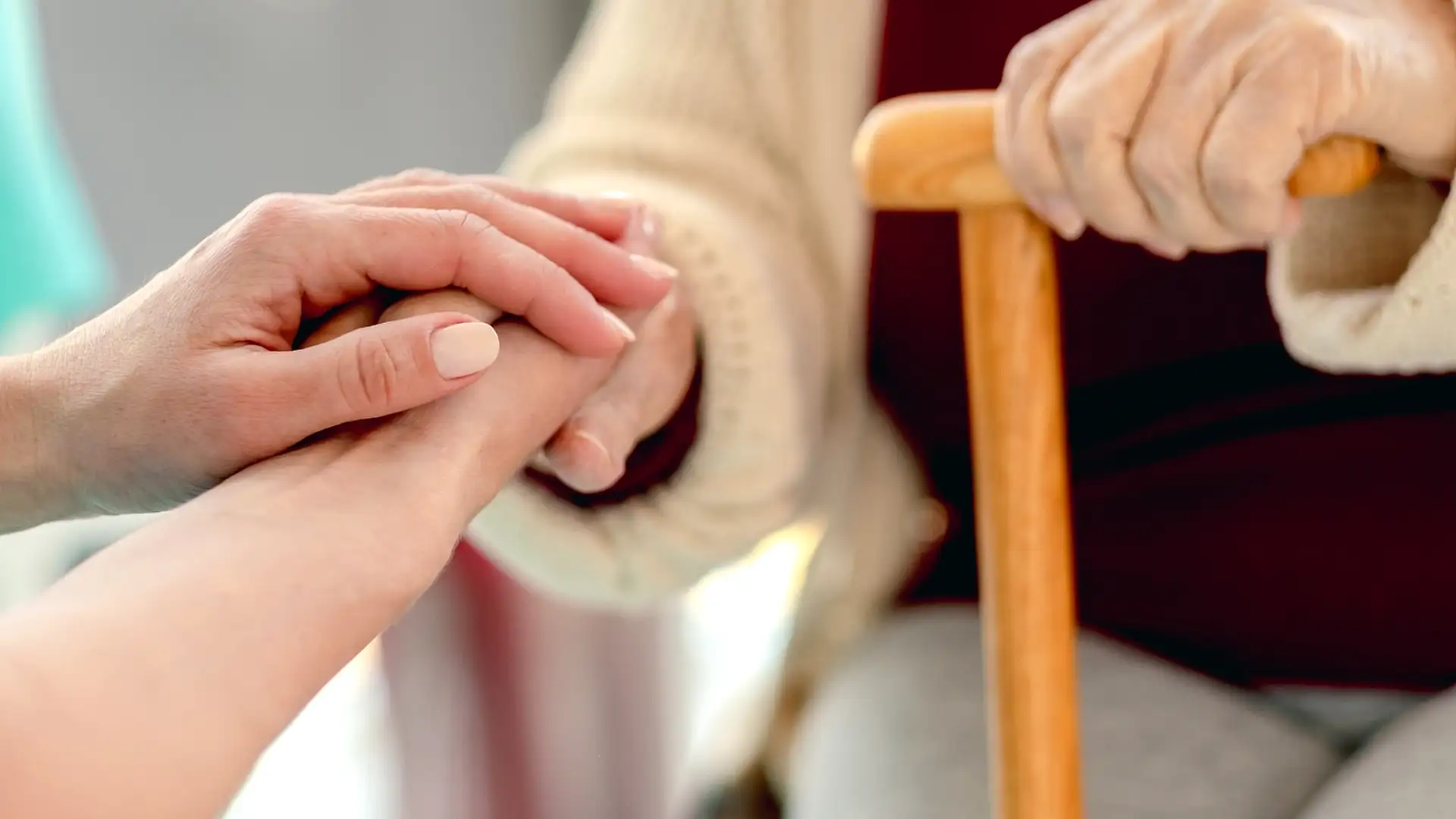
Elderly hands on a walking sitck

We're becoming a fully regulated service

While we are not currently regulated, meaning there are some services we cannot currently provide, we are in the process of registering to become a fully regulated service.

CQC
Elderly hands on a walking sitck

Call us to find out more about Gentle exercise ideas for older adults at home

East Midlands

We proudly provide high-quality home care across the East Midlands

Our Reviews

We’re proud of the trust families place in us. Here’s what some of the people we support, and their loved ones, say about our home care services.

"They have been a great help with keeping on top of my dads laundry and general house cleaning as he is bed bound and have been being changed daily."

Emily R

"Great support for my mum after she lost her confidence after a fall and hospital stay."

Sarah L

"Really helped me with keeping on top of my house work since my parkinson's has progressed."

Mark T

Senior woman hand in caregiver hands

Join The Good News Newsletter

Be the first to discover exclusive offers, and service updates. Your journey to independent living starts here - where everything truly is fine.


Contact The Good Place

We’d love to hear from you! Whether you have questions, want to learn more about our home care service, or are ready for us to start supporting you or your loved one, our good people are here to help. If you are looking to make a complaint, you can contact our Registered Manager or Nominated Individual directly.

Send Us a Message


Elderly hands on a walking sitck

Working in Partnership

We work closely within the community to provide safe, compassionate, reliable home care that supports independence, dignity, and improved wellbeing while remaining at home.

NHS
Staffordshire County Council
Derbyshire County Council