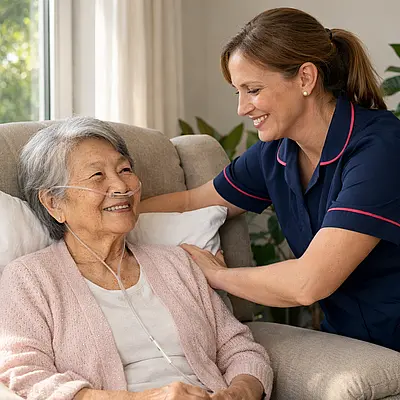
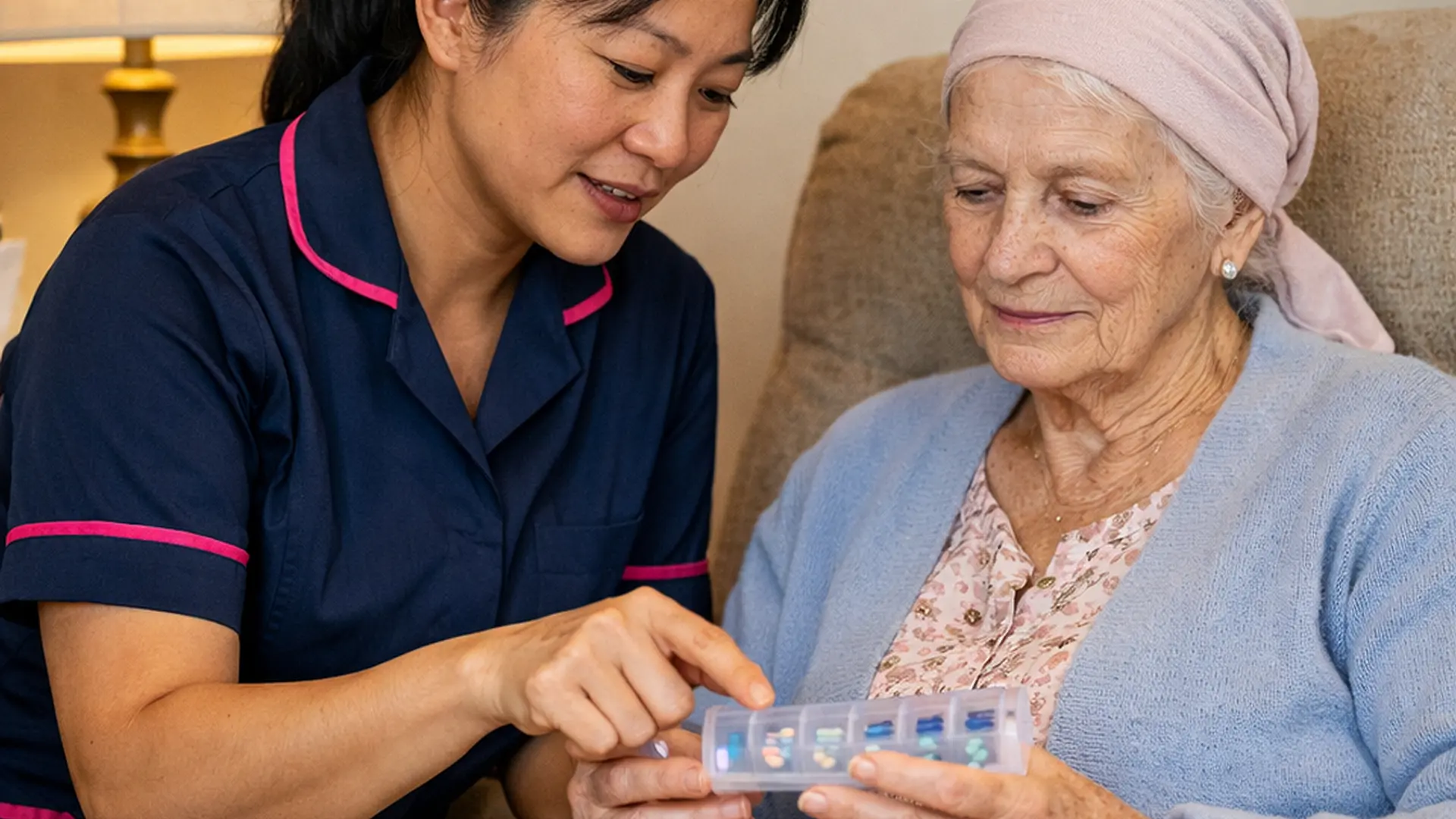
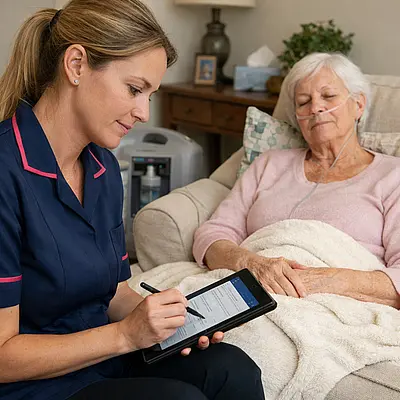
An Asian female caregiver in a 00072b tunic with e51974 trim checks a pill organiser beside an elderly white woman sitting in a favourite armchair both focused yet relaxed. A lamp and family photos create a homely safe environment illustrating professional cancer care at home.

Cancer Care

Home-based cancer care offers practical help, emotional support and gentle companionship so you can focus on treatment and time with loved ones in familiar surroundings. Our flexible domiciliary care adapts as needs change, from personal care to medication prompts and household tasks. Talk to us today about tailored cancer support in your own home.

Understanding cancer care at home

Cancer affects every part of life, not just hospital appointments. Our role is to bring calm, practical support into your home so daily life feels more manageable. From help with washing and personal hygiene to emotional reassurance, we work around you and your routines, so you can focus on treatment, rest and the people who matter.
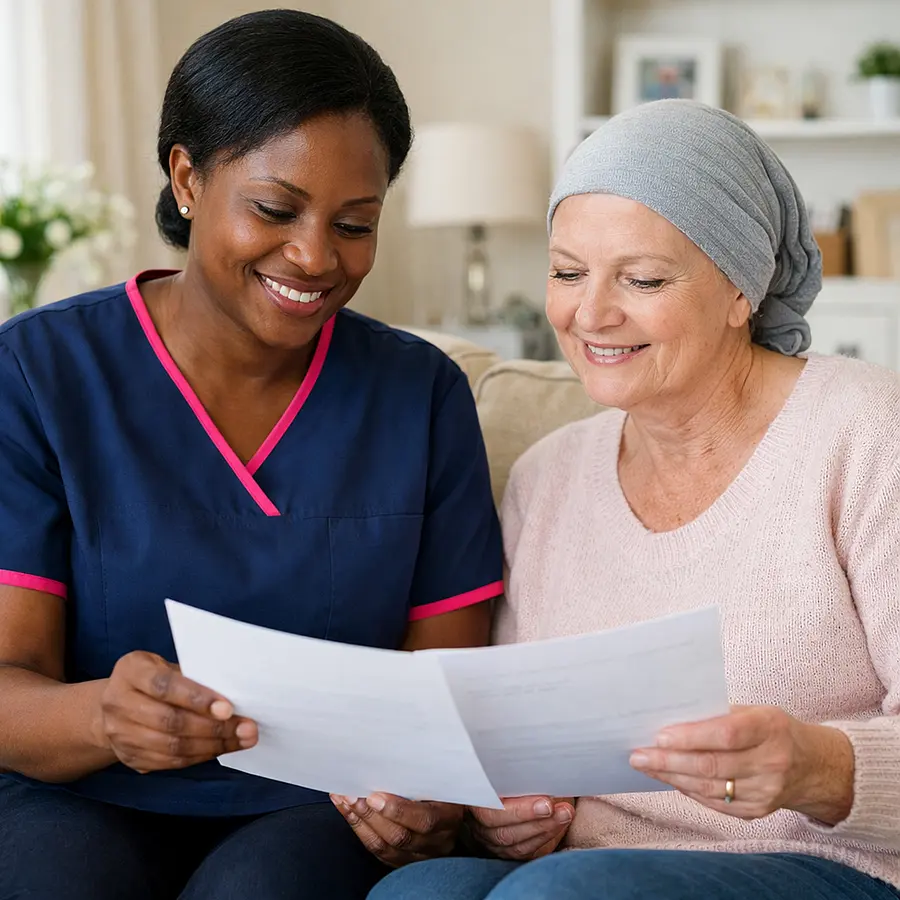
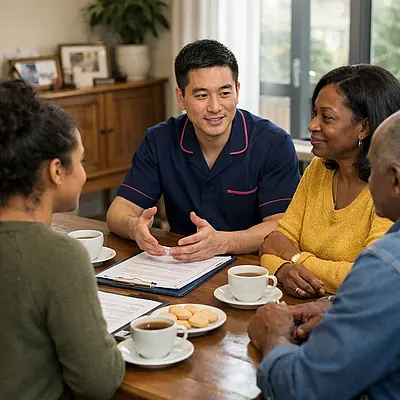
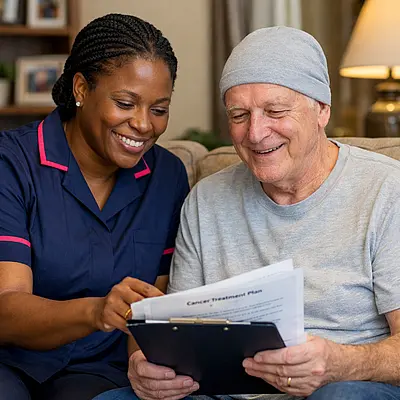
A black female caregiver in a 00072b tunic with e51974 trim sits beside a middle aged white woman on a sofa reviewing appointment letters together in a bright living room both smiling gently. The atmosphere is calm and reassuring conveying professional home cancer care support and warmth.

What is cancer care in your own home?

Home cancer care is tailored support that fits around your diagnosis, treatment plan and energy levels. Instead of doing everything alone, you have a trained carer alongside you. We can help with gentle meal preparation, getting to the bathroom safely, attending appointments, managing tiredness and keeping home life running smoothly for you and your family.
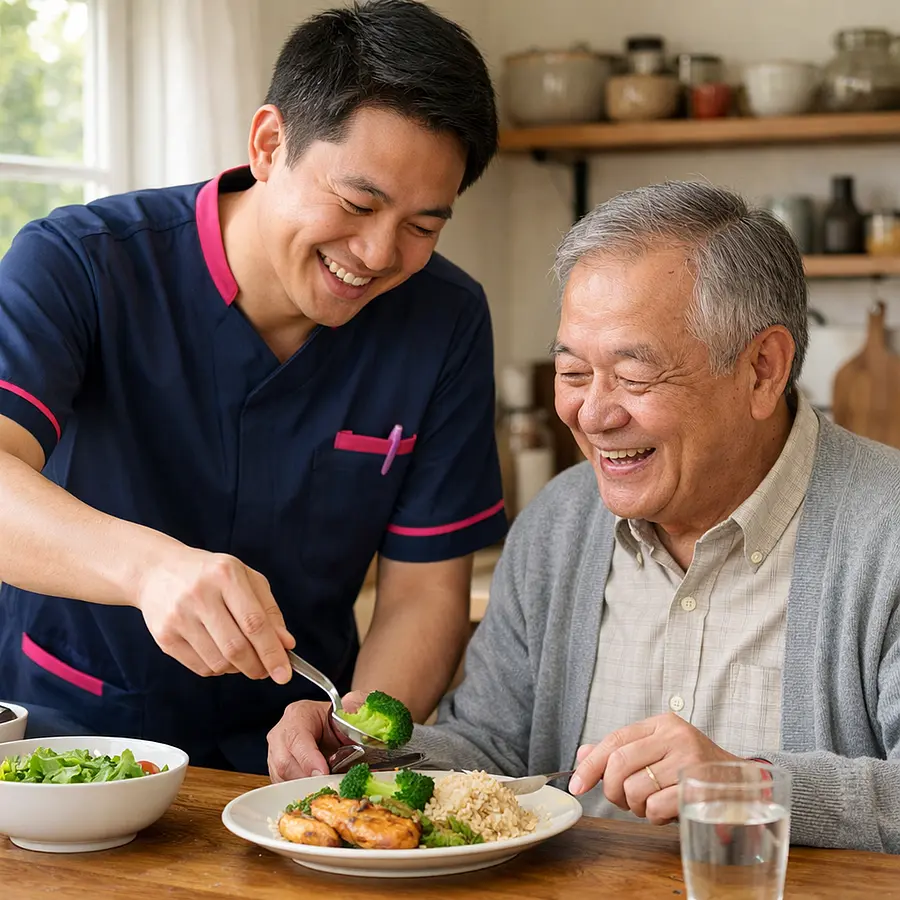
An Asian male caregiver in a 00072b tunic with e51974 accents stands in a cosy kitchen helping an older Asian man plate up a simple healthy meal both laughing softly. Sunlight through the window highlights a homely reassuring atmosphere focused on everyday cancer support.

How home-based cancer support adapts to changing needs

Cancer journeys rarely follow a straight line. Some days you may feel independent; others you might need more help. Our home care is flexible, adjusting as treatment, side effects or pain change. We can increase visits, add night-time supervision, or reduce support as you regain strength, always guided by you and your clinical team.
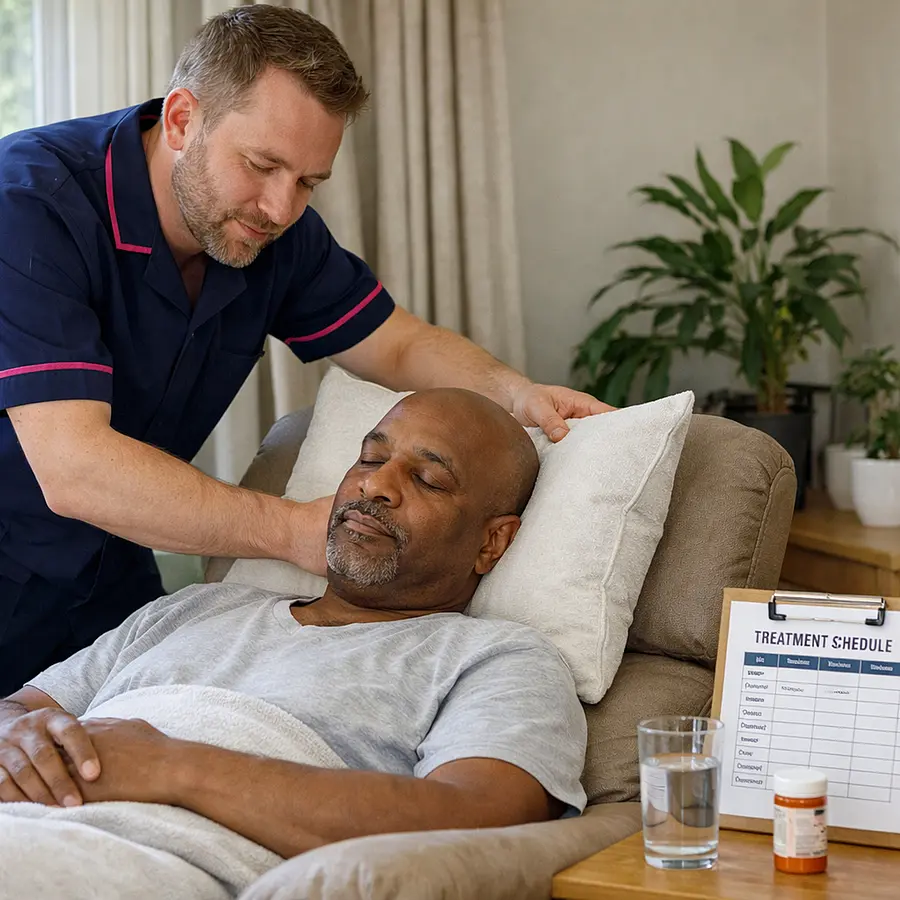
A white male caregiver in a 00072b tunic with e51974 detailing adjusts cushions for a middle aged black man resting in a reclining chair near a window a treatment schedule visible on a side table. The scene feels calm with sunlight and plants conveying adaptable attentive cancer care at home.

Can cancer care be provided safely at home?

In many cases, yes. With the right support, home can be the best place to recover from surgery, manage ongoing treatment or live well with advanced cancer. We work alongside healthcare professionals, offering help with medication prompts and monitoring, mobility, and everyday tasks so hospital stays can often be shorter and comfort much greater.
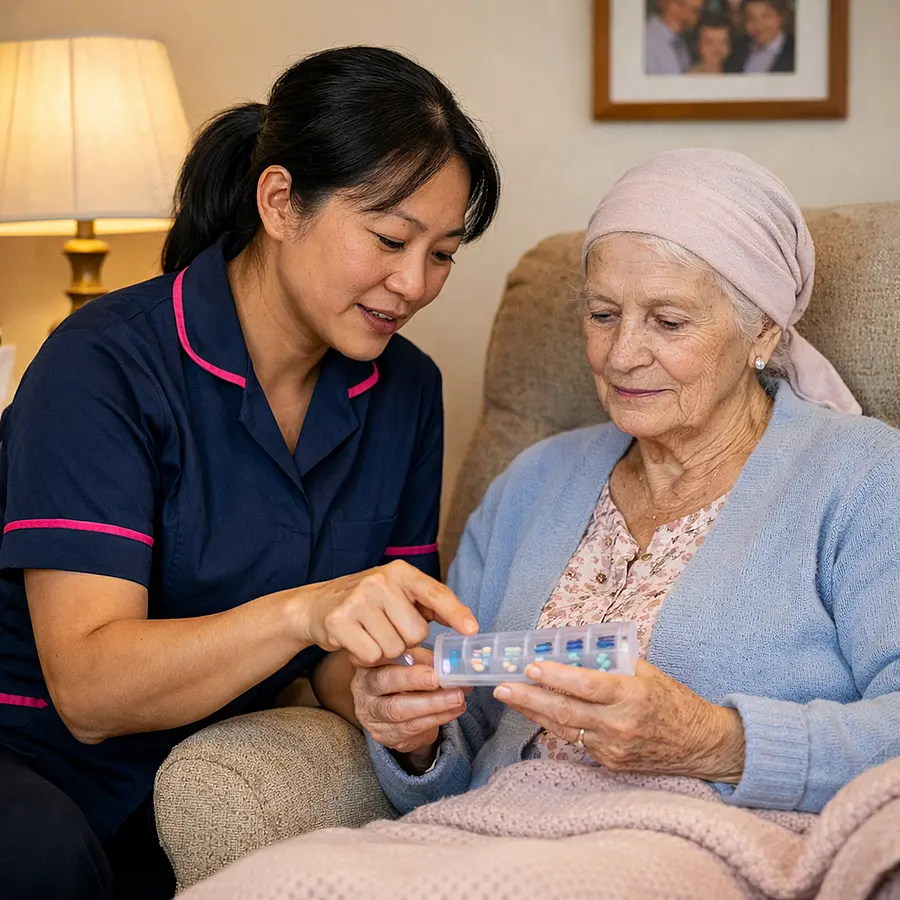
An Asian female caregiver in a 00072b tunic with e51974 trim checks a pill organiser beside an elderly white woman sitting in a favourite armchair both focused yet relaxed. A lamp and family photos create a homely safe environment illustrating professional cancer care at home.

Cancer treatment and home life working together

Balancing chemotherapy, radiotherapy or immunotherapy with home routines can be exhausting. Our carers help bridge that gap. We can support rest days, provide light housework and laundry, offer transport to appointments and keep on top of changes, so you feel less overwhelmed and more in control of each stage of treatment.
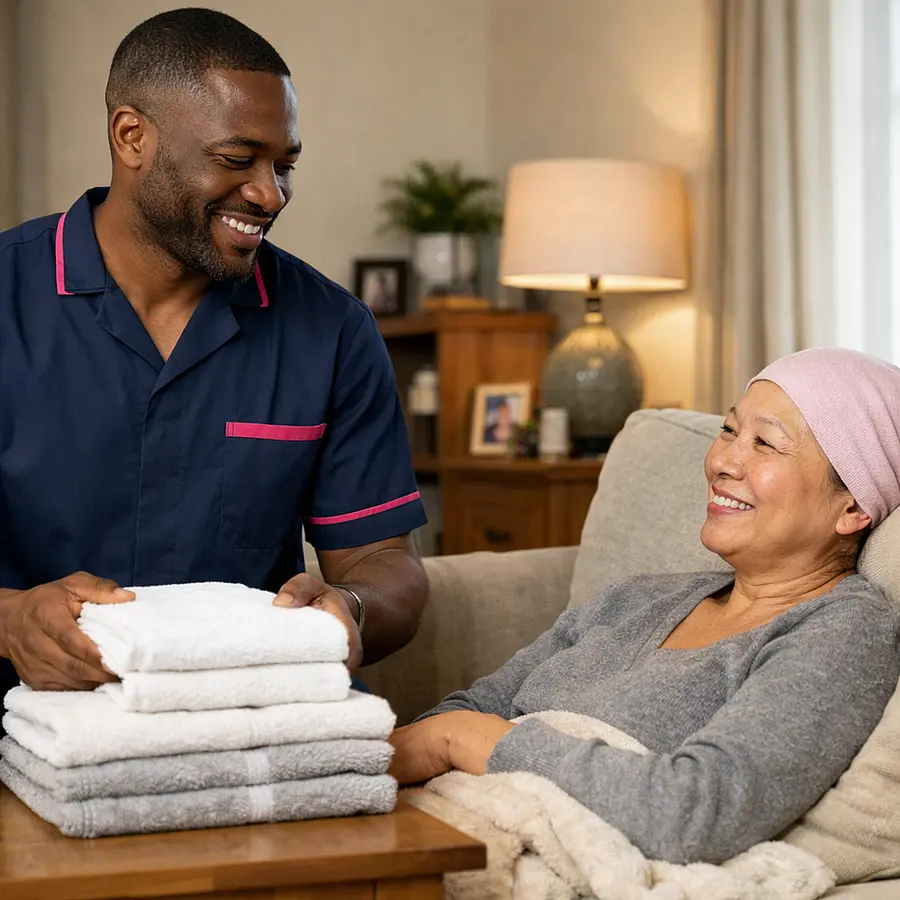
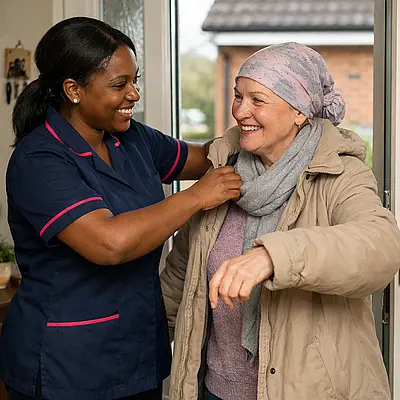
A black male caregiver in a 00072b tunic with e51974 accents folds clean towels in a tidy living room while a tired middle aged Asian woman with a headscarf relaxes on the sofa. Both exchange a warm smile capturing the relief of practical support during cancer treatment.

Common symptoms you might notice with cancer or treatment

People experience cancer very differently, but common symptoms include fatigue, pain, nausea, appetite changes, weight loss or gain, and changes in mood or concentration. Treatment can also affect skin, hair and digestion. Our carers respond to these changes with gentle emotional support, practical help, and close communication with you and your healthcare team when something feels different.
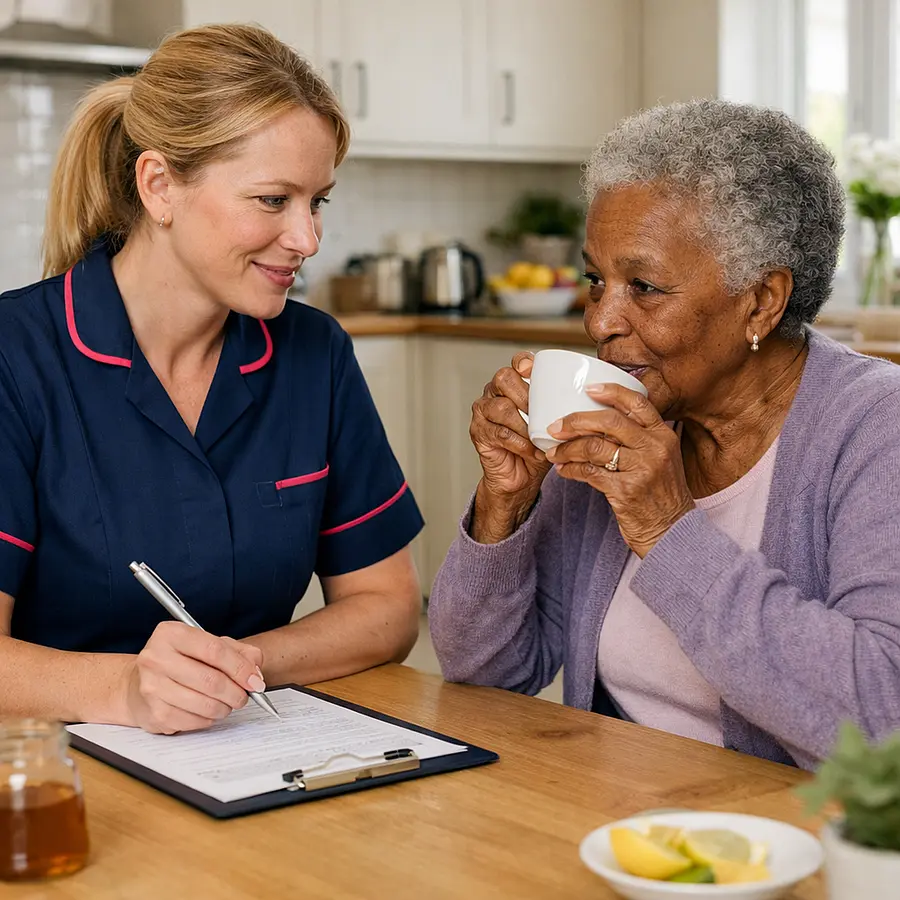
A white female caregiver in a 00072b tunic with e51974 piping sits at a kitchen table with an elderly black woman gently noting symptoms on a clipboard while the client sips herbal tea. Their body language shows trust and careful listening in a bright tidy home setting.

Cancer care support with personal routines

Simple tasks like bathing or getting dressed can become hard during treatment or advanced illness. Our carers provide respectful, dignified help with bathing, dressing and continence support. We work at your pace, respecting privacy, cultural preferences and body changes, so you can feel clean, comfortable and more like yourself, even on the most difficult days.
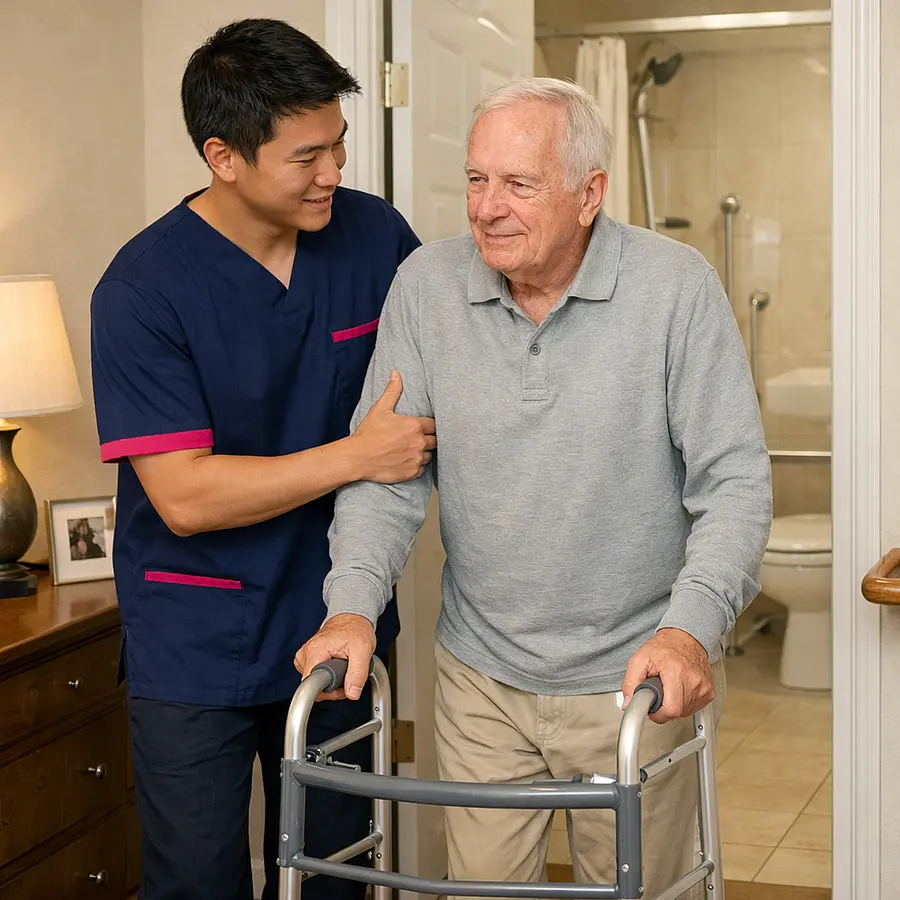
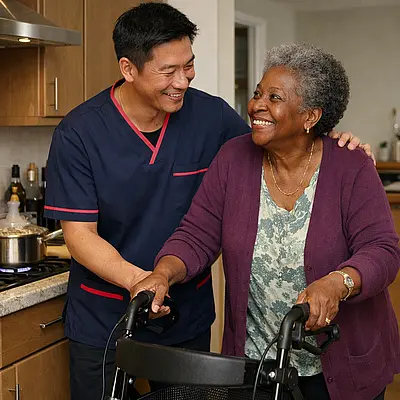
An Asian male caregiver in a 00072b tunic with e51974 detailing assists an older white man to the bathroom using a walking frame both moving slowly and carefully. The client looks reassured the carer attentive in a clean adapted home setting focused on dignity.

How cancer care at home supports nutrition and energy

Taste changes, nausea and tiredness can make eating difficult. Our carers can prepare small, appealing meals, encourage fluids and support diet advice from your clinical team. We offer flexible home cooking and snack support, helping you maintain strength, manage weight changes and reduce the stress of planning food when appetite is low.
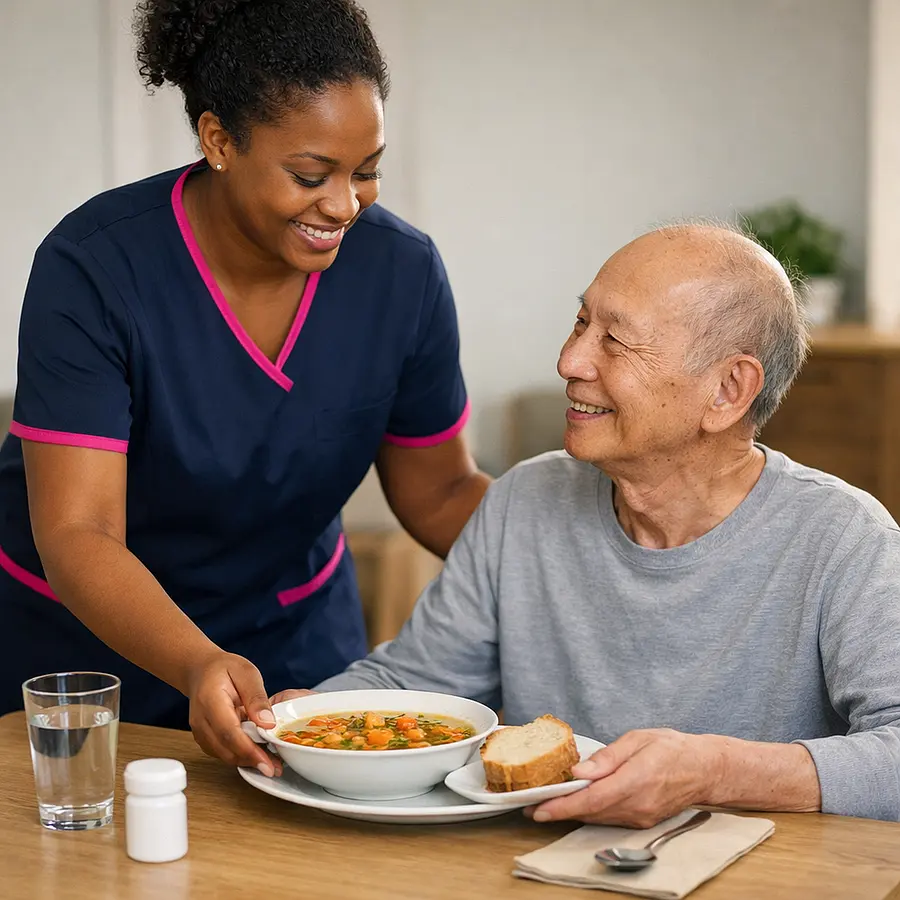
A black female caregiver in a 00072b tunic with e51974 trim serves a colourful bowl of soup and bread to a thin older Asian man seated at a dining table both smiling. The table is simply set conveying gentle encouragement to eat and maintain strength during cancer treatment.

Cancer care that keeps hobbies and interests alive

Cancer doesn’t erase who you are. Whether you love gardening, reading, crafts or watching football, we’ll weave your interests into each visit. Our carers can offer companionship and conversation, help set up hobbies at home, or adapt activities to your energy levels, so you still experience joy and a sense of normality.
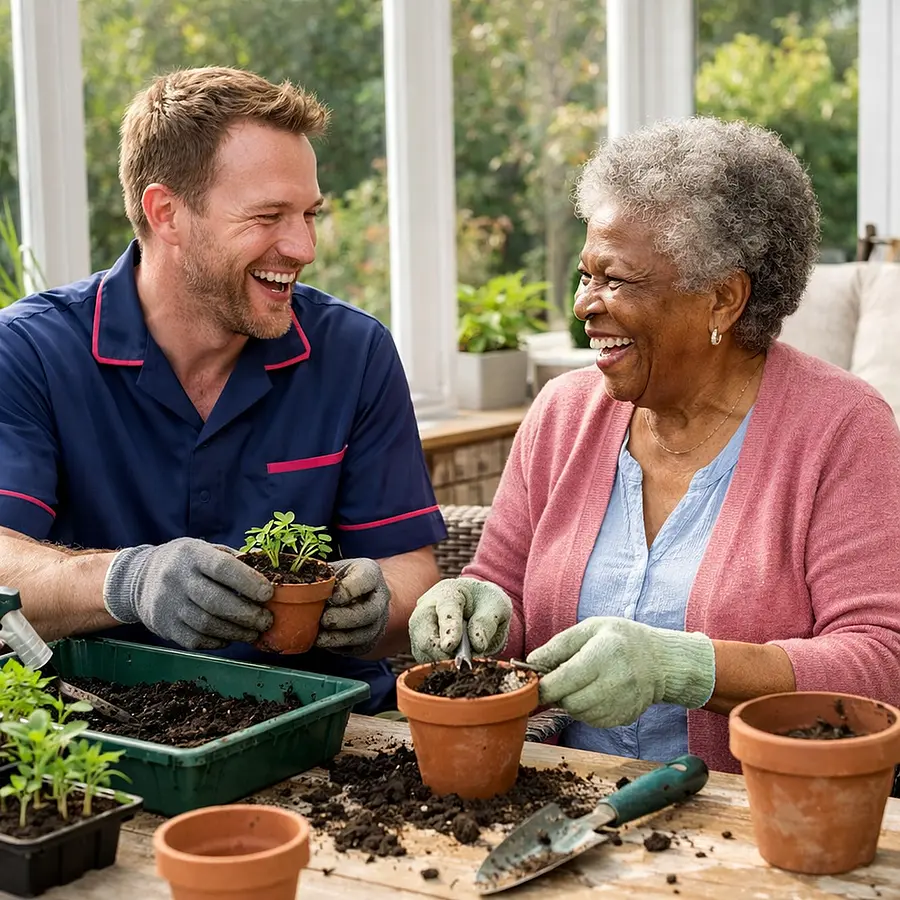
A white male caregiver in a 00072b tunic with e51974 accents sits in a sunny conservatory helping an elderly black woman pot small plants. Both laugh as they work gardening tools nearby capturing how home cancer care can support meaningful hobbies.

Reablement-focused cancer support at home

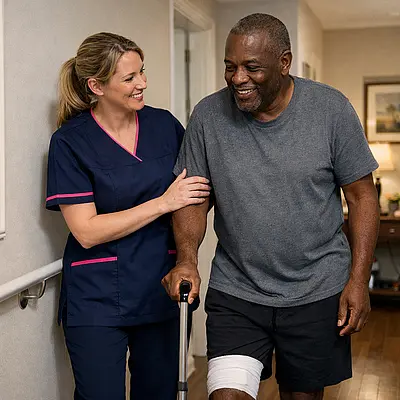
After surgery or intensive treatment, you may want to rebuild confidence step by step. Our carers can encourage gentle mobility, support exercise plans agreed with therapists, and offer steady mobility assistance. We focus on what you can do, not just what’s difficult, helping you regain independence safely and avoid unnecessary readmission to hospital.
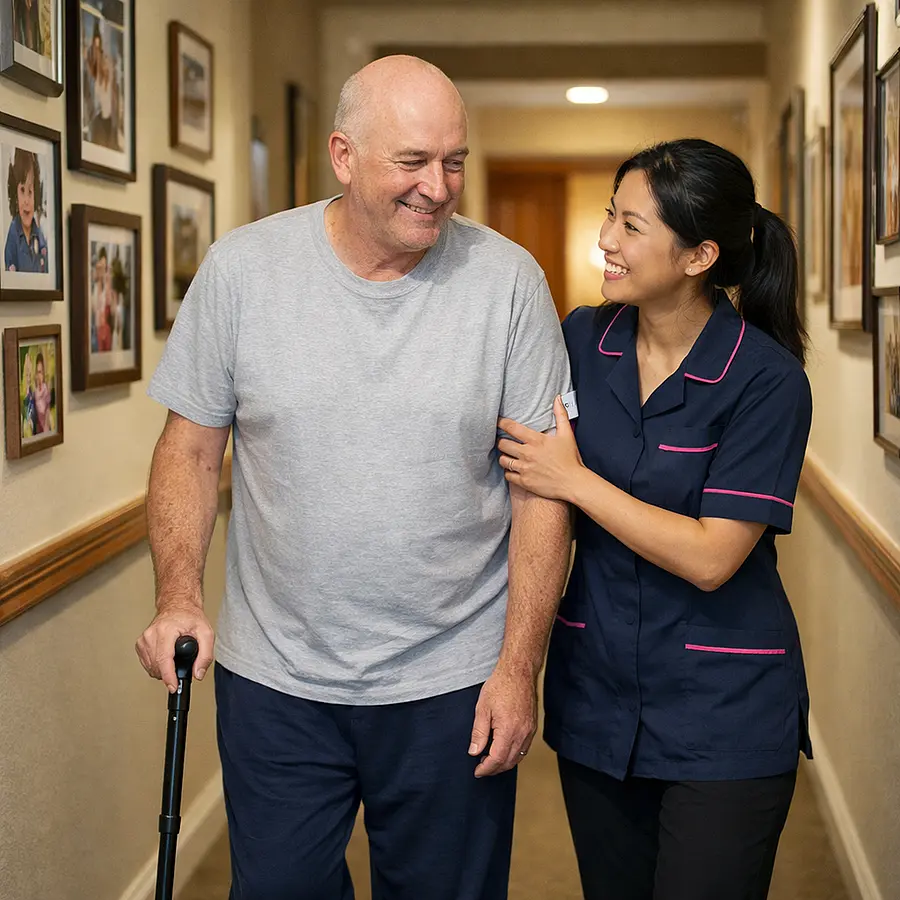
An Asian female caregiver in a 00072b tunic with e51974 piping walks slowly beside a recovering white man using a stick down a hallway lined with family photos encouraging him with a smile. The mood is hopeful reflecting reablement after cancer treatment.

Emotional support for loved ones during cancer

Family members often feel they must “stay strong” while quietly feeling frightened or exhausted. Our carers offer space to talk, signpost helpful guides and information, and share practical suggestions that reduce pressure. Knowing a trusted professional is there can give relatives permission to rest, work, or simply step back for a breather without feeling guilty.
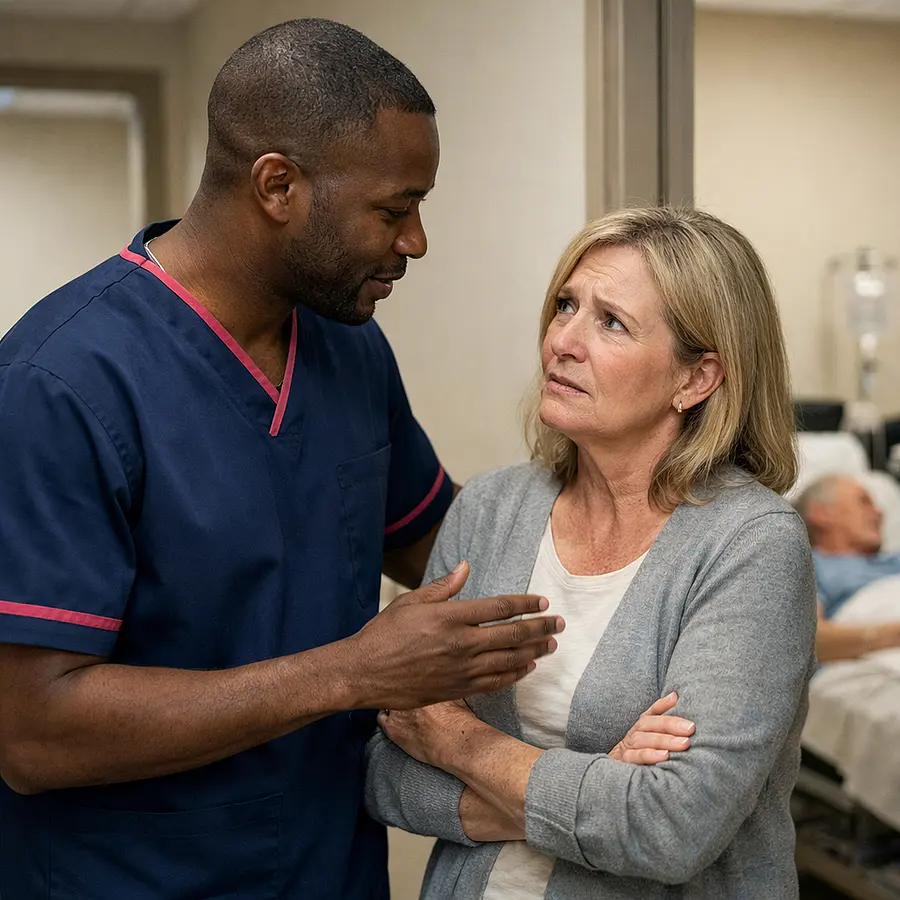
A black male caregiver in a 00072b tunic with e51974 trim talks gently with an anxious looking middle aged white woman in a hallway while an older man rests in a nearby room. Their body language shows empathy and reassurance emphasising emotional support for families during cancer.

How family and friends can help someone with cancer

Small, consistent actions matter: offering lifts, preparing food for the freezer, managing paperwork, or sitting quietly during tough days. We can complement this with professional domestic help and household tasks, leaving you free to focus on the emotional side of your relationship rather than constantly juggling every practical responsibility alone.
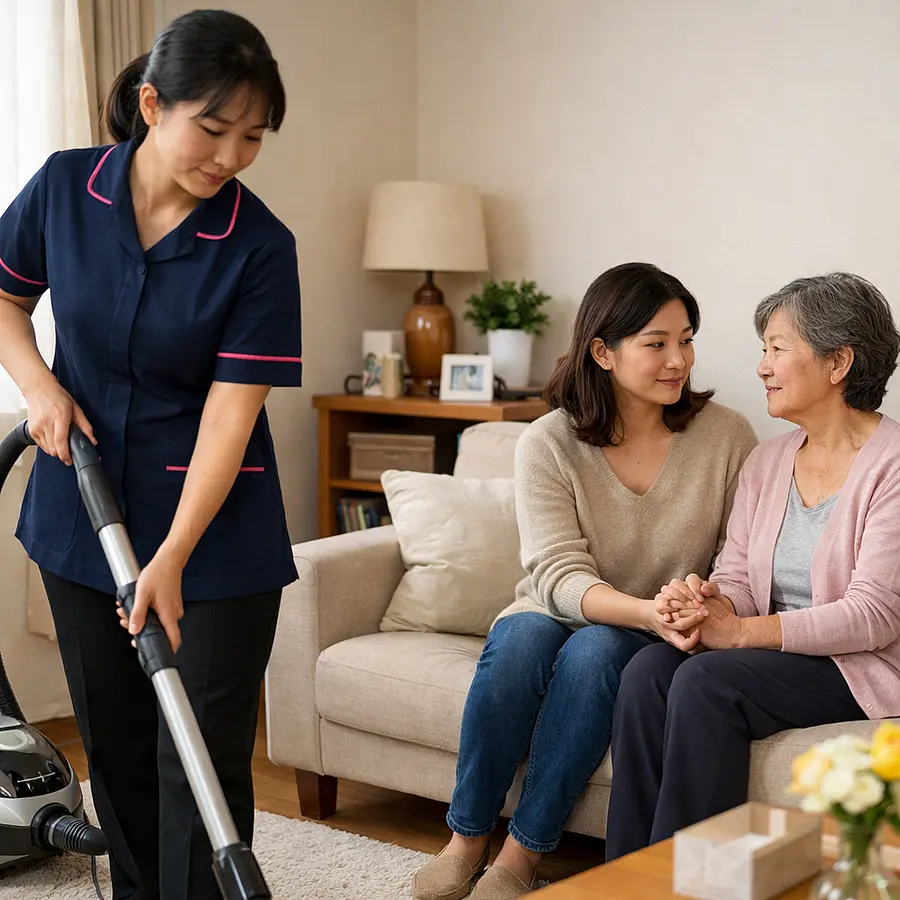
An Asian female caregiver in a 00072b tunic with e51974 piping vacuums a living room while a young adult daughter sits on the sofa holding hands with her unwell mother. The room looks tidy and warm reflecting partnership between family and professional carers.

Practical cancer care tips for relatives at home

Try keeping a shared notebook of symptoms, questions and appointments, so everyone feels informed. Agree simple routines for rest, food and visitors, and accept offers of help. Our carers can provide regular check-in visits and emotional support, giving you time to sleep, work, or spend one-to-one time without worrying the person is alone.
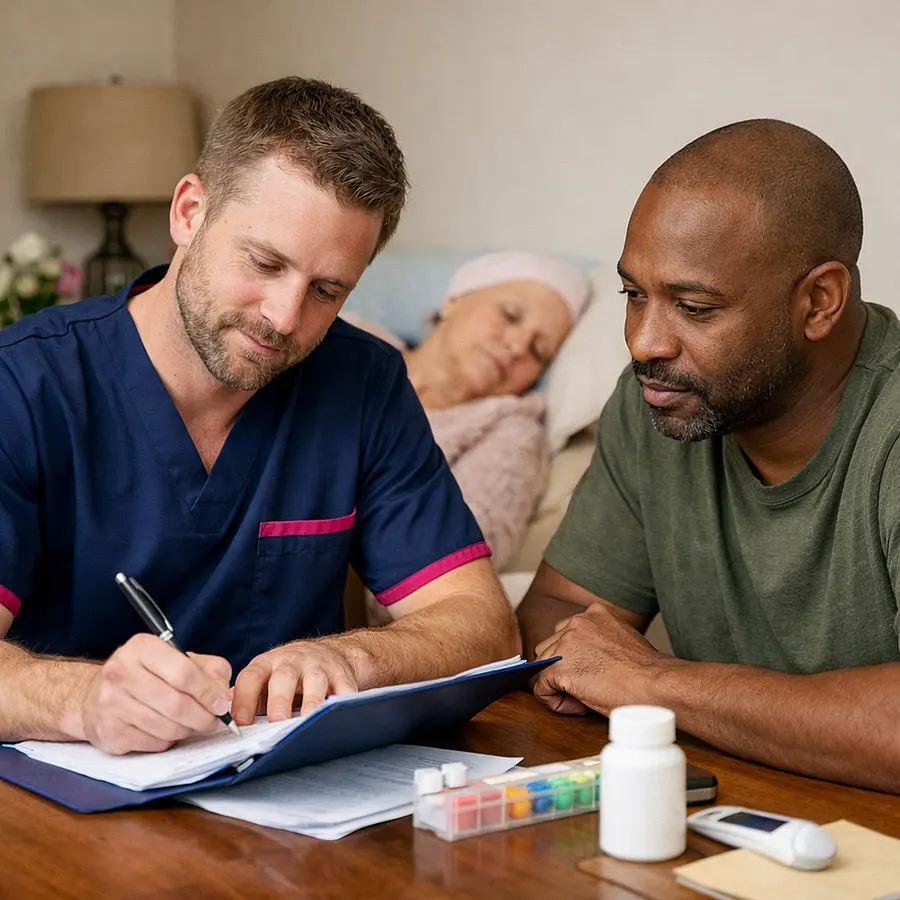
A white male caregiver in a 00072b tunic with e51974 detail writes notes in a folder at a dining table with a black adult son while an older woman rests in the background. The scene shows collaborative planning of home cancer care routines.

Caring for a loved one with cancer without burning out

It’s natural to want to do everything, but no one can pour from an empty cup. Plan regular breaks, keep your own medical appointments and talk openly about how you’re coping. We can step in with overnight reassurance and monitoring or daytime visits, so you get real rest while knowing your loved one is in safe hands.
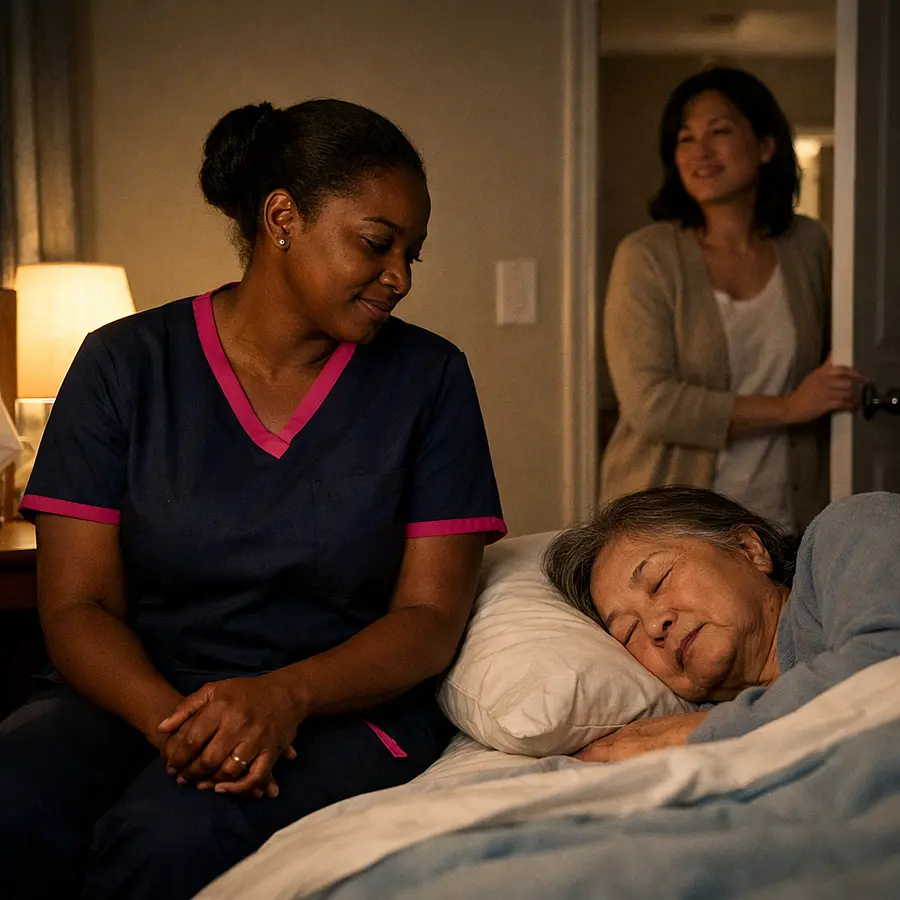
A black female caregiver in a 00072b tunic with e51974 accents sits quietly beside a sleeping older Asian woman in a dim bedroom at night while the womans daughter leaves the room looking relieved. The atmosphere is peaceful highlighting respite for family carers.

Why home cancer care can be the right choice

Being at home often means better sleep, familiar surroundings and more control over daily life. Our cancer care brings professional support into that familiar space, combining practical help, social interaction and close collaboration with clinical teams. Together, we can create a care plan that respects your choices, supports your family and adapts as circumstances change.
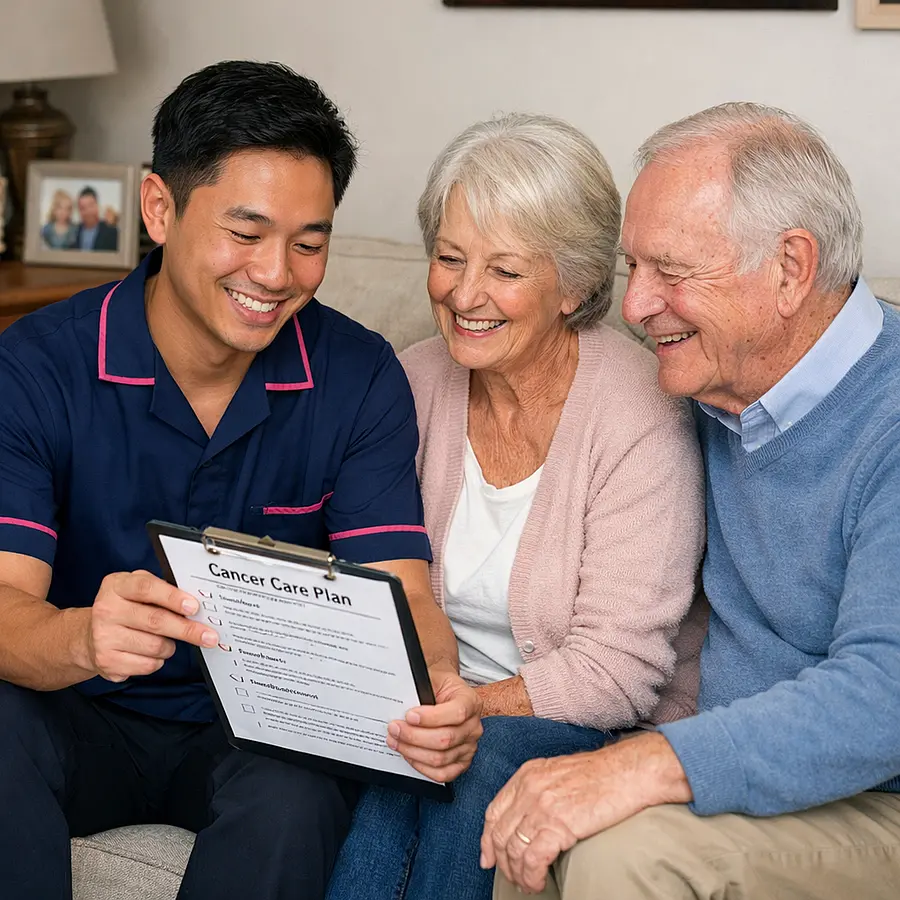
An Asian male caregiver in a 00072b tunic with e51974 trim sits on a sofa with an elderly white couple reviewing a clearly laid out care plan. They all smile with relief surrounded by homely touches like cushions and photos illustrating the benefits of home based cancer care.

Choosing our team for ongoing cancer support

We understand that cancer care is about far more than tasks; it’s about trust, listening and walking alongside you for as long as you need. Our carers are trained in condition-led support, from early diagnosis through complex needs and, where appropriate, palliative care at home. We’ll build a relationship that feels personal, respectful and genuinely supportive.

A black male caregiver in a 00072b tunic with e51974 piping shares a warm handshake with a middle aged Asian man at the front door while an older woman smiles from inside. The moment conveys trust reliability and ongoing partnership in cancer care at home.
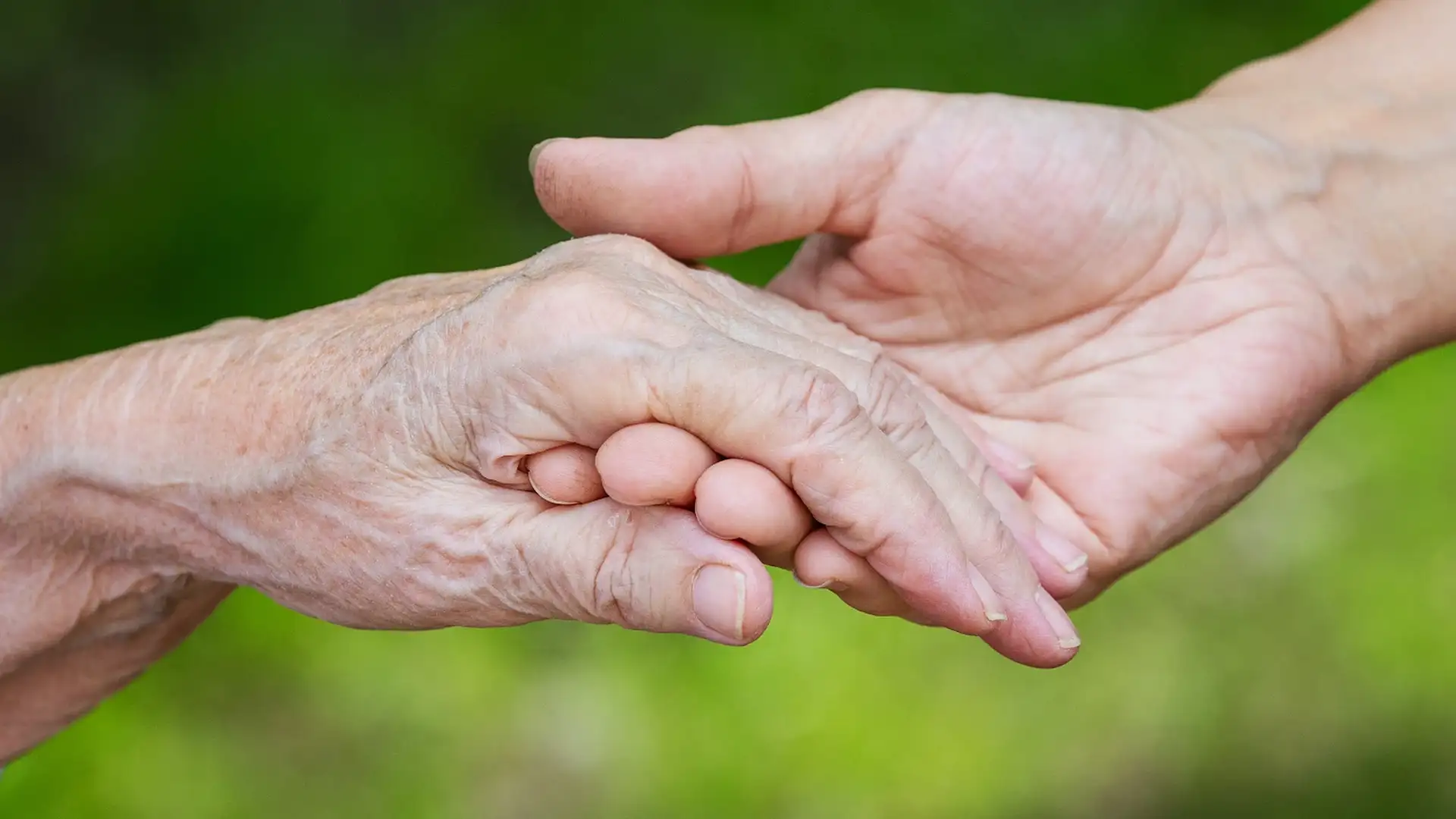
Hands of young adult and senior women over green b
Contact Us

Contact us to arrange Cancer Care at home

If you're looking for support with daily living for some one with cancer, we're here to help. Our friendly team is ready to offer guidance, answer your questions, and arrange cancer care tailored to your or your loved ones' needs in their own home. Reach out today for personalised advice and support.

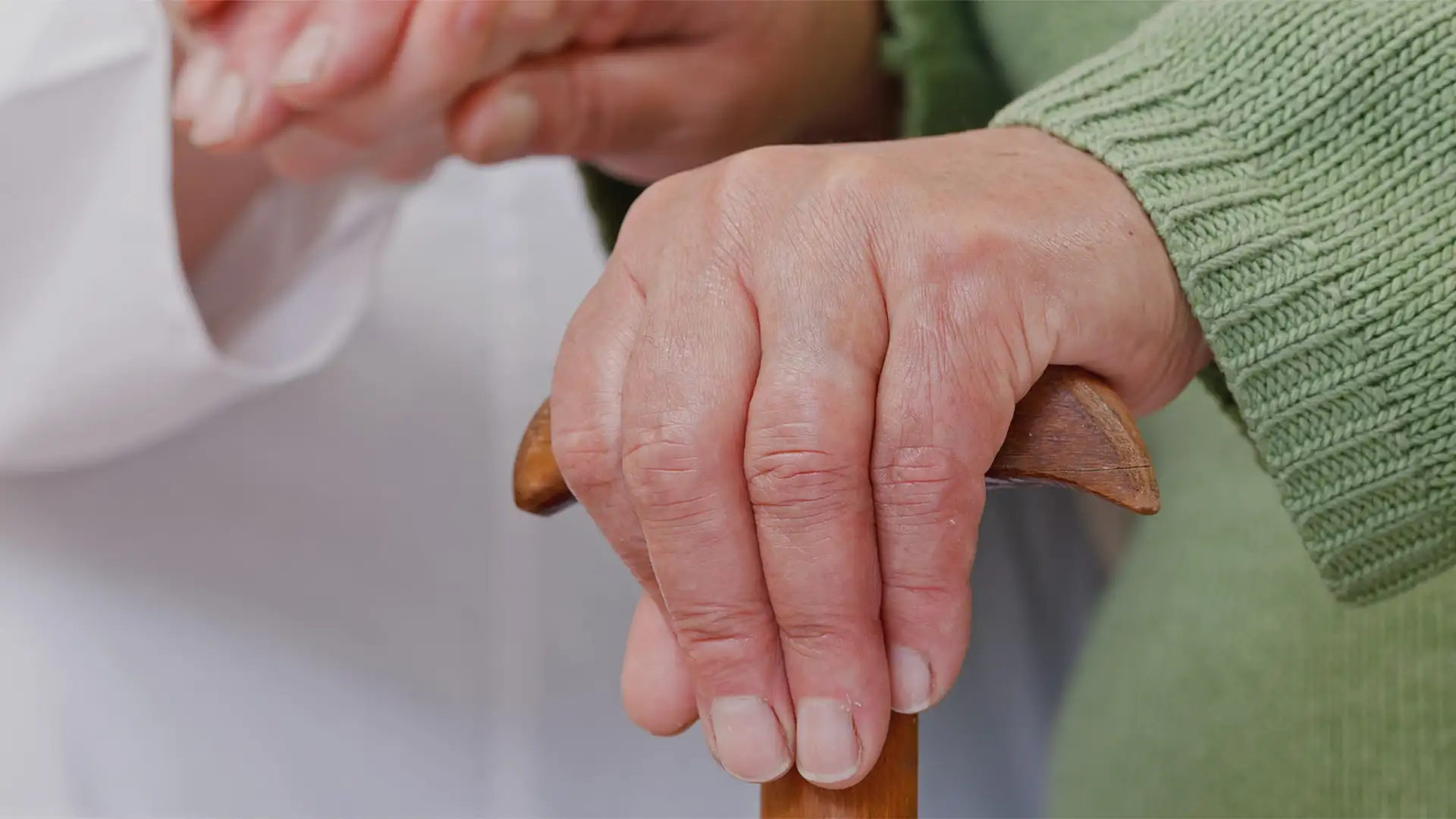
Elderly hands on a walking sitck

We're becoming a fully regulated service

While we are not currently regulated, meaning there are some services we cannot currently provide, we are in the process of registering to become a fully regulated service.

CQC

Cancer Care FAQ's

You’re bound to have questions when exploring your home care options, so we’ve answered some of the most common ones below.

Fatigue related to cancer or its treatment can be overwhelming and very different from ordinary tiredness. Our carers work with you to pace activities, building rest into your day and avoiding the “boom and bust” cycle of overdoing things on a good day then feeling wiped out. We can break tasks into small steps, prepare easy meals that don’t take much effort to eat, and support gentle movement that maintains strength without exhausting you. Practical help with housework, shopping and personal care also preserves your energy for what matters most, whether that’s spending time with family, focusing on your treatment, or enjoying a favourite hobby. Everything is tailored to how you feel that day.

Yes, many people choose short-term or time-limited support around specific treatment phases, such as immediately after chemotherapy cycles, radiotherapy, or surgery. You might want extra help for a few weeks when fatigue is worst, then reduce visits as you recover. Others may prefer support only at certain times of day, like mornings when getting up is difficult. Care can be set up with clear start and review points so you can adapt the level of support as your treatment progresses and your needs change.

We are not a replacement for medical professionals, but we do play an important role in day-to-day pain and symptom management. Carers can provide timely prompts for prescribed pain relief, observe and record changes in symptoms, and encourage you to share concerns with your GP, specialist nurse or hospital team. We can help you find comfortable positions, use cushions or equipment safely, maintain gentle movement where advised, and adapt routines to minimise discomfort. When needed, we can also work alongside palliative or end-of-life services to support more complex symptom control.

The cost of home cancer care varies depending on where you live, how often you need visits, how long each visit lasts and the level of support required. Some people fund care privately, others receive local authority or health-funded support after a care needs assessment. It’s worth exploring potential funding options, including assessments arranged through your local council. We can discuss likely costs for different patterns of support and help you think about how to balance what you need with what is affordable for you and your family.

While carers are not therapists, they are trained to offer sensitive emotional support. Sometimes, simply having someone calm and non-judgemental to talk to can ease anxiety and loneliness. Carers can encourage routines that support mental wellbeing, such as gentle activity, fresh air, enjoyable hobbies and regular meals. They can also notice changes in mood or behaviour and encourage you to speak with your GP or specialist if you seem particularly low or anxious, so that professional psychological support can be arranged if needed.

A home carer can support with a wide range of everyday tasks that may become difficult during treatment. This can include help with washing, dressing, toileting and continence care, as well as preparing light meals, encouraging regular drinks and supporting safe movement around the home. Carers can assist with light domestic tasks such as laundry and tidying, offer company and emotional reassurance, and provide prompts or practical support for medication routines in line with professional guidance. All support is tailored to your energy levels, symptoms and personal preferences.

Timings depend on where you live and the level of support needed, but we always try to move at the pace your situation requires. If you’re planning ahead before starting treatment, we can take time to meet, understand your routines, and build a gradual care plan. If circumstances change suddenly—for example, after an unexpected hospital stay—we’ll work to put urgent support in place as quickly as we safely can. An initial conversation helps us understand your priorities, and from there we can discuss availability, visit schedules, and any equipment or adaptations that might help. The sooner you contact us, the more options we usually have to tailor things around you.

Good communication with medical and hospice teams is central to safe home cancer care. With your consent, we can share observations about symptoms, appetite, mobility or mood to help professionals make informed decisions. We follow the guidance given by nurses and doctors on medication timing, moving and handling, skin care or use of equipment. If we notice worrying changes, we will encourage you or your family to seek urgent advice and, where appropriate, help you contact the relevant service. The aim is a joined-up, consistent approach.

Cancer journeys can change quickly, so flexibility is essential. Care plans are designed to be responsive rather than rigid. If your energy drops, side effects worsen or you’re discharged from hospital sooner than expected, we can explore increasing visit frequency, extending visit length or adding overnight support where possible. Likewise, if you feel stronger or need less help, support can be stepped back. Regular reviews with you and your family help ensure care remains appropriate, and any significant changes are always discussed in advance wherever possible.

Care planning starts with a detailed conversation about your diagnosis, current treatment, symptoms, routines and what matters most to you. We’ll talk about what you can and want to do for yourself, what feels overwhelming, and what your family can realistically manage. With your permission, we may also consider information from healthcare professionals. From there, we agree a written plan covering visit frequency, key tasks, risk considerations and preferences, such as how you like personal care to be delivered. The plan is reviewed regularly and updated when needs or wishes change.

Elderly hands on a walking sitck

Call us to find out more about Cancer Care

East Midlands

We proudly provide high-quality home care across the East Midlands

Our Reviews

We’re proud of the trust families place in us. Here’s what some of the people we support, and their loved ones, say about our home care services.

"Great support for my mum after she lost her confidence after a fall and hospital stay."

Sarah L

"Really helped me with keeping on top of my house work since my parkinson's has progressed."

Mark T

"They have been a great help with keeping on top of my dads laundry and general house cleaning as he is bed bound and have been being changed daily."

Emily R

Senior woman hand in caregiver hands

Join The Good News Newsletter

Be the first to discover exclusive offers, and service updates. Your journey to independent living starts here - where everything truly is fine.


Contact The Good Place

We’d love to hear from you! Whether you have questions, want to learn more about our home care service, or are ready for us to start supporting you or your loved one, our good people are here to help. If you are looking to make a complaint, you can contact our Registered Manager or Nominated Individual directly.

Send Us a Message


Elderly hands on a walking sitck

Working in Partnership

We work closely within the community to provide safe, compassionate, reliable home care that supports independence, dignity, and improved wellbeing while remaining at home.

NHS
Derbyshire County Council
Staffordshire County Council