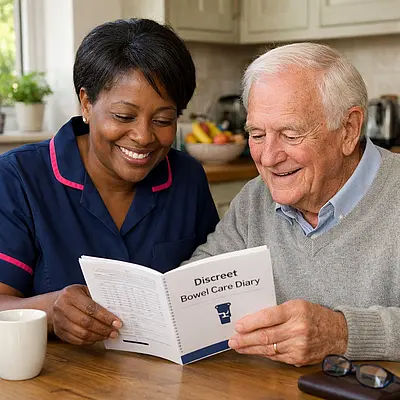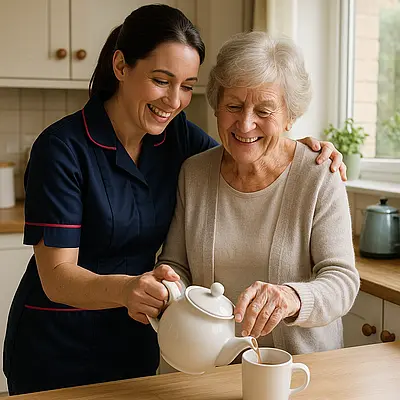

A realistic family meeting at a dining table with an asian male caregiver in 00072b tunic uniform with e51974 trim gently facilitating discussion between a black female service user and two relatives everyone attentive and calm paperwork and tea present warm supportive mood

Talking About Advanced Cancer and Future Wishes at Home

Learn how to approach talking about advanced cancer and future wishes at home with practical guidance, emotional support, and personalised care ideas. We help families create comfort, clarity, and dignity at home - contact us to discuss the right support for your loved one.

Talking about advanced cancer and future wishes at home

Talking about advanced cancer and future wishes at home can feel daunting, but gentle, honest conversations often bring comfort, clarity, and a stronger sense of togetherness. This page explains how to start these discussions, what practical topics to cover, and how families can make space for care preferences, daily comfort, and emotional reassurance at home.

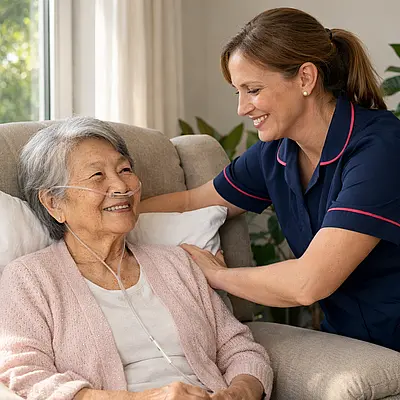
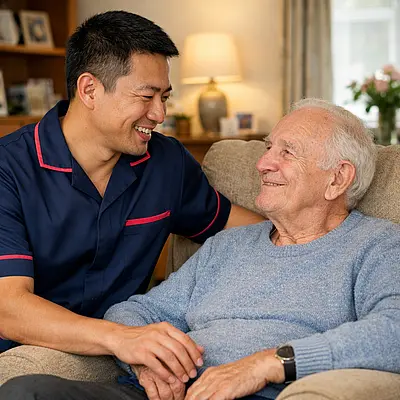
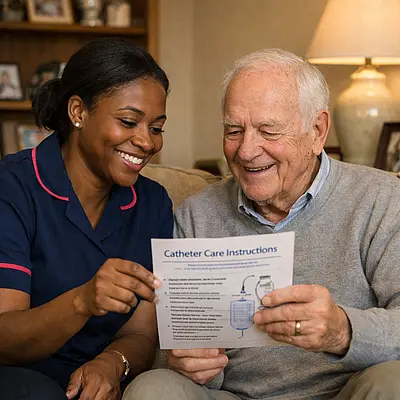
A realistic home care scene in a bright living room with a black female caregiver wearing a tunic uniform in color 00072b with e51974 accents sitting warmly beside an asian older male service user on a sofa both smiling gently during a reassuring conversation family photos nearby soft natural light

Why future wishes matter in advanced cancer care

When someone is living with advanced cancer, future wishes can include where they want to be cared for, who should be involved in decisions, and what helps them feel safe day to day. Speaking early can reduce uncertainty later. It also helps families plan support around routines, comfort, dignity, and important personal choices at home.

A realistic kitchen table conversation at home with an asian male caregiver in a 00072b tunic uniform with e51974 accent trim speaking reassuringly with a caucasian female service user and her daughter cups of tea on the table warm expressions tidy home setting emotionally supportive and realistic

Common challenges when discussing advanced cancer at home

Families often worry that bringing up advanced cancer will take away hope or upset a loved one. In reality, avoiding the conversation can create more stress. Different relatives may also disagree about timing, treatment, or care plans. Tiredness, pain, or treatment side effects may make talking harder, so planning shorter conversations can help.
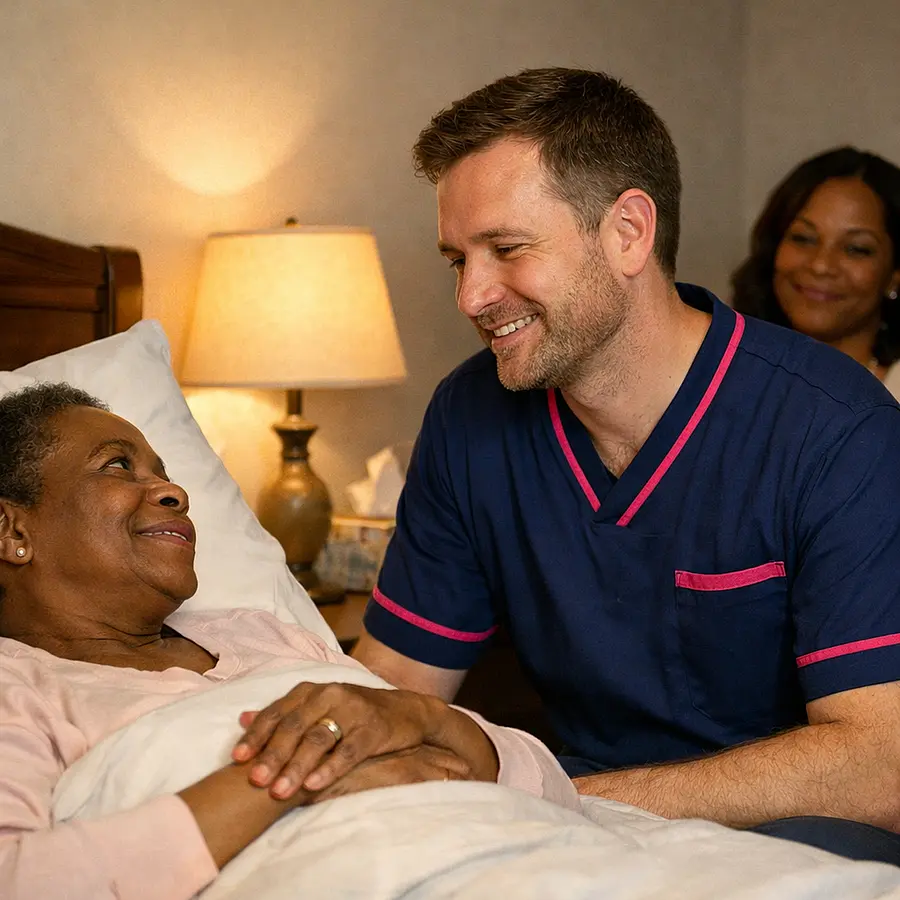
A realistic bedroom scene with a caucasian male caregiver wearing a 00072b tunic with e51974 accents listening kindly to a black female service user resting in bed a family member nearby the mood calm and reassuring warm bedside lamp realistic facial expressions showing trust and relief

Choosing the right time to start the conversation

Try to begin when the person feels relatively comfortable, not during a rushed appointment or a moment of severe fatigue. A quiet afternoon, a short walk indoors, or time after lunch may work better. You can start small with, “Would it help to talk about what matters most to you now?” and let the conversation unfold naturally.

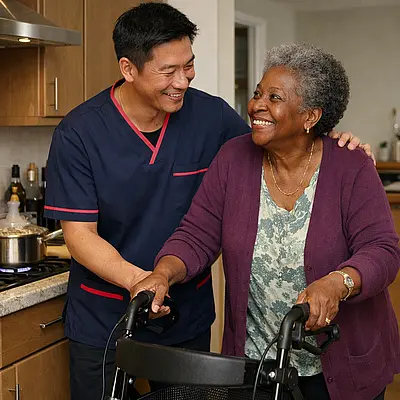
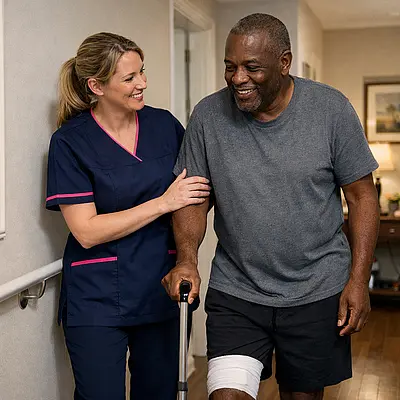
A realistic hallway and lounge home scene with a black male caregiver in a 00072b tunic uniform with e51974 piping walking slowly beside a caucasian older female service user both smiling softly gentle supportive body language natural daylight warm and reassuring environment

Creating a calm space for advanced cancer discussions

A familiar room, comfortable seating, low noise, and enough time can make these talks feel less overwhelming. Keep water, tissues, and any notes nearby. Some families find it easier to talk during everyday moments, such as over tea or while looking through photographs. A calm setting supports honest sharing and helps everyone feel heard.

A realistic lounge setup prepared for a sensitive conversation featuring an asian female caregiver in a 00072b tunic with e51974 accents arranging cushions and tea for a black male service user both smiling gently warm homely lighting realistic details atmosphere of comfort and reassurance

How daily routines can guide future wishes at home

Future wishes are not only about medical decisions. They often include ordinary preferences like when someone likes to wake up, what helps with appetite, or whether they want help with washing and personal hygiene. Discussing routines can make care feel more personal, respectful, and easier to organise around changing energy levels.

A realistic morning care scene in a bedroom with a caucasian female caregiver in a 00072b tunic uniform with e51974 details helping an asian female service user choose clothes and prepare for the day both looking relaxed and reassured warm sunlight respectful and realistic home care setting

Talking about symptoms and comfort in advanced cancer

Comfort matters greatly in advanced cancer. It can help to ask what symptoms are most troublesome, such as pain, nausea, breathlessness, or poor sleep. Families can then plan support, including help with medicines and medication routines, positioning, rest periods, and links with wider palliative care at home where appropriate.

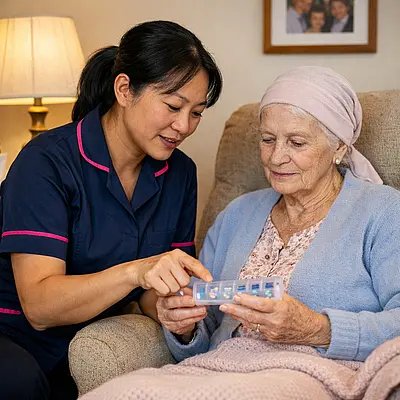
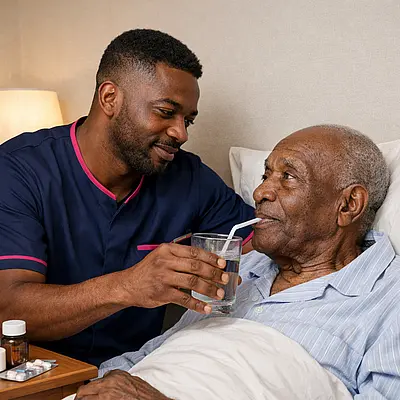
A realistic bedside support scene showing a black female caregiver in a 00072b tunic with e51974 accents checking a medication chart with a caucasian male service user both calm and reassured soft lamp light neatly arranged room supportive and professional home care atmosphere

Including family members without losing the person’s voice

Relatives often want to help, but the person with advanced cancer should stay at the centre of the conversation whenever possible. If several people are involved, agree who will take notes and who will speak with health professionals. Giving everyone a role can reduce tension while protecting the individual’s own wishes and priorities.

A realistic family meeting at a dining table with an asian male caregiver in 00072b tunic uniform with e51974 trim gently facilitating discussion between a black female service user and two relatives everyone attentive and calm paperwork and tea present warm supportive mood

Planning food and fluids around changing needs

Appetite and thirst can change with advanced cancer, so practical conversations should include favourite foods, portion sizes, and when eating feels easiest. Keeping simple options available can reduce pressure. Support with meal preparation may include soft meals, small snacks, or drinks within easy reach, always guided by comfort and preference.
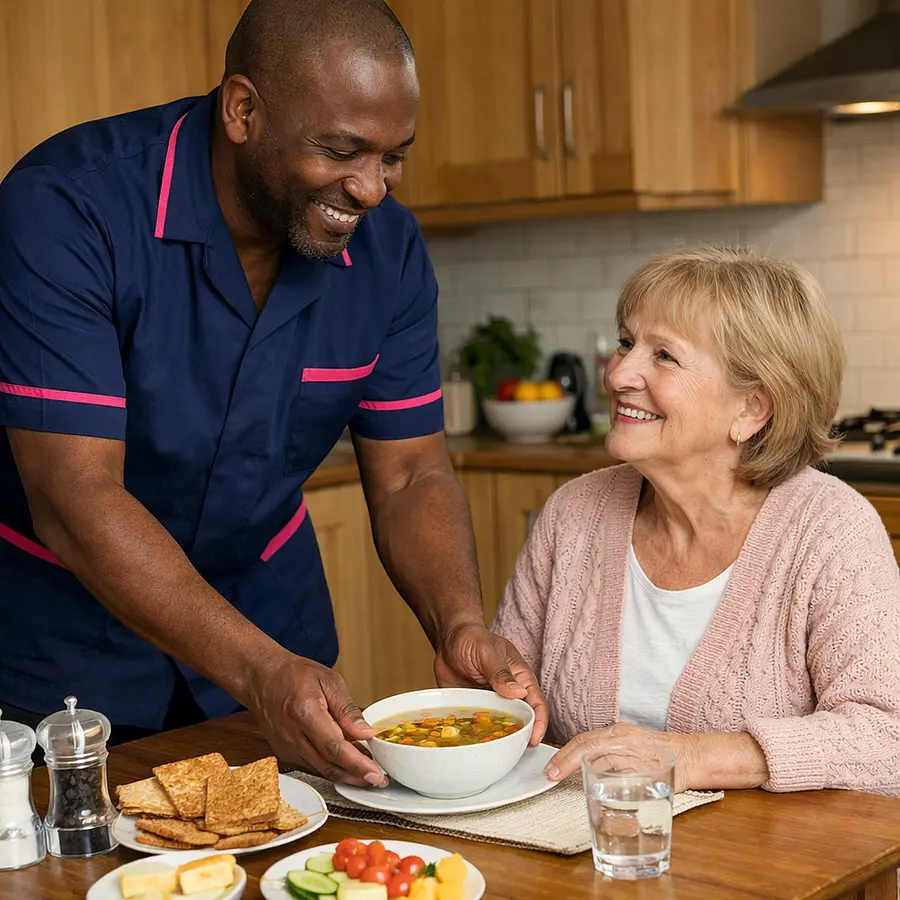
A realistic kitchen scene with a black male caregiver wearing a 00072b tunic with e51974 accents preparing a light meal for a caucasian female service user seated comfortably at the table both smiling warmly fresh soup and snacks visible homely and reassuring atmosphere

Managing energy levels and rest at home

Fatigue can shape every part of daily life. It helps to ask when the person has most energy and save important conversations or visits for those times. Quiet company, short activities, and practical support with light household tasks can protect energy for things that matter, such as family time or simple pleasures.
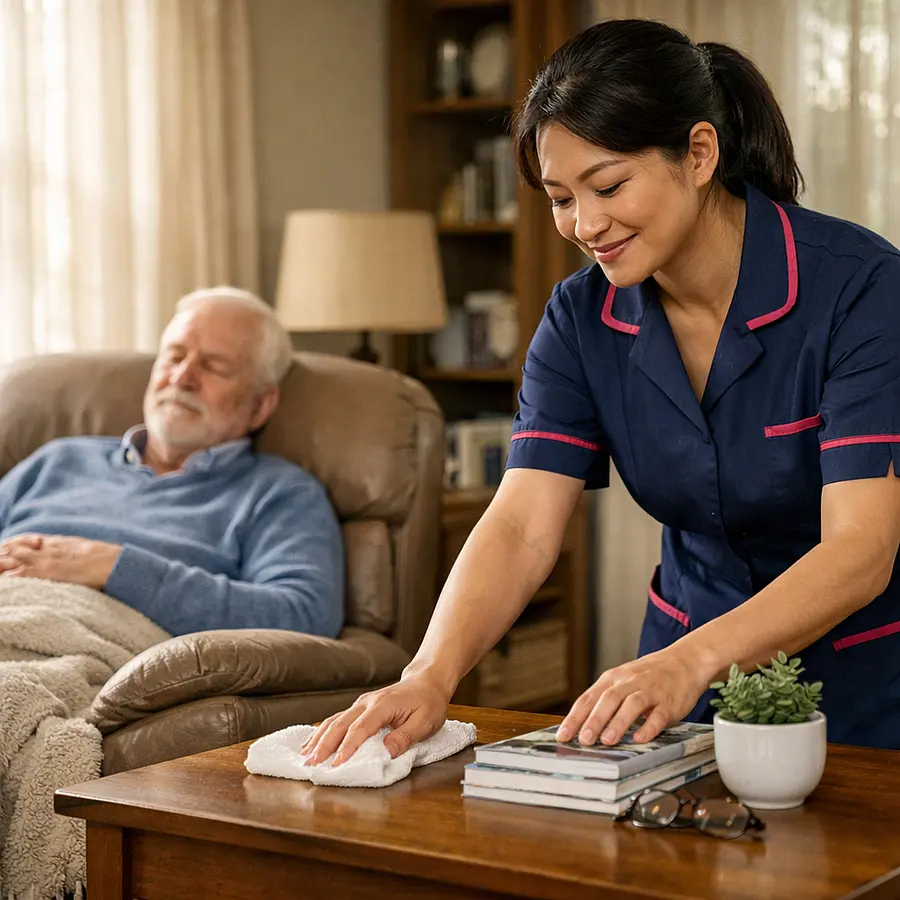
A realistic afternoon home scene with an asian female caregiver in a 00072b tunic uniform with e51974 accents quietly tidying a living room while a caucasian older male service user rests comfortably in an armchair both content sunlight through curtains atmosphere of calm and care

Making room for companionship during difficult conversations

Not every discussion needs to be serious from start to finish. Gentle company can make hard topics easier. A trusted relative, close friend, or companionship visit can help someone feel less alone before and after talking. Sometimes the most supportive step is sitting quietly together and allowing emotions to settle naturally.
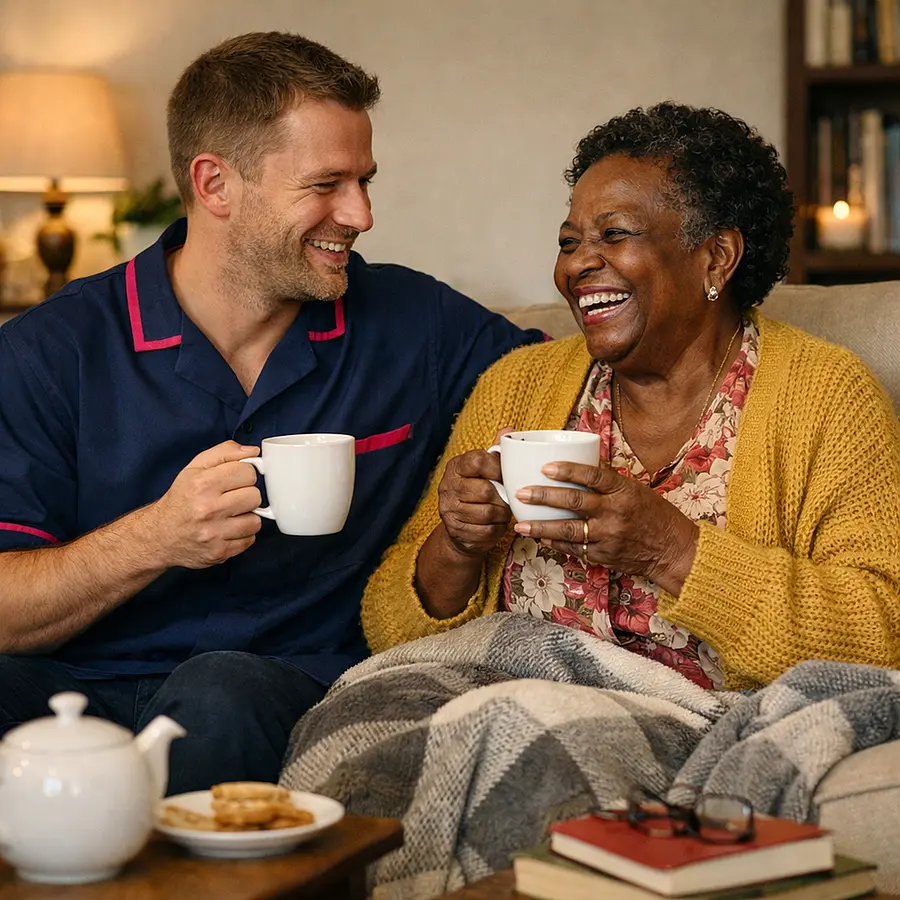
A realistic sitting room scene with a caucasian male caregiver in a 00072b tunic with e51974 detail sharing tea and a gentle laugh with a black female service user cosy blankets and books nearby warm emotional reassurance realistic and joyful home companionship

Thinking ahead about night-time support in advanced cancer

Night can bring anxiety, pain flare-ups, toileting needs, or disrupted sleep. Talking in advance about what feels reassuring overnight can prevent distress later. Some people want a family member nearby, while others prefer professional overnight care at home. Discussing this early helps families prepare practical, realistic support.
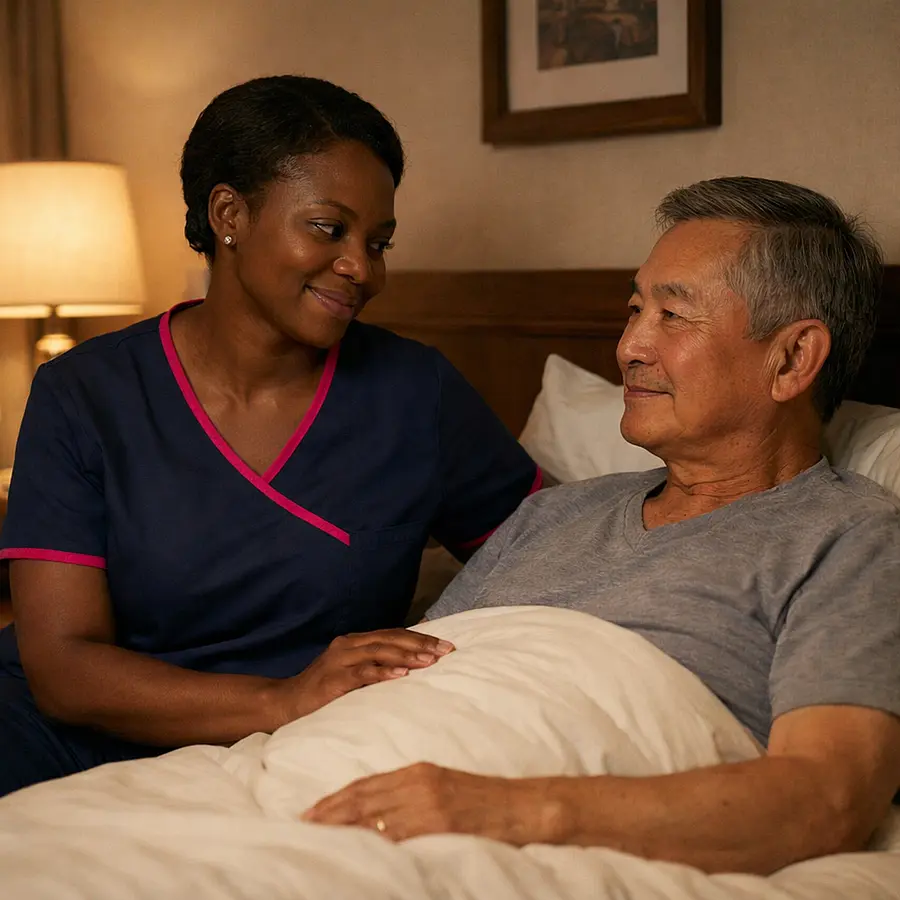
A realistic evening bedroom scene with a black female caregiver in a 00072b tunic with e51974 accents sitting reassuringly beside an asian male service user in bed low warm light calm expressions safe and comforting overnight home care atmosphere realistic details

Real examples of starting the conversation at home

One gentle approach is to begin with practical questions rather than big medical topics. For example: “If you feel more tired next month, what would help most at home?” Another is, “Who would you like us to call if anything changes?” These openings feel less overwhelming and often lead naturally to wider wishes and priorities.
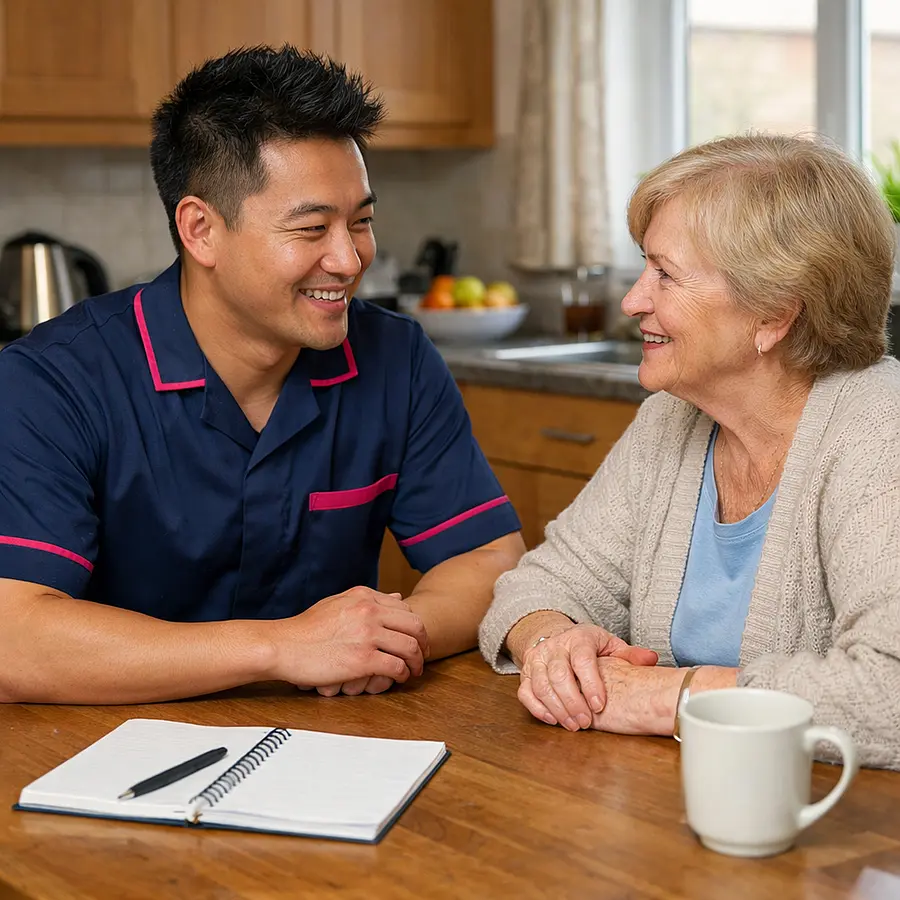
A realistic home conversation scene with an asian male caregiver wearing a 00072b tunic uniform with e51974 accents speaking gently with a caucasian female service user at a kitchen table notepad nearby both relaxed and engaged warm home setting realistic and supportive

Using written notes to record future wishes

Many families find it useful to keep a notebook with key preferences, important phone numbers, appointment details, and questions for professionals. This can include preferred routines, favourite meals, and what signs suggest a difficult day. Written notes reduce confusion, especially when several relatives are helping or when treatment plans are changing quickly.
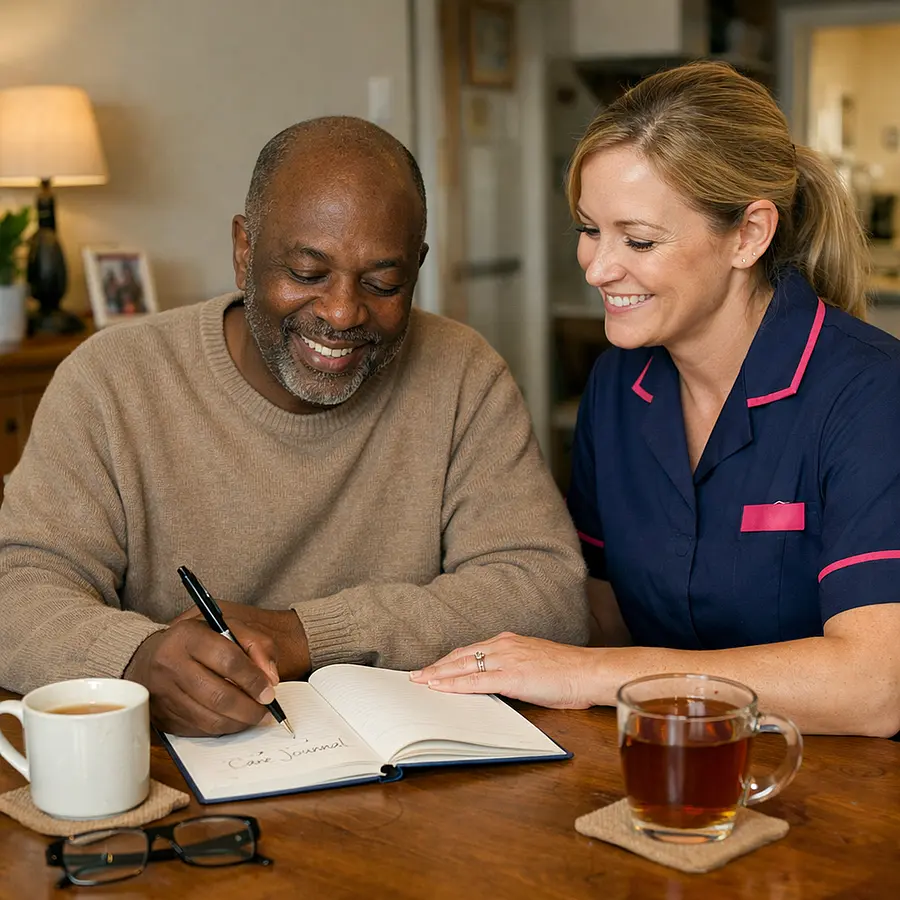
A realistic dining room scene showing a caucasian female caregiver in a 00072b tunic with e51974 details helping a black male service user write notes in a care journal both smiling softly glasses and tea on table practical and warm home care atmosphere

How home environment changes support advanced cancer wishes

Sometimes future wishes involve simple changes to the home, such as moving a bed downstairs, clearing walkways, or creating a more peaceful resting area. A comfortable chair, soft lighting, and essentials within reach can make daily life easier. This practical planning helps the person feel safer and supports families caring at home.
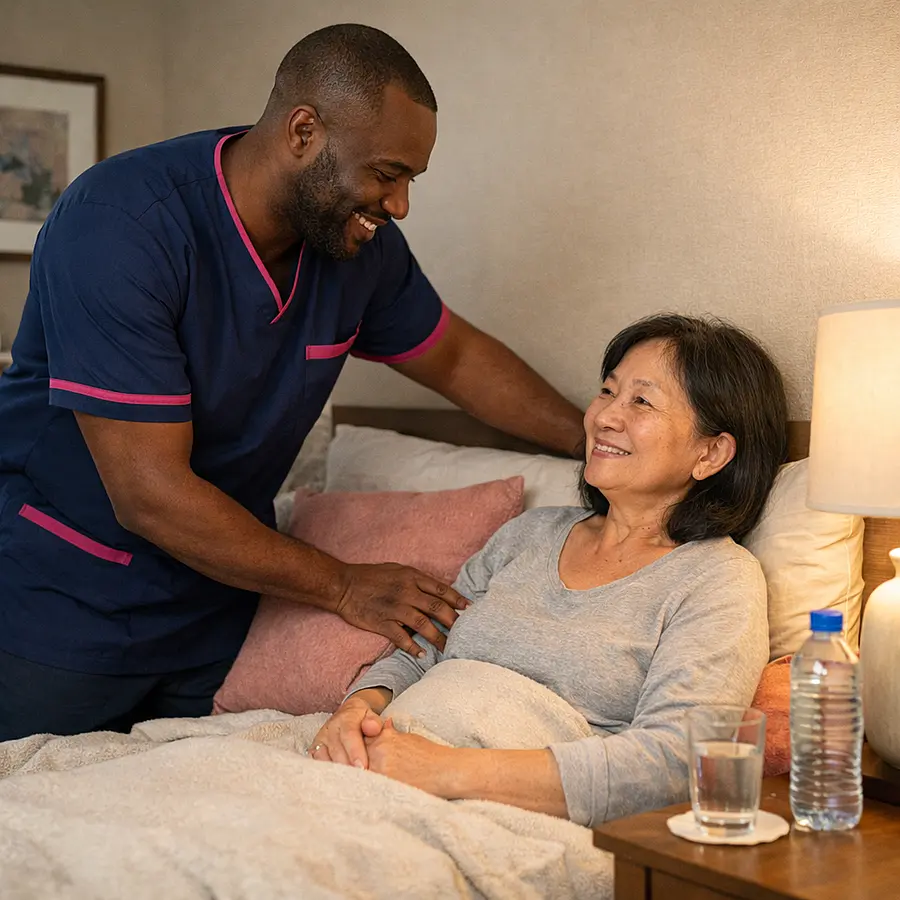
A realistic home adaptation scene with a black male caregiver in a 00072b tunic with e51974 accents arranging a comfortable bedroom space for an asian female service user cushions lamp and water nearby both looking reassured warm and realistic home care setting

When children and younger relatives are part of the family

Families often wonder how much to say to children. Honest, age-appropriate language is usually kinder than silence. You might explain that the person is very unwell, may need more rest, and that adults are making plans to keep them comfortable. Keeping routines familiar for younger relatives can provide reassurance during uncertain times.
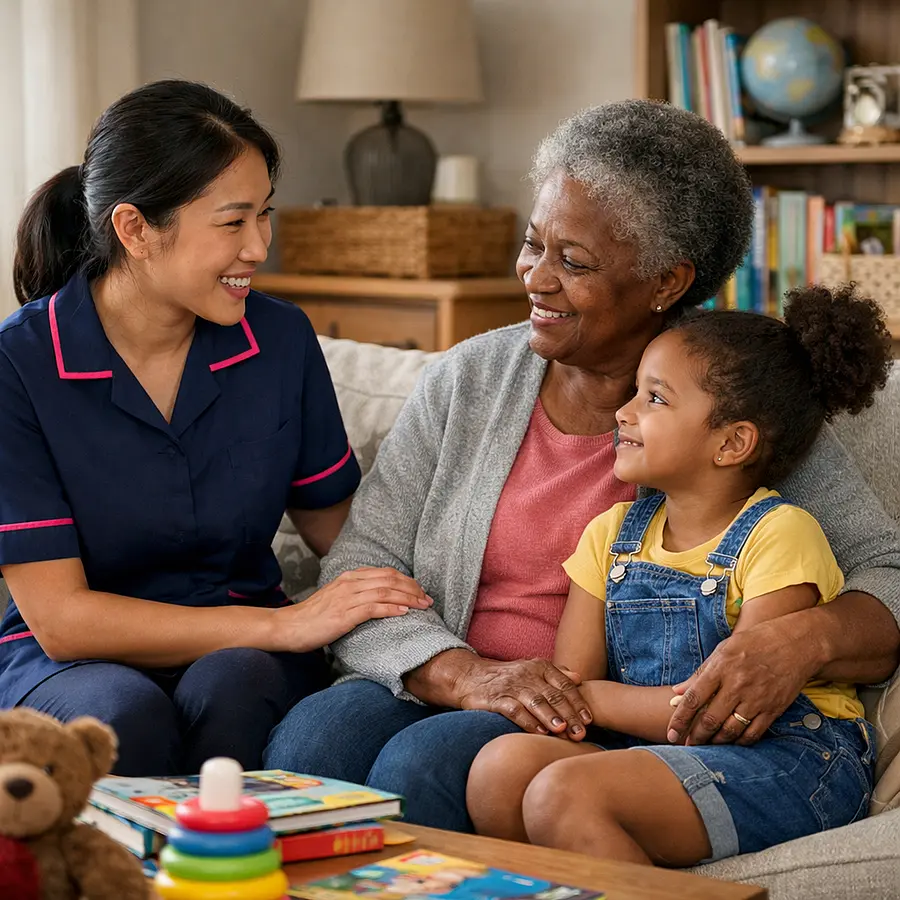
A realistic family lounge scene with an asian female caregiver in a 00072b tunic uniform with e51974 accents gently talking with a black grandmother service user and a young family member everyone calm and comforted toys and books visible warm realistic and reassuring

Balancing hospital treatment with future wishes at home

Some people with advanced cancer still attend appointments or treatment while planning for more support at home. Conversations can include transport, recovery after visits, what information to write down, and who should attend appointments. Linking practical plans with comfort needs helps daily life feel more manageable and less rushed.
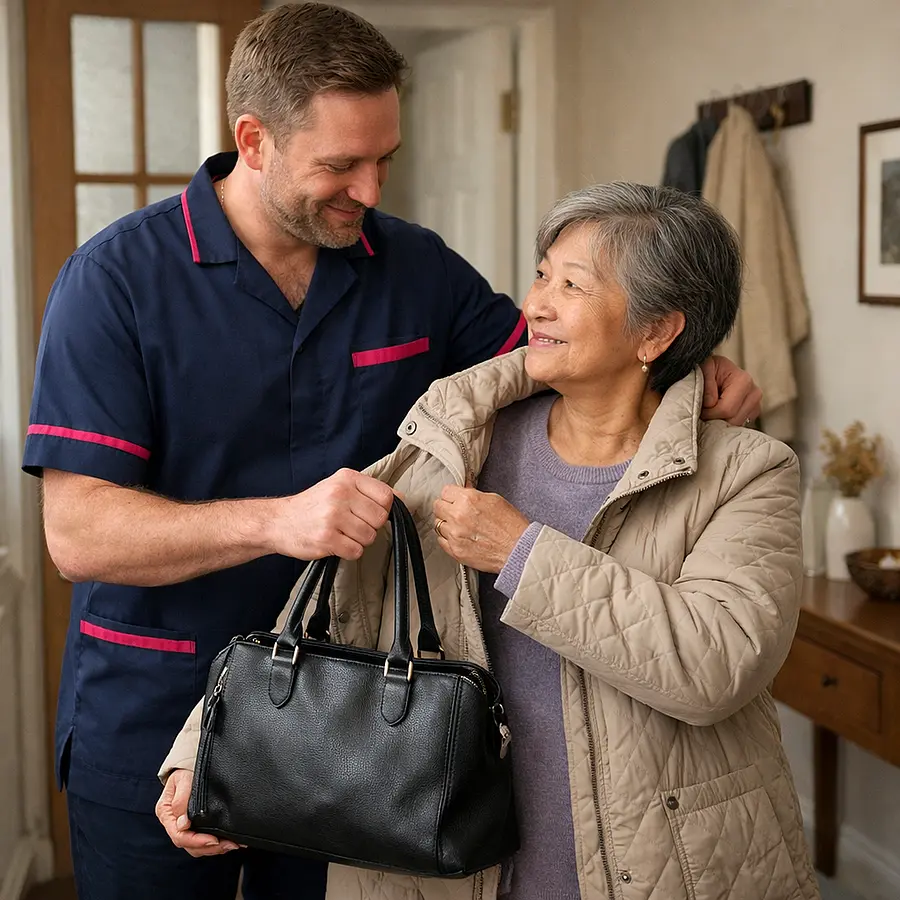
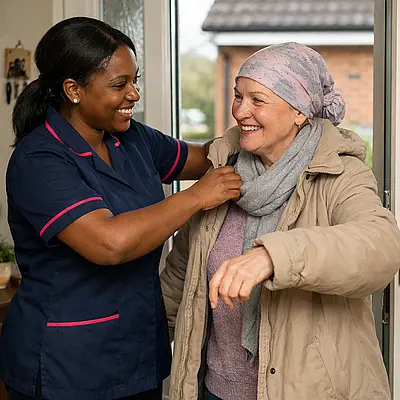
A realistic hallway scene before a medical appointment with a caucasian male caregiver in a 00072b tunic with e51974 accents helping an asian older female service user prepare a coat and bag both composed and reassured warm natural light realistic supportive home care image

How professional care supports advanced cancer conversations

Professional carers can support these discussions by listening carefully, noticing changes in comfort, and helping routines run more smoothly. We can provide practical help with washing, meals, mobility, medication prompts, and emotional reassurance, while working alongside family and wider professionals. This creates steadier support around the person’s wishes at home.

A realistic in home support scene showing a black female caregiver in a 00072b tunic with e51974 detail reviewing a daily plan with a caucasian male service user and his spouse everyone reassured and smiling gently tidy home setting warm and professional realism

Why choose us for advanced cancer support at home

We understand that talking about advanced cancer and future wishes takes sensitivity, patience, and practical experience. Our approach is centred on dignity, comfort, and the individual’s own voice. We work with families to build flexible care at home, whether that means regular visits, reassurance, or support as needs change over time.
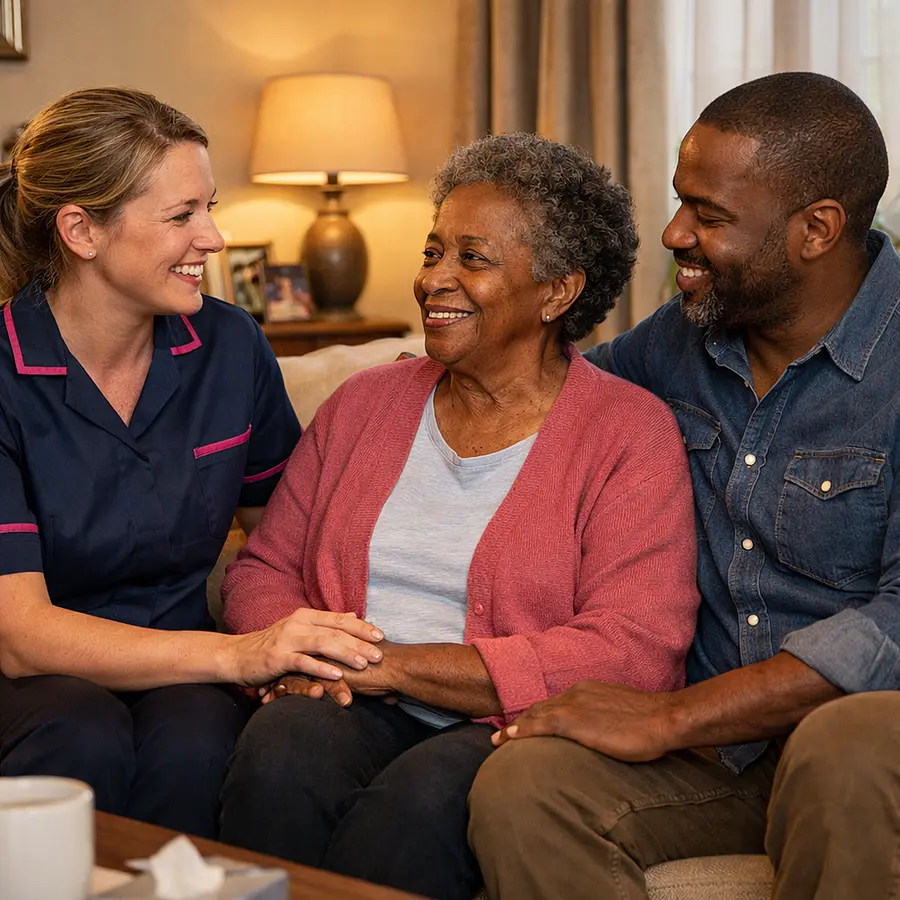
A realistic front room home care scene with a caucasian female caregiver wearing a 00072b tunic uniform with e51974 accents smiling reassuringly with a black female service user and her son warm lighting comfortable furnishings strong sense of trust joy and compassionate professionalism
Hands of young adult and senior women over green b
Contact Us

Contact us to arrange Cancer Care at home

If you're looking for support with daily living for some one with cancer, we're here to help. Our friendly team is ready to offer guidance, answer your questions, and arrange cancer care tailored to your or your loved ones' needs in their own home. Reach out today for personalised advice and support.

Talking About Advanced Cancer and Future Wishes at Home FAQ's

You’re bound to have questions when exploring your home care options, so we’ve answered some of the most common ones below.

Home cancer support can be tailored around the person’s condition, symptoms, routines, and family circumstances. This may include help with washing and dressing, meal support, mobility, sitting companionship, medication routines, overnight reassurance, and practical support after appointments or treatment. Some people need short visits, while others need more regular input. Families can also explore broader cancer care at home if they want support that grows with changing needs. The benefit of home-based care is that it keeps support centred in familiar surroundings, allowing the person to maintain as much comfort, routine, and personal choice as possible.

Meal support should focus on comfort, preference, and flexibility rather than pressure. Appetite can change from day to day, so it often helps to offer smaller portions, favourite foods, or easy snacks at times when the person feels most able to eat. Support with preparing meals at home may include making soft foods, nourishing drinks, or simple dishes that are easier to manage when someone feels tired or nauseated. Keeping fluids nearby can also help. Families should not feel they have failed if someone eats less than before. The goal is to make eating and drinking as comfortable and stress-free as possible, guided by advice from relevant professionals where needed.

Yes, if the person is willing, earlier conversations are often easier than waiting for a crisis. Talking before needs become more urgent allows everyone to think clearly and ask questions without the same level of pressure. It also gives the person more opportunity to explain what matters to them, from practical daily routines to where they wish to receive care. Early planning can help with appointments, home adaptations, comfort measures, and family roles. It does not mean giving up hope. It simply means being prepared and making sure the person’s wishes are understood. These conversations can happen gradually over time rather than all at once.

A good way to begin is with a gentle, open question rather than trying to cover everything at once. You might say, “Would it help to talk about what matters most to you at home?” or “Is there anything you want us to plan together for the coming weeks?” Choose a quiet time when the person is reasonably comfortable and not tired after an appointment. Listen more than you speak, and allow pauses. Some people want to talk straight away, while others need several shorter conversations. It can also help to write down key points afterwards, including preferences about comfort, routines, visitors, and who should be involved in decisions.

Talking about future wishes can reduce uncertainty and help everyone feel more prepared. These conversations are not only about medical treatment. They may include where someone feels safest, who they want around them, their preferred routines, and what comfort means to them personally. When wishes are shared early, families are less likely to guess or disagree later. It also becomes easier to arrange the right support, whether that is practical help at home, emotional reassurance, or links with end-of-life care support if needs progress. Clear conversations can actually bring relief, because they allow the person’s voice to stay central while plans are being made.

Yes, practical help with the home can make a significant difference when someone is living with advanced cancer. Families often find that laundry, changing bedding, tidying, and other everyday jobs become harder to manage alongside appointments, emotional stress, and caring responsibilities. Support with light domestic duties can ease that pressure and help create a calmer, more comfortable environment. This is especially valuable when fatigue is high or when family carers are balancing work and other responsibilities. A well-kept, organised home can also make care routines smoother and allow more time and energy for meaningful moments together.

A calmer home often comes from simple changes rather than major adjustments. Clear walkways, comfortable seating, soft lighting, a nearby table for drinks and medicines, and easy access to essentials can all help. Noise can also have a big effect, so some families choose quieter rooms for rest and conversations. If sleep is becoming difficult, ideas from creating a comforting bedroom space at home may be useful. The aim is to reduce unnecessary effort and create a setting that feels safe, warm, and settled. A calmer environment can support both physical comfort and emotional reassurance.

Emotion is a natural part of these conversations, so the aim is not to stop it but to respond calmly and kindly. If your loved one becomes upset, pause, stay present, and avoid rushing to fix the moment. You can say, “We do not have to answer everything now,” or “I’m here with you.” Offer tissues, water, or a short break. Sometimes sitting quietly together is more supportive than asking more questions. If the conversation feels too much, return to it another day. Short, gentle discussions are often more manageable than one long talk. The important thing is creating a sense of safety so the person knows their feelings can be expressed without pressure.

Avoidance is common, especially if the person is frightened, overwhelmed, or trying to protect family members from worry. It usually helps to avoid pushing for one big conversation. Instead, try smaller openings connected to daily life, such as comfort, routines, or practical support at home. For example, ask what helps on more difficult days or whether they would like more support with meals, rest, or appointments. Respecting their pace is important. Even if they do not want to talk today, they may be willing later. Keep the door open by saying you are ready to listen whenever they choose. Consistent reassurance, familiar routines, and calm support can help build trust over time.

Medication support can make daily life more manageable by helping ensure medicines are taken as intended and by reducing stress for family members. In advanced cancer, someone may have tablets, patches, liquid medicines, or changing routines linked to pain, nausea, or sleep. Support with medication management can include reminders, recording what has been taken, noticing when supplies are running low, and helping families keep routines organised. While carers do not replace clinical advice, practical support around medicines can improve consistency and reduce confusion, especially if the person feels fatigued or several relatives are sharing responsibilities. Good communication with wider professionals is also important when symptoms change.

We proudly provide high-quality home care across the East Midlands, in an around the towns and cities detailed below.

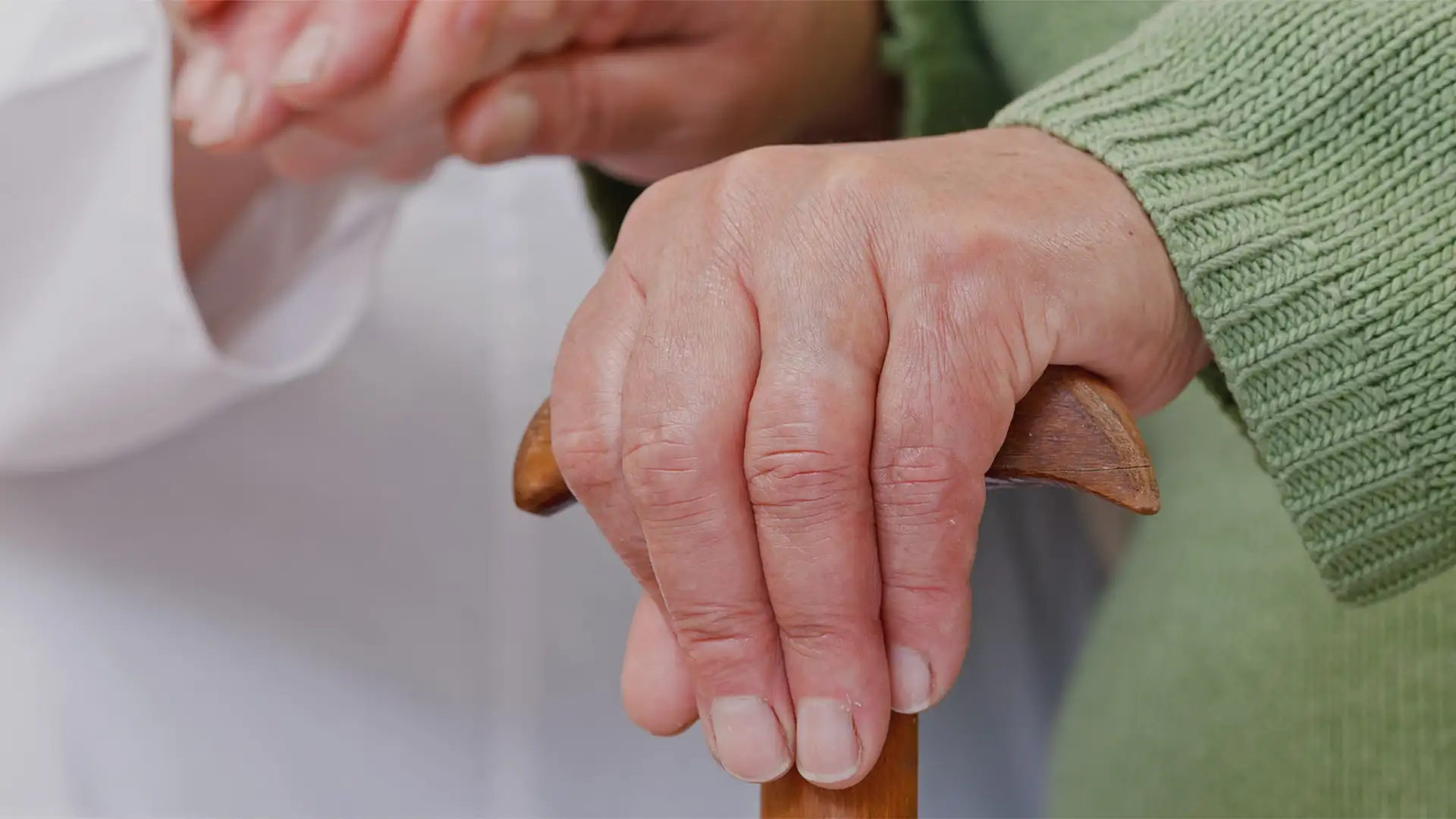
Elderly hands on a walking sitck

We're becoming a fully regulated service

While we are not currently regulated, meaning there are some services we cannot currently provide, we are in the process of registering to become a fully regulated service.

CQC
Elderly hands on a walking sitck

Call us to find out more about Talking About Advanced Cancer and Future Wishes at Home

East Midlands

We proudly provide high-quality home care across the East Midlands

Our Reviews

We’re proud of the trust families place in us. Here’s what some of the people we support, and their loved ones, say about our home care services.

"They have been a great help with keeping on top of my dads laundry and general house cleaning as he is bed bound and have been being changed daily."

Emily R

"Great support for my mum after she lost her confidence after a fall and hospital stay."

Sarah L

"Really helped me with keeping on top of my house work since my parkinson's has progressed."

Mark T

Senior woman hand in caregiver hands

Join The Good News Newsletter

Be the first to discover exclusive offers, and service updates. Your journey to independent living starts here - where everything truly is fine.


Contact The Good Place

We’d love to hear from you! Whether you have questions, want to learn more about our home care service, or are ready for us to start supporting you or your loved one, our good people are here to help. If you are looking to make a complaint, you can contact our Registered Manager or Nominated Individual directly.

Send Us a Message


Elderly hands on a walking sitck

Working in Partnership

We work closely within the community to provide safe, compassionate, reliable home care that supports independence, dignity, and improved wellbeing while remaining at home.

NHS
Derbyshire County Council
Staffordshire County Council