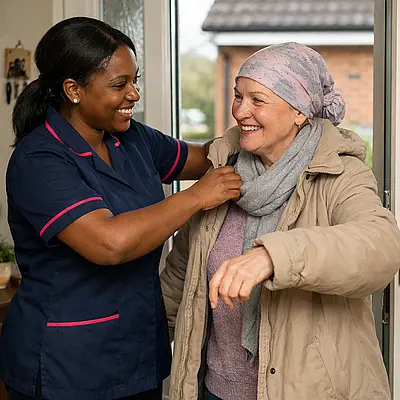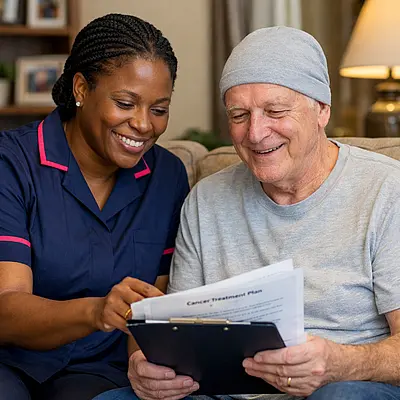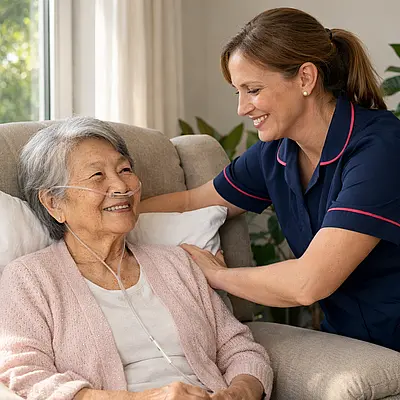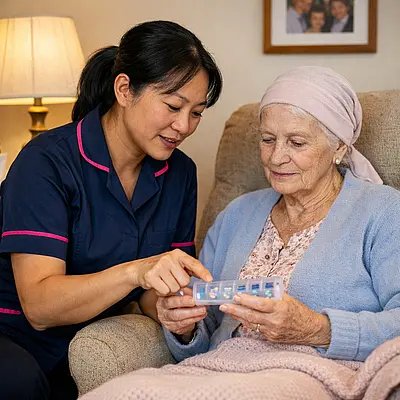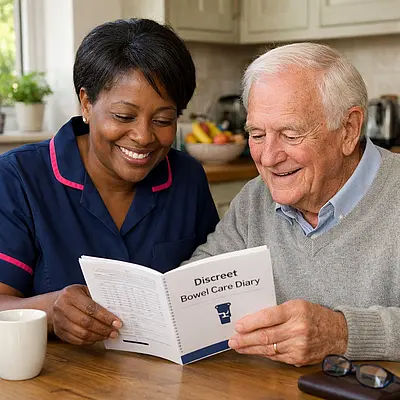
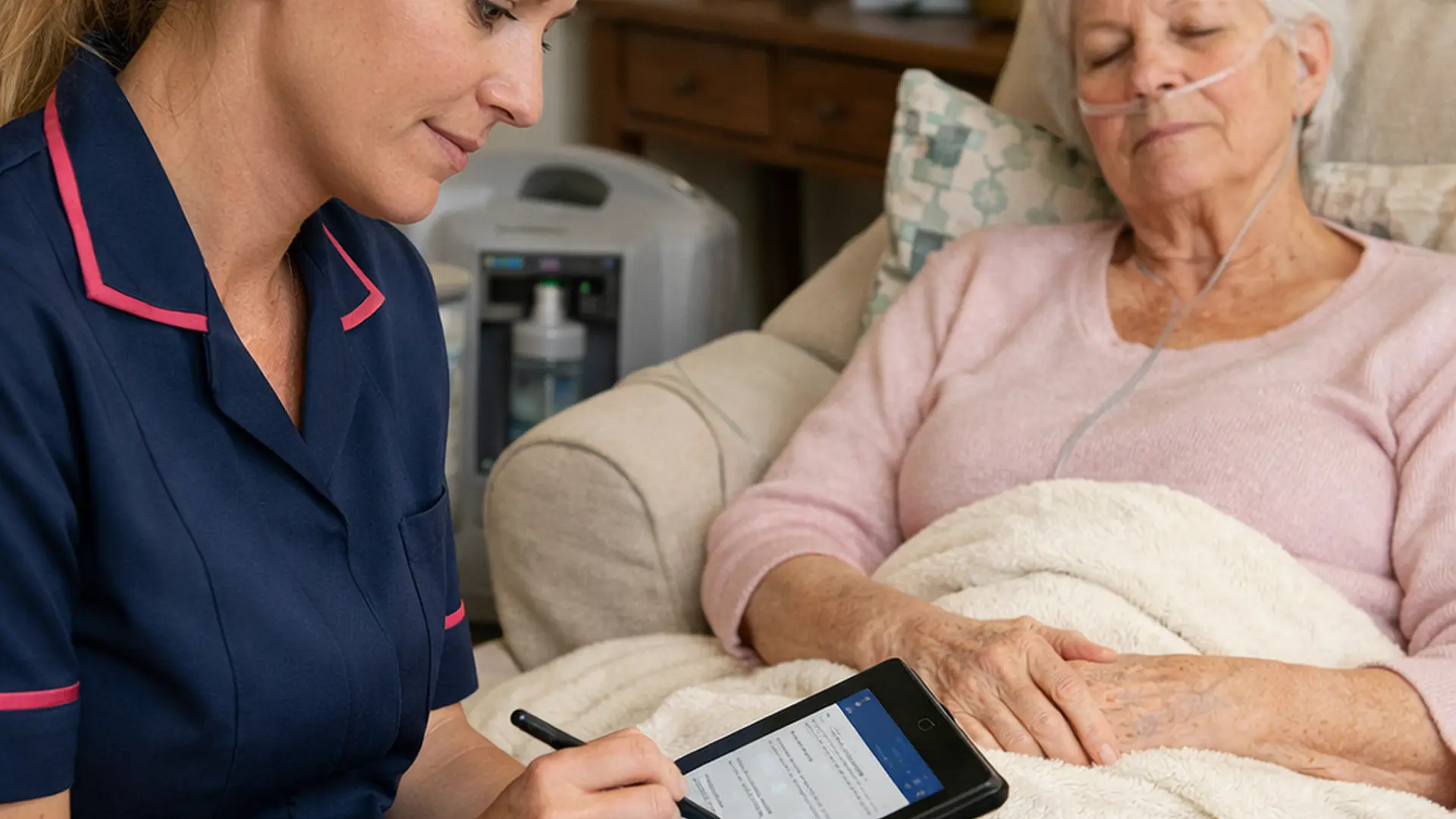
Realistic scene of a white female caregiver in a 00072b tunic with e51974 trim updating care notes on a tablet while a white older woman rests comfortably on a sofa with oxygen nearby illustrating changing levels of lung cancer support at home.

Coping Emotionally with a New Cancer Diagnosis at Home

Coping emotionally with a new cancer diagnosis at home can feel overwhelming, but practical support makes a real difference. We provide compassionate home care that helps with routines, reassurance, and everyday tasks. Contact us to discuss tailored cancer care at home for you or your loved one.

Understanding coping emotionally with a new cancer diagnosis at home

Hearing that you have cancer can make home feel different overnight. You may feel frightened, numb, angry, relieved to have answers, or all of these at once. Coping emotionally with a new cancer diagnosis at home means creating space for feelings, finding practical support, and taking one manageable step at a time while daily life adjusts.

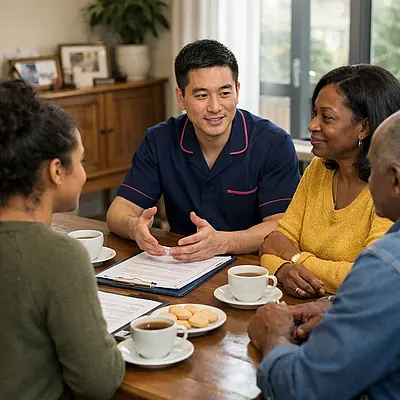
A realistic home care scene showing a black female caregiver in a tunic uniform coloured 00072b with e51974 accent sitting warmly with an elderly asian man and his adult daughter at a kitchen table all smiling gently during a supportive conversation bright natural light reassuring family atmosphere

What emotional support after a cancer diagnosis can look like

Emotional support at home is not only about big conversations. It can be having someone sit with you after an appointment, writing questions for the hospital, keeping track of letters, or helping you eat and rest. Small, steady routines often make difficult days feel less overwhelming and help families feel more grounded.
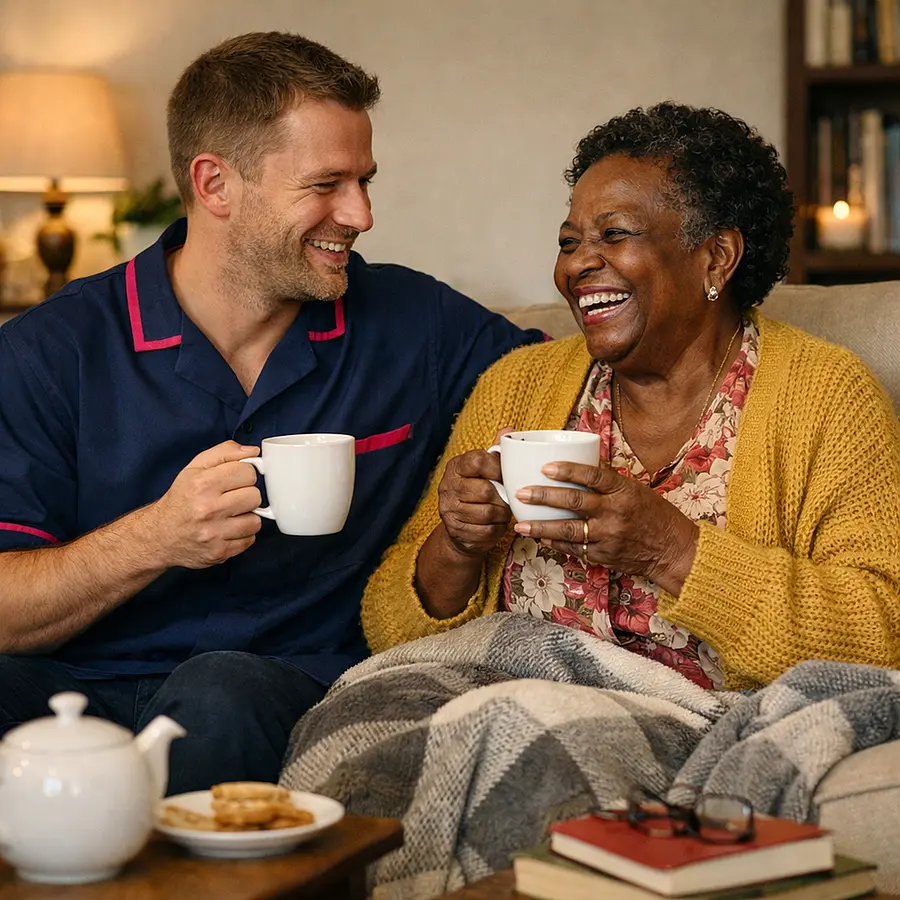
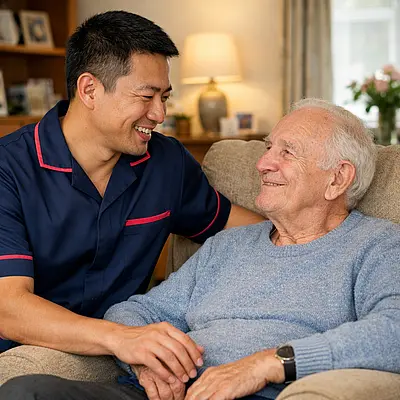
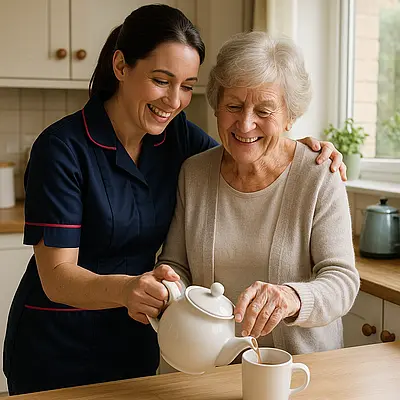
A realistic sitting room scene with a caucasian male caregiver in a 00072b tunic with e51974 detail sharing tea and a gentle laugh with a black female service user cosy blankets and books nearby warm emotional reassurance realistic and joyful home companionship

Common emotional challenges after a cancer diagnosis

Many people struggle with racing thoughts, poor sleep, loss of appetite, fear of treatment, or worry about family. Loved ones may try to stay strong and become exhausted themselves. If emotions start affecting eating, medication routines, personal safety, or everyday tasks, extra help at home can reduce pressure and prevent things from building up.
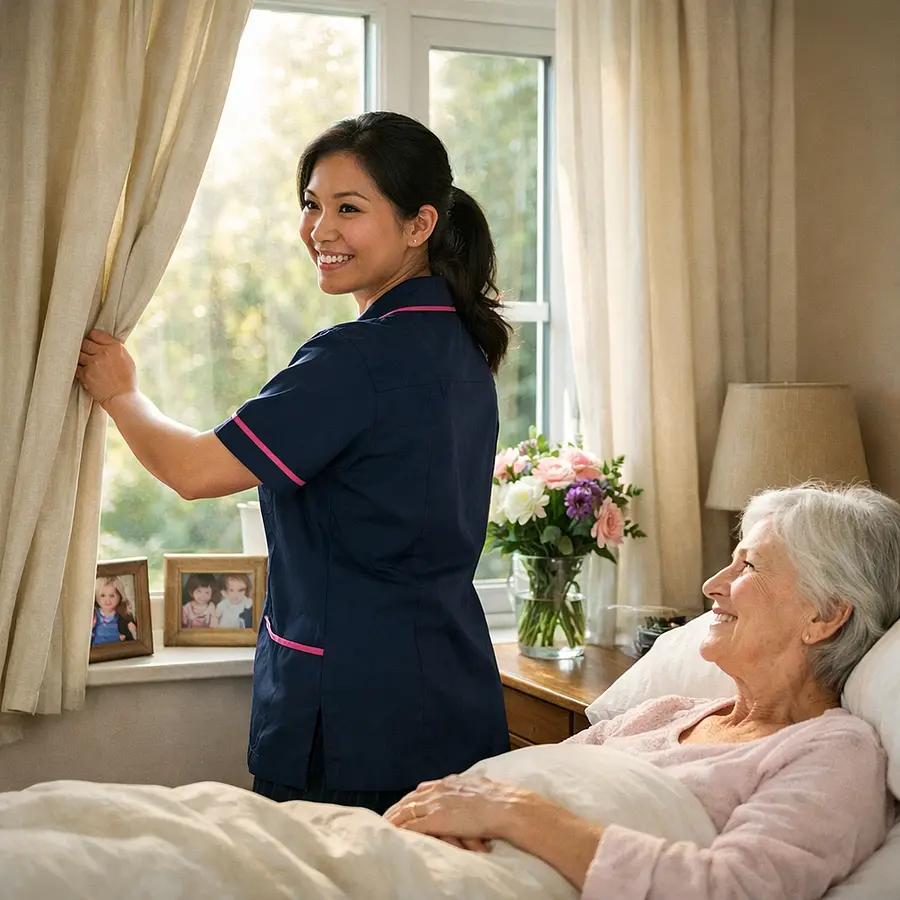
Realistic scene of an Asian female caregiver in a 00072b tunic with e51974 accents opening curtains in a cosy bedroom smiling towards an older white woman in bed sunlight coming in family photos and flowers on the windowsill atmosphere of quiet morning routine and safety.

Building a calm daily routine after diagnosis

A simple routine can soften the shock of diagnosis. Try regular wake-up times, short rests, easy meals, and one or two priorities for the day. A carer can help with simple meal preparation, organise letters, and support light household jobs so the home feels calmer rather than chaotic.

Caucasian female caregiver in a 00072b tunic with e51974 trim using a calendar and notepad with an older Black man in his lounge planning upcoming hospital appointments and home support both smiling gently suggesting organised person centred care.

Making space for feelings at home without pressure

You do not need to talk all the time to cope well. Some people prefer short check-ins such as “How are you feeling this morning?” Others like journalling, prayer, quiet music, or sitting with a trusted person. Our companionship support can offer a calm presence when family members need a break or live further away.

A realistic Black male caregiver in a 00072b tunic with e51974 accent laughing gently with an elderly Caucasian woman on a park bench during a relaxed outing shopping bag and walking stick nearby joyful reassuring expressions true to life photography

Using practical planning to reduce anxiety

Anxiety often eases when the next step feels clear. Keep a folder for appointment letters, test dates, contact numbers, and questions to ask. It can help to pack a hospital bag the day before and note travel times. For related ideas, see our guidance on coping with treatment side effects at home.
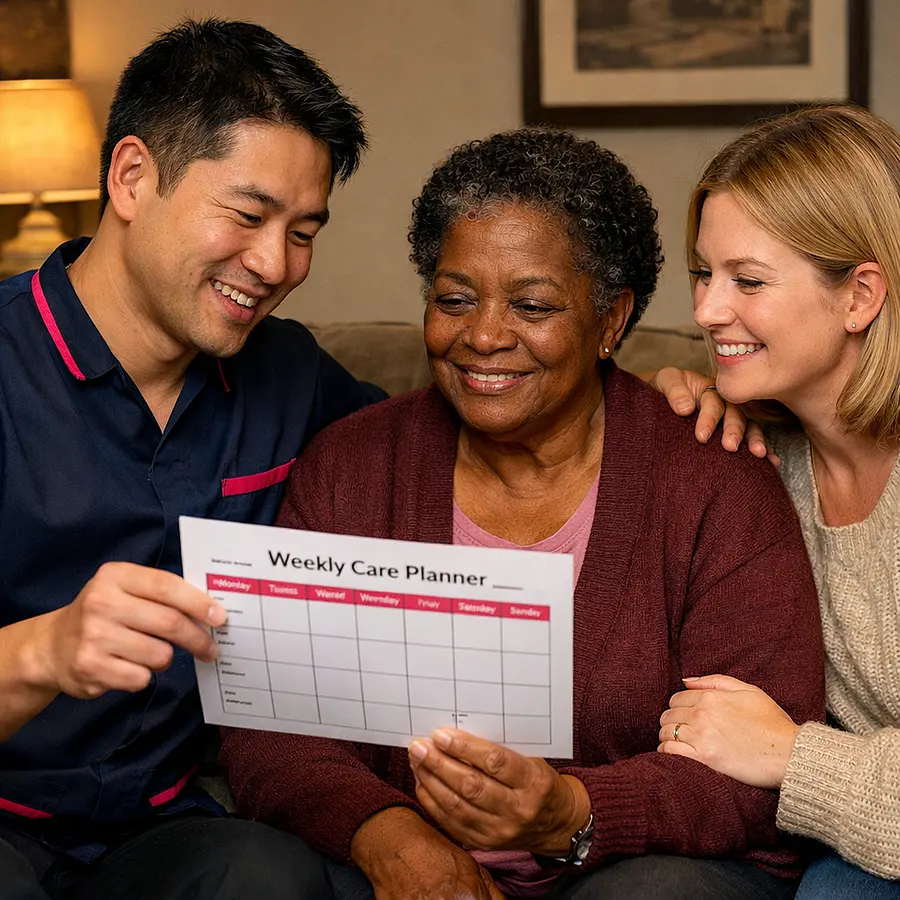
realistic asian male caregiver in tunic uniform 00072b with e51974 accent showing a weekly care planner to a black female service user and her caucasian daughter in a cosy living room everyone appearing reassured and supported warm lamp light homely atmosphere realistic documentary style

Protecting sleep and rest during emotional strain

When your mind is busy, nights can feel long. A bedtime routine may include dim lights, switching off news alerts, gentle breathing, and keeping a notebook by the bed for worries or questions. If sleep is affected by treatment, our article on creating a restful sleep environment may help.
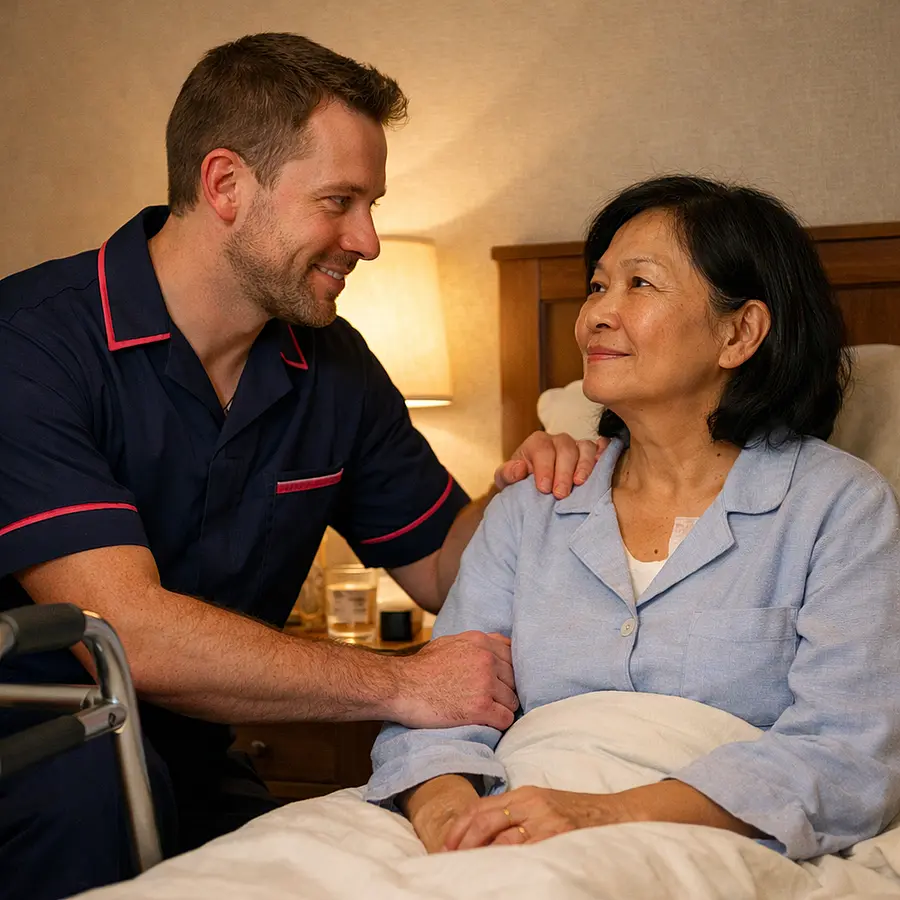
A realistic evening home care scene showing a caucasian male caregiver in a 00072b tunic with e51974 detailing reassuring an asian female service user in her bedroom after surgery. Soft bedside lighting a walking frame and calm facial expressions convey safety warmth and overnight support.

Supporting eating and drinking when emotions affect appetite

Stress can make food seem unappealing, yet low energy often makes emotions harder to manage. Aim for small, easy options such as soup, yoghurt, toast, smoothies, or little meals every few hours. We can help with planning and preparing nourishing meals and gentle prompts to drink enough through the day.

A realistic kitchen scene showing a black female caregiver in a 00072b tunic with e51974 accents preparing light nutritious food for a caucasian male service user recovering after surgery soup and fruit on the counter both smiling bright clean kitchen natural and reassuring.

Staying on top of medication and appointments at home

Emotional shock can make it hard to remember tablets, pain relief, or appointment times. A written chart, phone reminders, and a clearly labelled box can help. Our medication management support can provide dependable prompts and recording, helping you feel more in control when concentration is low.
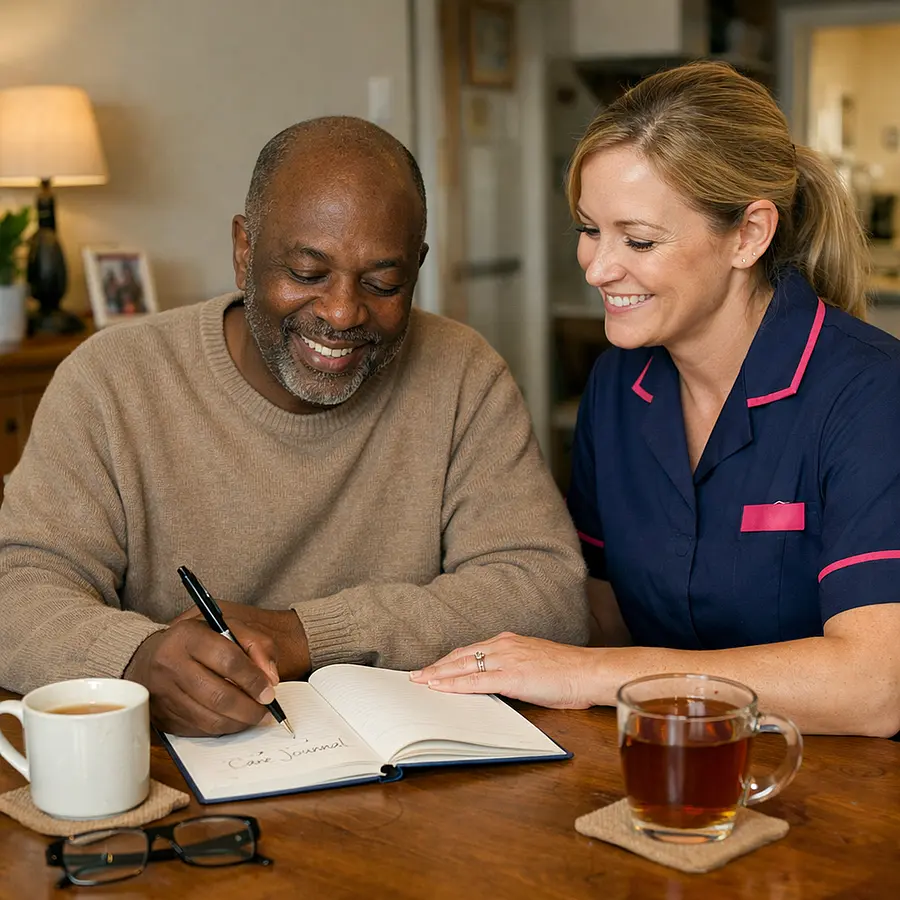
A realistic dining room scene showing a caucasian female caregiver in a 00072b tunic with e51974 details helping a black male service user write notes in a care journal both smiling softly glasses and tea on table practical and warm home care atmosphere

Accepting help with personal routines when energy is low

It is common to want privacy and independence, especially early on. Yet accepting support with washing, dressing, or getting ready can save energy for appointments and recovery. Sensitive help with showering, dressing, and personal hygiene can be offered respectfully, at your pace, and always with dignity.
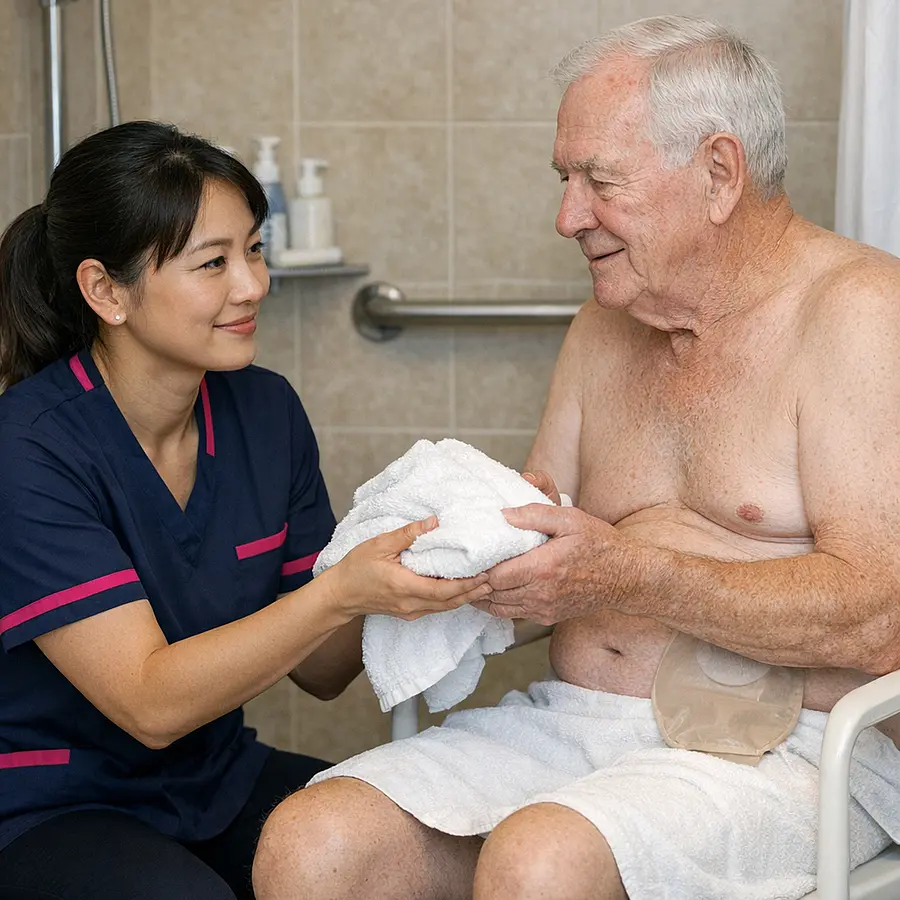
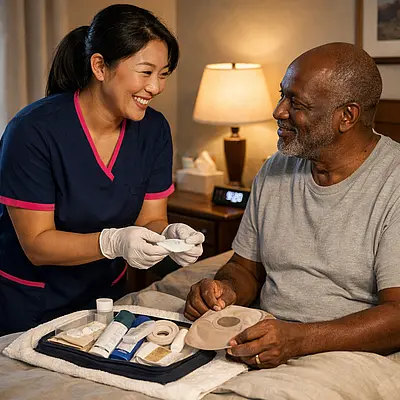
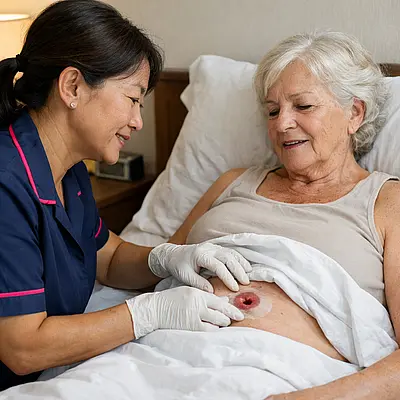
Asian female caregiver in a 00072b tunic with e51974 accents kneeling by an older white man seated in a bathroom chair passing him a towel with discretion and kindness highlighting dignified personal and stoma care.

Managing night-time worry with extra reassurance

Many people feel more anxious once the house is quiet. Night-time can bring fear about symptoms, treatment, or the future. Having someone nearby can be deeply reassuring. Our overnight care offers practical support and a calming presence, especially after difficult appointments, sleepless periods, or during treatment changes.
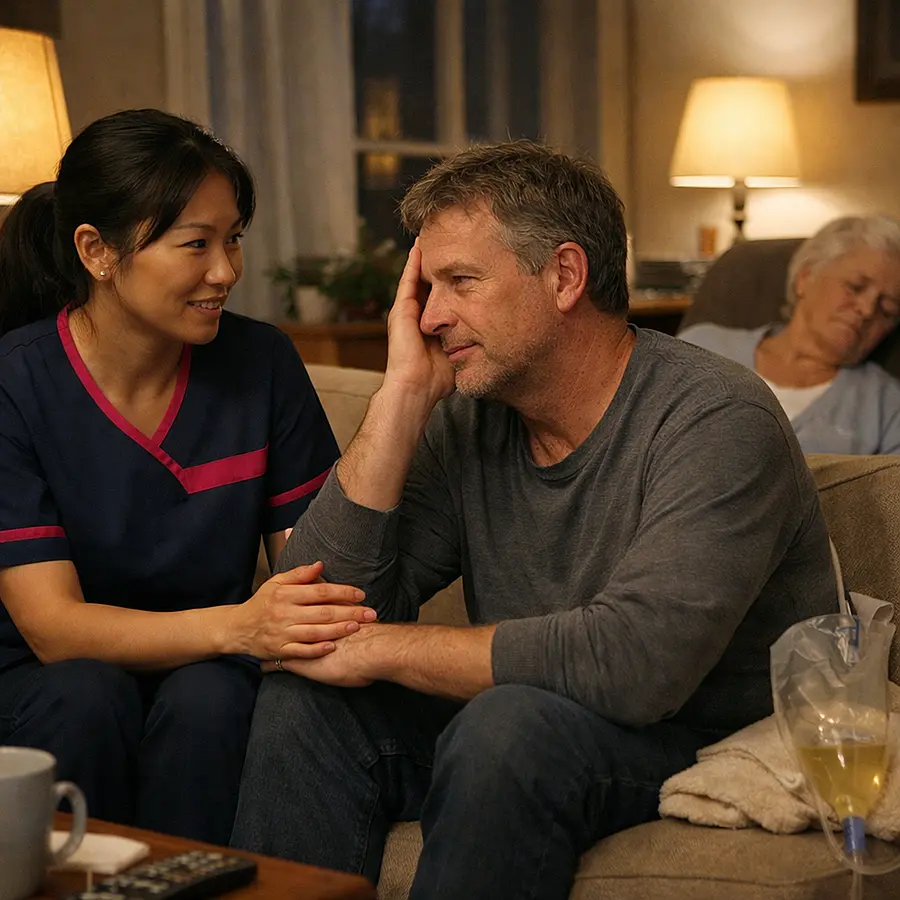
Realistic evening living room scene of an Asian female caregiver in a 00072b tunic with e51974 accents talking gently with a tired white middle aged man the older female catheter user resting nearby atmosphere calm and supportive.

Using gentle movement to steady the day

When advised by your clinical team, small movements can help mood as well as energy. This might mean walking to the garden, stretching in a chair, or standing at the window for fresh air. If treatment brings tiredness, our guide to gentle movement and fatigue management offers practical ideas.

Realistic image of an elderly black woman being supported by an Asian female caregiver in a 00072b tunic with e51974 trim as they walk slowly to a sunny garden bench both laughing flowers and bird feeder in the background highlighting hobbies and gentle routine.

A real first week at home after diagnosis

In the first week, many families feel flooded with calls, messages, and information. One practical approach is to choose one main contact person, write updates once a day, and keep the rest of the day quieter. This protects energy and gives the person with cancer more control over who knows what, and when.

Realistic home office scene of a middle aged Asian man checking a family calendar on his laptop while talking by phone to a white female caregiver in a 00072b tunic with e51974 trim coordinating his elderly mothers visits atmosphere organised and reassuring.

Handling difficult conversations with loved ones

You do not need to explain everything perfectly. A simple script can help: “We know the diagnosis, we are waiting for the next appointment, and we will share more when ready.” This can stop repeated questioning. Some families find support from our wider mental health related care guidance useful when emotions run high.
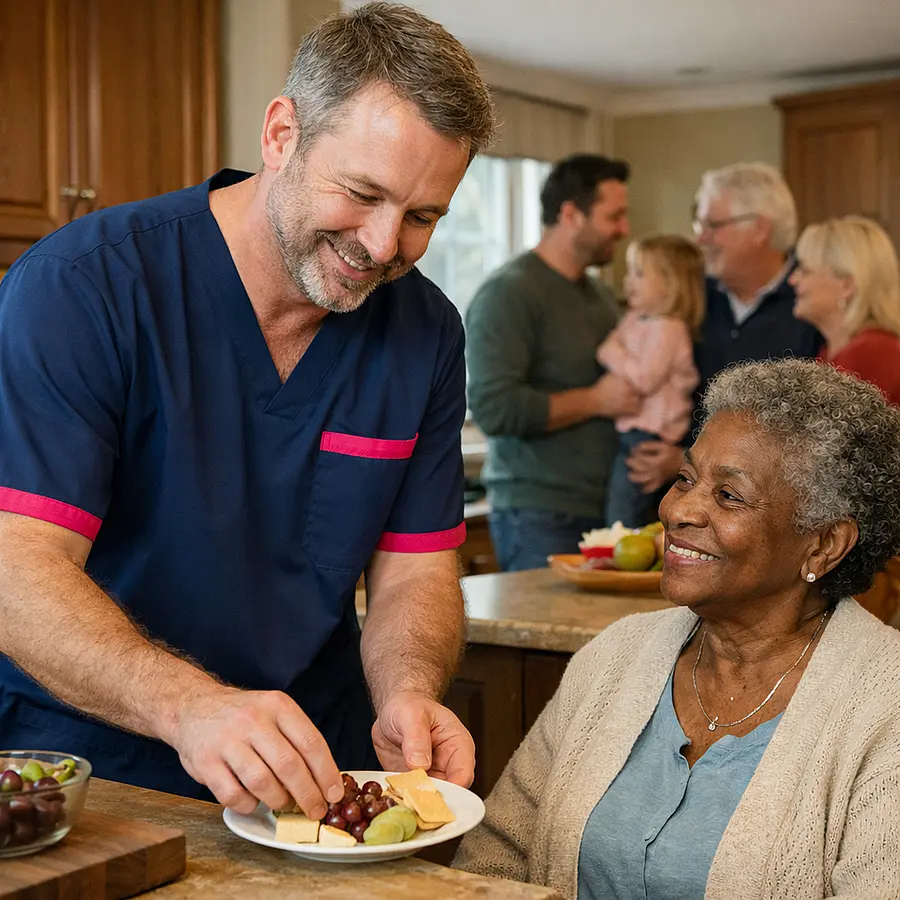
A realistic home kitchen scene with a caucasian male caregiver wearing a 00072b tunic with e51974 accent preparing a small comforting plate for an older black woman seated nearby both smiling gently with family gathered in the background and a warm homely atmosphere.

Creating small comforts that make home feel safe

Comfort can come from familiar objects and habits. Examples include keeping a blanket by the sofa, setting up a chair near a sunny window, making a playlist for waiting-room nerves, or placing a notebook by the kettle for questions. These little choices restore a sense of control when life feels suddenly uncertain.

A realistic living room image of an asian male caregiver in a 00072b tunic with e51974 piping helping an older black female service user review medication prompts and stoma supply notes cheerful expressions cosy home surroundings trust and reassurance clearly conveyed.

When a partner needs support too

Partners often become organisers, drivers, note-takers, and emotional anchors overnight. That pressure can be exhausting. Sharing tasks such as cooking, cleaning, and appointment preparation can protect the relationship from becoming only about illness. Our article on supporting a partner through cancer at home may also be helpful.
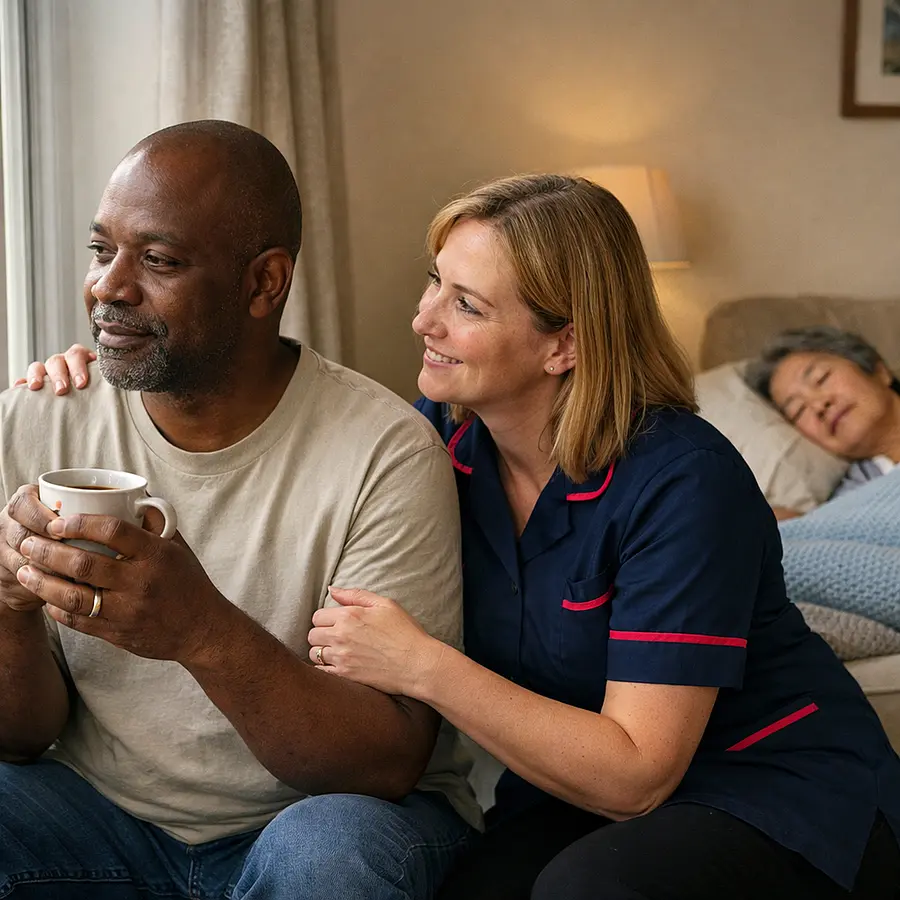
realistic caucasian female caregiver in 00072b tunic with e51974 accent encouraging a black male family carer taking a mindful pause with tea by a window while an asian service user rests peacefully soft daylight hopeful and warm mood realistic home care scene

Adapting the home environment for peace of mind

If treatment or surgery is planned, preparing the home early can reduce emotional strain later. This may mean clearing walkways, creating a rest area downstairs, or keeping essentials within reach. For practical ideas, read our guide on adapting your home environment after cancer surgery.
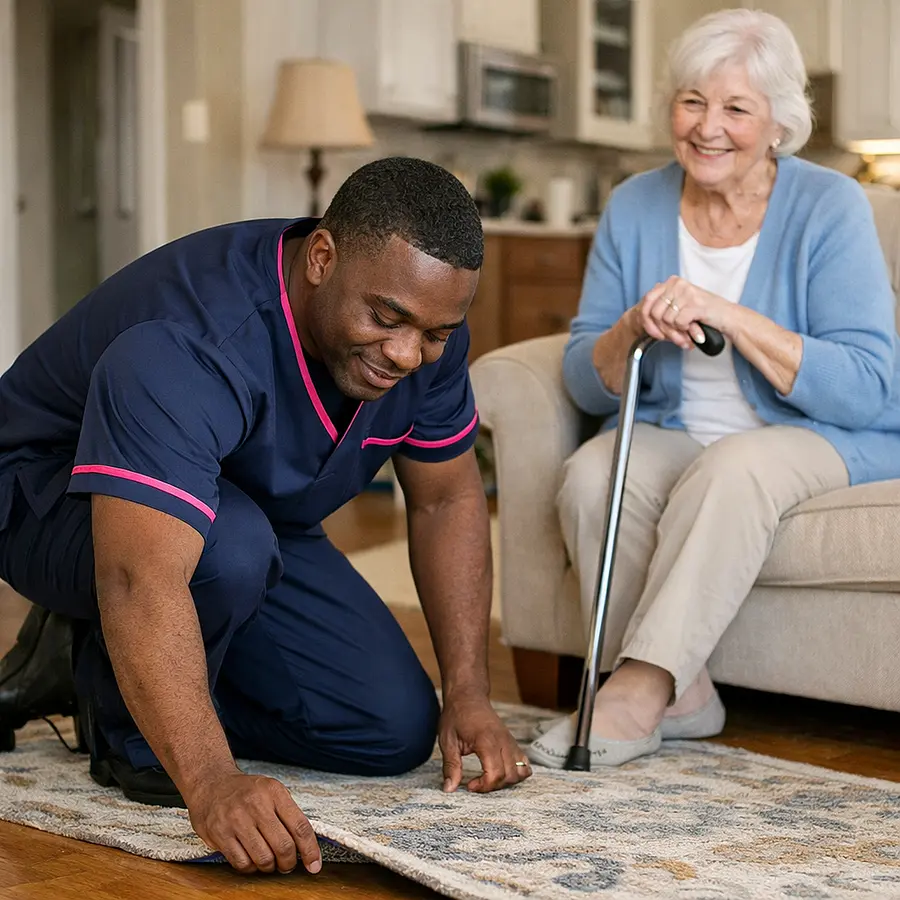
A realistic home environment featuring a black male caregiver in a 00072b tunic with e51974 accents checking that rugs and walkways are safe while an elderly caucasian woman watches with a relieved smile demonstrating a warm supportive atmosphere focused on recovery at home after a fall.

How professional cancer care at home can help emotionally

Professional support can bring steadiness when everything feels uncertain. We can assist with routines, daily washing and dressing, medicine prompts, companionship visits, meal support, and household tasks. This practical help often eases emotional pressure because it reduces the number of things you need to manage alone while adjusting to diagnosis.

Real life style photo of an elderly Black gentleman standing by his front door smiling as a South Asian female caregiver in a 00072b tunic with e51974 piping arrives with a folder both greeting each other warmly in a familiar suburban street setting.

Why choose us for emotional support with cancer at home

We understand that emotional coping and practical care are closely linked. Our approach is flexible, respectful, and shaped around the person, not just the diagnosis. Whether you need a few visits for reassurance or broader cancer care at home, we focus on dignity, consistency, and helping home remain a place of comfort and control.
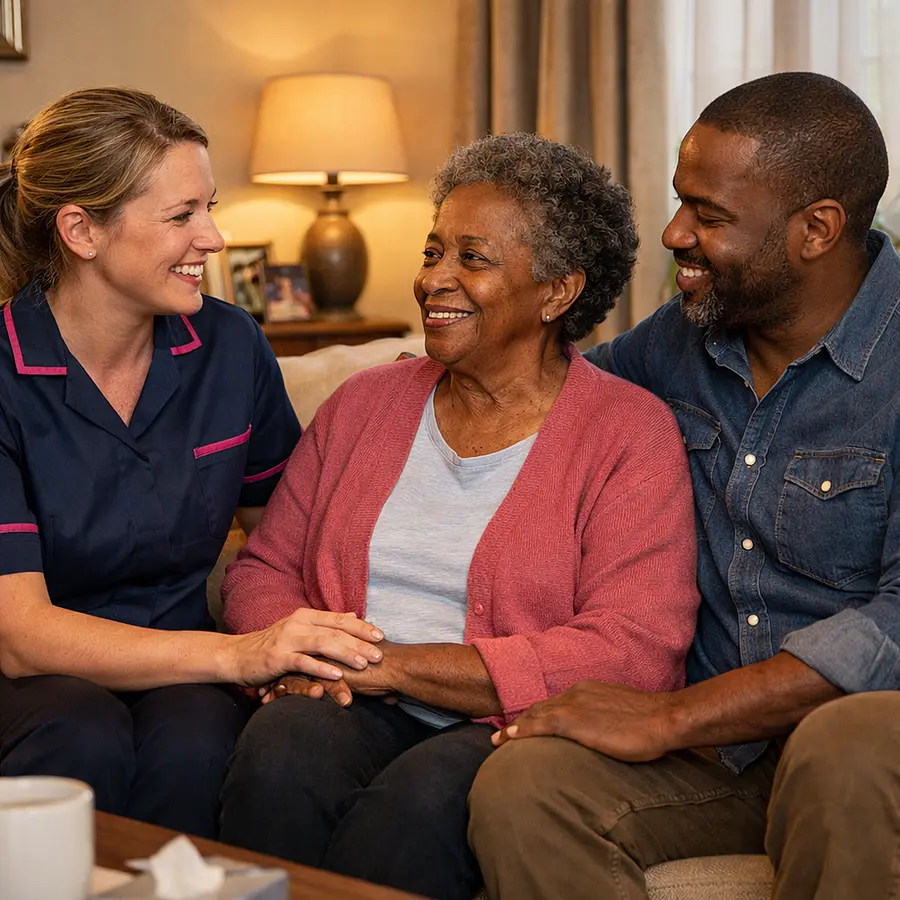
A realistic front room home care scene with a caucasian female caregiver wearing a 00072b tunic uniform with e51974 accents smiling reassuringly with a black female service user and her son warm lighting comfortable furnishings strong sense of trust joy and compassionate professionalism
Hands of young adult and senior women over green b
Contact Us

Contact us to arrange Cancer Care at home

If you're looking for support with daily living for some one with cancer, we're here to help. Our friendly team is ready to offer guidance, answer your questions, and arrange cancer care tailored to your or your loved ones' needs in their own home. Reach out today for personalised advice and support.

Coping Emotionally with a New Cancer Diagnosis at Home FAQ's

You’re bound to have questions when exploring your home care options, so we’ve answered some of the most common ones below.

In the first few days, coping emotionally with a new cancer diagnosis at home can feel very mixed and unpredictable. Some people feel shocked and numb, while others feel frightened, tearful, angry, or oddly calm at first. It is also common to move between these emotions in the same day. Practical tasks may suddenly feel harder, concentration can dip, and sleep may be disrupted. What often helps most is reducing pressure. Keep plans simple, write down important information, and accept help with everyday tasks where possible. A trusted relative, friend, or carer can sit with you after appointments, help organise letters, and make sure you are eating and drinking. Emotional coping does not mean staying positive all the time; it means finding safe, manageable ways to get through each day.

Yes, overnight care can help emotional wellbeing as well as practical safety. Many people feel their anxiety increase after dark, especially if they are dealing with new symptoms, uncertain test results, or treatment side effects. Being alone with those worries can make sleep harder and leave the next day feeling even more draining. Overnight support means there is someone present to reassure, help with comfort needs, support bathroom visits, prompt medication if required, and provide a calm response if the person wakes distressed. For families, it can also relieve the pressure of trying to stay alert every night. Better rest and a stronger sense of security often improve emotional resilience. Even short-term overnight care can make a real difference during particularly intense periods after diagnosis or treatment changes.

Professional home cancer care may be right if daily life is starting to feel harder to manage, emotions are affecting routines, or family support alone is becoming stretched. Signs include missed meals, poor sleep, forgotten medication, reduced personal care, increasing mess at home, or a partner who seems exhausted and under pressure. Some families also choose care early, before a crisis develops, because they want reassurance and steadiness from the start. Home care is not only for physical needs; it can support emotional wellbeing by making each day feel calmer and more manageable. You can start with a small amount of help, such as companionship, meal support, or medication prompts, and then adjust as needs change. Flexible support often works well after a diagnosis because circumstances can shift quickly with appointments and treatment plans.

Night-time can feel especially hard because distractions fade and worries become louder. To make coping with cancer emotions easier at night, try creating a gentle evening routine. This could include dimming lights, stopping difficult conversations late in the day, avoiding constant internet searching, and keeping a notebook nearby to write down worries or questions for the next morning. Make the bedroom as comfortable as possible, with water, medication, tissues, and a phone within reach. If anxiety increases after dark, having someone nearby can help you feel safer and less alone. Overnight support can also be valuable if sleep is regularly broken by worry, discomfort, or treatment side effects. The goal is not to force sleep, but to create a calmer, more reassuring environment that reduces fear and makes rest more likely.

Yes, it is completely normal. Even with loving family around you, a cancer diagnosis can bring fear about treatment, uncertainty about the future, and a sense that life has changed very quickly. Supportive relatives cannot remove that emotional shock, and sometimes people feel guilty for still being upset when others are trying hard to help. Family members may also be processing the news themselves, which can make conversations feel strained or overwhelming. It helps to remember that emotional difficulty is not a sign of weakness or ingratitude. It is a natural response to major news. Some people find it easier to talk to someone slightly outside the immediate family, such as a trusted friend or professional carer, because it allows them to speak openly without worrying about upsetting those closest to them.

Yes, cancer care at home can be arranged flexibly around treatment appointments, hospital visits, and changing energy levels. Some people want support before appointments, such as help getting washed, dressed, and ready, while others need more help afterwards when they feel tired, emotional, or less able to eat and rest well. Support can also be timed for evenings, nights, or the days immediately following treatment. This flexibility matters because the emotional impact of cancer is rarely the same every day. On one week, practical help with meals and cleaning may be enough; on another, companionship and overnight reassurance may be more important. A tailored approach allows care to match real life at home rather than forcing the person and family into a rigid routine that does not reflect how cancer treatment often unfolds.

What helps most is usually a combination of emotional reassurance and practical structure. Many people benefit from having one calm person to talk to, a notebook for questions and worries, and a simple daily routine with time to rest. Small supports can make a big difference, such as regular meals, gentle company, help remembering appointments, and a tidy, quieter home environment. Some people want long conversations, while others prefer practical support and short check-ins. There is no single right approach. The key is to notice what lowers stress rather than adding to it. Professional home care can help with companionship, meal preparation, medication prompts, and personal routines, which often eases emotional pressure because fewer things are left to manage alone during an already difficult time.

Light household help is useful early on because emotional shock often makes ordinary chores feel unexpectedly heavy. Tasks like washing up, changing bedding, vacuuming, or keeping the bathroom fresh may be easy to overlook, yet clutter and mess can quickly add to stress. A calm, tidy environment helps many people feel more settled and less mentally overloaded. It also reduces the pressure on partners or relatives who may already be juggling work, appointments, and their own emotional reactions. Early practical support can prevent exhaustion from building up in the home. It is often easier to adjust well to a diagnosis when daily life has some structure and comfort, rather than waiting until everyone is already overwhelmed. Accepting help with household tasks can be a very positive way to protect emotional energy.

Absolutely. Coping emotionally with a new cancer diagnosis at home is rarely a straight line. You may feel calm after one appointment, then anxious the next morning. You might laugh at lunch and cry later in the evening. Good days do not mean you are “over it,” and bad days do not mean you are coping badly. Emotional adjustment often comes in waves, especially when new information, treatment decisions, or physical side effects appear. What matters is creating support that can flex with those changes. That may include simpler plans on harder days, practical help when energy dips, and space to enjoy ordinary moments when they come. Families often feel reassured when they understand this pattern, because it helps them respond with patience rather than worrying that every difficult day is a sign of decline.

Medication routines can become easier to manage with a combination of clear systems and consistent support. Start by keeping medicines in one safe, organised place and using a written chart or labelled organiser if appropriate. Set reminders on a phone or clock, and write down any side effects or questions for the next appointment. It can also help to tie medication times to existing routines, such as breakfast, lunch, or bedtime. Emotional shock can affect memory and concentration, so it is common to need extra prompts in the early stages. Home support with medication management can provide dependable reminders and help record what has been taken. This reduces worry for both the person with cancer and their family, particularly on days when treatment fatigue, anxiety, or poor sleep makes it harder to stay on top of details.

We proudly provide high-quality home care across the East Midlands, in an around the towns and cities detailed below.

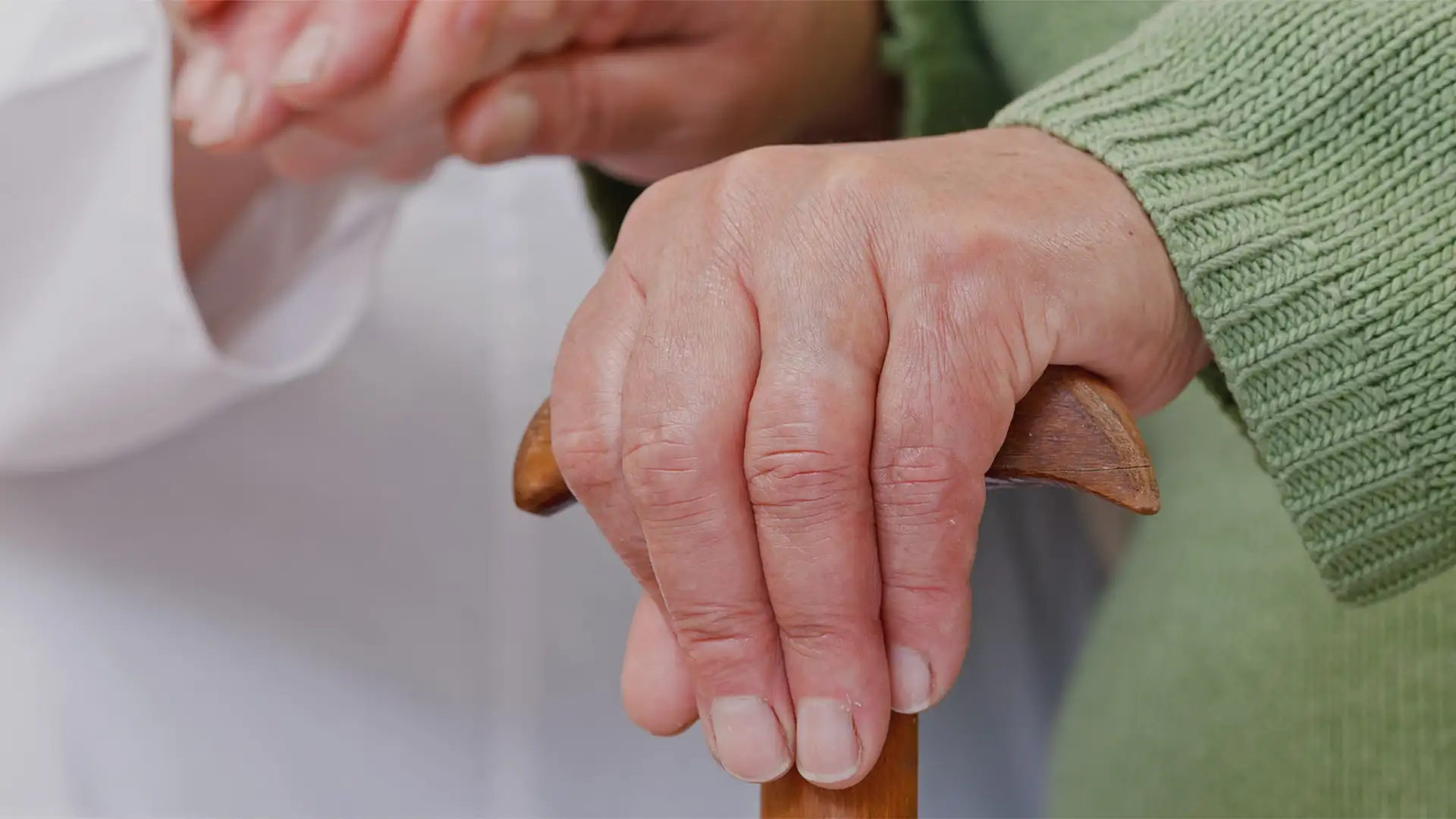
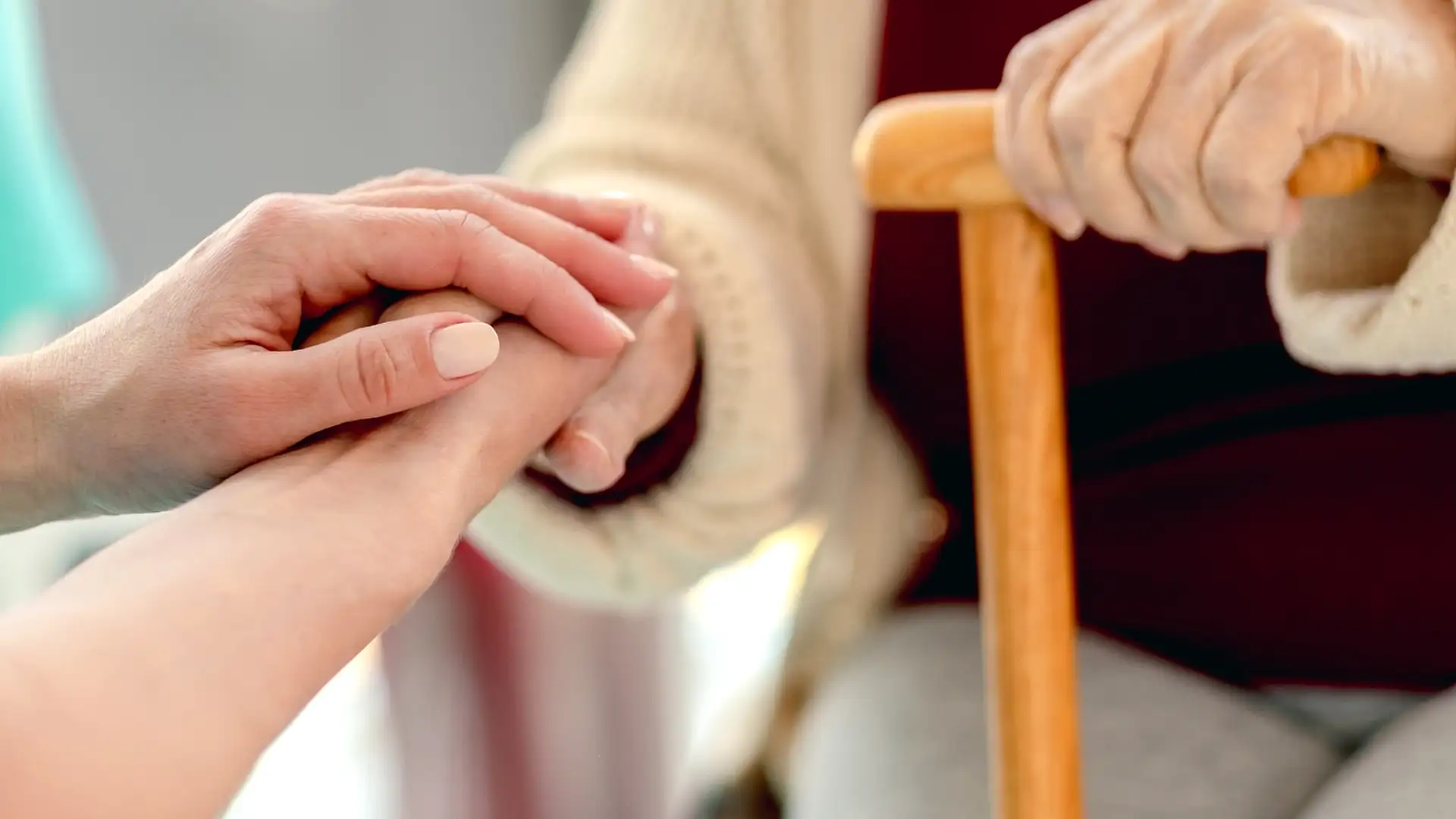
Elderly hands on a walking sitck

We're becoming a fully regulated service

While we are not currently regulated, meaning there are some services we cannot currently provide, we are in the process of registering to become a fully regulated service.

CQC
Elderly hands on a walking sitck

Call us to find out more about Coping Emotionally with a New Cancer Diagnosis at Home

East Midlands

We proudly provide high-quality home care across the East Midlands

Our Reviews

We’re proud of the trust families place in us. Here’s what some of the people we support, and their loved ones, say about our home care services.

"They have been a great help with keeping on top of my dads laundry and general house cleaning as he is bed bound and have been being changed daily."

Emily R

"Really helped me with keeping on top of my house work since my parkinson's has progressed."

Mark T

"Great support for my mum after she lost her confidence after a fall and hospital stay."

Sarah L

Senior woman hand in caregiver hands

Join The Good News Newsletter

Be the first to discover exclusive offers, and service updates. Your journey to independent living starts here - where everything truly is fine.


Contact The Good Place

We’d love to hear from you! Whether you have questions, want to learn more about our home care service, or are ready for us to start supporting you or your loved one, our good people are here to help. If you are looking to make a complaint, you can contact our Registered Manager or Nominated Individual directly.

Send Us a Message


Elderly hands on a walking sitck

Working in Partnership

We work closely within the community to provide safe, compassionate, reliable home care that supports independence, dignity, and improved wellbeing while remaining at home.

NHS
Derbyshire County Council
Staffordshire County Council