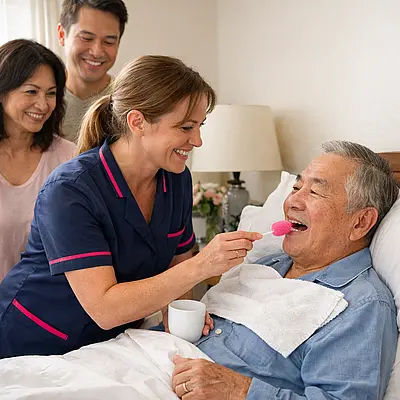
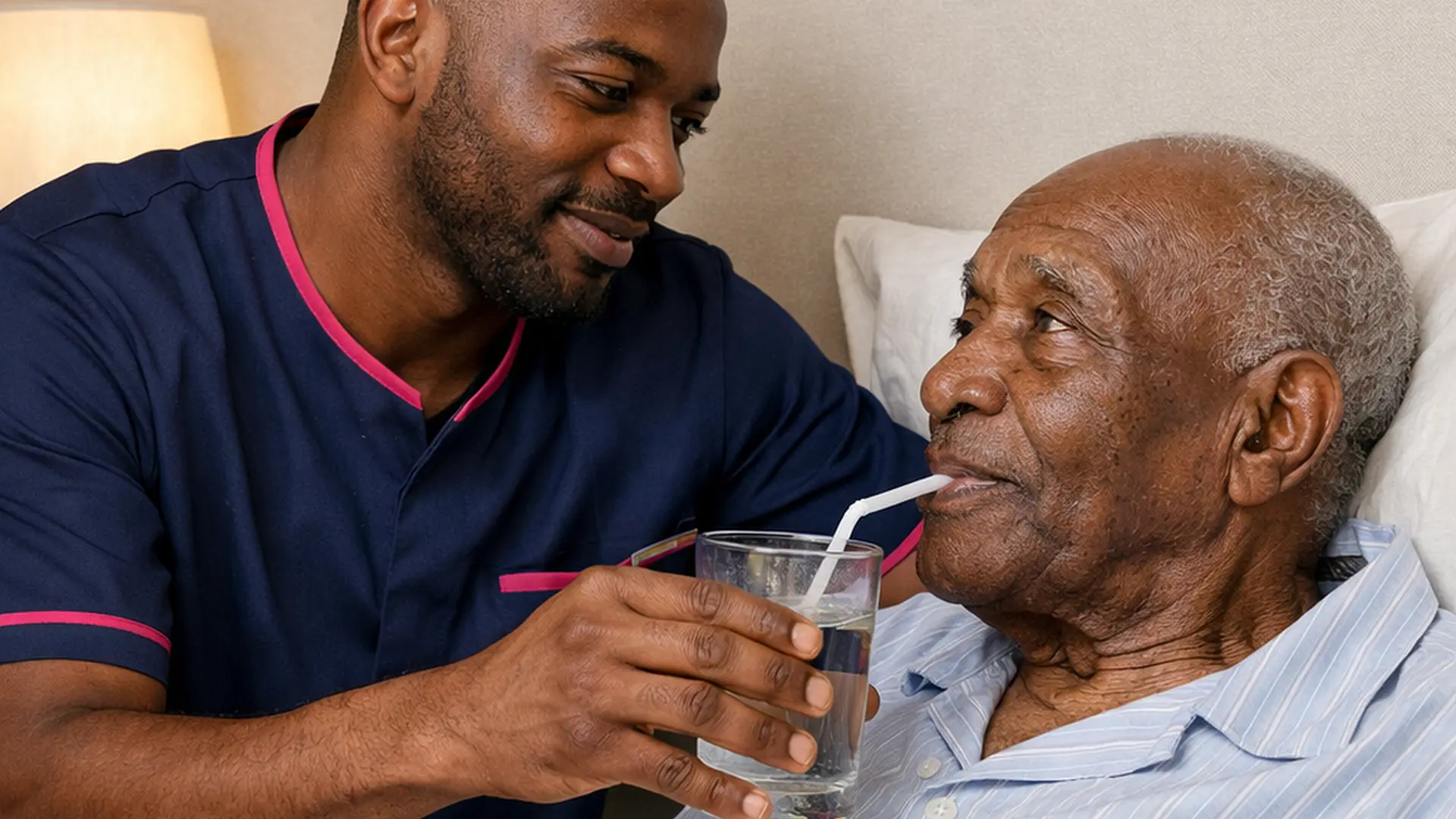
Realistic image of a Black male caregiver in a 00072b tunic with e51974 trim carefully helping a frail elderly Black man to sip water through a straw in bed bedside table with medications and a lamp both maintaining gentle eye contact in a calm tidy bedroom.

End of Life Care

Thoughtful end of life care at home focuses on comfort, dignity and precious time together. Our trained carers provide practical support, emotional reassurance and tailored routines so you can stay focused on being family, not full-time nurses. If you’re exploring options, contact us today to talk through compassionate end of life support in your own home.

End of life care at home – gentle, practical support

End of life care is about comfort, dignity and precious time with the people you love. We focus on making every day as peaceful and meaningful as possible, offering practical help, emotional support and reassurance at home so you can concentrate on being family, not full-time carers.
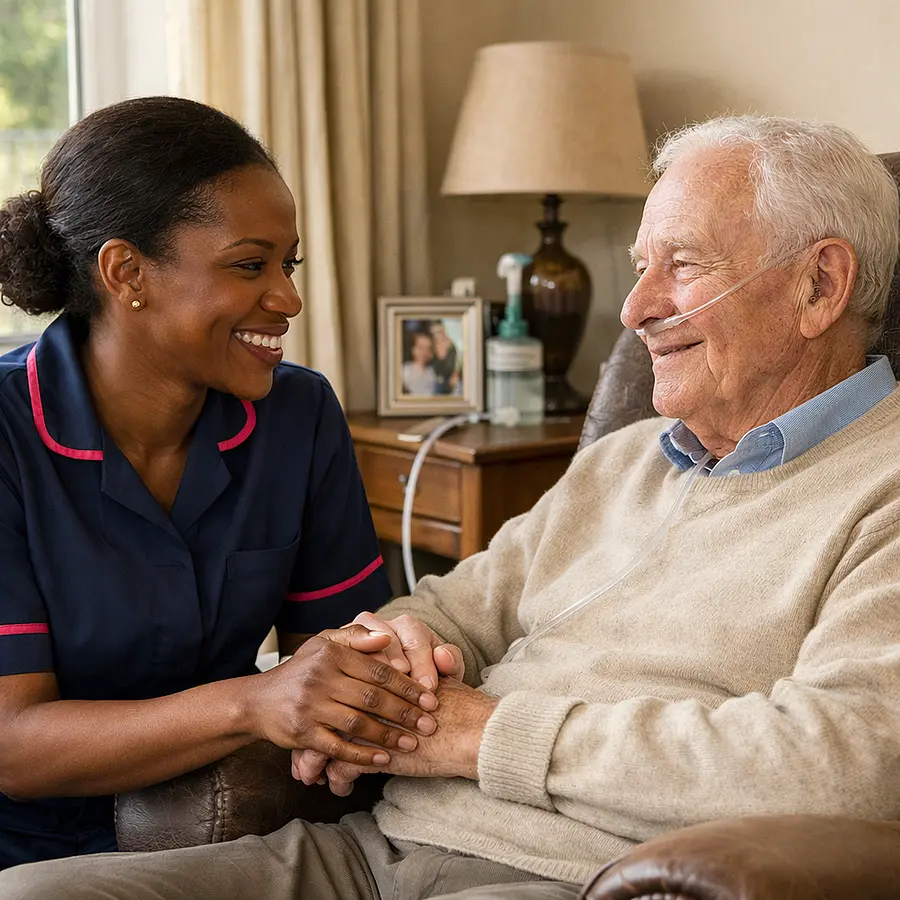
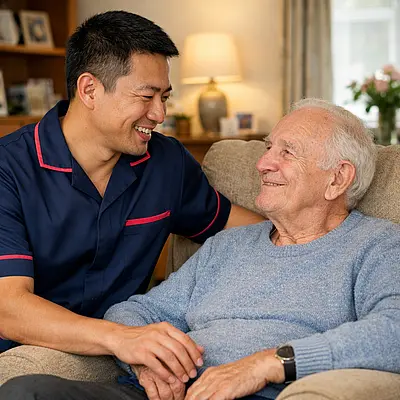
Warm realistic scene of a Black female caregiver in a navy 00072b tunic with e51974 trim sitting beside an elderly white man in his armchair at home gently holding his hand and smiling reassuringly soft afternoon light through the window oxygen equipment discreetly in the background calm and comfort

What end of life care means for you and your family

End of life care is the support someone receives in the final months, weeks or days of life. It focuses on comfort rather than cure, responding to physical, emotional and spiritual needs. At home, this can include symptom management, gentle personal hygiene support, emotional reassurance and help to plan what matters most.
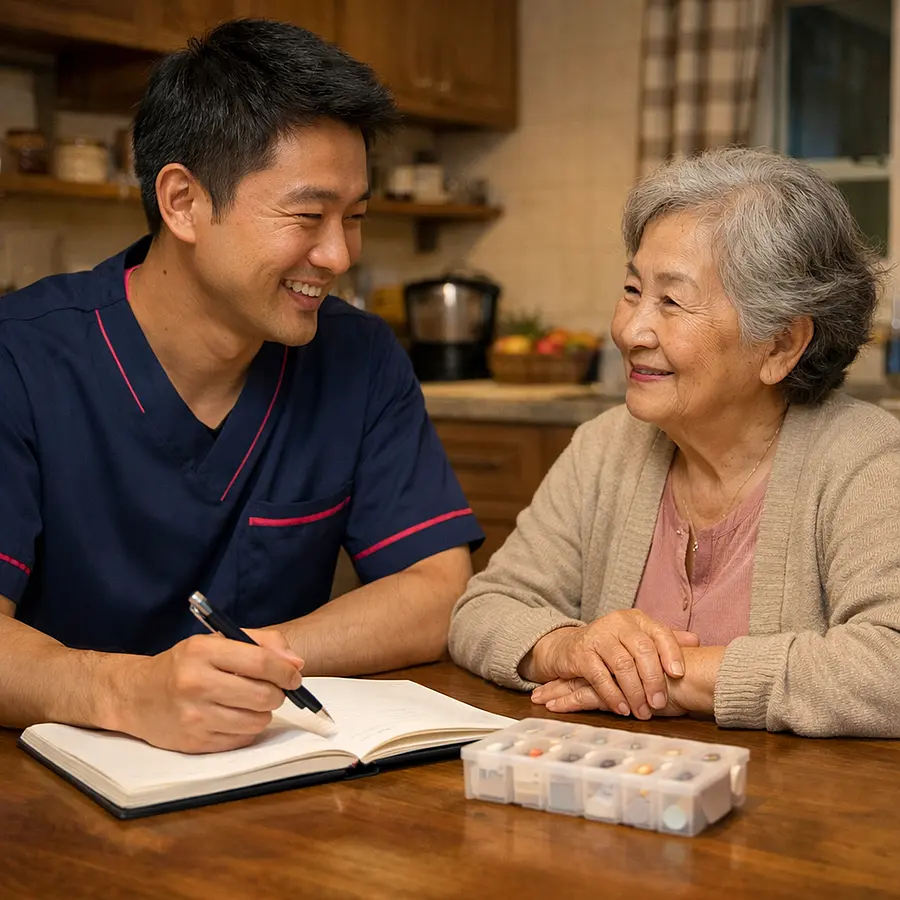
Realistic image of an Asian male caregiver in a 00072b tunic with e51974 accents sitting at a kitchen table with an elderly Asian woman a notebook and medication box between them both smiling gently as they talk through her wishes warm kitchen lighting creating a homely feeling.

How palliative care at home fits with end of life support

End of life care often overlaps with palliative support, which can begin months or years earlier. Both focus on easing symptoms, managing pain and protecting quality of life. As needs increase, our role gently shifts towards comfort, reassurance and making sure someone is never left struggling alone or in distress.
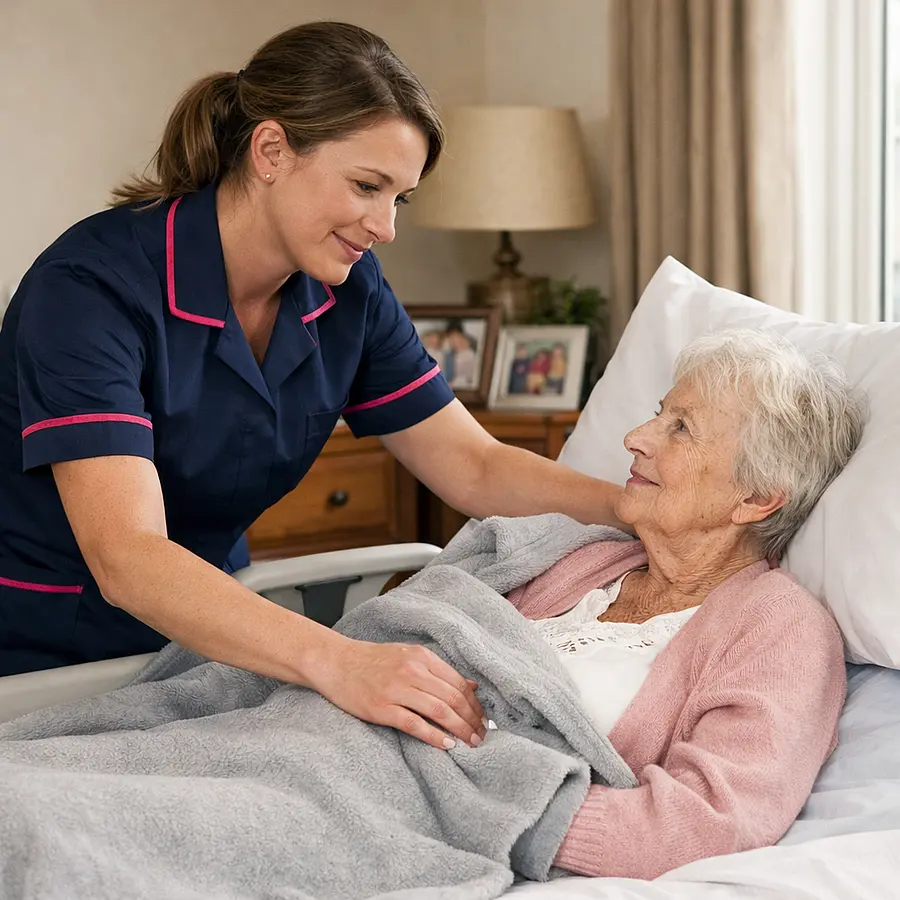
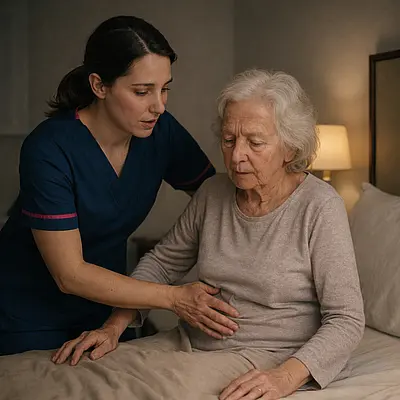
Realistic scene of a white female caregiver in a 00072b tunic with e51974 piping adjusting cushions and a blanket around a frail white woman in a hospital bed set up in the living room the carer listening attentively with a caring expression family photos visible on a sideboard.

What end of life care looks like day to day

Day to day, end of life care might include help with gentle washing, turning in bed, supporting eating and drinking, and timely medicines support. It also involves listening, comforting anxious moments, coordinating with nurses and letting family know what to expect, so everyone feels more prepared and less overwhelmed.
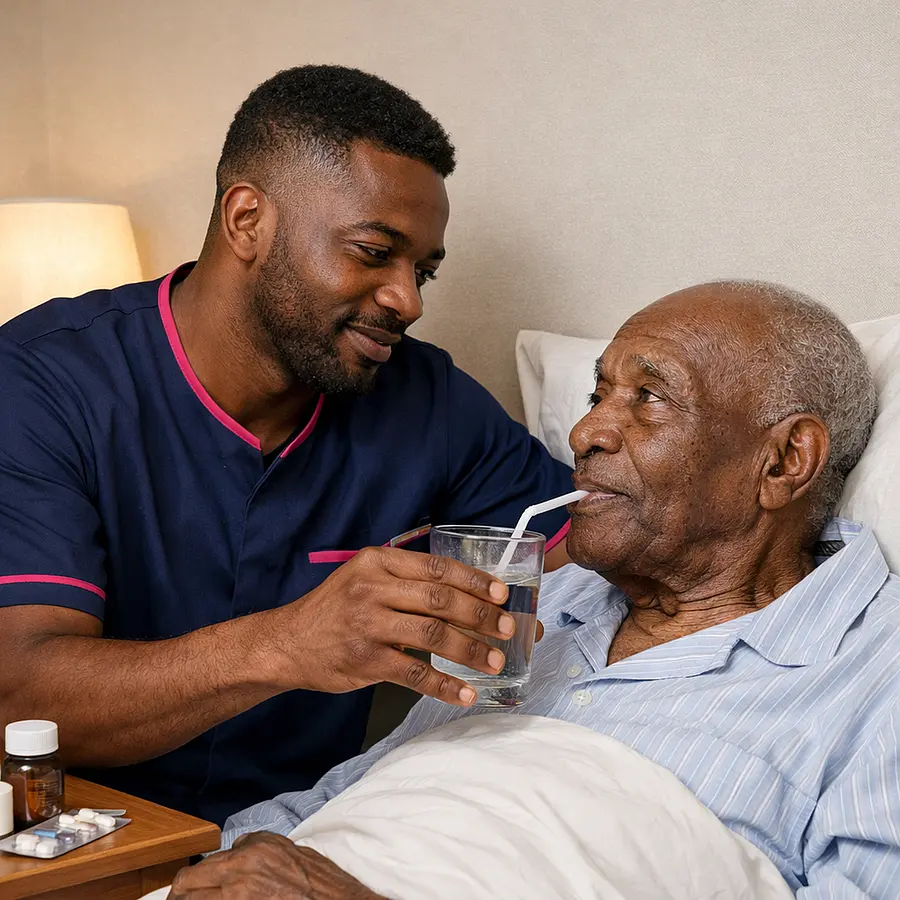
Realistic image of a Black male caregiver in a 00072b tunic with e51974 trim carefully helping a frail elderly Black man to sip water through a straw in bed bedside table with medications and a lamp both maintaining gentle eye contact in a calm tidy bedroom.

Can end of life care be provided at home?

Yes, many people choose to be at home in their final months because it feels familiar and peaceful. With the right home care, district nursing and GP input, it’s possible to manage symptoms safely. We work alongside health professionals to provide consistent, compassionate support that allows someone to stay where they feel most themselves.
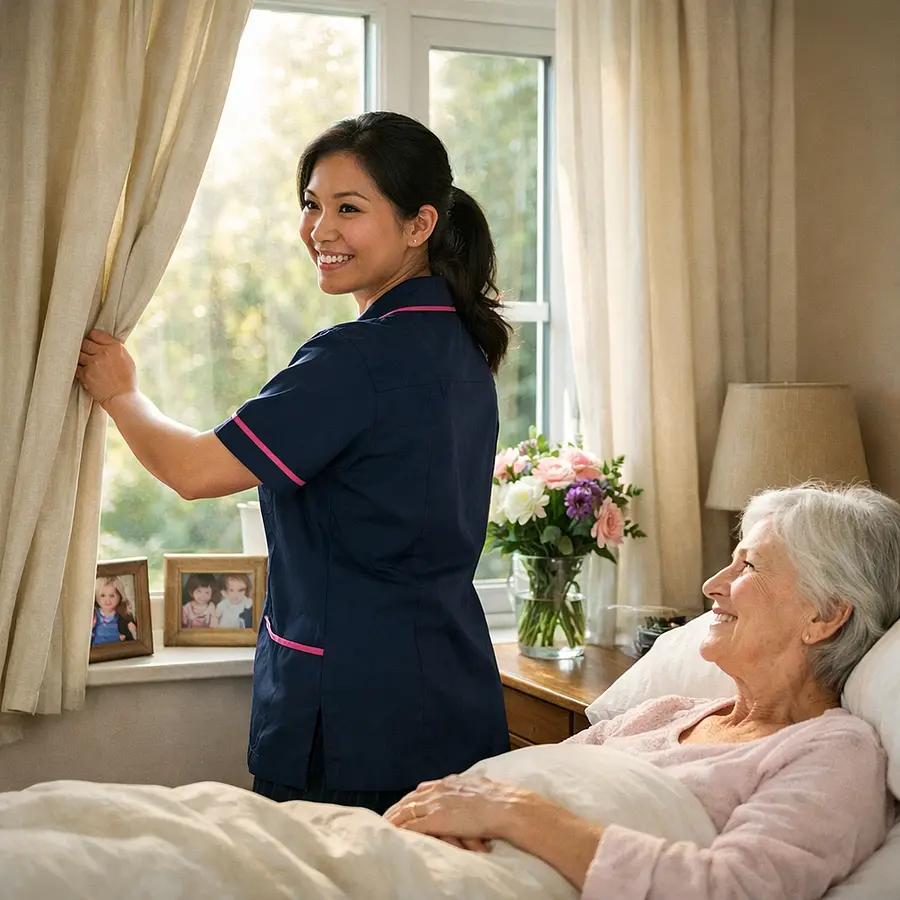
Realistic scene of an Asian female caregiver in a 00072b tunic with e51974 accents opening curtains in a cosy bedroom smiling towards an older white woman in bed sunlight coming in family photos and flowers on the windowsill atmosphere of quiet morning routine and safety.

End of life care at home for complex conditions

End of life care at home can support a wide range of conditions, from advanced cancer to heart failure, dementia or neurological illness. We adapt to changing needs, whether that means extra help overnight, closer monitoring of symptoms, or offering calm, confident reassurance when there are sudden changes or difficult decisions to make.
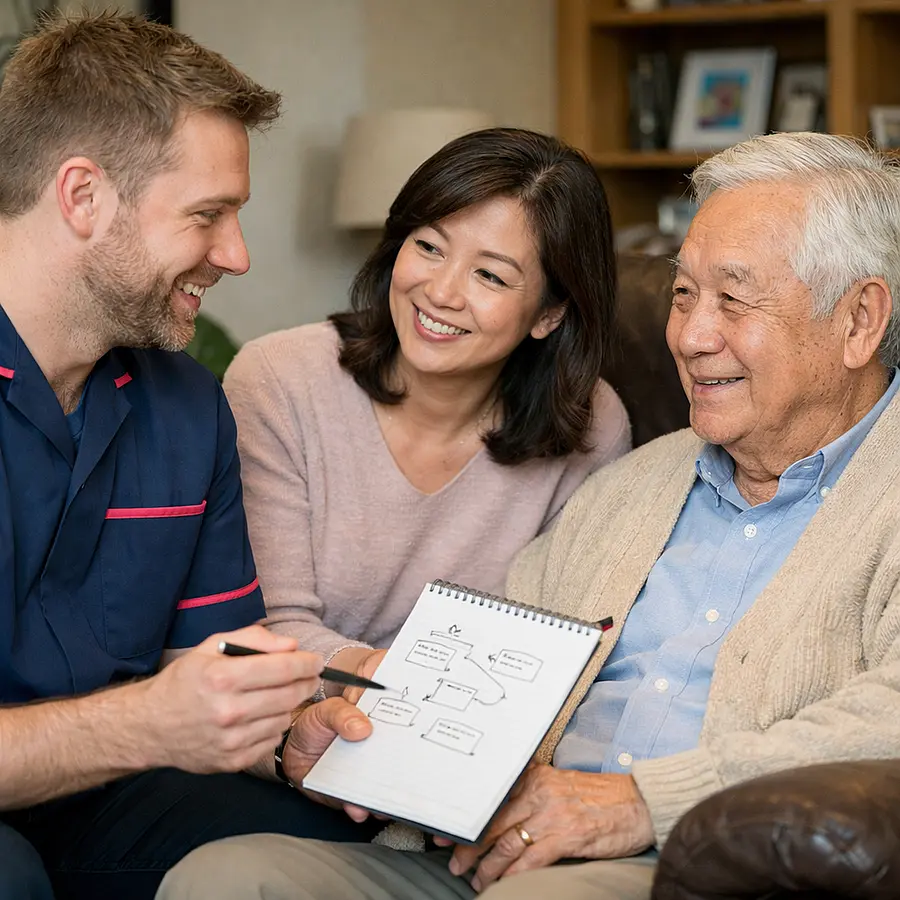
Realistic image of a white male caregiver in a 00072b tunic with e51974 detail talking with a middle aged Asian woman and her elderly father in a recliner caregiver using a notepad to explain a care plan the family looking reassured and engaged in their living room.

End of life care symptoms and changes to expect

Towards the end of life, people often sleep more, eat and drink less, and become weaker. Breathing patterns may change and confusion can increase, especially alongside memory problems. These changes are usually part of the natural dying process. Our carers help families understand what’s happening, easing fear and watching closely for signs of discomfort.
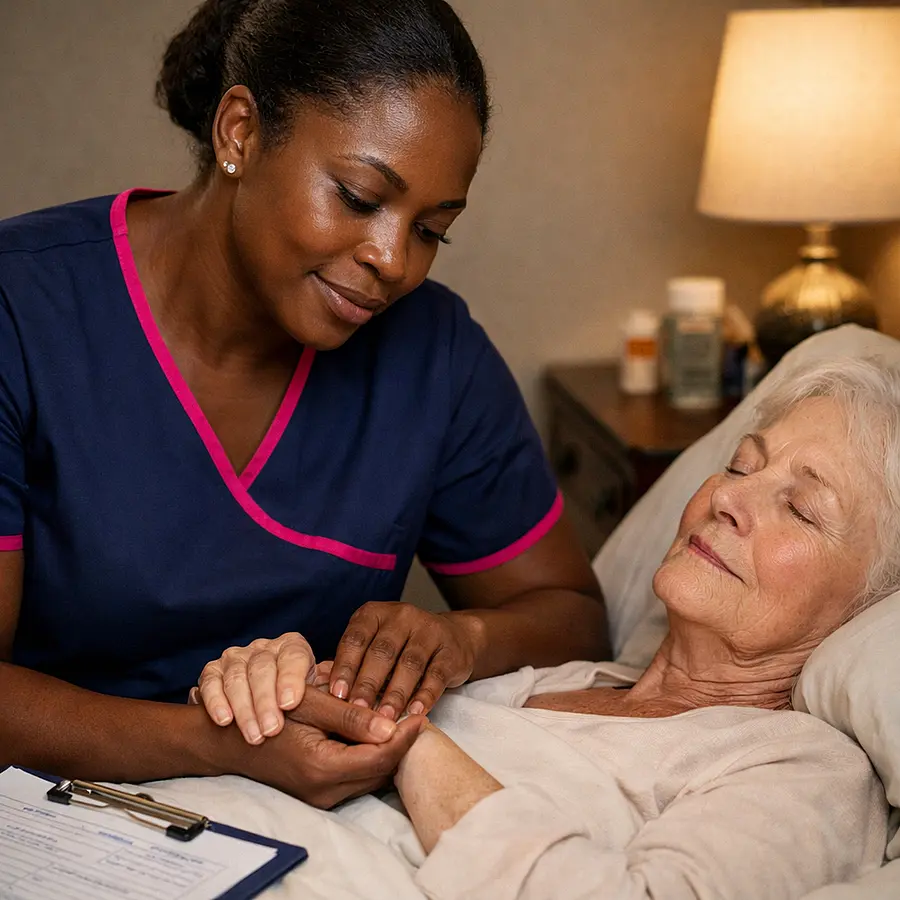
Realistic close up of a Black female caregiver in a 00072b tunic with e51974 trim gently checking the pulse of an elderly white woman lying peacefully in bed caregivers expression calm and reassuring soft bedside lamp lighting medical notes on a clipboard nearby.

Managing end of life care pain and discomfort

Pain or breathlessness can sometimes increase towards the end of life, but no one should be left suffering. We work closely with community nurses and GPs to support safe medicine routines, gentle positioning, mouth care and relaxation. Our carers notice small changes quickly, so adjustments can be made before symptoms become overwhelming.
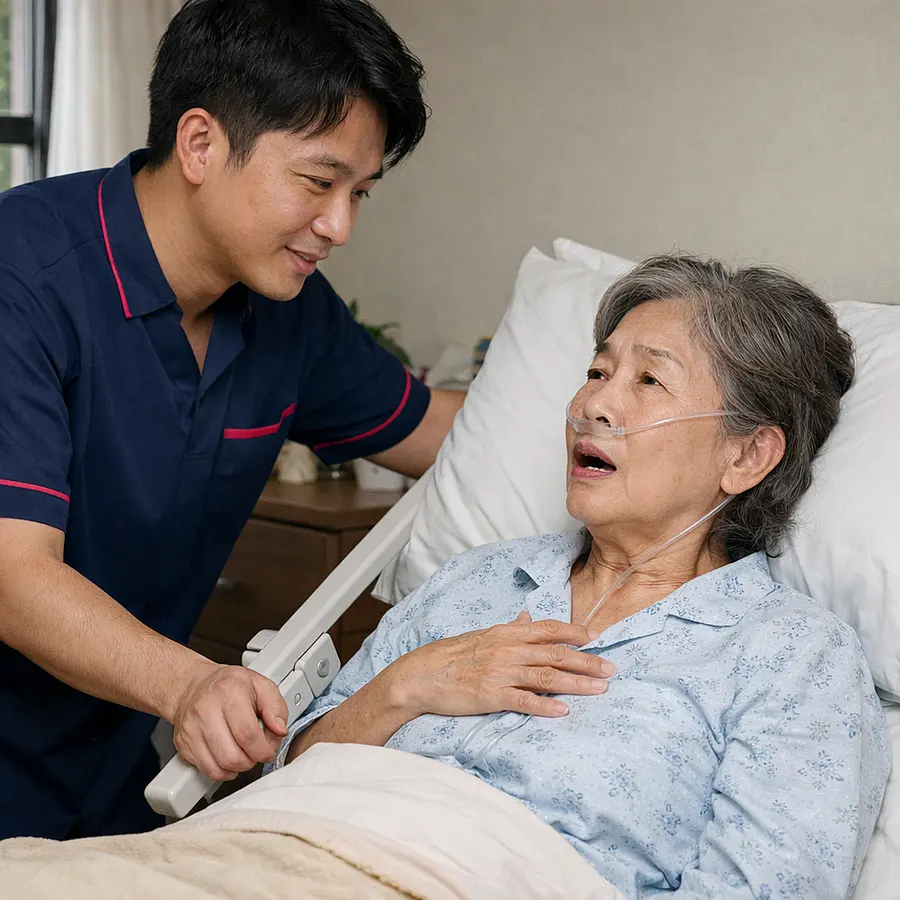
Realistic image of an Asian male caregiver in a 00072b tunic with e51974 accents raising the head of an adjustable bed for an elderly Asian woman struggling with breathlessness caregiver speaking gently and watching her face for comfort oxygen tubing visible window slightly open.

How we can support end of life care at home

Our role is to wrap tailored support around you and your family. That might mean regular daytime visits, live-in care, or overnight reassurance. We help with comfort, positioning, gentle washing, continence, and keeping on top of practical tasks so the home feels calm, safe and dignified as needs change.
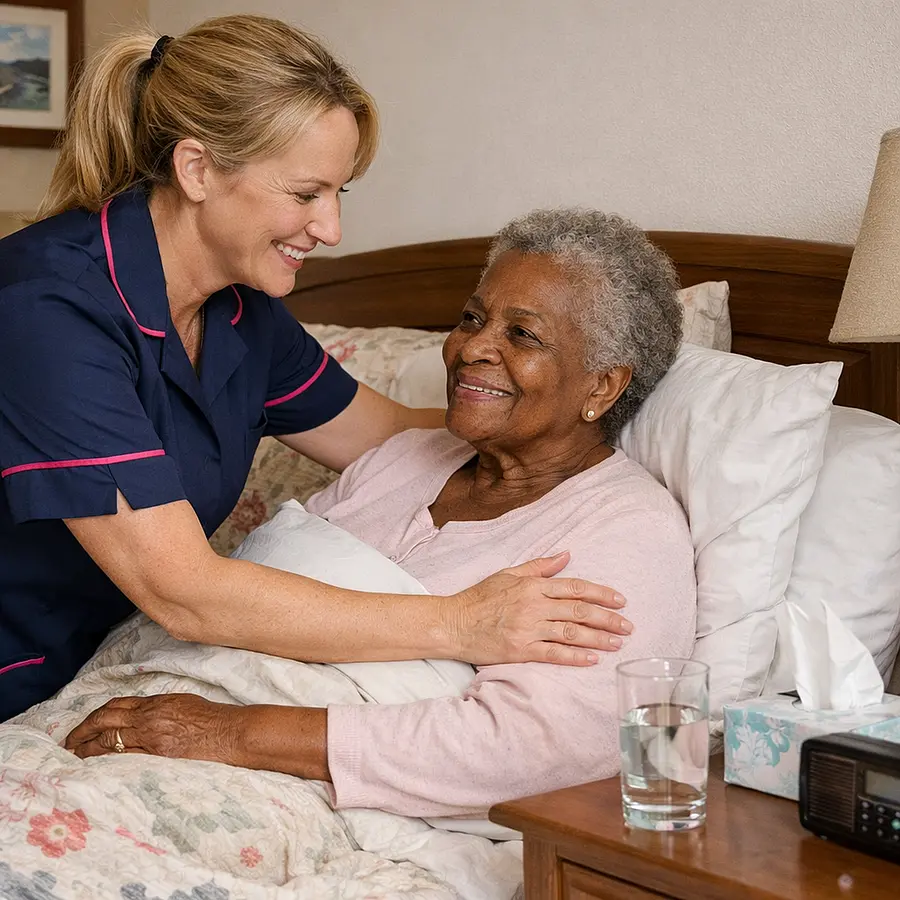
Realistic scene of a white female caregiver in a 00072b tunic with e51974 piping carefully supporting an elderly Black woman to sit up in bed with extra pillows both smiling softly bedside table with water tissues and a small radio homely bedroom decor.

Personal support with daily comforts and routines

Small comforts make a big difference. We can help with washing, dressing and toileting, moistening lips, brushing hair, and changing bedding gently. If someone enjoys favourite music or a particular routine, we weave this into care. Our aim is to keep them feeling like themselves, not just a patient.

Realistic image of a Black male caregiver in a 00072b tunic with e51974 accents gently brushing an older white mans hair while he sits on the edge of the bed in pyjamas both sharing a quiet smile soft morning light and neatly folded towels visible.

End of life care that supports family emotions

End of life care is as much about family as the person who is dying. We offer time to talk, explain what we’re seeing, and listen to fears or guilt. Our carers provide steady reassurance, helping relatives feel less alone with difficult decisions and gently encouraging rest breaks when exhaustion or worry starts to take over.
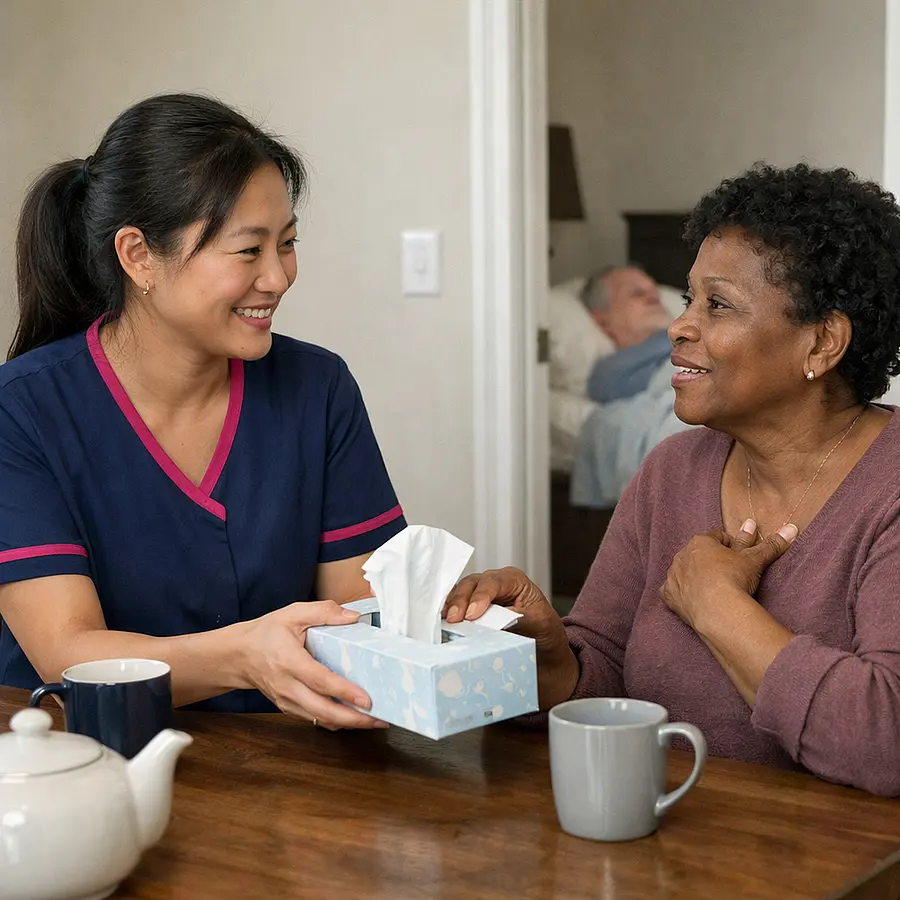
Realistic scene of an Asian female caregiver in a 00072b tunic with e51974 trim sitting at a dining table with a middle aged Black woman offering tissues and listening warmly while they talk a teapot and two mugs on the table bedroom doorway to a resting patient in the background.

End of life care that protects hobbies and interests

Even near the end of life, meaningful moments matter. If someone loves gardening, we might open the doors so they can feel the breeze and smell flowers. We can read favourite books, listen to music, or support gentle crafts. Our companionship-focused visits prioritise what brings comfort, joy and a sense of identity.
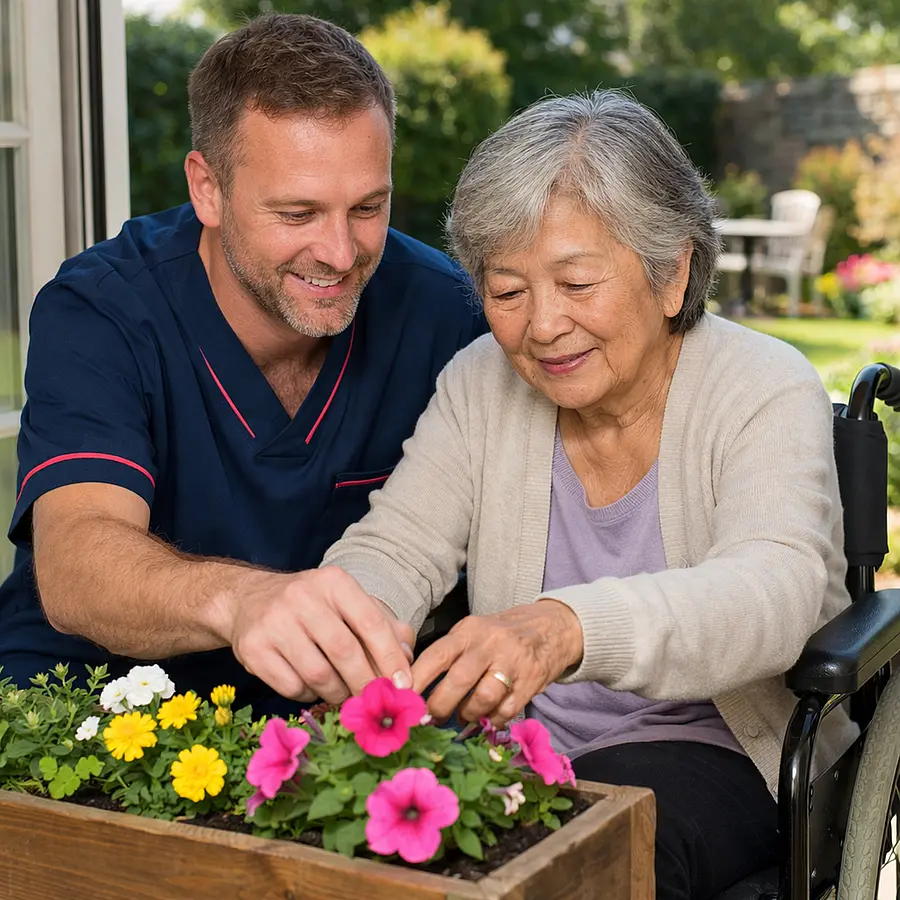
Realistic image of a white male caregiver in a 00072b tunic with e51974 details sitting beside an elderly Asian woman in a wheelchair near open patio doors both looking at a planter box of flowers caregiver helping her touch the petals sunny garden visible outside.

End of life care that supports reablement and choice

Some people experience periods of stability or even small improvements. We gently support independence where possible: helping someone sit out in a chair, eat a favourite meal, or have a short wash at the basin rather than in bed. Our flexible mobility support adapts to daily energy levels, always guided by their preferences.
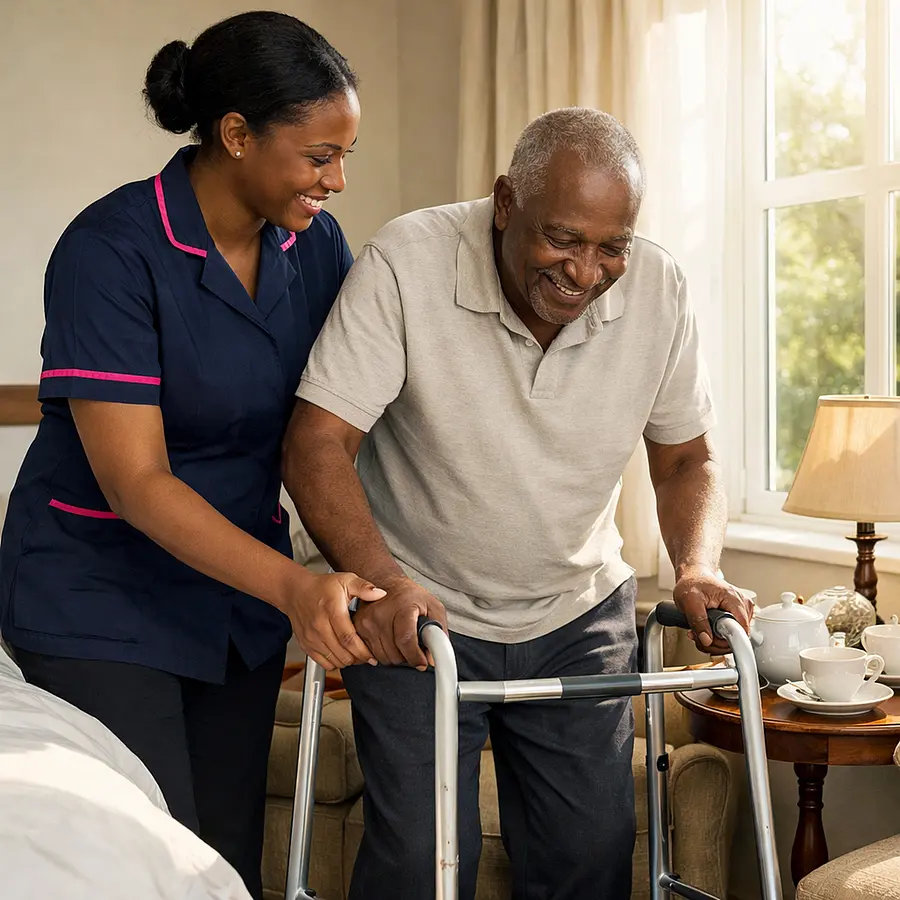
Realistic scene of a Black female caregiver in a 00072b tunic with e51974 trim using a walking frame to assist an elderly Black man to move from his bed to an armchair by the window both concentrating but smiling sunlight streaming in and a small table set with tea.

Using home routines to create calm and meaning

Routines can feel grounding when everything else is changing. We build a gentle daily rhythm around preferred wake times, pain relief, small bites to eat and quiet rest. Our carers keep notes so each visit feels consistent. Familiar faces, favourite TV shows and regular friendly conversation all help reduce anxiety for everyone.

Realistic image of an Asian male caregiver in a 00072b tunic with e51974 accents sitting on the sofa with an elderly white couple all watching television together and smiling a written care schedule visible on the coffee table cosy lighting in the living room.

How loved ones can support end of life care

If you’re a partner, relative or friend, your presence is powerful. Simple things like holding hands, playing familiar music, moistening lips and speaking calmly make a difference. We can show you gentle repositioning techniques, how to spot discomfort, and how to keep on top of everyday household tasks without exhausting yourself.
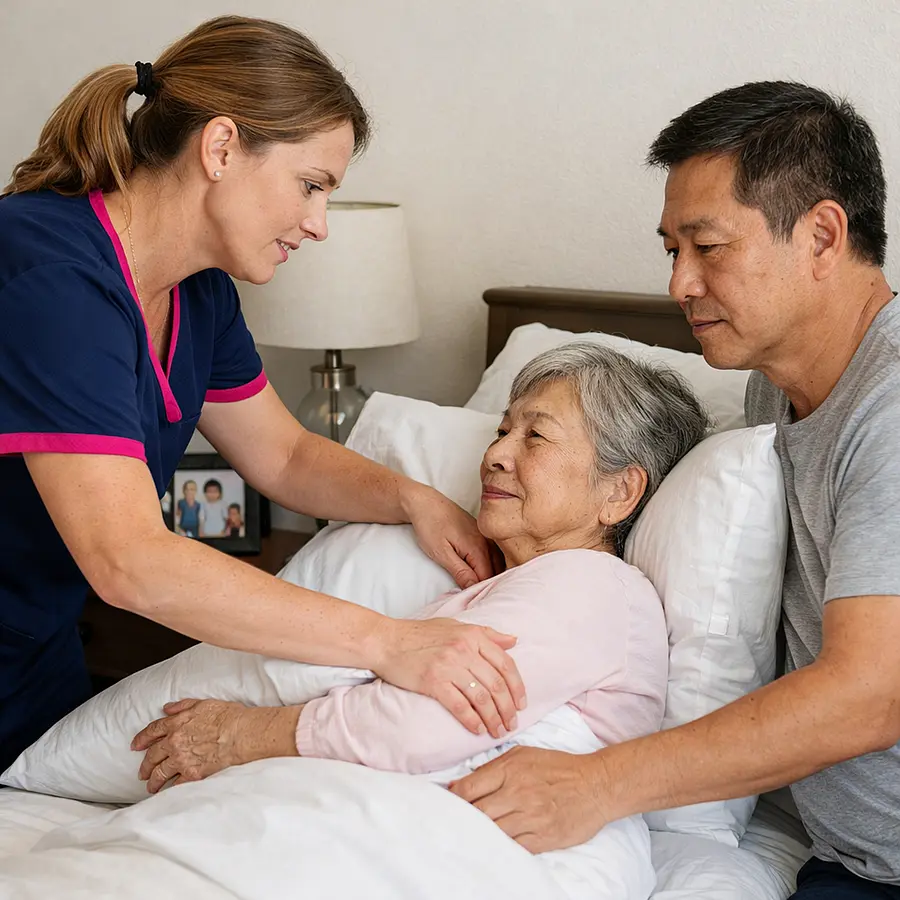
Realistic scene of a white female caregiver in a 00072b tunic with e51974 trim demonstrating to a middle aged Asian man how to gently reposition his elderly mother in bed using pillows all three focused but relaxed clean bedding and a nightstand with family photos nearby.

Emotional support for family during end of life

Grief often begins before someone dies. It’s normal to feel scared, guilty, angry or numb. Our carers provide a calm presence, offering space to talk or simply sit together in silence. We can also signpost useful information and guidance, so you feel more confident and less alone with what’s happening.

Realistic image of a Black male caregiver in a 00072b tunic with e51974 accents sitting quietly on a sofa next to a tearful white woman offering a comforting hand on her shoulder while they talk tissues and a glass of water on the coffee table softly lit room.

Practical help for families providing care

Providing end of life care alone can be overwhelming. We can step in with regular visits, night-sitting support, or live-in care so you can rest without worrying. Our carers can manage meals, continence care and gentle repositioning while you sleep, work or take time out, helping you sustain your energy over weeks and months.
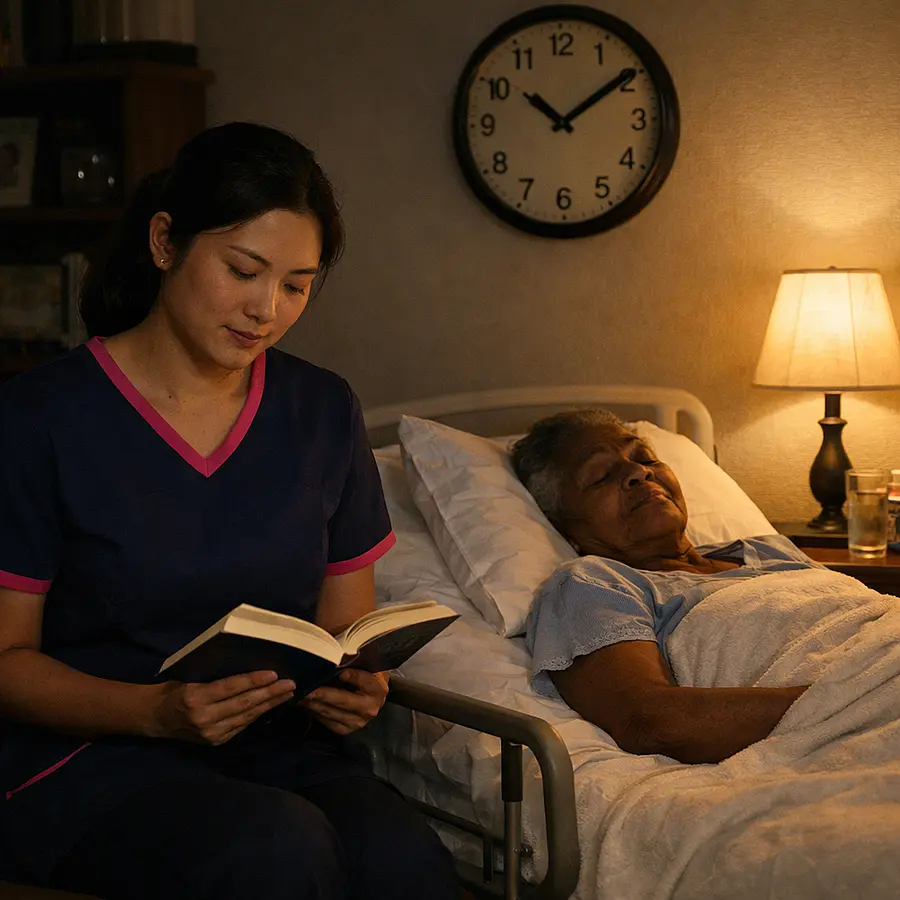
Realistic scene of an Asian female caregiver in a 00072b tunic with e51974 trim quietly reading a book beside an elderly Black woman who is sleeping in a hospital style bed in the living room at night only a small lamp on clock showing late evening atmosphere calm and watchful.

How can you care for a loved one nearing end of life?

Caring for someone at the end of life means balancing tenderness with practical tasks. Focus on comfort: soft bedding, pain relief on time, mouth care, favourite scents or music. Keep meals small and easy to swallow. We can help with gentle meal preparation, fluids and medication reminders, while you provide love, memories and presence.
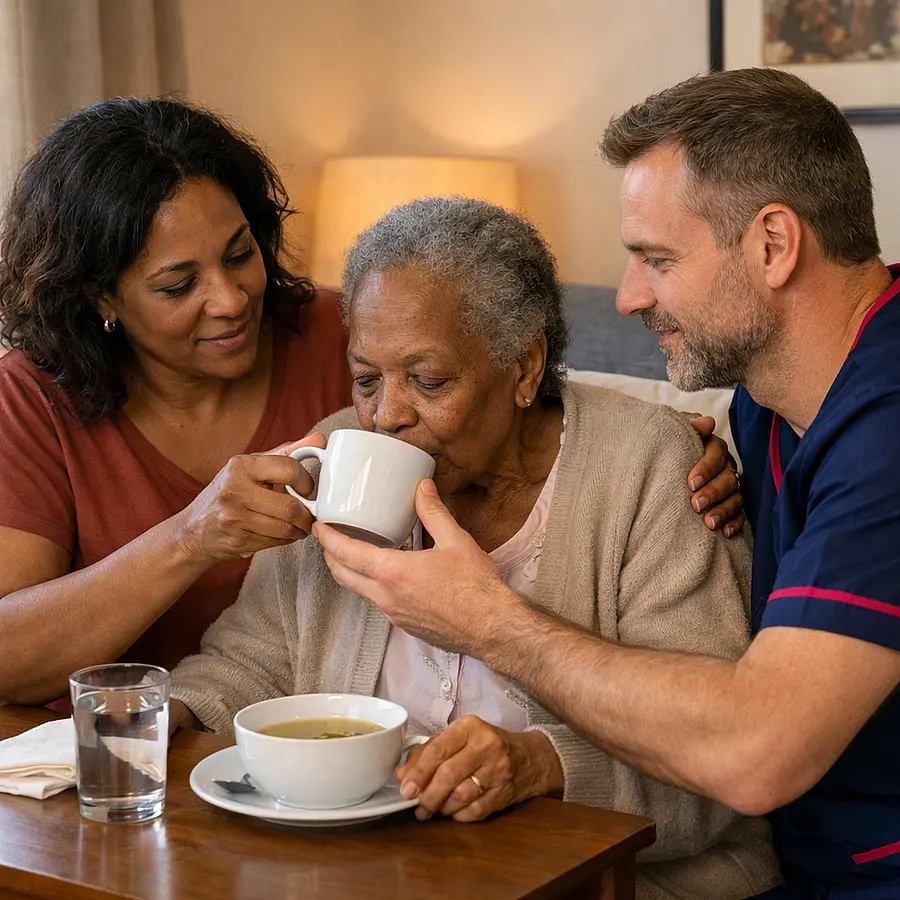
Realistic image of a white male caregiver in a 00072b tunic with e51974 details assisting a middle aged Black daughter to help her frail mother sip soup from a mug with a handle all three at a bedside table warm afternoon light caring and collaborative atmosphere.

Planning ahead for your loved one’s wishes

Whenever possible, talk early about what matters most: where they’d like to be, who they want around them, any spiritual needs, and thoughts about treatments. We can gently prompt these conversations and help record preferences. This can guide healthcare decisions and reassure you that you’re honouring their wishes, even when choices later feel difficult.

Realistic scene of a Black female caregiver in a 00072b tunic with e51974 trim sitting at a table with an elderly white couple pointing kindly to an advance care planning document while they discuss and smile gently pens and reading glasses on the table.

Why choose us for end of life care at home?

We understand the courage it takes to ask for help. Our carers are carefully trained in end of life support at home, working respectfully around family life, cultural beliefs and personal wishes. We focus on quiet competence: being there when you need us, easing worries and creating as peaceful a goodbye as possible.
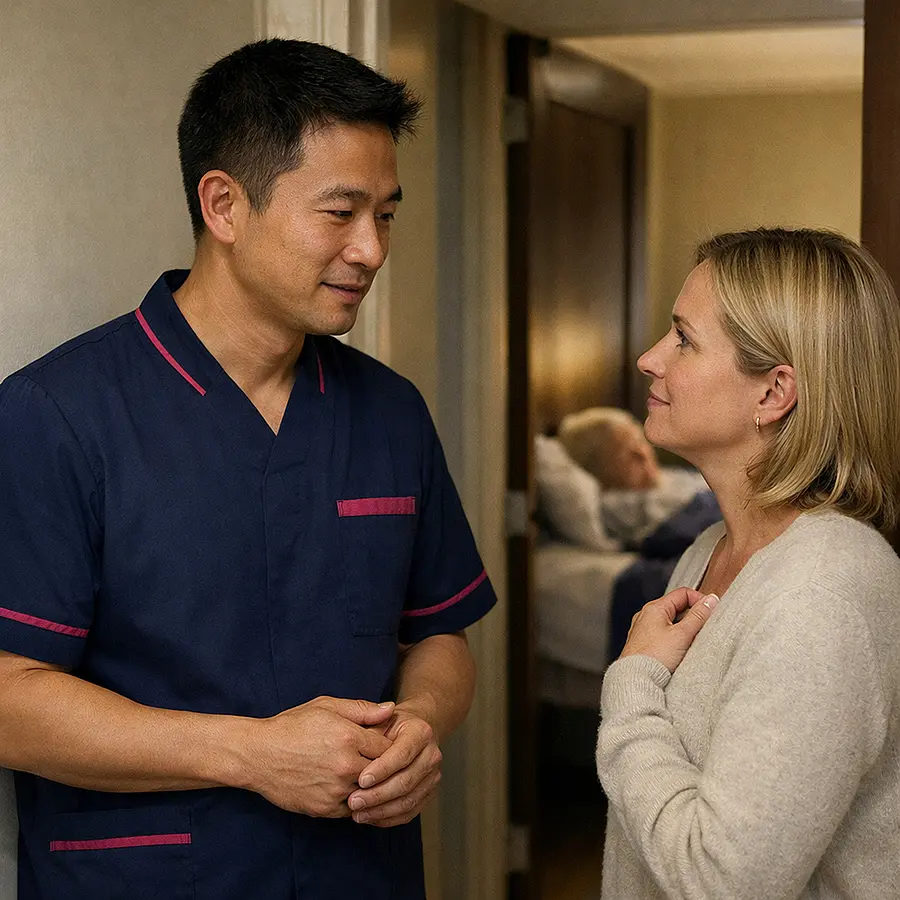
Realistic image of an Asian male caregiver in a 00072b tunic with e51974 accents standing in a hallway with an adult white daughter both speaking quietly and reassuringly before he enters a bedroom where an elderly person rests soft lighting and calm respectful atmosphere.
Hands of young adult and senior women over green b
Contact Us

Contact us to arrange End of Life Care at home

If you're looking for support with daily living for some one at the end of life, we're here to help. Our friendly team is ready to offer guidance, answer your questions, and arrange end of life care tailored to your or your loved ones' needs in their own home. Reach out today for personalised advice and support.

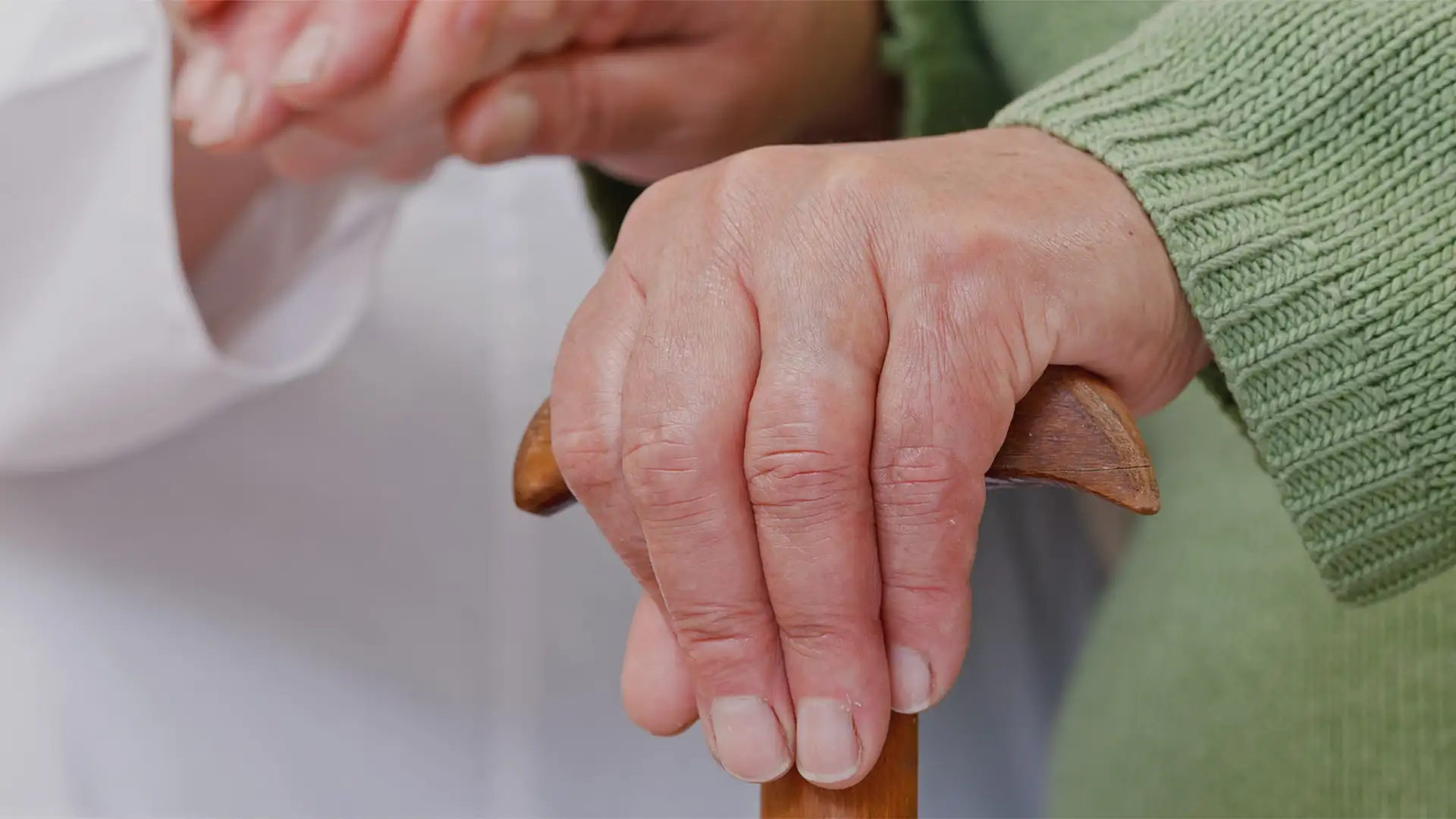
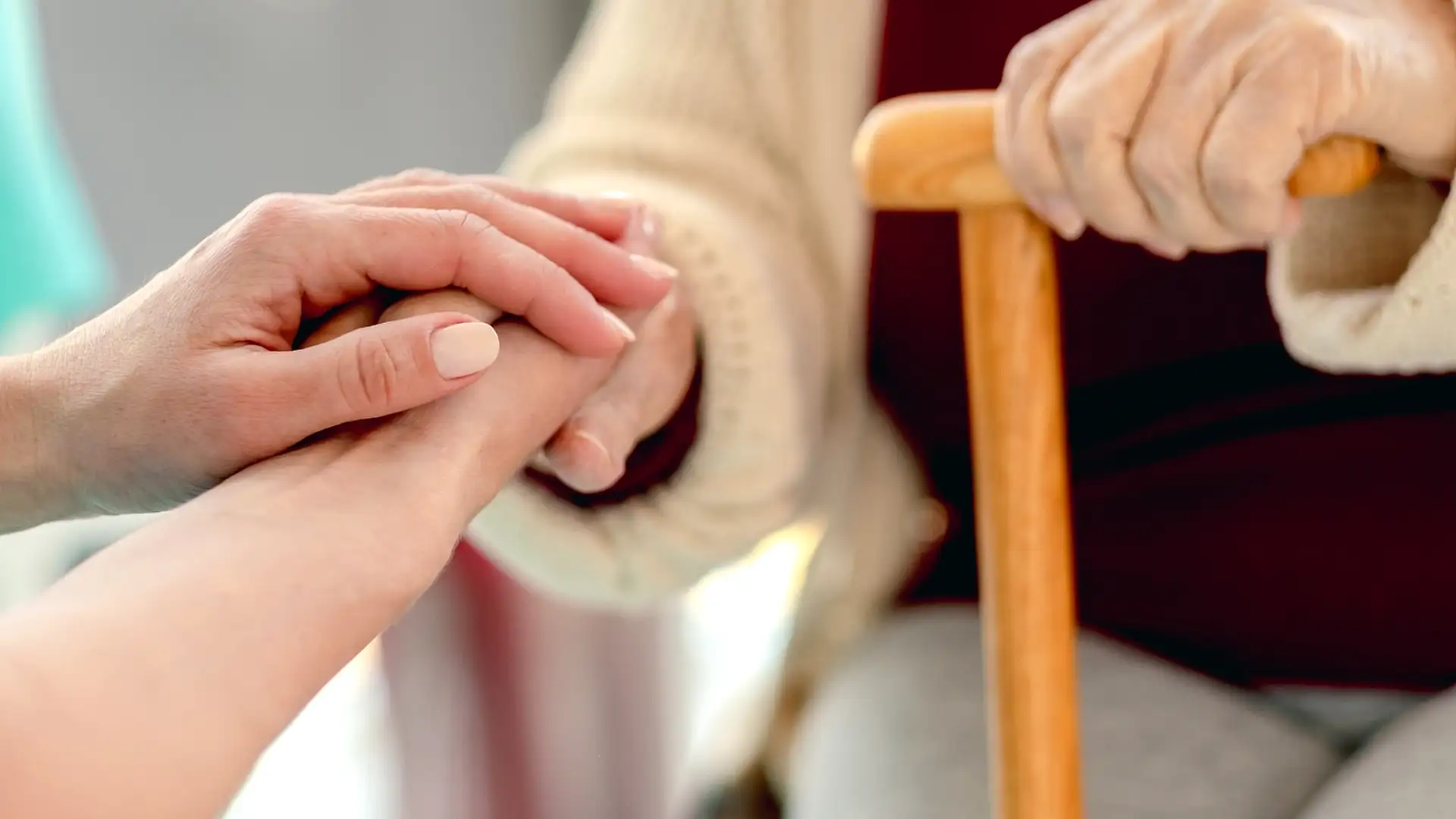
Elderly hands on a walking sitck

We're becoming a fully regulated service

While we are not currently regulated, meaning there are some services we cannot currently provide, we are in the process of registering to become a fully regulated service.

CQC

End of Life Care FAQ's

You’re bound to have questions when exploring your home care options, so we’ve answered some of the most common ones below.

Feeling overwhelmed, sad, guilty, or even angry is very common when caring for someone who is dying. Acknowledging these feelings is important; they do not mean you love the person any less. Talking openly with trusted friends, family, or professionals can help, as can accepting offers of practical help. Scheduling regular breaks with support from our team, or planning in short walks or quiet time, can restore some emotional balance. It’s also helpful to ask professionals direct questions about what to expect, which can reduce fear of the unknown. Remember that you do not have to do this alone; we are here to walk alongside you.

Yes, if that feels right for your family and the person who is dying. Children often benefit from being included in age-appropriate ways—perhaps drawing pictures, reading stories or giving gentle hugs. Pets can offer enormous comfort too; a cat on the bed or a dog lying nearby can be very soothing. Our carers are happy to support these interactions safely, ensuring infection control and gentle handling. We can also help you think about how to explain what’s happening to children, so they feel less confused or shut out, and can signpost resources on talking about death in honest but sensitive language.

Trying to manage a job, children, household tasks and intensive caring is incredibly demanding. It can help to start by being realistic about what you can and can’t do alone. Consider involving other family members, friends, neighbours, or your faith community. We can provide regular visits, respite breaks or packages designed specifically to help you balance work and caring. Talking to your employer about flexible working or carer’s leave may also relieve pressure. Remember that accepting help is not a sign of failing your loved one—it’s a way to keep going sustainably and be emotionally present when it matters most.

Visit frequency is flexible and built around what you and your loved one need. Some families begin with one or two visits a day for help with personal care and medicines, then increase as symptoms progress. Others may choose more intensive support or live-in care, with a carer present throughout the day and night. We can also provide waking or sleeping night support, allowing family to rest. It’s common for patterns to change over time, and we’ll review this with you regularly so that visits remain appropriate, responsive, and sustainable for everyone involved.

Many people with complex conditions, such as advanced cancer, heart failure, dementia, or neurological illnesses, can still receive end of life care at home. Community specialist teams, including cancer and palliative nurses, provide guidance, while our carers focus on day-to-day comfort and routine. The key is careful planning: ensuring equipment is in place, clear instructions are written down, and everyone knows who to contact in an emergency. We’ll work closely with healthcare professionals to adapt the care plan as the condition progresses, so that home remains a safe and compassionate option for as long as possible.

The cost of end of life care at home depends on factors like how many hours of support you need, whether you choose visiting or live-in care, and any specialist skills required. There may be help available through local authorities or health funding, particularly where needs are primarily health-related. We can talk you through options and point you towards guidance on care costs and funding, including assessments that may be available. Our aim is to be transparent and flexible, shaping a package that balances your budget with the level of support that feels safe, sustainable, and compassionate.

As well as direct personal support, carers can make the home run more smoothly. This might include light cleaning of the bedroom and bathroom, changing bedding, doing laundry, and keeping pathways clear and safe. They can support simple meal preparation, ensure drinks are within reach, and tidy away clutter that could cause trips. If you’re juggling work or other responsibilities, this practical help can be a lifeline, preventing you from becoming overwhelmed and allowing you to spend more of your time on meaningful moments with your loved one instead of constant chores.

When someone dies at home, it can be a deeply emotional moment. If a carer is present, they will respond calmly, follow the agreed procedure, and contact the appropriate professionals such as the GP or community nurse. They will treat your loved one with utmost respect, ensuring they look peaceful and that you have time and space to say goodbye. Afterwards, we can share practical information, signpost you to bereavement resources, and, if you wish, continue providing support for a short period with tasks like tidying the room or organising belongings. Grief is individual, and we’ll respect your pace and choices.

Yes, many people living with dementia can receive end of life care at home. The familiar surroundings, consistent routines, and known objects can help reduce confusion and distress. Our carers receive training in dementia care, including communication techniques, managing distressed behaviours, and creating a calm environment. We work closely with family to understand life history, preferences, and what soothes the person. As dementia progresses, we adapt our approach, focusing on comfort, sensory experiences such as music or touch, and gentle reassurance, while still managing physical needs like nutrition, continence, and skin care.

End of life care at home is support provided during the final months, weeks or days of someone’s life, delivered in their own familiar surroundings. The focus is on comfort, dignity and quality of life rather than cure. It can include help with personal care, symptom management alongside community nurses, emotional support for the person and their family, and practical tasks such as light housework or meal preparation. Being at home often allows people to stay close to loved ones, pets and treasured belongings, which many find reassuring. Our role is to work alongside health professionals, respond sensitively to changing needs, and help make the time that’s left as peaceful and meaningful as possible.

We proudly provide high-quality home care across the East Midlands, in an around the towns and cities detailed below.

Elderly hands on a walking sitck

Call us to find out more about End of Life Care

East Midlands

We proudly provide high-quality home care across the East Midlands

Our Reviews

We’re proud of the trust families place in us. Here’s what some of the people we support, and their loved ones, say about our home care services.

"Great support for my mum after she lost her confidence after a fall and hospital stay."

Sarah L

"They have been a great help with keeping on top of my dads laundry and general house cleaning as he is bed bound and have been being changed daily."

Emily R

"Really helped me with keeping on top of my house work since my parkinson's has progressed."

Mark T

Senior woman hand in caregiver hands

Join The Good News Newsletter

Be the first to discover exclusive offers, and service updates. Your journey to independent living starts here - where everything truly is fine.


Contact The Good Place

We’d love to hear from you! Whether you have questions, want to learn more about our home care service, or are ready for us to start supporting you or your loved one, our good people are here to help. If you are looking to make a complaint, you can contact our Registered Manager or Nominated Individual directly.

Send Us a Message


Elderly hands on a walking sitck

Working in Partnership

We work closely within the community to provide safe, compassionate, reliable home care that supports independence, dignity, and improved wellbeing while remaining at home.

Derbyshire County Council
Staffordshire County Council
NHS