
A realistic bedside family scene with a caucasian female caregiver in a 00072b tunic with e51974 accent arranging chairs for relatives around an elderly black man in bed everyone sharing warm smiles and soft eye contact with a comforting lamp lit room and heartfelt atmosphere.

Planning meaningful goodbye rituals and memories at home

Planning meaningful goodbye rituals and memories at home can bring comfort, dignity, and connection during end-of-life care. We offer practical, compassionate support with daily care, comfort, and family routines. Contact us to discuss how we can help create calmer, more personal moments at home.

Planning meaningful goodbye rituals and memories at home

Planning meaningful goodbye rituals and memories at home can help a difficult time feel more personal, calm, and connected. These moments do not need to be large or formal. They can be simple acts that reflect someone’s wishes, values, faith, culture, and relationships, while bringing comfort to the person and those around them.
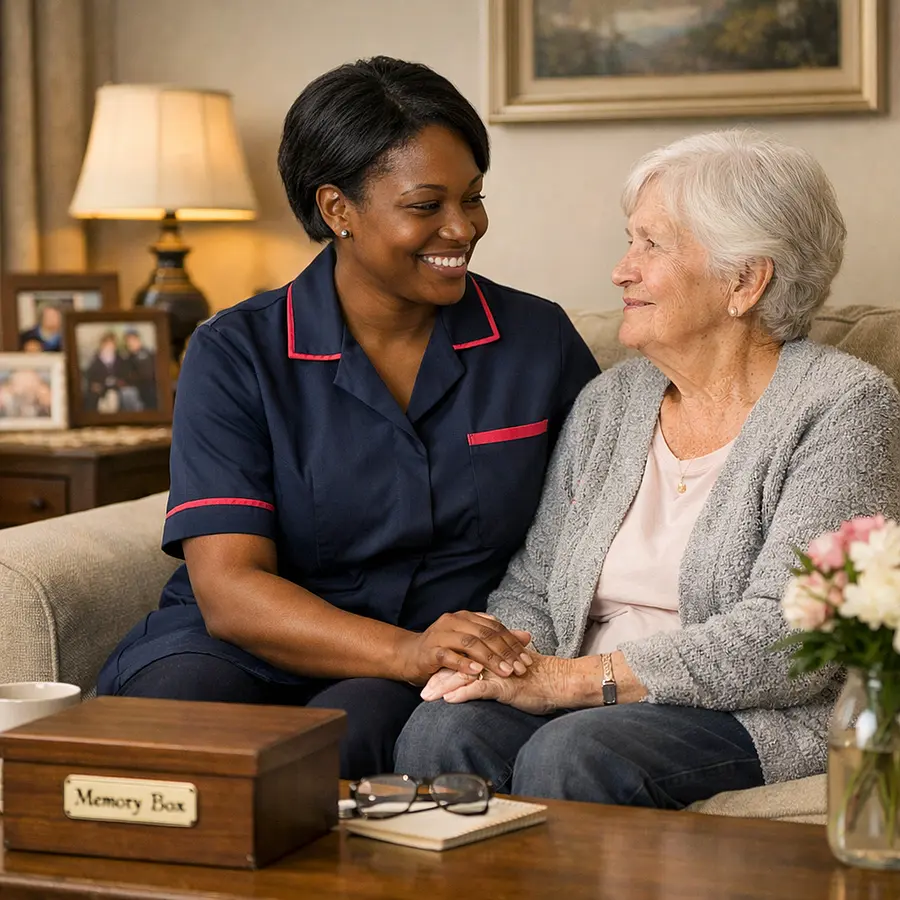
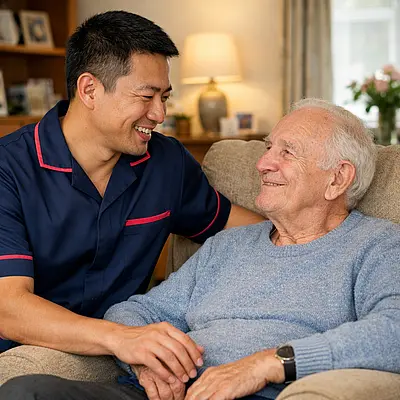
A realistic home care scene in a softly lit living room showing a black female caregiver wearing a tunic uniform in color 00072b with e51974 accent smiling warmly beside an elderly caucasian woman on a sofa with family photos a memory box flowers and a calm atmosphere that conveys reassurance dignit

Why goodbye rituals at home can matter so much

When someone is nearing the end of life, familiar surroundings often make emotional conversations easier. A planned ritual might include music, letters, prayers, quiet storytelling, or sharing a favourite meal. It gives everyone permission to pause, express love, and create lasting memories. It can also help relatives feel less helpless and more involved in meaningful care.
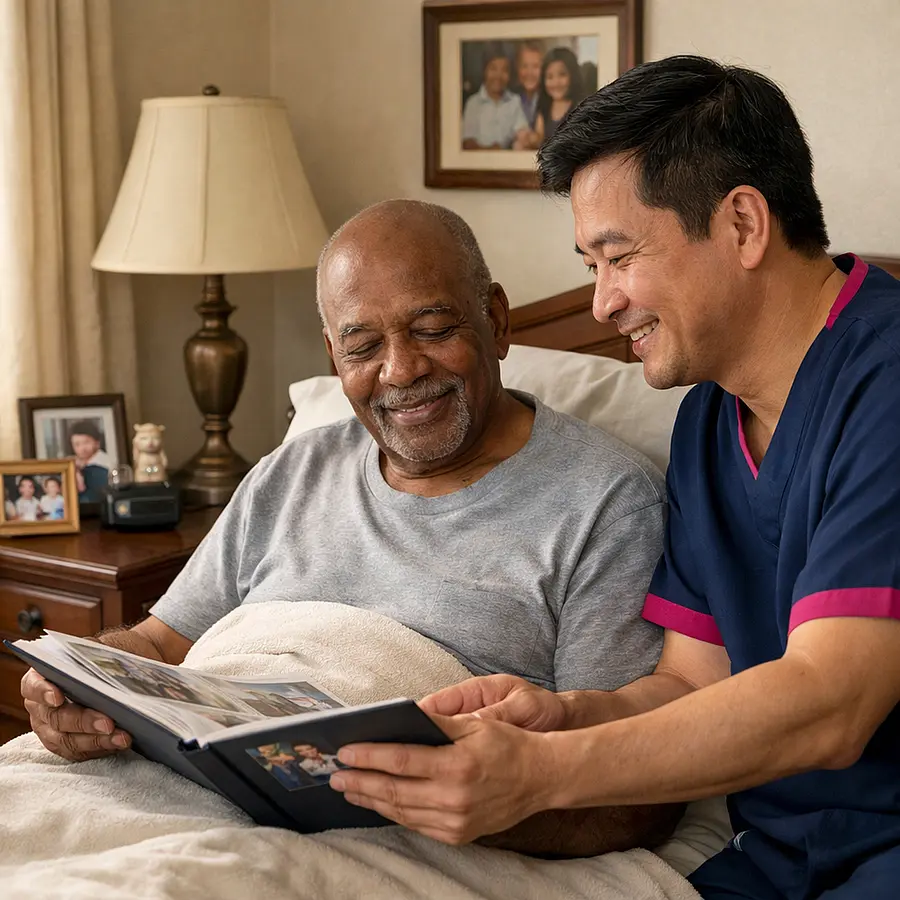
A realistic bedroom at home with an asian male caregiver in a 00072b tunic with e51974 accent gently arranging a photo album for an older black man in bed both smiling softly with warm daylight family keepsakes and a comforting atmosphere focused on dignity warmth and emotional connection.

Common challenges in planning end-of-life moments

Families often worry about saying the wrong thing, becoming overwhelmed, or leaving plans too late. Energy levels may change quickly, and symptoms can affect attention, comfort, and appetite. Different relatives may also have different ideas. Reading about the final weeks of life at home can help you plan gentle moments that match the person’s strength and wishes.

A realistic family home hallway and bedroom doorway with a caucasian male caregiver in a 00072b tunic with e51974 accent speaking calmly with an asian family member both looking reassured while an older caucasian person rests comfortably in the background creating a warm supportive non clinical home

Starting goodbye conversations gently and clearly

Begin with small, open questions such as “What would feel comforting?” or “Is there anyone you want to speak to?” Keep the tone gentle, not rushed. Some people want deep conversations, while others prefer simple company. Our companionship support can help create calm space for visits, conversation, reading aloud, or simply sitting together in silence.

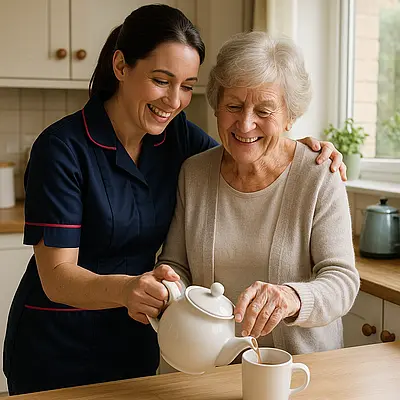
A realistic kitchen table scene at home with a caucasian female caregiver in a 00072b tunic with e51974 accent sitting beside a middle aged black service user both sharing tea and a relaxed conversation smiling softly with notebooks and family cards on the table showing warmth trust and emotional re

Choosing meaningful rituals that reflect the person

Goodbye rituals should feel true to the person’s life. That may mean a favourite hymn, a football scarf on the bed, a blessing from a faith leader, or grandchildren reading messages aloud. You can also plan around comfort by using ideas from creating a comforting bedroom space so the setting feels peaceful and familiar.
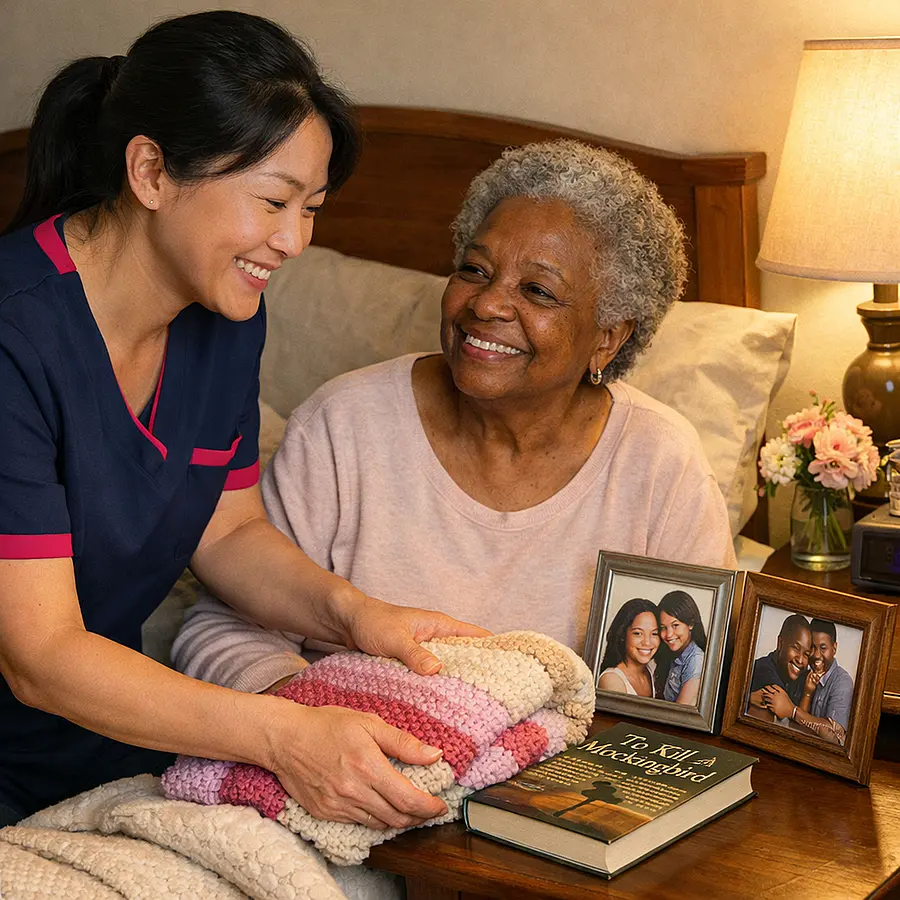
A realistic bedside home care setting with an asian female caregiver wearing a 00072b tunic with e51974 accent helping a black elderly woman arrange treasured objects including a knitted blanket framed photos and a favourite book with warm lamp light and joyful reassuring expressions.

Creating memory keepsakes without pressure

Keepsakes do not have to be complicated. Families often record voice notes, collect recipe cards, write down favourite sayings, or take a photo of joined hands. If the person is tired, do one small thing at a time. A memory box on a bedside table can gradually be filled with notes, letters, drawings, or small personal items.
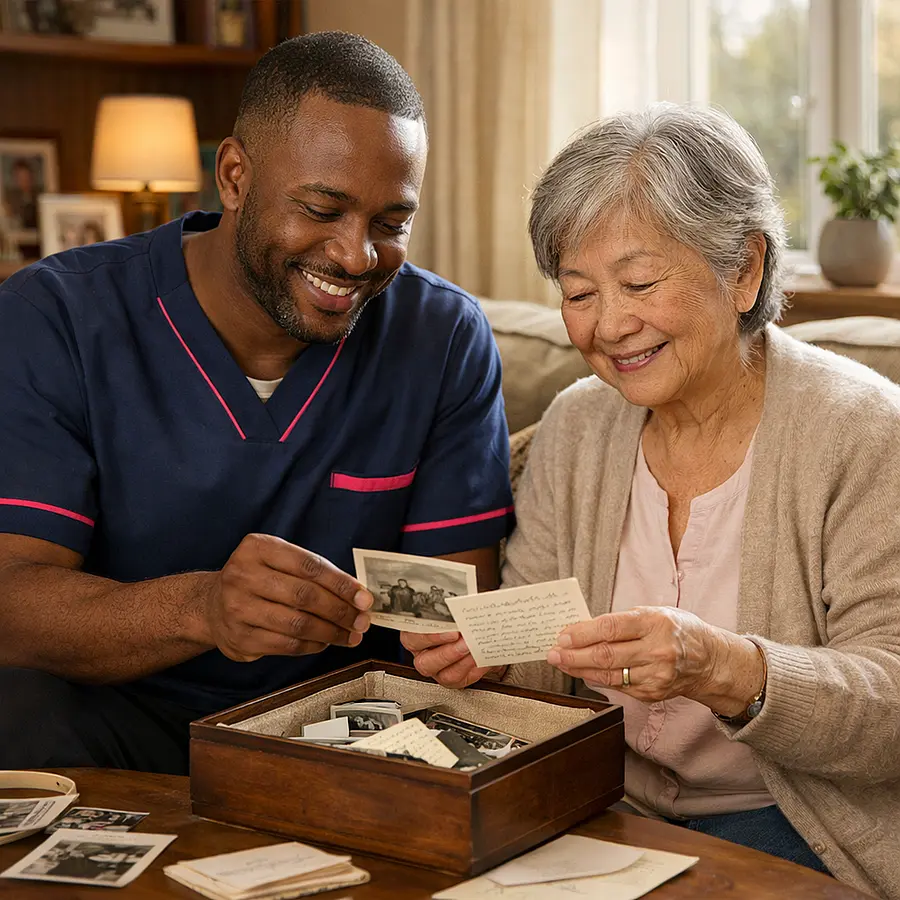
A realistic lounge scene with a black male caregiver in a 00072b tunic with e51974 accent helping an elderly asian woman place handwritten notes and photographs into a memory box both smiling gently with soft afternoon light cosy furnishings and a heartfelt family atmosphere.

Supporting comfort during goodbye moments at home

Comfort matters as much as conversation. Plan short visits, allow rest breaks, reduce noise, and keep favourite blankets or scents nearby. If symptoms are changing, review guidance on managing pain and discomfort at home. Practical help with washing, dressing, and personal hygiene can also help someone feel settled before visitors arrive.

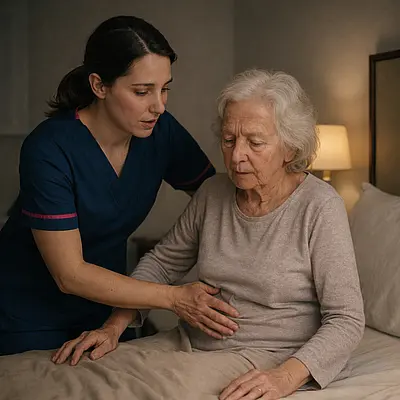
A realistic calm bedroom scene showing a caucasian female caregiver in a 00072b tunic with e51974 accent gently adjusting pillows and a blanket for an older black man both relaxed and smiling softly with flowers warm lighting and a peaceful environment centred on dignity and reassurance.

Making family visits feel manageable and calm

Large gatherings can be tiring, so consider a simple rota, shorter visits, or one-to-one time. Let relatives know what helps: speaking softly, avoiding strong perfume, or waiting if the person is asleep. It also helps to identify one family contact who updates everyone else, reducing interruptions and helping the home feel more peaceful.

A realistic family living room with an asian male caregiver in a 00072b tunic with e51974 accent welcoming relatives quietly while an elderly caucasian woman rests comfortably nearby everyone appearing calm and reassured with soft natural light and a warm organised home care environment.

Using music and familiar senses to create connection

Music often reaches people when words are hard. A favourite song, scented hand cream, familiar flowers, or a well-loved blanket can all bring comfort. Keep sensory choices gentle and personal. If fatigue is high, one song or a short hand massage may be enough. The aim is not to fill every moment, but to make each one feel recognised.

A realistic bedside scene featuring a black female caregiver in a 00072b tunic with e51974 accent playing soft music from a small speaker while gently holding the hand of an elderly asian man both peaceful and smiling faintly with flowers soft bedding and warm evening light.

Including food and shared meals in a gentle way

Food can carry strong memories, even when appetite is low. A tiny spoonful of a favourite pudding, the smell of fresh toast, or family sharing a meal nearby can still feel meaningful. Our support with meal preparation can make this easier, while practical kitchen help keeps the focus on togetherness rather than tasks.

A realistic home kitchen scene with a caucasian male caregiver wearing a 00072b tunic with e51974 accent preparing a small comforting plate for an older black woman seated nearby both smiling gently with family gathered in the background and a warm homely atmosphere.

Preparing overnight peace for important final days

Some families want reassurance that someone is there through the night, especially when comfort needs change or relatives are exhausted. Our overnight care can support repositioning, quiet reassurance, and observation, while also helping loved ones rest. This can make daytime rituals more meaningful because family members have more energy to be present.

A realistic night time bedroom setting with an asian female caregiver in a 00072b tunic with e51974 accent sitting calmly beside a sleeping caucasian service user checking comfort and smiling reassuringly toward a family member at the door with soft lamp light and a peaceful secure atmosphere.

Staying organised with practical home support

Meaningful moments are easier when daily tasks are covered. Help with light household jobs such as laundry, tidying, and changing bedding can reduce stress for relatives. If medicines need to be taken on time before visits or rituals, medication management support can help maintain comfort and consistency in a calm, respectful way.

A realistic home bedroom and hallway scene with a black male caregiver in a 00072b tunic with e51974 accent changing fresh bedding and organising medication discreetly while an elderly asian woman and her daughter smile with relief showing warmth order and practical reassurance.

A simple bedside ritual with close family

One family may choose a bedside ritual where each person says one thing they are grateful for. This could include “thank you for teaching me to cook” or “I will always remember our holidays.” A caregiver can help position chairs, adjust lighting, and make sure the person is comfortable so the moment feels calm rather than rushed.

A realistic bedside family scene with a caucasian female caregiver in a 00072b tunic with e51974 accent arranging chairs for relatives around an elderly black man in bed everyone sharing warm smiles and soft eye contact with a comforting lamp lit room and heartfelt atmosphere.

A gentle memory book for children and grandchildren

A memory book can be especially helpful for younger family members. They might draw pictures, add stickers, write short messages, or include printed photos. If talking about dying feels too direct, this still creates connection. Families can use prompts like “My favourite story about you” or “Something I learned from you” to make it easier.
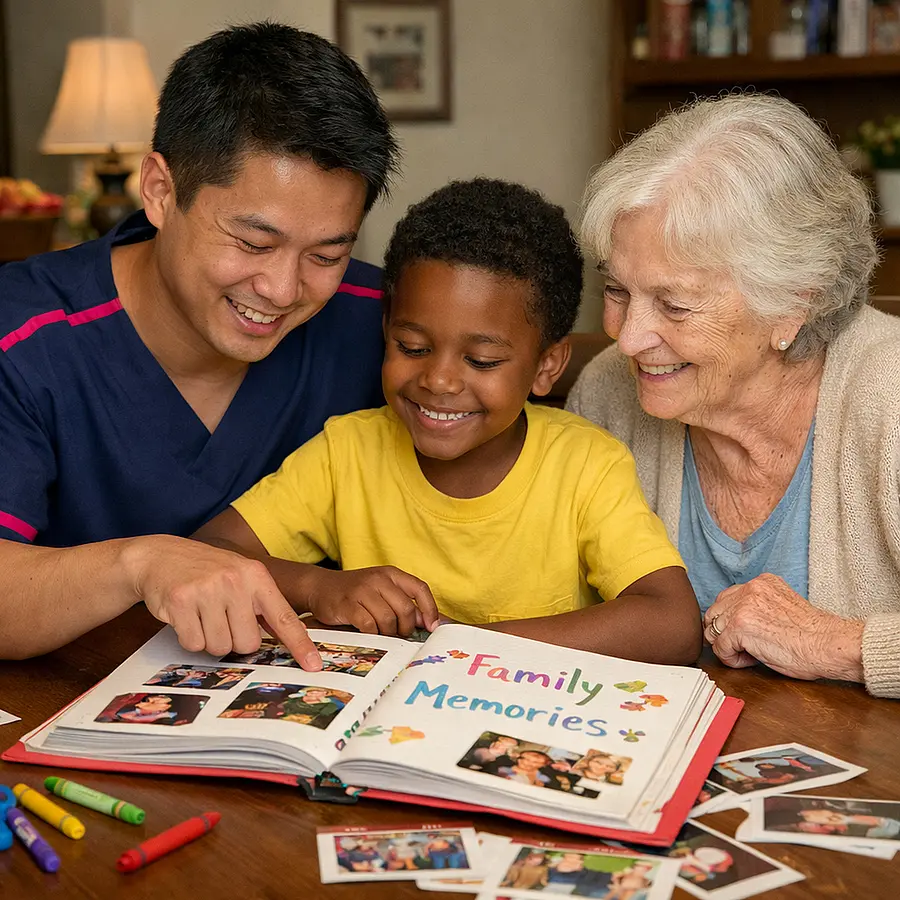
A realistic dining table scene with an asian male caregiver in a 00072b tunic with e51974 accent helping a black child and elderly caucasian grandmother look through a handmade memory book everyone smiling tenderly with crayons photos and warm family surroundings.

Using voice messages when visits are not possible

If relatives live far away or cannot visit quickly, short voice notes can be deeply comforting. A message saying “I love you,” sharing a prayer, or retelling a favourite memory can be played at the bedside. This approach is useful when energy is limited, because the person can listen at a quiet time without managing a full call.
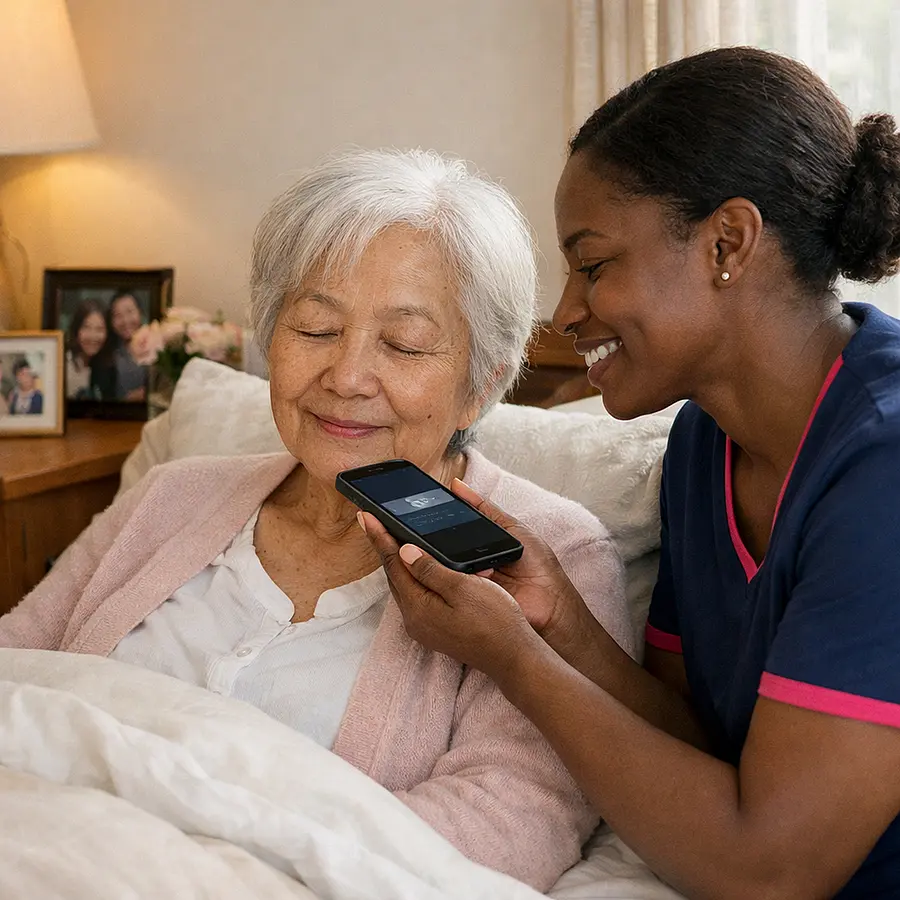
A realistic bedroom scene showing a black female caregiver in a 00072b tunic with e51974 accent holding a phone near an elderly asian woman so she can listen to family voice messages both appearing peaceful and comforted with soft bedding framed photos and warm natural light.

Planning final wishes around faith, culture, and routine

Some people want prayers at set times, specific clothing, special readings, or the presence of certain relatives. Others prefer a very private routine with minimal fuss. Writing these wishes down can prevent misunderstandings. If changes become noticeable, guidance on what to expect in the final 48 hours at home may help families adapt plans gently.
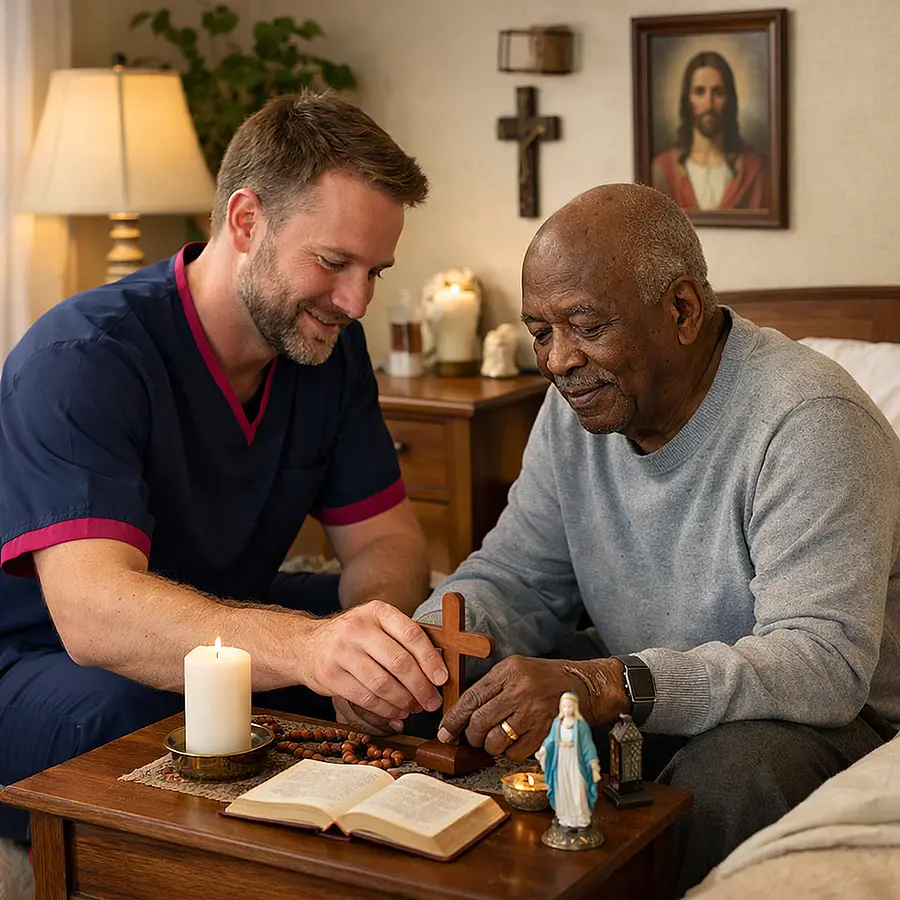
A realistic home prayer and reflection space with a caucasian male caregiver in a 00072b tunic with e51974 accent respectfully helping an older black service user arrange meaningful items beside the bed both calm and reassured in a realistic warm room with dignified peaceful detail.

How professional care supports goodbye rituals at home

Professional care can make space for emotional moments by taking pressure off practical demands. We can support comfort, bathing and grooming, timed medicines, meal support, and quieter household routines, while families focus on being together. Our wider end-of-life care at home is designed to protect dignity, reassurance, and the person’s choices.

A realistic home care visit with an asian female caregiver in a 00072b tunic with e51974 accent speaking warmly with a caucasian family around an elderly black service user everyone appearing reassured and supported in a bright tidy living room with a compassionate professional atmosphere.

Why choose us for goodbye support at home

We understand that these moments are deeply personal. Our role is to listen, respect routines, and support the person and family with sensitivity. Whether you need a little help or more regular care, we can provide practical reassurance, emotional steadiness, and flexible home support so meaningful goodbyes feel calmer, more comfortable, and centred on what matters most.


A realistic front room home care scene with a black male caregiver in a 00072b tunic with e51974 accent holding a reassuring conversation with an asian family and an elderly caucasian service user all smiling softly with natural lighting comforting dcor and a strong sense of trust warmth and dignity
Hands of young adult and senior women over green b
Contact Us

Contact us to arrange End of Life Care at home

If you're looking for support with daily living for some one at the end of life, we're here to help. Our friendly team is ready to offer guidance, answer your questions, and arrange end of life care tailored to your or your loved ones' needs in their own home. Reach out today for personalised advice and support.

Planning meaningful goodbye rituals and memories at home FAQ's

You’re bound to have questions when exploring your home care options, so we’ve answered some of the most common ones below.

Many families worry that raising goodbye wishes will feel too upsetting, but gentle, open questions often bring relief rather than distress. You do not need to force a big conversation. Start small with questions like “What would feel comforting?” or “Is there anything important you want us to know?” This keeps the focus on support and choice. Some people will want to talk in detail, while others will answer briefly or change the subject. Both responses should be respected. The goal is to invite, not pressure. Choosing a calm time, sitting close, and allowing pauses can help. Often, people appreciate being asked because it shows their wishes matter and their voice is still central.

If faith, spirituality, or cultural traditions matter to the person, they should absolutely be part of goodbye planning. This could include prayers, readings, blessings, music, particular clothing, symbolic items, or the presence of specific people. Some families prefer formal rituals, while others want something quieter and more private. Asking early about what feels right can avoid confusion later and helps everyone act with confidence and respect. It can also be helpful to write wishes down so all involved understand them clearly. Even where energy is limited, small elements of faith or culture can still be included in a gentle way. Familiar traditions often bring comfort, identity, and peace to both the person and their loved ones.

That is completely okay. Not everyone wants a formal goodbye ritual, and meaningful moments can still happen in ordinary ways. Some people prefer a quiet routine, a favourite chair, familiar television, a normal cup of tea nearby, or one-to-one time rather than planned conversations. The most important thing is to respect their personality and wishes. A goodbye does not have to be announced or structured to be real and important. Love may be shown through presence, a gentle touch, familiar jokes, or simply keeping them comfortable and settled. Families sometimes worry they are not doing enough if there is no formal ritual, but often the most fitting choice is one that feels natural and unforced.

Keep memory keepsakes small and simple. You do not need to complete everything in one day. One recorded message, one family photo, one handwritten note, or one item placed in a memory box can be enough. Choose a pace that suits the person’s energy and the family’s emotional capacity. You might set aside ten quiet minutes to ask one question, such as “What is a memory you want us to keep?” If that feels too much, others can contribute memories instead. It is also fine to stop and continue another day. Keepsakes should feel comforting, not like a task list. A gentle approach usually creates something more personal and less pressured for everyone involved.

Managing family visits usually works best when someone gently coordinates them. A simple plan might include short visiting times, one or two people at once, and quiet periods in between for rest. You can let relatives know in advance if the person is sleeping more, speaking less, or needing very calm surroundings. Ask visitors to keep voices low, avoid staying too long, and accept that the person may not always be able to talk. Some families use a shared messaging group so one person can update everyone, which reduces repeated calls and interruptions. This approach protects the person’s energy while still allowing loved ones to feel included. Calm, respectful visits often create better memories than long, crowded ones.

If the person is very tired, it helps to think in short, manageable moments rather than long visits or detailed plans. A goodbye ritual may only last a few minutes, and that is absolutely fine. You could play one favourite song, read a short letter, offer a quiet hand massage, or invite one person at a time to sit with them. Watch for signs of fatigue, such as closing eyes, restlessness, or less focus, and be prepared to pause. Keep the room calm, reduce background noise, and make sure they are physically comfortable first. Sometimes simply being present in silence is the most meaningful choice. These moments do not need many words to hold love and importance.

Alongside goodbye planning, it helps to think about the practical tasks that can affect comfort and stress levels. These may include medication timing, bedding changes, laundry, room temperature, gentle cleaning, drinks for visitors, and making sure important items are within reach. You may also want a plan for who updates relatives, who answers the door, and when quiet rest times will be protected. These details may seem small, but they often shape whether the day feels calm or chaotic. Putting practical support in place allows more space for meaningful time together. Families often feel a great sense of relief when everyday responsibilities are shared rather than carried by one exhausted person.

Yes, children and grandchildren can often be included in goodbye rituals in very gentle, age-appropriate ways. Many families find that involving younger relatives helps them feel connected rather than confused or excluded. Children might draw a picture, add a note to a memory book, choose a song, or sit quietly and hold a hand if they want to. It helps to explain simply what is happening and reassure them that there is no right or wrong way to take part. Some children may want to be very involved, while others prefer brief visits. Their questions should be answered honestly and calmly. Small, creative acts often help children express love when they cannot find the words.

It is usually best to start planning goodbye rituals as early as feels appropriate, rather than waiting until everyone feels rushed. If someone has already expressed wishes about music, faith, visitors, or favourite routines, you can begin shaping small moments around those preferences straight away. Early planning allows for more choice and less pressure. It also gives time to speak with relatives, prepare keepsakes, and think about practical support. That said, even if time is short, meaningful rituals are still possible. A short conversation, a favourite blanket, a voice message from family, or a quiet bedside reading can still carry great meaning. The key is to keep plans flexible and guided by comfort.

Simple goodbye ideas often work best because they are easier to manage and feel more natural. Families might make a playlist of favourite songs, create a memory box, read out messages from loved ones, look through old photographs, or share one happy memory each. Some choose a faith-based ritual such as prayer or a blessing, while others prefer everyday moments like tea together, a familiar scent in the room, or a favourite television programme playing softly. A small keepsake such as a handwritten note, a recipe card, or a recorded voice message can become very precious later. The best ideas are personal and gentle. They should fit the person’s energy levels, personality, and what brings them peace.

We proudly provide high-quality home care across the East Midlands, in an around the towns and cities detailed below.

Elderly hands on a walking sitck

We're becoming a fully regulated service

While we are not currently regulated, meaning there are some services we cannot currently provide, we are in the process of registering to become a fully regulated service.

CQC
Elderly hands on a walking sitck

Call us to find out more about Planning meaningful goodbye rituals and memories at home

East Midlands

We proudly provide high-quality home care across the East Midlands

Our Reviews

We’re proud of the trust families place in us. Here’s what some of the people we support, and their loved ones, say about our home care services.

"They have been a great help with keeping on top of my dads laundry and general house cleaning as he is bed bound and have been being changed daily."

Emily R

"Really helped me with keeping on top of my house work since my parkinson's has progressed."

Mark T

"Great support for my mum after she lost her confidence after a fall and hospital stay."

Sarah L

Senior woman hand in caregiver hands

Join The Good News Newsletter

Be the first to discover exclusive offers, and service updates. Your journey to independent living starts here - where everything truly is fine.


Contact The Good Place

We’d love to hear from you! Whether you have questions, want to learn more about our home care service, or are ready for us to start supporting you or your loved one, our good people are here to help. If you are looking to make a complaint, you can contact our Registered Manager or Nominated Individual directly.

Send Us a Message


Elderly hands on a walking sitck

Working in Partnership

We work closely within the community to provide safe, compassionate, reliable home care that supports independence, dignity, and improved wellbeing while remaining at home.

NHS
Derbyshire County Council
Staffordshire County Council