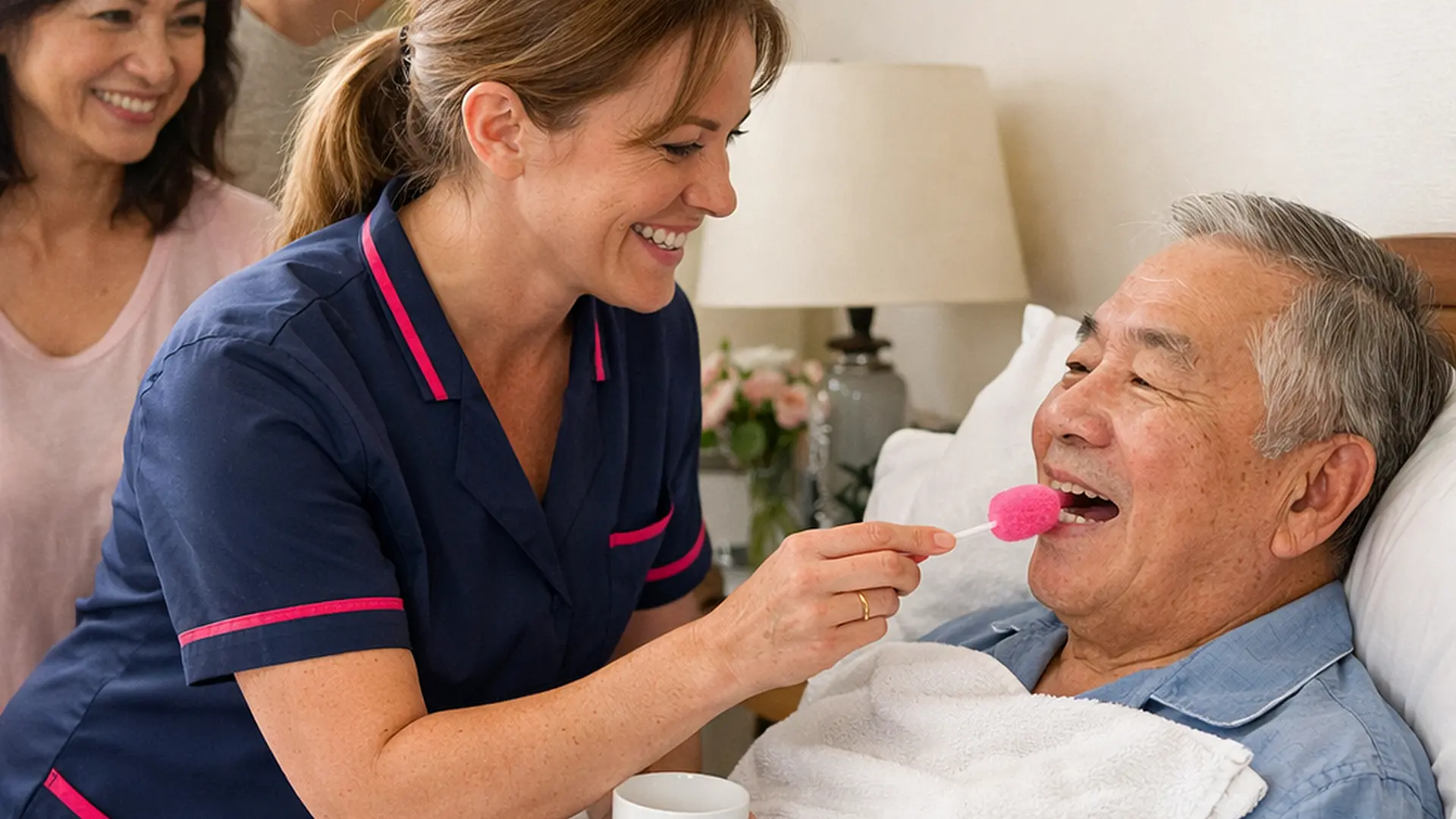
A realistic care at home image with a caucasian female caregiver in a tunic uniform colour 00072b with e51974 accent gently providing mouth care and freshening bedding for an asian elderly male service user warm smiles from relatives bright but soft room respectful and compassionate atmosphere

What to expect in the final 48 hours at home

Learn what to expect in the final 48 hours at home, including common changes, comfort tips, and how professional home care can support your family. If you need compassionate guidance, contact us today to talk about practical end-of-life support at home.

Understanding the final 48 hours at home

The final 48 hours at home can bring physical changes, emotional moments, and uncertainty for everyone involved. This guide explains what families may notice, how to make the environment calmer, and when to ask for extra help. With the right support, home can remain a peaceful, familiar place focused on comfort, dignity, and closeness.

A realistic home care scene showing a black female caregiver in a tunic uniform colour 00072b with e51974 accent sitting beside an elderly asian male service user in a calm bedroom at home speaking gently with family nearby warm expressions reassuring atmosphere soft natural light tidy room conveyin

What to expect in the final 48 hours at home can include

During the last two days of life, people often sleep more, eat and drink less, and respond less often. Breathing may change, hands and feet may feel cool, and periods of restlessness can happen. These signs are often part of the natural dying process. Reading about the final weeks at home can also help families feel more prepared.

A realistic bedroom scene with an asian male caregiver in a tunic uniform colour 00072b with e51974 accent gently explaining end of life changes to a caucasian female family member while a black elderly female service user rests comfortably in bed warm home setting soft lamp lighting calm and reassu

Common risks in the final 48 hours at home

The main challenges are usually discomfort, confusion, family exhaustion, and worry about whether symptoms are normal. Dry mouth, pressure on sore areas, noisy breathing, and missed medicines can all add distress. Relatives may also feel frightened at night. Planning ahead for night-time support, comfort measures, and who to call can reduce panic and help everyone respond more calmly.
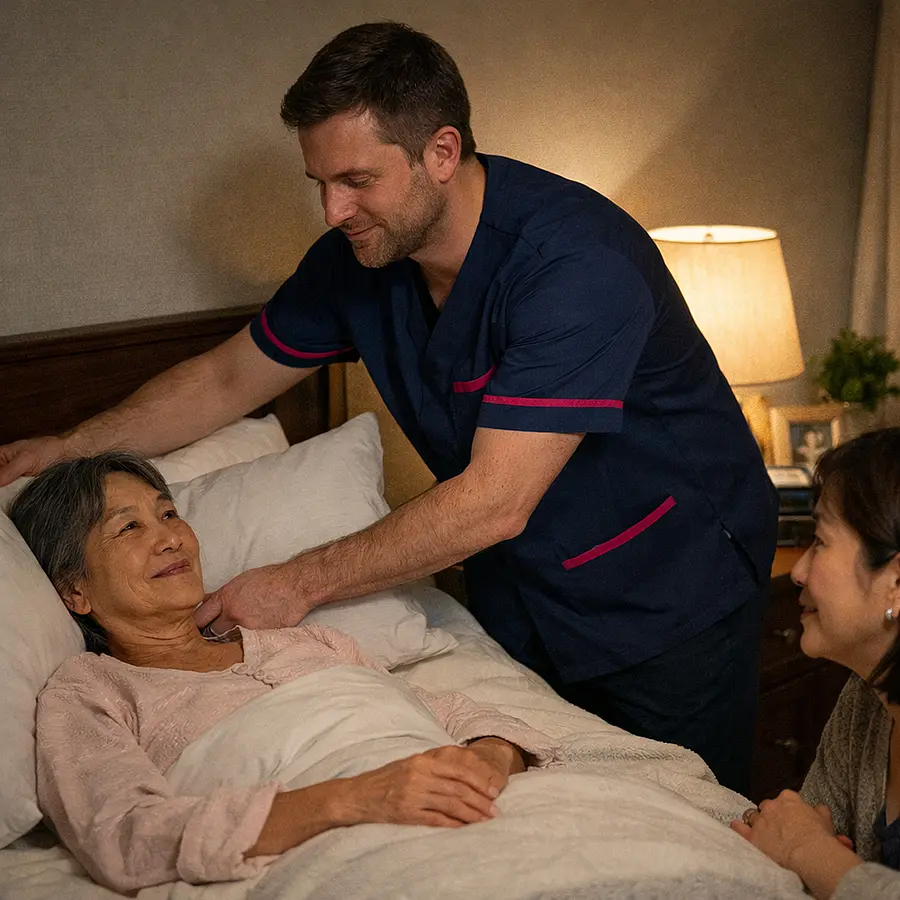
A realistic night time home care image showing a caucasian male caregiver in a tunic uniform colour 00072b with e51974 accent adjusting pillows for an asian female service user family member watching with relief warm bedside light peaceful bedroom clear sense of safety and reassurance realistic not

Creating comfort during the final 48 hours at home

Start with the room itself. Keep lighting soft, reduce noise, and make sure essentials are within reach. Fresh bedding, a favourite blanket, and a comfortable position can make a big difference. If you are preparing the space, our guide to creating a comforting bedroom space offers simple ideas families can use straight away.

A realistic home bedroom with a black male caregiver in a tunic uniform colour 00072b with e51974 accent smoothing bedding and arranging a favourite blanket for a caucasian elderly female service user family photos visible calm smiles warm lamp light peaceful and reassuring environment

Watching for changes in breathing

Breathing can become slower, shallower, or uneven. There may be long pauses, or a rattling sound caused by secretions gathering in the throat. This can be upsetting to hear, but it does not always mean the person is distressed. Gentle repositioning, keeping the head slightly raised, and following advice on comfort in the last days can help.

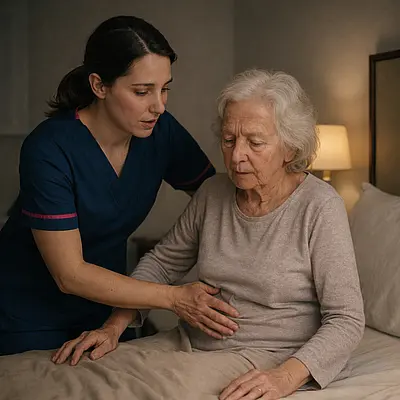
A realistic close home care scene showing an asian female caregiver in a tunic uniform colour 00072b with e51974 accent gently raising pillows for a black male service user in bed family member nearby looking reassured natural bedroom setting calm facial expressions warm and supportive mood

Supporting personal comfort and hygiene

In the final hours, comfort often matters more than routine. Small acts like mouth care, applying lip balm, changing bedding, and helping with washing can reduce irritation and help someone feel settled. Gentle washing, hygiene, and dignity support should always be calm and unhurried, with soft explanations even if the person is no longer speaking much.

A realistic care at home image with a caucasian female caregiver in a tunic uniform colour 00072b with e51974 accent gently providing mouth care and freshening bedding for an asian elderly male service user warm smiles from relatives bright but soft room respectful and compassionate atmosphere

Managing medicines in the final 48 hours

Medicines may be prescribed to ease pain, agitation, sickness, or breathing discomfort. If swallowing becomes difficult, a small medication pump (sometimes called a syringe driver) may be used to give medicines continuously and keep symptoms under control. Families often worry about giving the right amount or recognising when something has changed. Clear written guidance, reassurance about how medicines and the pump work, and access to support at home can help reduce that worry. Seek advice promptly if symptoms increase, doses are missed, or there are any concerns about the medication or pump.

A realistic home care scene showing a black female caregiver in a tunic uniform colour 00072b with e51974 accent reviewing medication notes with a caucasian family member beside a resting asian female service user bedside table organised caring smiles calm and professional atmosphere

Approaching food and drinks in the final hours

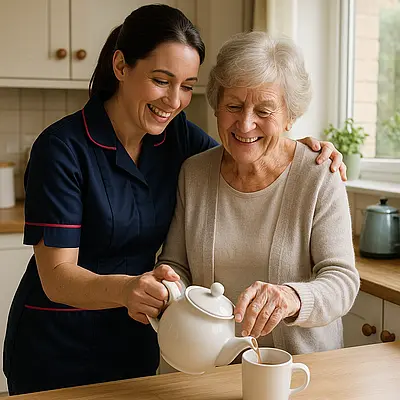
It is common for appetite to fade and for sips to become smaller. Families can find this especially hard, but forcing food or fluids may cause discomfort. Offer tiny sips, ice chips if advised, and regular mouth care instead. If someone can still enjoy a little, simple meal and drink preparation support can focus on comfort, not quantity.
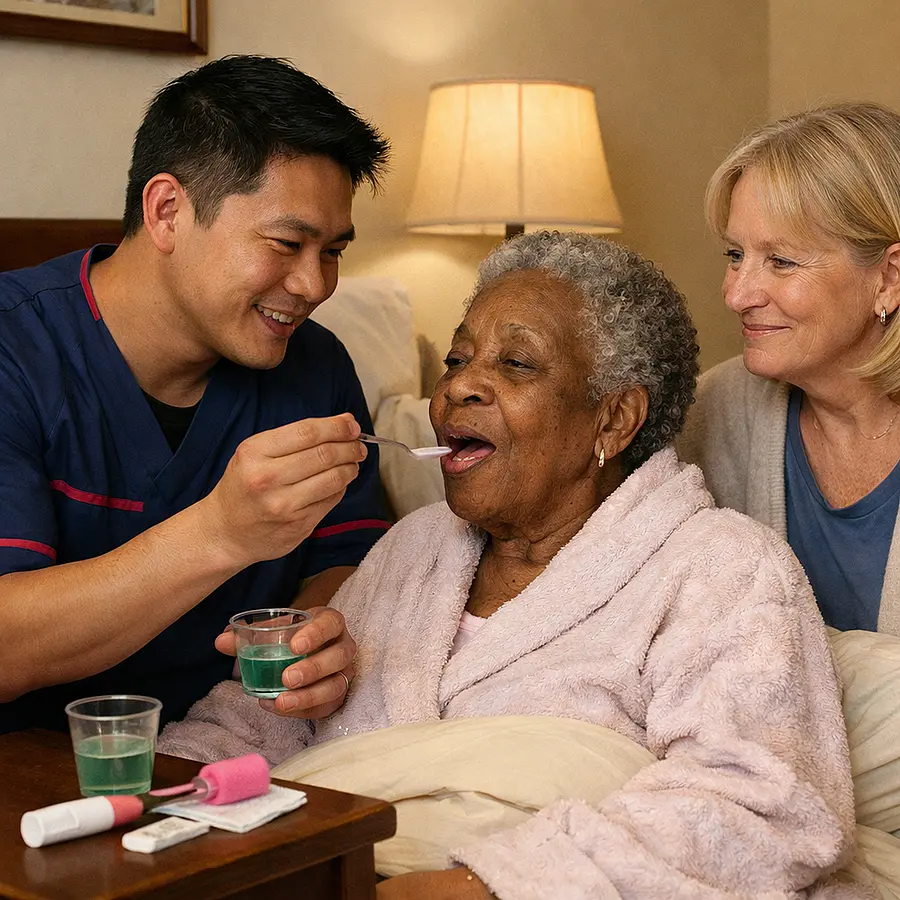
A realistic bedside scene with an asian male caregiver in a tunic uniform colour 00072b with e51974 accent offering a small spoon and mouth care items to a black elderly female service user caucasian relative nearby smiling gently peaceful room warm and reassuring mood

Giving reassurance through companionship at home

Even when someone seems asleep or less responsive, hearing may still remain for some time. Gentle voices, a hand held softly, favourite music, or simply sitting nearby can be deeply comforting. Meaningful companionship and emotional presence can help reduce fear for both the person and their family, especially when words are few and reassurance comes through closeness.

A realistic living room turned care space showing a caucasian male caregiver in a tunic uniform colour 00072b with e51974 accent sitting beside a black male service user holding his hand while soft music plays asian family member nearby warm expressions realistic and comforting

Preparing for overnight changes at home

Nights can feel longest when someone is nearing death. Breathing patterns may alter, restlessness may increase, and family carers may feel unable to sleep in case something happens. Having overnight care at home or a clear rota means one person is alert while others rest. This can make the final hours less overwhelming and more peaceful for everyone.
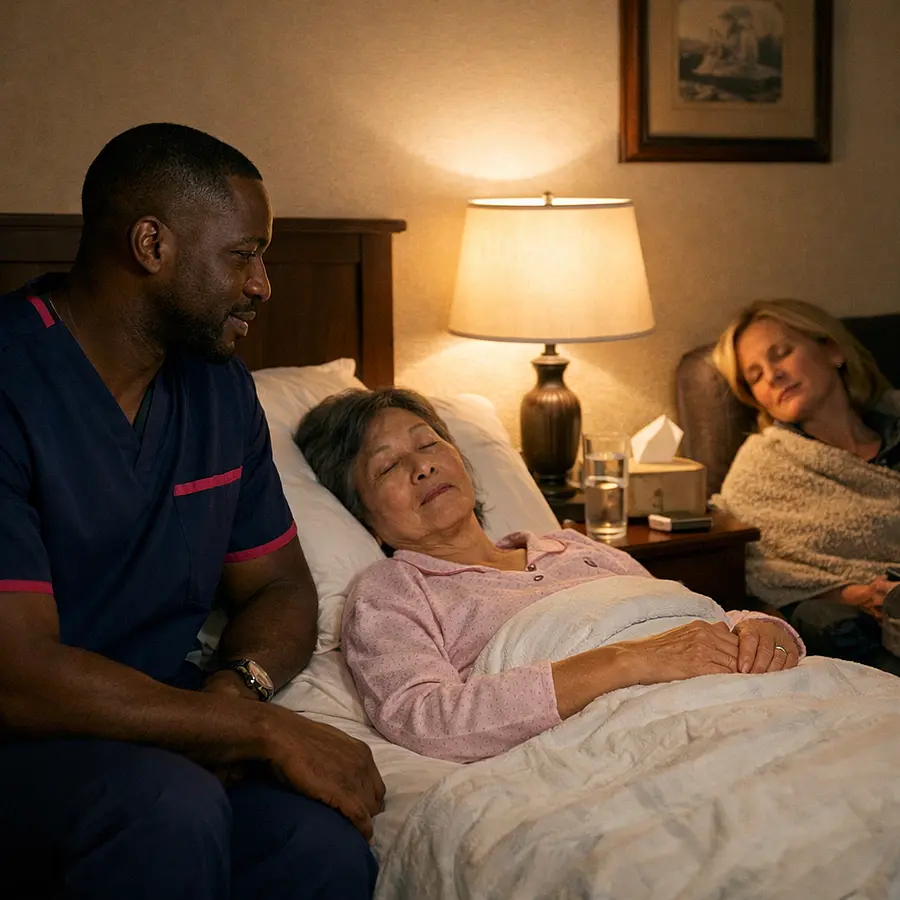
A realistic late evening bedroom scene with a black male caregiver in a tunic uniform colour 00072b with e51974 accent keeping watch beside an asian female service user caucasian relative resting in a chair under a blanket gentle bedside lamp peaceful safe and supportive atmosphere

Handling domestic tasks in the final days

When emotions are high, everyday jobs can quickly pile up. Washing up, changing bedding, doing laundry, and keeping walkways clear all matter more than people expect. Light help with housework and domestic duties can keep the home calmer and safer, allowing relatives to spend less time on chores and more time being present with their loved one.

A realistic home care image showing an asian female caregiver in a tunic uniform colour 00072b with e51974 accent changing bedding and tidying a peaceful bedroom for a caucasian male service user while black family members talk quietly nearby warm and reassuring atmosphere

Knowing when extra end-of-life support is needed

If symptoms change quickly, if family members feel unable to cope, or if there is uncertainty about what is happening, extra help should be arranged without delay. Looking at when it is time to consider end-of-life care at home can help relatives decide when more structured support will bring comfort and reassurance.

A realistic consultation at home scene with a caucasian female caregiver in a tunic uniform colour 00072b with e51974 accent speaking gently to an asian family around a dining table while a black elderly service user rests in the next room warm home lighting calm compassionate and professional

An example of the final 48 hours at home

You may notice your loved one sleeping almost all day, refusing meals, and waking only briefly when spoken to. You should keep the room quiet, moisten ther mouth every hour, and take turns sitting with them. By reducing pressure to eat and focusing on comfort instead, the atmosphere often becomes more settled and less anxious.

A realistic family home scene showing a black female caregiver in a tunic uniform colour 00072b with e51974 accent supporting a caucasian family around an asian elderly female service user resting peacefully in bed glasses of water and mouth care items nearby warm and hopeful mood

Responding to restlessness in the final hours

A person may fidget with sheets, reach into the air, or seem unsettled for short periods. Family members sometimes fear this means severe distress, but it can have several causes. Speaking softly, dimming lights, checking for discomfort, and staying nearby can help. If restlessness continues, seek advice quickly rather than trying to manage growing symptoms alone.

A realistic bedside scene with an asian male caregiver in a tunic uniform colour 00072b with e51974 accent calming a restless caucasian female service user by gently holding her hand black relative nearby reassured soft evening lighting peaceful and realistic home environment

Helping children understand the final 48 hours

Children often sense that something important is happening. Simple, honest language works best, such as explaining that the person is very ill and their body is slowing down. Let them visit if they want to, ask questions, or draw a picture. Families may also find comfort in planning meaningful goodbye rituals and memories at home.

A realistic family home image showing a caucasian female caregiver in a tunic uniform colour 00072b with e51974 accent speaking warmly with a black child and asian adult relative outside a bedroom where an elderly male service user rests gentle smiles respectful and comforting atmosphere

Sharing care during the final 48 hours at home

Families often try to do everything themselves, but simple teamwork can reduce strain. One person can handle phone calls, another can sit with their loved one, and another can manage refreshments or bedding. A loose plan prevents exhaustion and guilt. It also helps everyone spend more meaningful time together instead of feeling pulled in five directions.
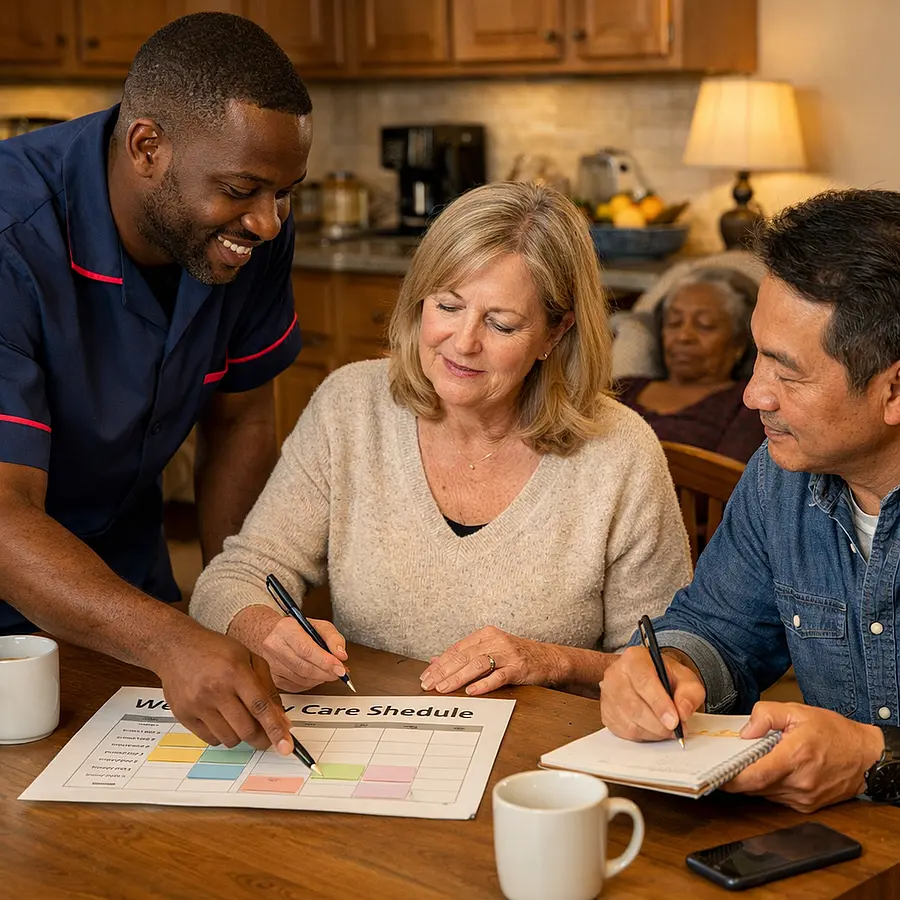
A realistic kitchen table planning scene with a black male caregiver in a tunic uniform colour 00072b with e51974 accent helping caucasian and asian family members organise a care rota while an elderly black female service user rests nearby warm lighting practical and reassuring atmosphere

After-death planning around the final hours at home

Although difficult to think about, knowing what happens next can ease fear. Keep important numbers nearby and make sure family members know who to call when death occurs. Having this agreed in advance can create a calmer atmosphere. It can also help to discuss spiritual wishes, music, or who would like to be present during the final hours.

A realistic home care planning image showing an asian female caregiver in a tunic uniform colour 00072b with e51974 accent gently discussing practical next steps with a caucasian couple in a quiet living room while a black elderly service user rests comfortably calm respectful and warm

The role of professional care in the final 48 hours

Professional carers can support families by monitoring comfort, helping with washing and repositioning, prompting or assisting with medicine routines, offering gentle company, and covering night support when relatives need rest. We work alongside families to keep care calm, respectful, and centred on the person’s wishes during this deeply important time.

A realistic bedroom care scene with a caucasian male caregiver in a tunic uniform colour 00072b with e51974 accent supporting an asian elderly female service user while a black family member rests nearby warm bedside lighting gentle smiles professional yet compassionate atmosphere

Why families choose us for final 48 hour support

Families choose us because we understand that the final 48 hours are not only about care tasks, but about reassurance, dignity, and being present. We offer practical home support, emotional understanding, and flexible help tailored to changing needs. Whether you need a little guidance or full end-of-life care at home, our team is here for you.


A realistic welcoming home care image with a black female caregiver in a tunic uniform colour 00072b with e51974 accent smiling reassuringly at a caucasian family and asian elderly service user in a bright living room warm natural light trustworthy compassionate and realistic
Hands of young adult and senior women over green b
Contact Us

Contact us to arrange End of Life Care at home

If you're looking for support with daily living for some one at the end of life, we're here to help. Our friendly team is ready to offer guidance, answer your questions, and arrange end of life care tailored to your or your loved ones' needs in their own home. Reach out today for personalised advice and support.

What to expect in the final 48 hours at home FAQ's

You’re bound to have questions when exploring your home care options, so we’ve answered some of the most common ones below.

Professional support at home can ease pressure at a time when families are emotionally stretched and practical needs are increasing. In the final 48 hours, carers can help with comfort, washing and hygiene, medicine support, night-time care, and light household tasks. Just as importantly, we offer reassurance and a calm presence when relatives are frightened or unsure. Our aim is to support the person’s dignity, respect family wishes, and make home feel as peaceful and manageable as possible. With the right help, families can spend more time connecting and less time worrying about every detail alone.

Medication support is very important because medicines in the final 48 hours are often used to ease pain, agitation, nausea, or breathing discomfort. Families sometimes feel anxious about timing, doses, or whether a medicine should still be given if swallowing changes. Structured medication management at home can reduce that pressure and help make sure comfort remains the priority. Keep written instructions close by and note when medicines are given. If the person appears more uncomfortable, becomes unable to swallow, or a dose is missed, ask for advice rather than guessing. Prompt action can prevent distress and help the final hours feel more settled for both the person and their family.

Restlessness can happen for different reasons, including discomfort, anxiety, medication changes, or the body naturally slowing down. In the final 48 hours at home, it may look like picking at the bedding, trying to get up, calling out, or moving the hands repeatedly. Start by checking simple things: are they too hot, too cold, lying awkwardly, or in need of mouth care? Reduce noise, lower lights, and speak in a calm voice. Stay nearby so they feel secure. If restlessness continues or becomes distressing, seek advice quickly, as medicines or care plans may need adjusting. You do not have to work this out alone, and support is there to help make things calmer.

In the final 48 hours at home, many people become much sleepier, eat and drink far less, and may respond only briefly or not at all. Their breathing can change in pattern, with pauses or a rattling sound, and their hands or feet may become cooler as circulation slows. Some people also become restless for short periods. These changes are often part of the natural dying process and do not always mean the person is uncomfortable. Families can usually help most by keeping the room calm, offering mouth care, speaking gently, and checking any comfort medicines are given as advised. If something changes suddenly or feels worrying, it is always sensible to ask for professional guidance.

The final 48 hours can bring sadness, anticipatory grief, relief, confusion, and exhaustion all at once. There is no perfect way to feel. Some relatives want to talk, some need silence, and some focus on practical tasks to cope. Try to accept help, take short breaks, and let people share the responsibility of sitting, calling, or preparing food. You do not need to create a perfect experience; being present and caring is enough. If emotions feel overwhelming, professional support can bring steadiness as well as practical care. Afterward, families may also benefit from reading about looking after yourself emotionally after caring.

Children can be involved if it feels right for the family and if they are prepared in an age-appropriate way. In the final 48 hours at home, children often pick up on tension and may imagine something even more frightening if they are excluded completely. Simple honesty usually works best: explain that the person is very ill, their body is slowing down, and they may die soon. Let children choose whether to visit, sit quietly, draw a picture, or ask questions. Some families also find comfort in planning goodbye rituals and memories at home, which can give children a gentle and meaningful way to be included.

You can offer food, but it is common for someone in the final 48 hours at home to stop wanting it. Families often find this heartbreaking because feeding is such a natural expression of love, yet forcing food can make someone more uncomfortable. A better approach is to offer small sips, moistening the mouth, lip balm, and tiny amounts only if the person seems able and willing. Some people may still enjoy a spoonful of yoghurt or a favourite taste, while others may not want anything at all. If they are still taking small amounts, gentle meal preparation support can help keep things simple and comforting rather than clinical or pressured.

Overnight support can make a significant difference because nights often feel the most uncertain and emotionally draining. Families may be frightened to sleep, worried they will miss something important, or exhausted after days of caring. Having overnight care means there is someone present to monitor changes, offer reassurance, help with repositioning, and respond if symptoms increase. This can allow relatives to rest for a few hours without guilt, which is vital when emotions are already stretched. It also helps create a more peaceful atmosphere in the home, because everyone knows there is a calm, capable person available if the person’s needs change during the night.

Personal comfort in the final 48 hours often comes from very small, gentle actions. Mouth care is especially important, as lips and the inside of the mouth can become dry. You can use a soft sponge or swab if advised, apply lip balm, and keep the face clean and fresh. Repositioning, smoothing bedding, changing clothing if needed, and helping with light washing can all improve comfort. This kind of personal hygiene and washing support should always be unhurried and respectful. Speak softly, explain what you are doing, and watch for signs that the person is comfortable. Even when someone cannot respond, dignity and tenderness still matter enormously.

Breathing changes because the body is slowing down and no longer working in the usual way. In the final 48 hours at home, breaths may become shallow, irregular, or separated by pauses. A rattling sound can happen when secretions collect in the throat and the person is too weak to clear them. This noise can be distressing for relatives to hear, but it does not automatically mean the person is suffering. Small changes such as gently repositioning them onto one side, raising their head slightly, and keeping the room calm can help. If they appear uncomfortable, distressed, or breathless, seek advice promptly so any medicines or comfort measures can be reviewed.

We proudly provide high-quality home care across the East Midlands, in an around the towns and cities detailed below.

Elderly hands on a walking sitck

We're becoming a fully regulated service

While we are not currently regulated, meaning there are some services we cannot currently provide, we are in the process of registering to become a fully regulated service.

CQC
Elderly hands on a walking sitck

Call us to find out more about What to expect in the final 48 hours at home

East Midlands

We proudly provide high-quality home care across the East Midlands

Our Reviews

We’re proud of the trust families place in us. Here’s what some of the people we support, and their loved ones, say about our home care services.

"Really helped me with keeping on top of my house work since my parkinson's has progressed."

Mark T

"Great support for my mum after she lost her confidence after a fall and hospital stay."

Sarah L

"They have been a great help with keeping on top of my dads laundry and general house cleaning as he is bed bound and have been being changed daily."

Emily R

Senior woman hand in caregiver hands

Join The Good News Newsletter

Be the first to discover exclusive offers, and service updates. Your journey to independent living starts here - where everything truly is fine.


Contact The Good Place

We’d love to hear from you! Whether you have questions, want to learn more about our home care service, or are ready for us to start supporting you or your loved one, our good people are here to help. If you are looking to make a complaint, you can contact our Registered Manager or Nominated Individual directly.

Send Us a Message


Elderly hands on a walking sitck

Working in Partnership

We work closely within the community to provide safe, compassionate, reliable home care that supports independence, dignity, and improved wellbeing while remaining at home.

NHS
Staffordshire County Council
Derbyshire County Council