
realistic asian male caregiver in tunic uniform 00072b with e51974 accent chatting warmly with a caucasian male service user while a black female family carer works calmly on a laptop in the same home professional and homely joyful reassurance realistic photo style

Balancing work and caring when someone is nearing the end of life

Balancing work and caring when someone is nearing the end of life can feel emotionally and practically overwhelming. Our guide shares realistic tips, planning ideas, and home care options to ease pressure, protect wellbeing, and keep your loved one comfortable. Contact us to talk through support at home.

Balancing work and caring when someone is nearing the end of life

Balancing work and caring when someone is nearing the end of life can feel overwhelming, emotional, and difficult to plan. You may be trying to keep up with meetings, childcare, travel, and household tasks while also providing comfort, attending appointments, and responding to sudden changes. This guide explains how to manage both with more structure, support, and confidence at home.

Realistic image of a female caregiver in a 00072b tunic with e51974 trim carefully helping a frail elderly Black lady and her son with a gentle greeting

Understanding end-of-life care alongside work commitments

As a person nears the end of life, needs often change quickly. One week you may simply be checking in, and the next you may be helping with appointments, comfort, washing, meals, and night-time reassurance. Knowing what end-of-life care at home involves helps you make realistic plans with employers, relatives, and professionals before pressure builds.

realistic asian male caregiver in tunic uniform 00072b with e51974 accent showing a weekly care planner to a black female service user and her caucasian daughter in a cosy living room everyone appearing reassured and supported warm lamp light homely atmosphere realistic documentary style

The main challenges of caring while staying employed

The biggest risks are exhaustion, missed medication, poor communication, and trying to do too much alone. You may skip sleep, rush from work calls to urgent care tasks, or feel guilty whichever role needs you most. Without a plan, important details such as medicines and timings, symptom changes, and your own wellbeing can easily be overlooked.

realistic caucasian male caregiver in 00072b tunic with e51974 accent helping a black female family carer organise medication chart notebook and phone reminders beside an asian elderly service user in an armchair warm expressions reassuring eye contact tidy home natural realism

Creating a care plan around your working day

Start with a written plan covering mornings, afternoons, evenings, and overnight needs. Include meals, drinks, toilet support, appointments, symptom updates, and who is available when. For example, you might do breakfast before work, ask a sibling to cover lunch, and arrange our carers for washing and personal hygiene support mid-morning to reduce stress.

realistic black male caregiver in tunic uniform 00072b with e51974 piping discussing a simple daily care timetable with a caucasian female service user and her asian son at a dining table notebooks tea mugs warm smiles supportive atmosphere real home care photography style

Talking to employers about carer responsibilities early

Many people wait until crisis point before speaking to work, but earlier conversations are often kinder and more practical. Explain the situation clearly, say that needs may increase, and ask about flexible hours, remote working, carer leave, or time for appointments. Keeping your manager updated weekly can reduce uncertainty and make it easier to step away when needed.

realistic asian female caregiver in 00072b tunic with e51974 accent encouraging a caucasian male family carer using a laptop for a work call while a black older service user rests peacefully in a nearby recliner bright living room reassuring and hopeful mood lifelike photography

Sharing family caring roles in a practical way

Relatives often want to help but are unsure what to do. Be specific. One person can collect prescriptions, another can sit during an afternoon, and someone else can handle laundry or bills. A shared message group or spreadsheet can prevent repeated questions. Even small tasks, like arranging help with cleaning and household chores, can free up your emotional energy.

realistic caucasian female caregiver in tunic uniform 00072b with e51974 trim smiling with an asian family around a coffee table dividing care tasks on paper while a black service user relaxes comfortably nearby warm home setting collaborative and reassuring natural realism

Managing medication support when your schedule is tight

When workdays are busy, medicine routines can become stressful. Keep an up-to-date list of what is taken, when it is due, and who gives it. Use alarms, printed charts, and one notebook for symptom changes. If doses are changing often, our medication management support can help keep records clear and reduce the risk of missed or duplicated medicines.

realistic black female caregiver in 00072b tunic with e51974 accent carefully checking a medication chart with a caucasian older service user while an asian daughter watches relieved neat bedside table soft daylight reassuring smiles realistic and warm

Using overnight support to protect your sleep

If the person wakes often, becomes unsettled, or needs help turning, toileting, or reassurance, nights can become the hardest part of balancing work and caring. Sleep loss quickly affects concentration, patience, and health. Arranging overnight care at home can mean you still respond lovingly during the day without feeling broken by morning.

realistic asian male caregiver in tunic uniform 00072b with e51974 accent quietly checking on a sleeping black female service user at night while a caucasian family carer rests peacefully in another room low warm lighting calm and safe atmosphere realistic home care image

Keeping mealtimes manageable during busy weeks

Food can become another pressure point when you are tired and rushing. Simple meals, small portions, and favourite foods are often easier than trying to cook everything from scratch. Batch-cooking soup, labelling soft meals, and keeping snacks within reach can help. Our meal preparation support can make daily eating and drinking routines more manageable and less stressful.

realistic caucasian female caregiver in 00072b tunic with e51974 accent preparing a light meal in a home kitchen for an asian male service user while a black family member smiles gratefully colourful soup and tea warm and uplifting atmosphere realistic photography

Making the home setup easier for everyone

A few changes at home can save time and effort each day. Keep essentials near the bed, clear pathways, add a chair for visitors, and create one place for notes, medicines, and contact numbers. If you are supporting someone with comfort needs, our guide to creating a comforting bedroom space can help you prepare calmly.

realistic black male caregiver in tunic uniform 00072b with e51974 accent arranging a calm bedroom with cushions water notes and soft lighting for a caucasian female service user while her asian daughter looks reassured warm tidy home realistic and comforting

Protecting your own wellbeing while caring and working

You do not need long breaks to care for yourself, but you do need regular ones. Ten minutes outside, a proper lunch, one uninterrupted sleep, or a friend who listens can make a difference. Try to notice signs you are at your limit. Emotional strain is common, and support such as family carer emotional guidance can help.
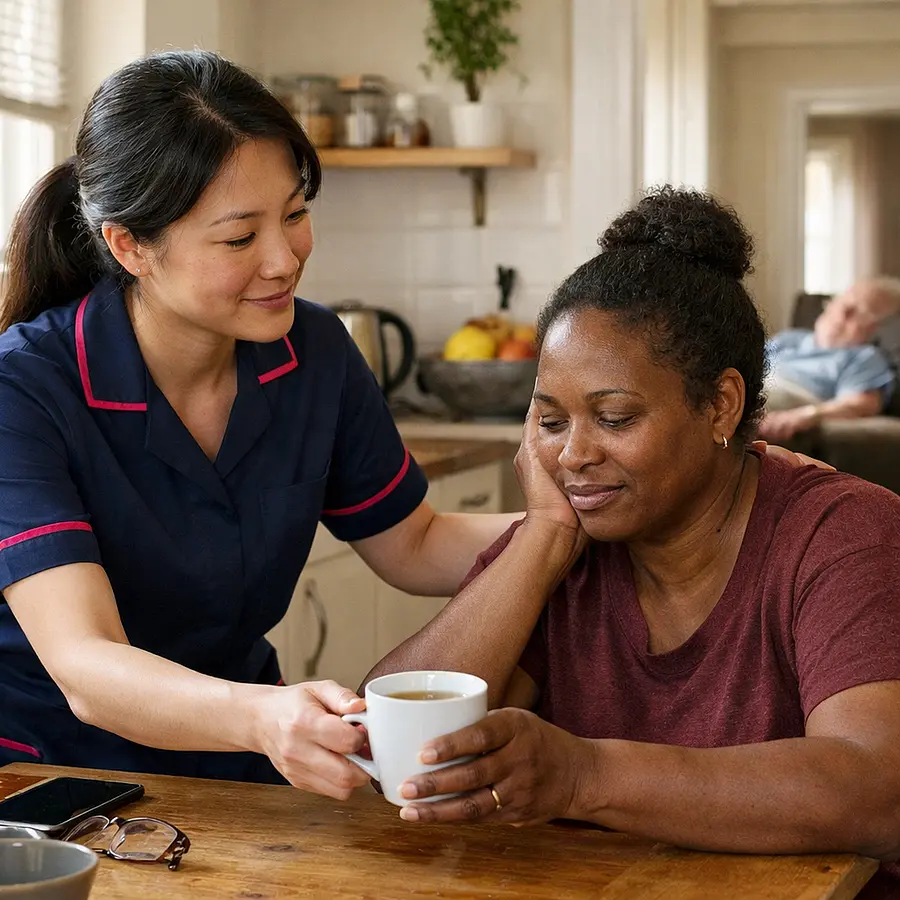
realistic asian female caregiver in 00072b tunic with e51974 accent offering tea and reassurance to a tired black female family carer in a sunny kitchen while a caucasian service user rests comfortably in the next room warm supportive mood natural documentary realism

Planning for sudden changes without panic

End-of-life care can change quickly, so it helps to prepare before things feel urgent. Keep important numbers visible, pack a hospital bag just in case, and note the person’s wishes where family can find them. Reading about the final weeks of life at home can help you feel better informed rather than caught off guard.

realistic caucasian male caregiver in tunic uniform 00072b with e51974 accent pinning emergency contacts and care notes on a kitchen board while an asian older service user and black daughter look comforted organised home environment warm and reassuring realism

A typical morning routine before you start work

A calm morning can shape the rest of the day. You might help with washing, check comfort, offer breakfast, review medicines, and make sure the room is tidy before logging on for work. If mornings are rushed, our carers can support with bathing, dressing, and grooming so the person feels settled and you begin work less anxious.

realistic black female caregiver in 00072b tunic with e51974 accent helping an asian female service user with morning dressing while a caucasian son prepares to start work on a laptop nearby bright bedroom gentle smiles caring and reassuring realistic style

Handling work from home while someone needs support

Working from home can help, but it can also blur every boundary. It may help to set fixed check-in times, keep your phone nearby, and let colleagues know when you are unavailable. If a carer visits during the day for company and reassurance, you may be able to attend meetings knowing someone kind is present with your loved one.

realistic asian male caregiver in tunic uniform 00072b with e51974 accent chatting warmly with a caucasian male service user while a black female family carer works calmly on a laptop in the same home professional and homely joyful reassurance realistic photo style

Using small breaks to stay emotionally steady

If your day is full, use short pauses well. A five-minute breathing break after a difficult conversation, a quick walk between calls, or texting a sibling for an update can stop stress building. Some carers keep a notebook to offload worries. Short resets do not remove grief, but they can help you return to caring tasks with more patience and clarity.

realistic caucasian female caregiver in 00072b tunic with e51974 accent encouraging a black male family carer taking a mindful pause with tea by a window while an asian service user rests peacefully soft daylight hopeful and warm mood realistic home care scene

Coordinating appointments and visitors around employment

Hospital calls, district nurse visits, relatives dropping in, and deliveries can easily interrupt your workday. A visible calendar helps everyone know what is happening. Colour-code medical visits, family help, and work deadlines. If treatment is part of the wider picture, pages such as planning hospital treatment days show how useful preparation can be.

realistic black male caregiver in tunic uniform 00072b with e51974 accent helping an asian daughter organise a wall calendar of appointments while a caucasian service user smiles from a nearby chair bright family home organised and reassuring realistic photography

Managing household tasks when time is short

Laundry, dishes, bed changes, shopping, and paperwork can become exhausting when you are also employed. Try making a short weekly essentials list rather than trying to keep everything perfect. If someone can handle cleaning, changing bedding, or light tidying, it protects your time for meaningful moments. Our light domestic support can ease that pressure at home.

realistic asian female caregiver in 00072b tunic with e51974 accent changing bed linen and tidying a calm bedroom for a black female service user while a caucasian family carer looks relieved warm home environment realistic and compassionate

Making time for meaningful moments despite work pressure

Not every caring task has to be practical. Reading aloud, sharing music, looking through photos, or sitting quietly together can matter just as much. Even ten minutes before work or after dinner can become precious. If you want ideas for memory-making, our article on meaningful goodbye rituals and memories may gently help.

realistic caucasian male caregiver in tunic uniform 00072b with e51974 accent smiling as a black service user and asian daughter look through a family photo album on a sofa soft natural light joyful tenderness and warmth realistic non stylized home care image

The value of professional home care during this time

Professional home care can make balancing work and caring more sustainable. We can step in with regular visits or more flexible support as needs change, helping with comfort, washing and toileting, preparing meals, gentle companionship, and night-time support. This can reduce pressure on family members while helping the person remain safe, comfortable, and cared for at home.

realistic black female caregiver in 00072b tunic with e51974 accent warmly supporting an asian older service user in a cosy living room while a caucasian family member heads out to work reassured genuine smiles comforting and professional realistic home care photography

Why choose us for end-of-life support at home?

We understand that balancing work and caring is not just a scheduling problem, but an emotional one too. Our approach is compassionate, practical, and shaped around the person’s routines, wishes, and comfort. Whether you need occasional visits or more regular help, we work alongside families to provide steady, respectful support when life feels uncertain and time feels especially precious.


realistic asian male caregiver in tunic uniform 00072b with e51974 accent standing supportively with a caucasian family and black service user in a welcoming home hallway warm smiles trust and reassurance polished but natural home care photography not stylized
Hands of young adult and senior women over green b
Contact Us

Contact us to arrange End of Life Care at home

If you're looking for support with daily living for some one at the end of life, we're here to help. Our friendly team is ready to offer guidance, answer your questions, and arrange end of life care tailored to your or your loved ones' needs in their own home. Reach out today for personalised advice and support.

Balancing work and caring when someone is nearing the end of life FAQ's

You’re bound to have questions when exploring your home care options, so we’ve answered some of the most common ones below.

After caring at the end of life, many people expect life to settle quickly, but the emotional impact can continue for some time. Returning to work may feel strange, exhausting, or even numbing. Be gentle with yourself. Try not to rush back into full routines without acknowledging what you have been through. It may help to speak to your employer about a phased return, lighter duties, or time off if that is possible. Keep eating regularly, rest where you can, and accept support from people who offer it. You may also find comfort in reading how to look after yourself emotionally after caring for someone at the end of life. Recovery is rarely neat, and practical as well as emotional support can matter.

Personal care can feel sensitive, especially when you are trying to be both loving and efficient. If you are helping with washing, dressing, toileting, or mouth care, try to keep the space warm, private, and calm, and explain each step as you go. Lay out towels, clothes, and products before you begin so you are not leaving the person waiting. If mornings feel rushed or physically difficult, professional support can help preserve dignity while reducing pressure on you. We can assist with bathing, showering, dressing, continence support, and other daily hygiene needs in a respectful way. That can allow you to focus on being emotionally present rather than starting each workday already exhausted or behind schedule.

As someone becomes more unwell, appetite often changes. Large meals may no longer feel right, and it can become tiring to eat or drink. At that stage, meal support is usually more about comfort and small, manageable options than full plates of food. Soft snacks, favourite tastes, sips of fluids, and regular offers can all help. It is useful to keep easy options ready, especially if you are fitting care around work. Meal preparation support can help by preparing light meals, drinks, and kitchen essentials without you having to rush in between work tasks. That support can also make it easier to notice patterns, such as when your loved one prefers to eat or what feels easiest for them to manage.

For working families, end-of-life care at home often involves a mixture of emotional support, practical routines, and rapid adjustments when needs change. You may be helping with comfort, drinks, medicines, washing, toileting, repositioning, calls with nurses, and keeping the home calm. At the same time, you may still be expected to attend meetings, answer emails, or travel to work. This is why structure matters. Many families find it helpful to separate the day into manageable parts, such as early morning, lunchtime, after work, and overnight. Support from relatives, neighbours, or a home care team can then be slotted into the times you cannot be there. That makes care more consistent and less exhausting.

Preparation can make a changing situation feel less chaotic. Keep important contact numbers visible, know where medicines and paperwork are stored, and make sure everyone involved understands the current care plan. You may want to read more about the final weeks of life at home so you have a better sense of what changes might happen. Practical preparation can include arranging backup care for work hours, discussing who can come quickly if symptoms change, and making sure the home environment is comfortable and accessible. It is also wise to think about your employer’s expectations if things become more urgent. Planning ahead cannot remove the emotion, but it can reduce panic and help you respond more calmly.

Yes, companionship support can help far more than many families expect. Time pressure is not only about practical tasks; it is also about knowing someone is with your loved one when you cannot be. A companion can sit, talk, read, offer reassurance, make drinks, and provide a calm presence while you work, attend meetings, or simply take a break. That can reduce the number of interruptions you face and ease the emotional guilt of stepping away. For someone nearing the end of life, a gentle human presence can also reduce loneliness and anxiety. Companionship is often a valuable part of a wider plan, especially when combined with help for meals, personal care, or night-time support.

End-of-life care at home can feel right when the person wishes to remain in familiar surroundings and when the home environment can be made safe, calm, and practical for their needs. Families often value the privacy, comfort, and flexibility that home offers. However, it is important to be realistic about what support is needed. Ask whether the person can be kept comfortable, whether enough help is available, and how care will be managed during the day and night. You do not have to answer all of that alone. Professional support can make home care much more achievable. For many families, the right choice is not between doing everything alone and not coping, but between unsupported care and well-supported care at home.

Yes, overnight care can make a huge difference if your loved one wakes often, becomes unsettled, needs toileting help, or requires turning and reassurance through the night. Without proper sleep, even simple work tasks can feel overwhelming, and decision-making becomes harder. Many family carers try to manage nights alone for too long because they feel they should cope, but broken sleep builds up quickly. Overnight support means someone can be there to respond calmly while you rest properly. That can help you continue working more safely and sustainably, especially if you still need to manage calls, travel, childcare, or important decisions during the day. It is often one of the most effective ways to reduce pressure in end-of-life care at home.

If you are looking for broader support, information, or care options, a good next step is to explore our end-of-life care at home guidance and our wider home care services. If costs or arranging support feel like part of the difficulty, our information on care costs and funding and a care needs assessment may also help. Every family’s situation is different. Some need occasional visits, while others need a more regular or overnight routine. Reaching out early can make it easier to find the right level of support before things become unmanageable.

Yes, absolutely. Many relatives feel uneasy about providing intimate care, especially when the relationship has always been parent-child, partner-partner, or otherwise not care-based. There is nothing wrong with that. Support with washing, dressing, continence care, and repositioning can be physically demanding and emotionally sensitive. Professional personal care at home can help protect dignity for your loved one while relieving you of tasks that feel too difficult, upsetting, or unsafe. This often improves family relationships too, because your time together becomes less focused on uncomfortable routines and more focused on conversation, reassurance, and simply being present. Accepting help is not stepping back; it is often a compassionate way to care better.

We proudly provide high-quality home care across the East Midlands, in an around the towns and cities detailed below.

Elderly hands on a walking sitck

We're becoming a fully regulated service

While we are not currently regulated, meaning there are some services we cannot currently provide, we are in the process of registering to become a fully regulated service.

CQC
Elderly hands on a walking sitck

Call us to find out more about Balancing work and caring when someone is nearing the end of life

East Midlands

We proudly provide high-quality home care across the East Midlands

Our Reviews

We’re proud of the trust families place in us. Here’s what some of the people we support, and their loved ones, say about our home care services.

"Great support for my mum after she lost her confidence after a fall and hospital stay."

Sarah L

"Really helped me with keeping on top of my house work since my parkinson's has progressed."

Mark T

"They have been a great help with keeping on top of my dads laundry and general house cleaning as he is bed bound and have been being changed daily."

Emily R

Senior woman hand in caregiver hands

Join The Good News Newsletter

Be the first to discover exclusive offers, and service updates. Your journey to independent living starts here - where everything truly is fine.


Contact The Good Place

We’d love to hear from you! Whether you have questions, want to learn more about our home care service, or are ready for us to start supporting you or your loved one, our good people are here to help. If you are looking to make a complaint, you can contact our Registered Manager or Nominated Individual directly.

Send Us a Message


Elderly hands on a walking sitck

Working in Partnership

We work closely within the community to provide safe, compassionate, reliable home care that supports independence, dignity, and improved wellbeing while remaining at home.

Derbyshire County Council
Staffordshire County Council
NHS