
Planning meaningful goodbye rituals and memories at home
Planning meaningful goodbye rituals and memories at home can help a difficult time feel more personal, calm, and connected. These moments do not need to be large or formal. They can be simple acts that reflect someone’s wishes, values, faith, culture, and relationships, while bringing comfort to the person and those around them.
Why goodbye rituals at home can matter so much
When someone is nearing the end of life, familiar surroundings often make emotional conversations easier. A planned ritual might include music, letters, prayers, quiet storytelling, or sharing a favourite meal. It gives everyone permission to pause, express love, and create lasting memories. It can also help relatives feel less helpless and more involved in meaningful care.

Common challenges in planning end-of-life moments
Families often worry about saying the wrong thing, becoming overwhelmed, or leaving plans too late. Energy levels may change quickly, and symptoms can affect attention, comfort, and appetite. Different relatives may also have different ideas. Reading about the final weeks of life at home can help you plan gentle moments that match the person’s strength and wishes.

Starting goodbye conversations gently and clearly
Begin with small, open questions such as “What would feel comforting?” or “Is there anyone you want to speak to?” Keep the tone gentle, not rushed. Some people want deep conversations, while others prefer simple company. Our companionship support can help create calm space for visits, conversation, reading aloud, or simply sitting together in silence.

Choosing meaningful rituals that reflect the person
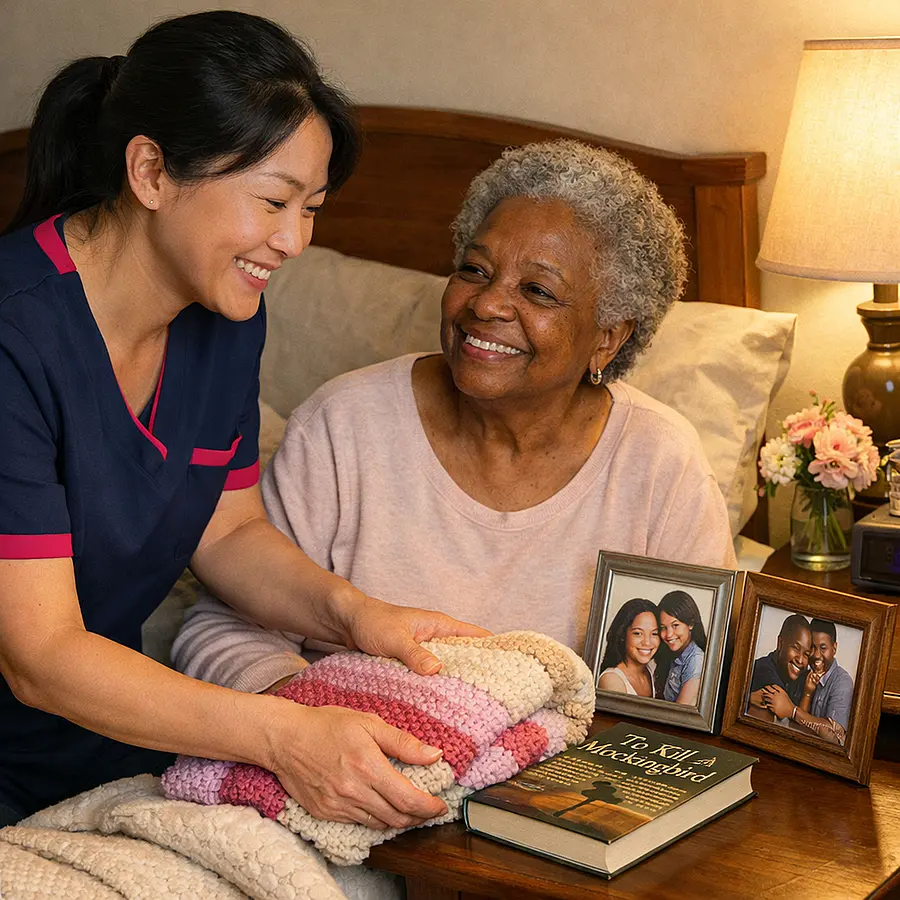
Goodbye rituals should feel true to the person’s life. That may mean a favourite hymn, a football scarf on the bed, a blessing from a faith leader, or grandchildren reading messages aloud. You can also plan around comfort by using ideas from creating a comforting bedroom space so the setting feels peaceful and familiar.
Creating memory keepsakes without pressure
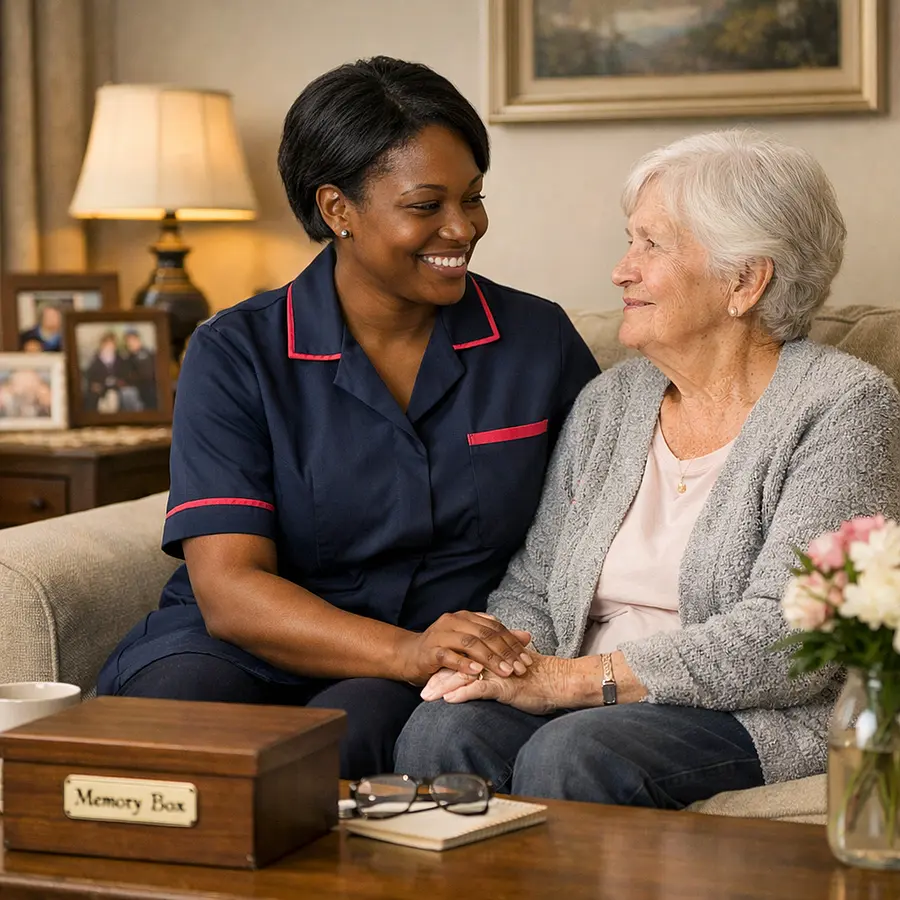
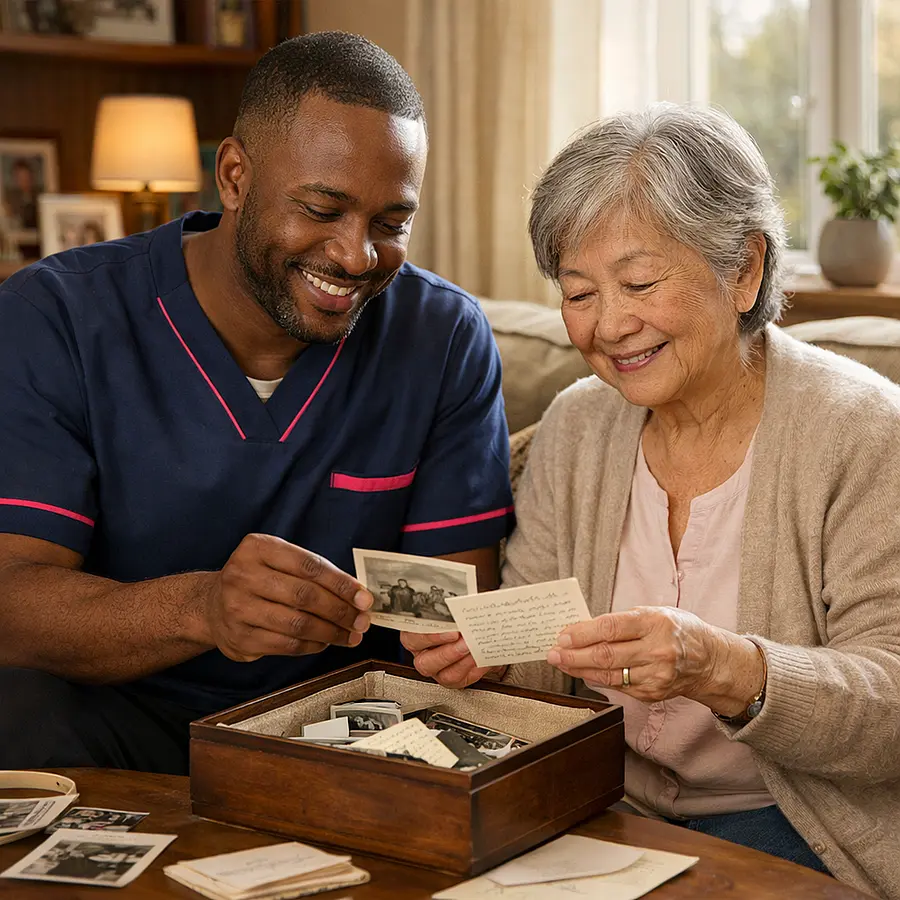
Keepsakes do not have to be complicated. Families often record voice notes, collect recipe cards, write down favourite sayings, or take a photo of joined hands. If the person is tired, do one small thing at a time. A memory box on a bedside table can gradually be filled with notes, letters, drawings, or small personal items.
Supporting comfort during goodbye moments at home
Comfort matters as much as conversation. Plan short visits, allow rest breaks, reduce noise, and keep favourite blankets or scents nearby. If symptoms are changing, review guidance on managing pain and discomfort at home. Practical help with washing, dressing, and personal hygiene can also help someone feel settled before visitors arrive.

Making family visits feel manageable and calm
Large gatherings can be tiring, so consider a simple rota, shorter visits, or one-to-one time. Let relatives know what helps: speaking softly, avoiding strong perfume, or waiting if the person is asleep. It also helps to identify one family contact who updates everyone else, reducing interruptions and helping the home feel more peaceful.

Using music and familiar senses to create connection
Music often reaches people when words are hard. A favourite song, scented hand cream, familiar flowers, or a well-loved blanket can all bring comfort. Keep sensory choices gentle and personal. If fatigue is high, one song or a short hand massage may be enough. The aim is not to fill every moment, but to make each one feel recognised.

Including food and shared meals in a gentle way
Food can carry strong memories, even when appetite is low. A tiny spoonful of a favourite pudding, the smell of fresh toast, or family sharing a meal nearby can still feel meaningful. Our support with meal preparation can make this easier, while practical kitchen help keeps the focus on togetherness rather than tasks.

Preparing overnight peace for important final days
Some families want reassurance that someone is there through the night, especially when comfort needs change or relatives are exhausted. Our overnight care can support repositioning, quiet reassurance, and observation, while also helping loved ones rest. This can make daytime rituals more meaningful because family members have more energy to be present.

Staying organised with practical home support
Meaningful moments are easier when daily tasks are covered. Help with light household jobs such as laundry, tidying, and changing bedding can reduce stress for relatives. If medicines need to be taken on time before visits or rituals, medication management support can help maintain comfort and consistency in a calm, respectful way.

A simple bedside ritual with close family
One family may choose a bedside ritual where each person says one thing they are grateful for. This could include “thank you for teaching me to cook” or “I will always remember our holidays.” A caregiver can help position chairs, adjust lighting, and make sure the person is comfortable so the moment feels calm rather than rushed.

A gentle memory book for children and grandchildren
A memory book can be especially helpful for younger family members. They might draw pictures, add stickers, write short messages, or include printed photos. If talking about dying feels too direct, this still creates connection. Families can use prompts like “My favourite story about you” or “Something I learned from you” to make it easier.

Using voice messages when visits are not possible
If relatives live far away or cannot visit quickly, short voice notes can be deeply comforting. A message saying “I love you,” sharing a prayer, or retelling a favourite memory can be played at the bedside. This approach is useful when energy is limited, because the person can listen at a quiet time without managing a full call.

Planning final wishes around faith, culture, and routine
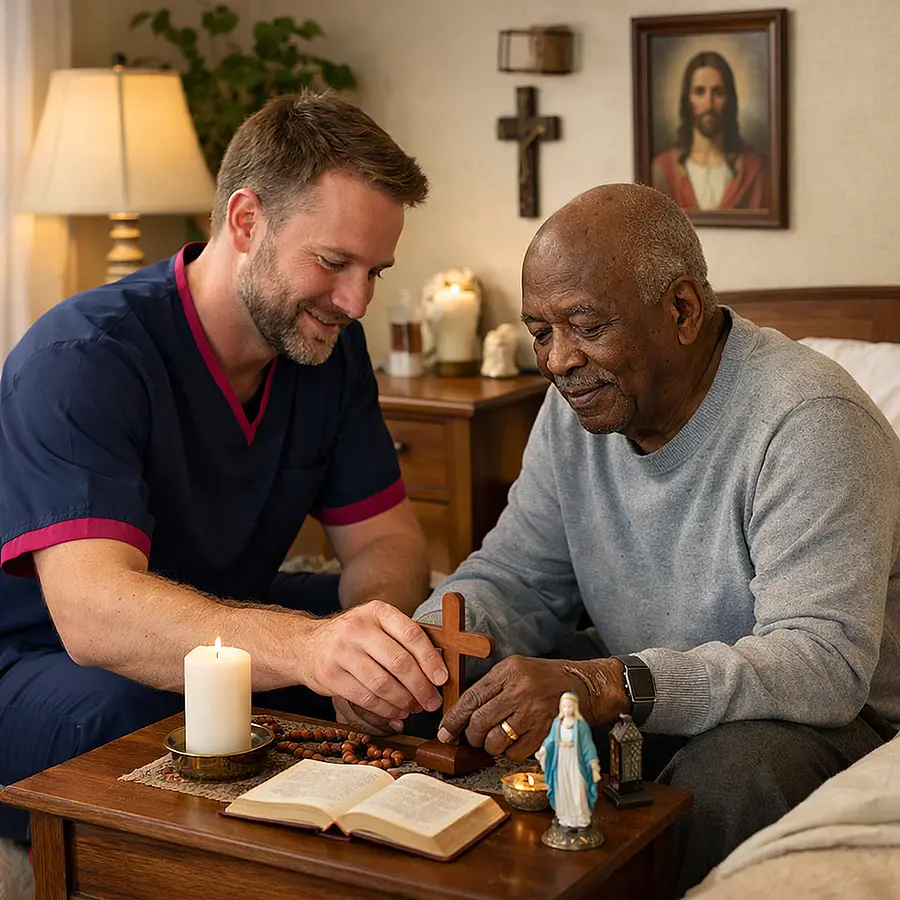
Some people want prayers at set times, specific clothing, special readings, or the presence of certain relatives. Others prefer a very private routine with minimal fuss. Writing these wishes down can prevent misunderstandings. If changes become noticeable, guidance on what to expect in the final 48 hours at home may help families adapt plans gently.
How professional care supports goodbye rituals at home
Professional care can make space for emotional moments by taking pressure off practical demands. We can support comfort, bathing and grooming, timed medicines, meal support, and quieter household routines, while families focus on being together. Our wider end-of-life care at home is designed to protect dignity, reassurance, and the person’s choices.

Why choose us for goodbye support at home
We understand that these moments are deeply personal. Our role is to listen, respect routines, and support the person and family with sensitivity. Whether you need a little help or more regular care, we can provide practical reassurance, emotional steadiness, and flexible home support so meaningful goodbyes feel calmer, more comfortable, and centred on what matters most.