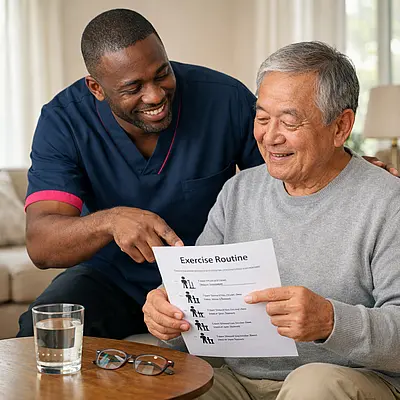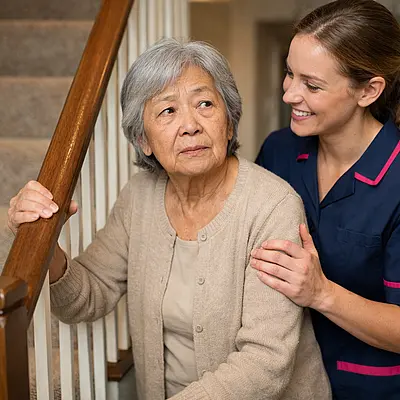

A realistic Caucasian female caregiver in a 00072b tunic with e51974 detail walking slowly beside an elderly Asian man in a park benches and flowers around them caregiver carrying water and a light jacket warm reassuring smiles realistic photography

Planning safe days out with an elderly loved one

Planning safe days out with an elderly loved one takes preparation, reassurance, and the right support. We help older adults enjoy outings with confidence through personal care, medication support, companionship, and practical help at home. Contact us to discuss tailored elderly care that makes meaningful trips safer and less stressful.

Planning safe days out with an elderly loved one

Planning safe days out with an elderly loved one is about balancing enjoyment with comfort, confidence, and the right practical steps. Whether you are visiting a garden centre, seeing family, or going for lunch, thoughtful preparation can reduce stress, support independence, and make the day more relaxed for everyone involved.

A realistic warm scene of a Black female caregiver wearing a tunic uniform in color 00072b with e51974 accents smiling beside an elderly Caucasian man near a front door as they prepare for a day out checking a small bag and coat together bright natural lighting reassuring home care atmosphere joyful

Why elderly days out need thoughtful planning

As we age, energy levels, mobility, continence, memory, medication timings, and confidence can all affect how easy it feels to leave the house. A well-planned outing considers the destination, journey, toilet access, seating, weather, and rest breaks. Small adjustments often make the difference between a tiring trip and a meaningful, enjoyable day.
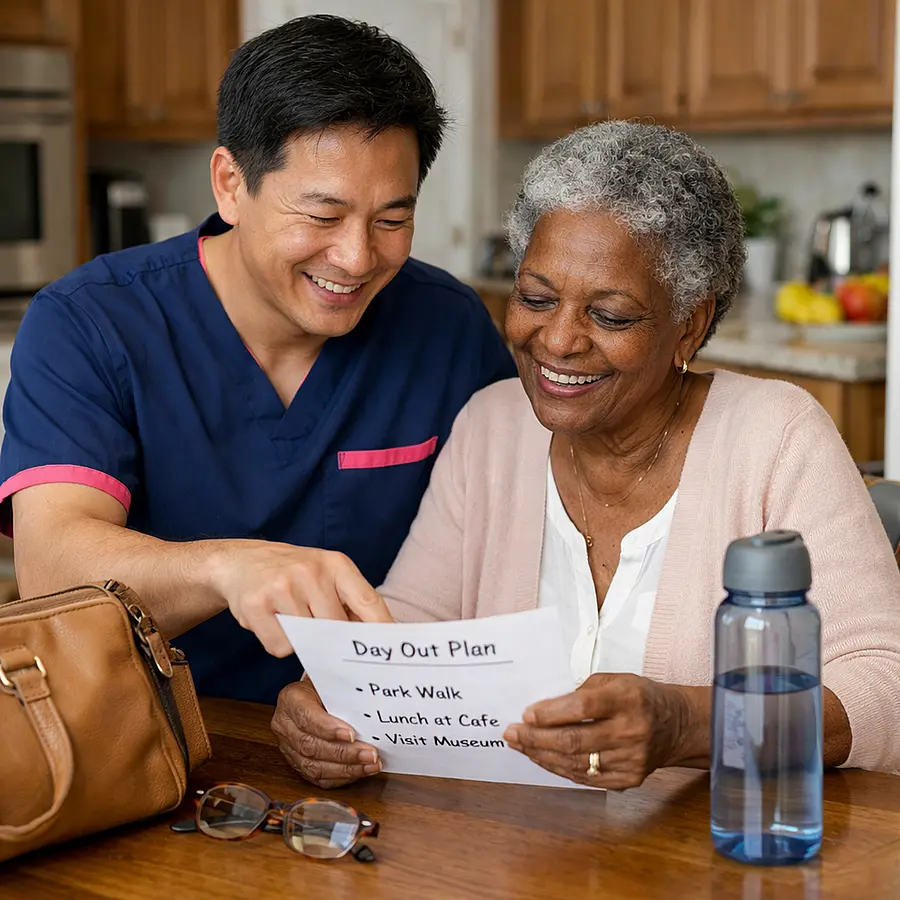
A realistic Asian male caregiver in a 00072b tunic with e51974 accent helping an elderly Black woman review a simple day out plan at a kitchen table handbag water bottle and glasses nearby warm smiles tidy home setting reassuring and joyful atmosphere natural documentary style photography

Common safety risks on days out to think about

Risks can include falls, rushing, dehydration, missed tablets, confusion in busy places, long periods standing, and becoming overtired. Uneven pavements, poor weather, and unfamiliar toilets can also cause problems. If your loved one lives with frailty, mobility changes, or memory loss, planning ahead can help avoid setbacks and protect their confidence.

A realistic Caucasian female caregiver in a 00072b tunic with e51974 trim gently supporting an elderly Asian man walking carefully on an outdoor path pointing out an uneven surface both looking calm and reassured sunny day warm natural expressions realistic home care photography

Start with the right destination for the day

Choose places that match your loved one’s usual pace and needs. A quiet café with nearby parking may work better than a crowded shopping centre. Look for step-free access, toilets, benches, shade, and shorter walking routes. If mobility is a concern, ideas from planning meaningful days out when you have limited mobility can help.
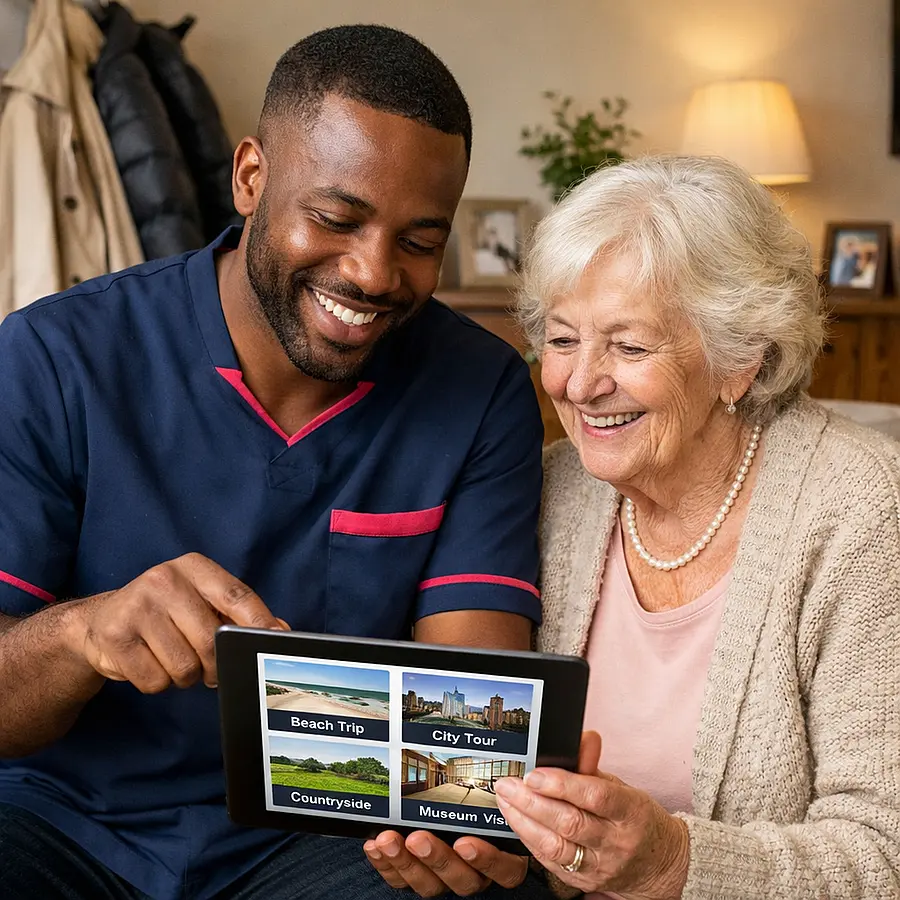
A realistic Black male caregiver in a 00072b tunic with e51974 accent showing an elderly Caucasian woman a tablet with accessible destination options both smiling in a living room before leaving coats ready warm and joyful tone realistic non stylized photography

Build the outing around energy levels and routine

Many older adults feel best at a certain time of day, often mid-morning or early afternoon. Plan around usual meals, rest, and familiar habits. If your loved one becomes tired after lunch or needs predictability, keeping the outing close to their routine is helpful. This can be especially important for people needing support with day-to-day living.
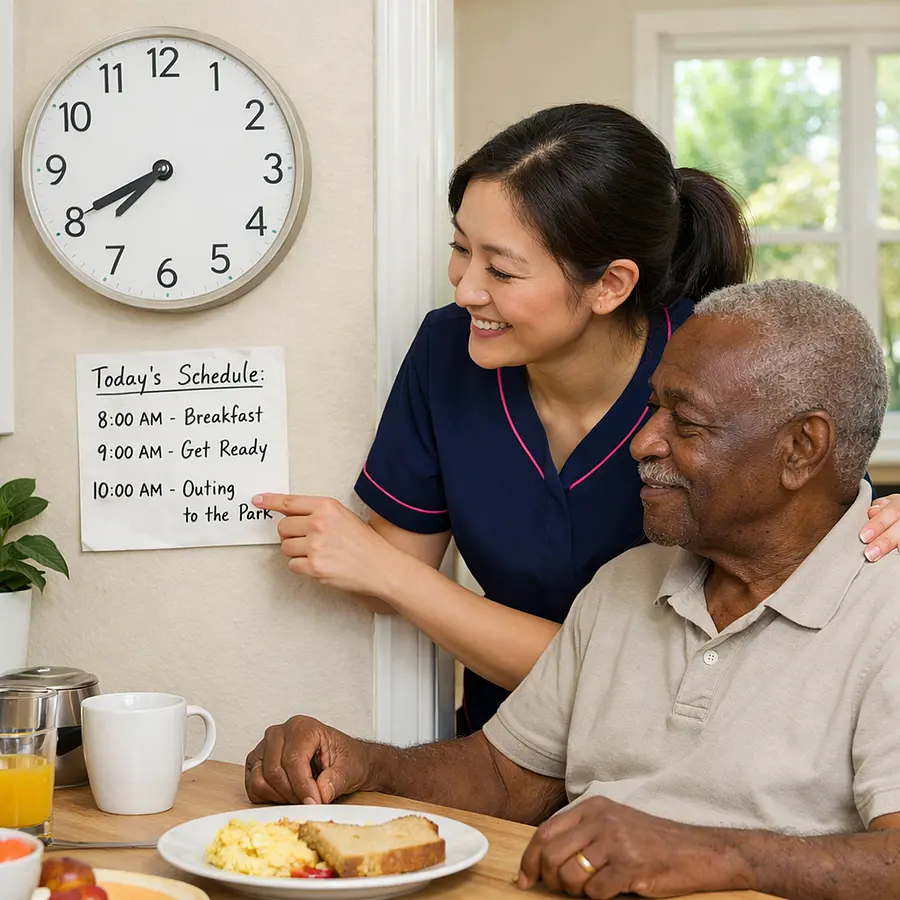
A realistic Asian female caregiver in a 00072b tunic with e51974 piping helping an elderly Black man check a clock and simple written routine before a day out breakfast dishes on the table gentle smiles bright home setting warm realistic caregiving moment

Prepare medication and health essentials in advance

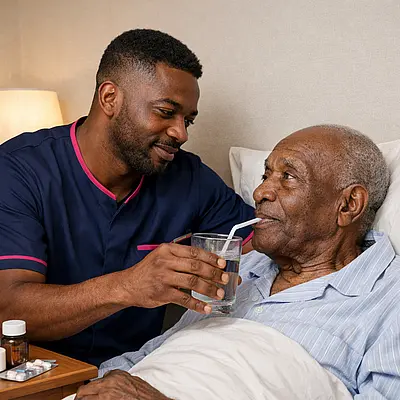
If tablets, inhalers, glucose supplies, or pain relief may be needed while out, pack them the night before and check timings. Good medication support at home can help create a clear plan so nothing is missed. Include emergency contacts, a list of conditions, and any clinic letters if your loved one has complex health needs.
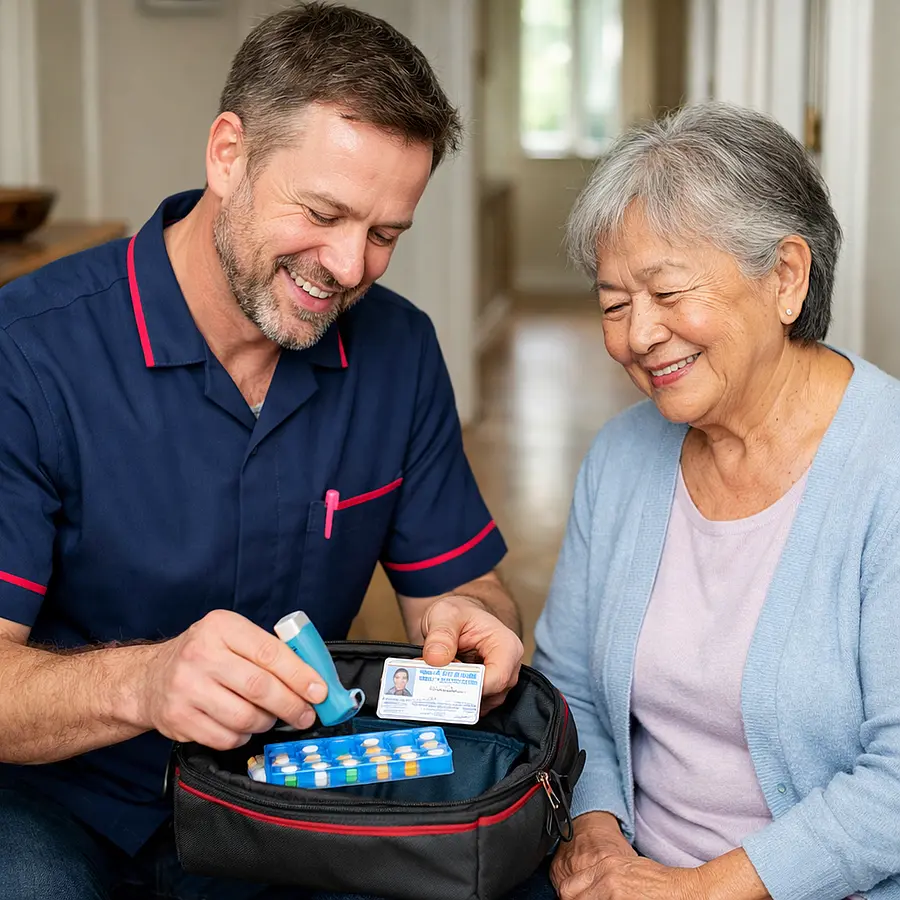
A realistic Caucasian male caregiver in a 00072b tunic with e51974 accents packing a pill organiser inhaler and contact card into a small bag for an elderly Asian woman both smiling with reassurance in a tidy hallway natural light realistic photo style

Think about mobility support before leaving home

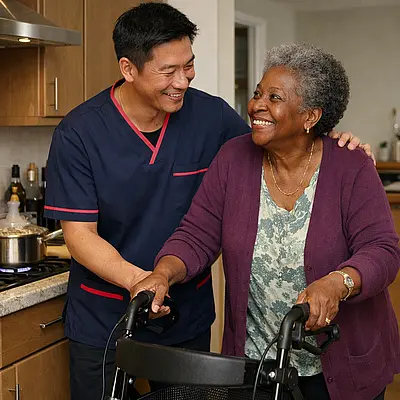
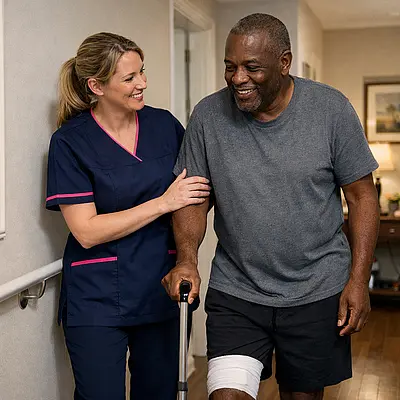
Check walking aids, wheelchair tyres, seat cushions, and suitable footwear before you set off. If your loved one is recovering confidence after a fall, shorter outings may feel safer at first. Helpful guidance can be found in building confidence after a fall in later life and our broader mobility support information.

A realistic Black female caregiver in a 00072b tunic with e51974 detail checking the brakes on a wheelchair while an elderly Caucasian man smiles nearby with his walking stick doorway setting warm reassuring eye contact realistic high quality photography

Pack for comfort and personal care needs

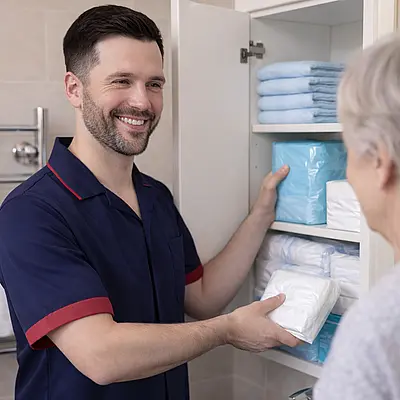
A simple bag can prevent a lot of stress. Include water, a snack, tissues, spare continence products, hand gel, glasses, hearing aid batteries, a cardigan, and weather protection. If your loved one needs help with washing, dressing, or personal hygiene before going out, our personal care support can make leaving home feel more comfortable and dignified.
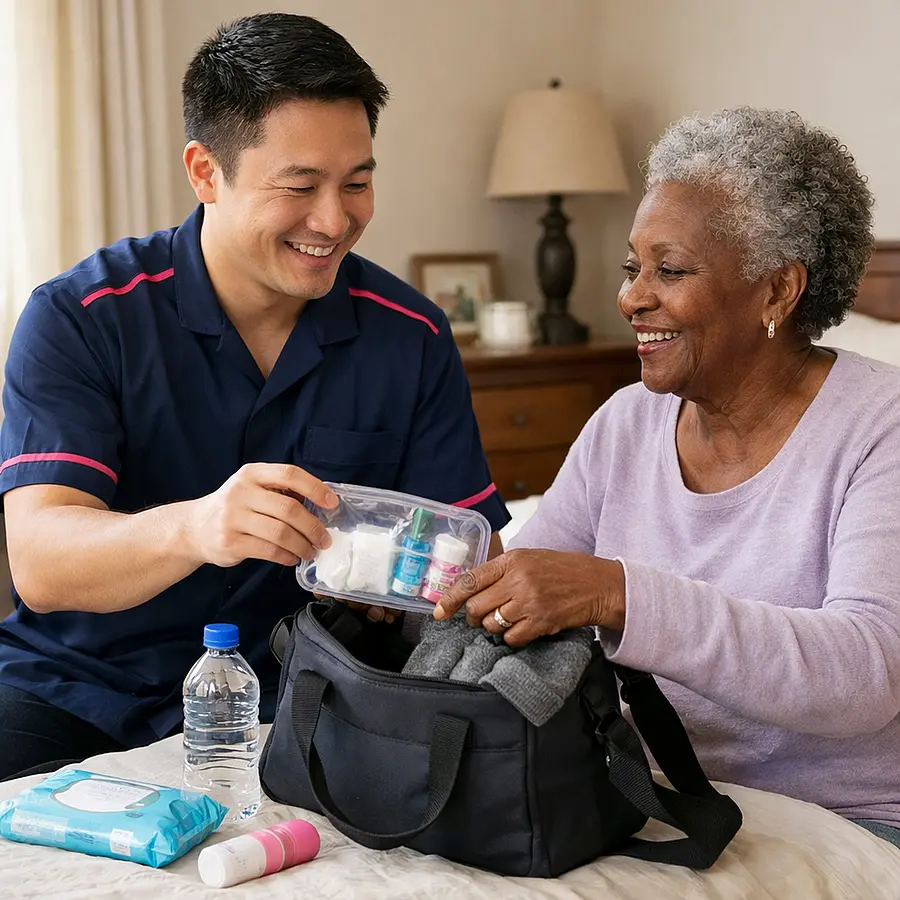
A realistic Asian male caregiver wearing a 00072b tunic with e51974 accents helping an elderly Black woman pack wipes water cardigan and toiletry items into a day bag both cheerful and relaxed in a bedroom realistic warm home care photography

Plan food and fluids as part of the outing

Even a short trip can feel harder if someone becomes hungry or dehydrated. Offer drinks before leaving and bring easy snacks such as a banana, crackers, or a sandwich. If meal timings matter, plan around them. Our help with meal preparation at home can make it easier to leave after a nourishing breakfast or return to a ready meal.
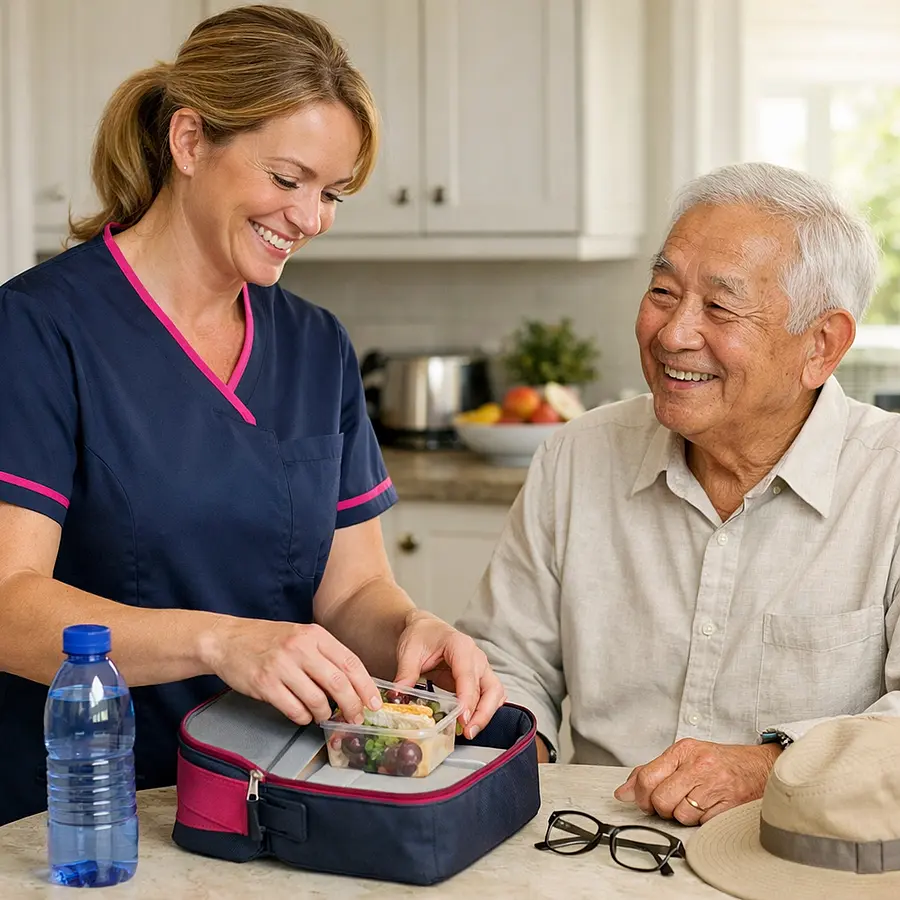
A realistic Caucasian female caregiver in a 00072b tunic with e51974 trim preparing a small lunch box and water bottle for an elderly Asian man before a day out both smiling in a bright kitchen warm caring atmosphere realistic non AI art style

Use companionship support to reduce stress

Some outings are easier when there is another calm, familiar person there. A supportive companion can help with conversation, pacing, carrying bags, prompting drinks, and noticing when it is time to rest. Our companionship care can make a visit to a park, a family event, or a hospital appointment feel less overwhelming and more enjoyable.

A realistic Black male caregiver in a 00072b tunic with e51974 accent laughing gently with an elderly Caucasian woman on a park bench during a relaxed outing shopping bag and walking stick nearby joyful reassuring expressions true to life photography

Check toilet access and continence planning

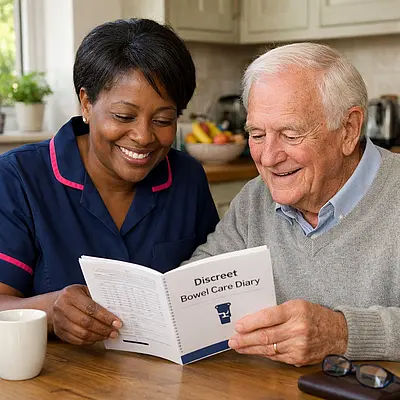
Knowing where toilets are can greatly reduce anxiety. Before you travel, check facilities, parking distance, and whether there is an accessible toilet. Bring spare pads or clothing if needed. If continence needs affect confidence, practical support from our continence care services can help older adults feel more prepared and in control during trips out.
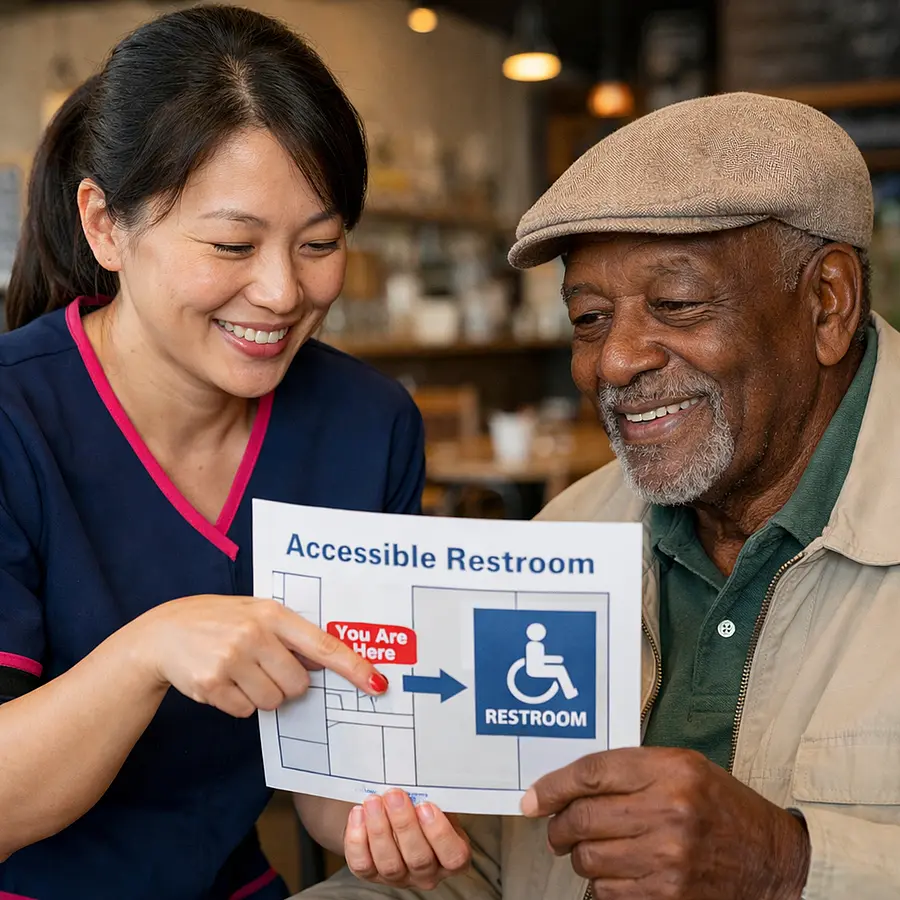
A realistic Asian female caregiver in a 00072b tunic with e51974 details showing an elderly Black man a clearly marked accessible toilet sign map before leaving a caf both relaxed and reassured natural smiles realistic photography

Make coming home easier after the trip

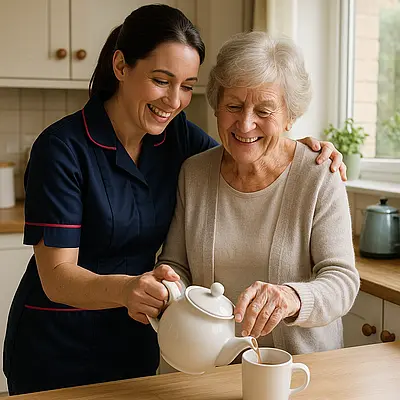
Returning home can be the point when tiredness really shows. A tidy space, slippers ready, and a planned cup of tea can make recovery smoother. Support with light household tasks such as changing the bed, washing up, or putting shopping away through our light domestic help can help the whole day feel manageable from start to finish.
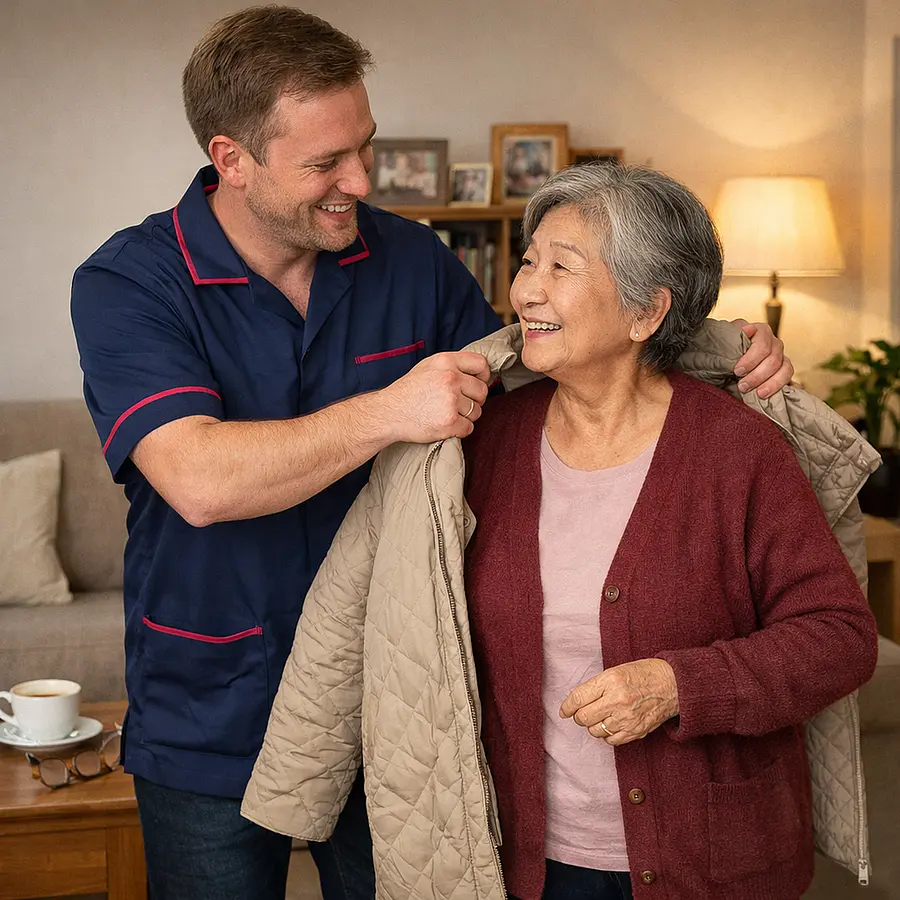
A realistic Caucasian male caregiver in a 00072b tunic with e51974 accent welcoming an elderly Asian woman back home after a day out helping her remove her coat while a tidy lounge and cup of tea wait nearby warm joyful realistic scene

A short café visit done safely

For example, if your mum enjoys a local café, book a quiet time, park close by, take her walking frame, and choose a table near the toilet. Offer a drink before leaving home, bring her lunchtime tablets, and keep the visit to an hour. This supports enjoyment without pushing her beyond her energy levels.
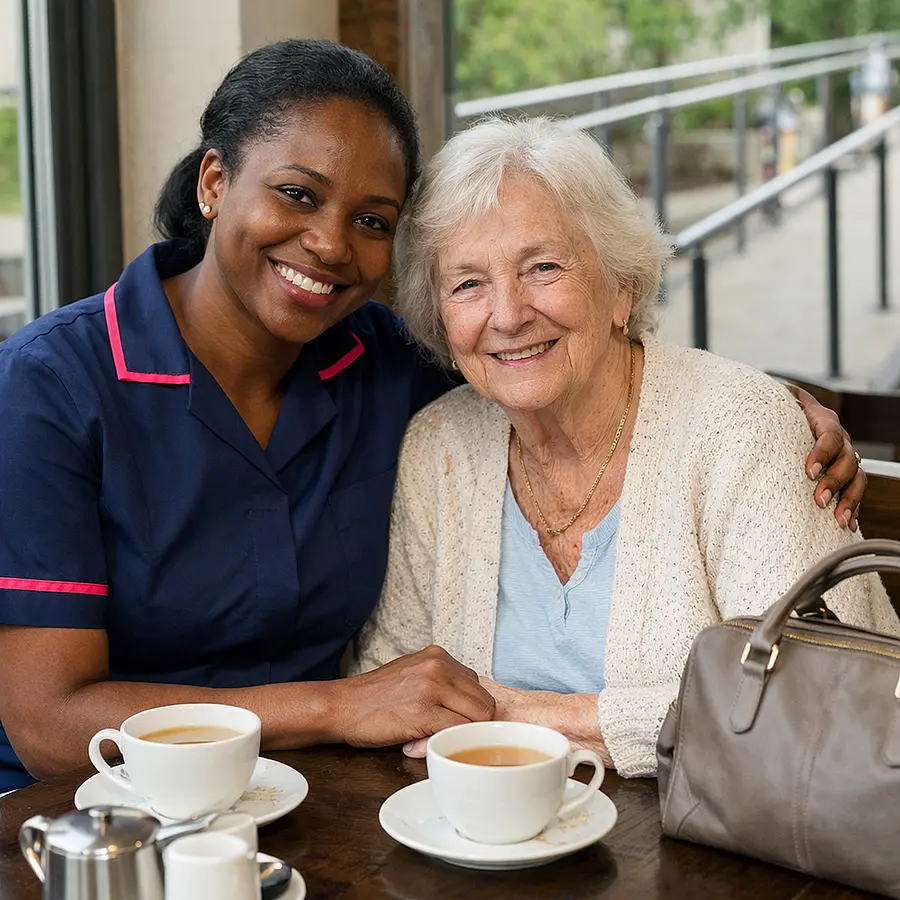
A realistic Black female caregiver in a 00072b tunic with e51974 trim sitting with an elderly Caucasian woman at a quiet caf table near an accessible route tea cups and handbag visible both smiling warmly natural realistic photography

A family gathering with less overwhelm

When visiting relatives, ask for a comfortable chair, a quieter room, and regular breaks. Keep visits shorter if noise or conversation becomes tiring. If your loved one lives with memory changes, bringing a familiar person and simple prompts can help them stay settled. Planning the journey home before they become fatigued is often just as important as getting there.

Realistic living room image of an elderly Asian woman her adult daughter and a Black male caregiver in a 00072b tunic with e51974 accents sitting together on a sofa looking at a shared notebook planning care tasks collaboratively with warm smiles.

A park or garden trip with sensible pacing

Nature can be uplifting, but distance and uneven paths matter. Pick a flat route with plenty of benches and take the weather seriously. A hat, warm layer, sunscreen, and water can all be essential. If your loved one has arthritis or reduced stamina, shorter loops and frequent pauses can help the outing stay enjoyable rather than uncomfortable.

A realistic Caucasian female caregiver in a 00072b tunic with e51974 detail walking slowly beside an elderly Asian man in a park benches and flowers around them caregiver carrying water and a light jacket warm reassuring smiles realistic photography

A hospital or clinic trip that feels manageable

Medical appointments can involve waiting, walking, and information overload. Pack notes, medications, snacks, and a bottle of water. Leave with extra time so no one feels rushed. If your loved one needs help getting washed, dressed, and ready in the morning, our support with showering and dressing can make appointment days feel much less pressured.

A realistic Black male caregiver in a 00072b tunic with e51974 accents accompanying an elderly Caucasian man through a clinic reception holding appointment papers and a water bottle calm smiling expressions bright healthcare setting realistic photographic look

A shopping trip with safety in mind

Shopping works best with a short list, off-peak timing, and realistic expectations. Rather than trying to cover several shops, focus on one or two essentials and stop for a sit-down if needed. If energy is limited, combining a small outing with help at home for everyday chores through our household support service can preserve strength for what matters most.

A realistic Asian female caregiver in a 00072b tunic with e51974 piping helping an elderly Black man with a small shopping basket in a quiet supermarket aisle both smiling calm and supported realistic everyday photography

How professional care supports safer outings

Professional home care can help before, during, and after a day out. We can assist with getting washed and dressed, managing medication, preparing meals, offering friendly companionship, and helping someone settle comfortably once home. If a long day leaves your loved one unsettled overnight, our overnight care can provide extra reassurance.
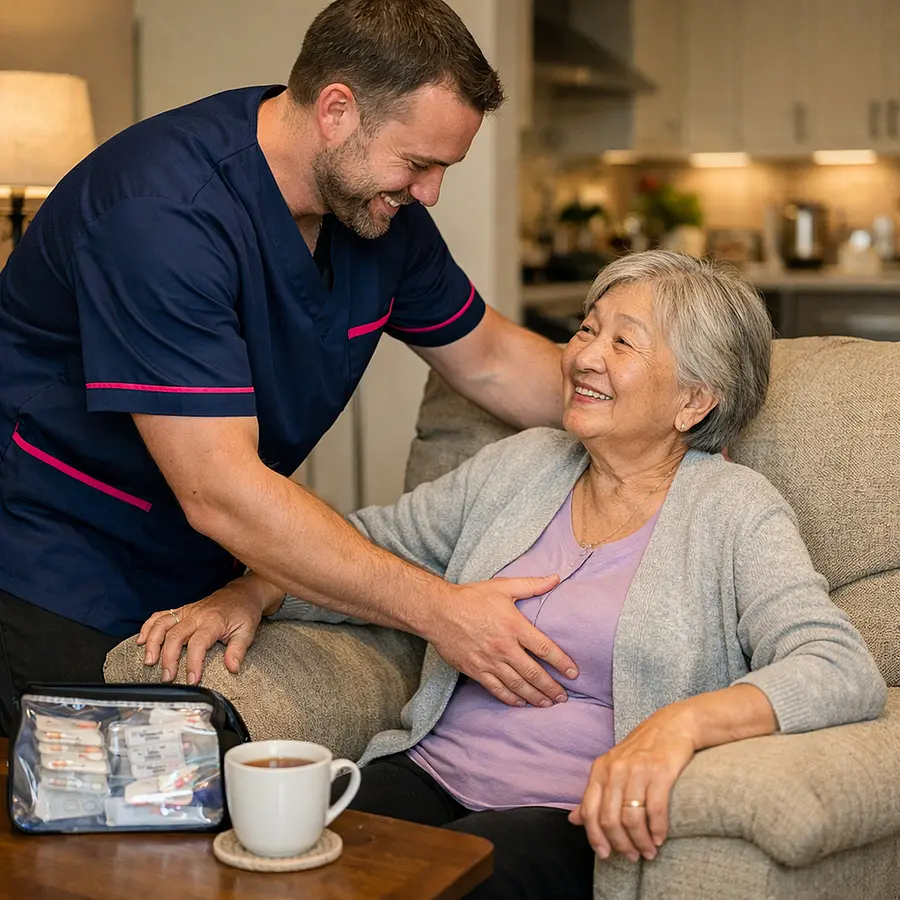
A realistic Caucasian male caregiver in a 00072b tunic with e51974 accent helping an elderly Asian woman comfortably back into her armchair after returning home medication pouch and tea nearby warm relieved smiles realistic home care photograph

Why choose us for support with elderly days out

We understand that a successful outing is not just about transport. It is about confidence, dignity, pacing, and having the right support around each part of the day. Our care is shaped around the person, from morning preparation to safe return home, helping older adults keep enjoying meaningful moments while families feel reassured.

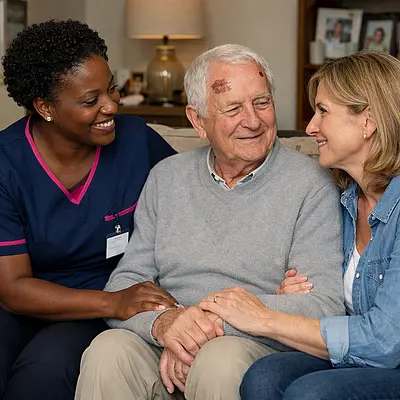
A realistic Black female caregiver in a 00072b tunic with e51974 detail standing with an elderly Caucasian couple at their front gate after a happy outing all smiling with reassurance and warmth golden natural light realistic home care photography
Hands of young adult and senior women over green b
Contact Us

Contact us to arrange Elderly Care at home

If you're looking for support with daily living for some one elderly, we're here to help. Our friendly team is ready to offer guidance, answer your questions, and arrange elderly care tailored to your or your loved ones' needs in their own home. Reach out today for personalised advice and support.

Planning safe days out with an elderly loved one FAQ's

You’re bound to have questions when exploring your home care options, so we’ve answered some of the most common ones below.

A good day-out bag should cover comfort, safety, and routine. Useful items often include water, an easy snack, prescribed medication, tissues, hand gel, hearing aid batteries, glasses, a cardigan, and weather-appropriate items such as a hat or umbrella. If your loved one has continence needs, include spare pads, wipes, or a change of clothing. For people with memory loss or complex conditions, carrying a simple note with their name, emergency contact details, allergies, and important health information can be reassuring. Try not to overpack, but do think ahead about the most likely needs during the journey and the visit itself. Having these basics close by can prevent small issues from becoming stressful and can help everyone feel more relaxed throughout the outing.

Speak to the host in advance and ask for simple adjustments. A comfortable chair with good support, easy toilet access, fewer trip hazards, and a quieter room for breaks can all help. Try to avoid long standing periods at the door or around buffet tables, and think about arrival and departure times so your loved one is not caught in the busiest moments. Keep the visit to a manageable length and bring anything they may need, such as medication, a cardigan, or continence products. Family visits are often emotionally important, but they can also be tiring, so it helps to protect energy where you can. A little planning allows your loved one to enjoy the connection without becoming overwhelmed.

They can, but only if it suits your loved one’s comfort, energy, and mobility. Public transport may work well for some people, especially if routes are familiar and stations are accessible. For others, the standing, noise, unpredictable delays, or rush of busy services may be too tiring or stressful. If you do use buses or trains, travel at quieter times, check step-free access, and allow plenty of time so no one feels rushed. Bring water, medication, and any walking aids needed. It is also worth having a backup plan, such as a taxi home if the journey becomes too much. The safest option is always the one that feels most manageable, not the one that looks easiest on paper.

Think about what brings them enjoyment without placing too much demand on their body or concentration. A quiet garden centre, local café, scenic drive, park with benches, or family visit may be better than a large event or crowded town centre. Consider noise levels, walking distance, toilet access, and how easy it would be to leave early if needed. It also helps to choose places linked to their interests, such as flowers, history, or favourite foods, because familiar enjoyment can encourage confidence. The right outing should feel manageable rather than ambitious. If they have limited stamina, aim for something short and meaningful instead of trying to fit too much into one day. Familiar places are often the easiest place to start.

Watch for increased quietness, confusion, irritability, slower walking, breathlessness, pain, shakiness, or repeated comments about wanting to go home. Some people do not directly say they are tired, so you may need to spot the signs yourself. They may start missing steps, struggle to follow conversation, look pale, or stop enjoying what they are doing. Ending early is not a failure. In fact, finishing the outing before discomfort grows often makes future outings more likely because the memory of the day stays positive. If this happens often, it may help to shorten the next trip, schedule more breaks, or choose a destination with easier access and less sensory demand.

There is no single rule, but shorter is often better, especially if your loved one gets tired easily or has changing mobility. Many successful outings last between one and three hours, depending on travel time, the activity, and how much rest is built in. What matters most is returning home before fatigue becomes overwhelming. Once someone becomes very tired, they may be less steady on their feet, more forgetful, or less able to communicate discomfort. It is often helpful to end the outing while it is still going well rather than trying to fit in one more stop. Over time, you can judge the right length by looking at how they feel later that day and the next morning.

Yes, professional carers can help at every stage of the outing. Support might include helping your loved one get washed and dressed, preparing food, organising medication, accompanying them to appointments or social visits, assisting with mobility, and helping them settle back in comfortably afterwards. This can be especially useful if family members are balancing work, childcare, or other caring responsibilities. Having professional support can also reduce stress if your loved one needs more than one pair of hands, gets anxious when routines change, or benefits from a familiar calm presence while out. The goal is not to take over but to make meaningful outings safer, more comfortable, and more achievable.

Good planning reduces rushing, fatigue, and unnecessary physical strain, which are all common fall risks. Choose destinations with smooth paths, handrails, seating, and easy access from parking to entrance. Allow extra time so your loved one does not feel pressured to walk faster than is comfortable. Check footwear before leaving and make sure walking aids are in good condition. Think about lighting, weather, and surface conditions too, as wet leaves, loose gravel, and uneven pavements can make a big difference. It also helps to keep outings shorter if confidence has changed after a recent fall. Building in rest stops and returning home before your loved one becomes too tired can protect both physical safety and confidence, which is especially important in later life.

Yes, but confidence often needs rebuilding gently. Start with very short outings and familiar places, and choose flat, accessible environments with seating nearby. Check that footwear and mobility aids are suitable and that your loved one is not feeling rushed. Talk through the plan clearly before you leave and keep the outing short enough that fatigue does not affect balance. Many people benefit from repeating one successful short trip several times before trying something longer. Emotional reassurance matters just as much as physical support after a fall, because fear of falling again can stop people from wanting to go out at all. Gentle preparation and a steady pace can make outings feel safe again.

Toilet uncertainty is one of the main reasons older people lose confidence about going out. If someone is worried about finding a toilet in time, they may feel tense throughout the trip or avoid outings altogether. Checking toilet access in advance, knowing the distance from parking, and taking spare continence products can remove a lot of that stress. Accessible toilets are especially important if your loved one needs help with clothing, walking aids, or extra time. It is also sensible to think about drinks and meal choices without restricting fluids too much, as dehydration creates other risks. A clear continence plan allows your loved one to focus more on enjoying the outing and less on worrying about what might go wrong.

We proudly provide high-quality home care across the East Midlands, in an around the towns and cities detailed below.

Elderly hands on a walking sitck

We're becoming a fully regulated service

While we are not currently regulated, meaning there are some services we cannot currently provide, we are in the process of registering to become a fully regulated service.

CQC
Elderly hands on a walking sitck

Call us to find out more about Planning safe days out with an elderly loved one

East Midlands

We proudly provide high-quality home care across the East Midlands

Our Reviews

We’re proud of the trust families place in us. Here’s what some of the people we support, and their loved ones, say about our home care services.

"Great support for my mum after she lost her confidence after a fall and hospital stay."

Sarah L

"They have been a great help with keeping on top of my dads laundry and general house cleaning as he is bed bound and have been being changed daily."

Emily R

"Really helped me with keeping on top of my house work since my parkinson's has progressed."

Mark T

Senior woman hand in caregiver hands

Join The Good News Newsletter

Be the first to discover exclusive offers, and service updates. Your journey to independent living starts here - where everything truly is fine.


Contact The Good Place

We’d love to hear from you! Whether you have questions, want to learn more about our home care service, or are ready for us to start supporting you or your loved one, our good people are here to help. If you are looking to make a complaint, you can contact our Registered Manager or Nominated Individual directly.

Send Us a Message


Elderly hands on a walking sitck

Working in Partnership

We work closely within the community to provide safe, compassionate, reliable home care that supports independence, dignity, and improved wellbeing while remaining at home.

NHS
Staffordshire County Council
Derbyshire County Council