
A realistic front room home care scene with a black male caregiver in a 00072b tunic with e51974 accent holding a reassuring conversation with an asian family and an elderly caucasian service user all smiling softly with natural lighting comforting dcor and a strong sense of trust warmth and dignity

Balancing work, family and caring for elderly relatives

Balancing work, family and caring for elderly relatives can feel overwhelming, but practical home care can ease pressure and restore routine. Learn how to manage daily challenges, share responsibilities and arrange support at home, then contact us to discuss care tailored to your loved one’s needs.

Balancing work, family and caring for elderly relatives

Balancing work, family life and caring for an older relative can feel like managing two full-time roles at once. Many people are supporting school runs, jobs, appointments and household routines while also checking on medication, meals and safety. With the right plan, honest conversations and flexible help at home, daily life can feel more manageable and less overwhelming.

realistic black female caregiver in 00072b tunic with e51974 accent warmly supporting an asian older service user in a cosy living room while a caucasian family member heads out to work reassured genuine smiles comforting and professional realistic home care photography

What balancing work and elder care really means

This situation is rarely just about time. It also includes emotional pressure, financial worries, changing family roles and the practical reality of helping with shopping, transport, washing, dressing or remembering tablets. Some families provide occasional support, while others need daily input. Understanding the true scope of care is the first step towards sharing tasks and arranging support that genuinely fits.
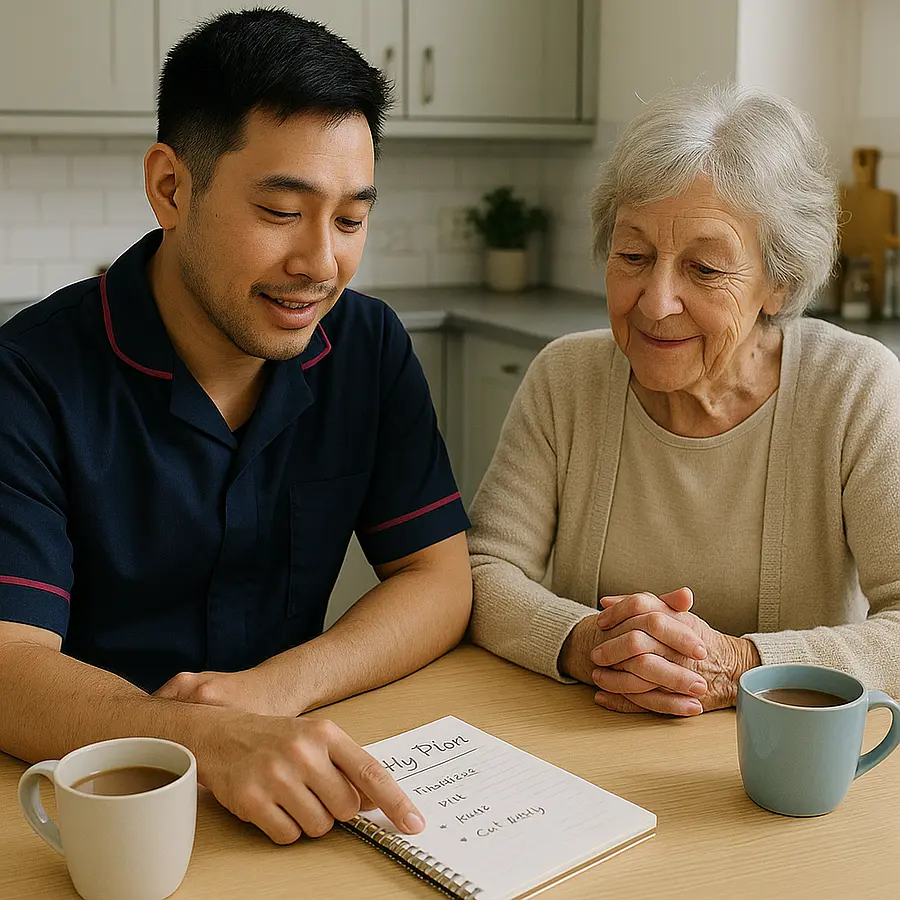
Kitchen table with a asian male caregiver in a 00072b tunic with e51974 piping sitting beside an older woman going through a simple daily plan written on a notepad mugs of tea nearby both looking reassured sense of organised collaborative care planning.

Main challenges for family carers to watch for

The biggest risks are burnout, missed appointments, medication errors, family tension and a loved one becoming isolated. A son working late may assume his sister has visited; she may think meals were already prepared. Small gaps can quickly become safety issues. Reading our service user guide can help families think clearly about consistent care and responsibilities.

Caucasian female caregiver in a 00072b tunic with e51974 trim using a calendar and notepad with an older Black man in his lounge planning upcoming hospital appointments and home support both smiling gently suggesting organised person centred care.

Start with a simple care routine everyone can follow

One of the most helpful steps is creating a written weekly routine. List who is covering breakfast, lunch checks, shopping, appointments and evening calls. Include exact times for tablets and meals. If your relative needs help with washing, dressing or daily personal hygiene support, note that too. A shared plan reduces confusion and makes gaps easier to spot.

realistic black male caregiver in tunic uniform 00072b with e51974 piping discussing a simple daily care timetable with a caucasian female service user and her asian son at a dining table notebooks tea mugs warm smiles supportive atmosphere real home care photography style

Share family responsibilities by task, not assumption

Families cope better when each person owns a clear task rather than vaguely saying they will “help more”. One relative might handle bills, another prescriptions, and another weekend visits. Someone local may oversee groceries, while a sibling farther away arranges transport or orders essentials online. This approach limits resentment and keeps your loved one’s support steady even when one person becomes busy.

realistic caucasian female caregiver in tunic uniform 00072b with e51974 trim smiling with an asian family around a coffee table dividing care tasks on paper while a black service user relaxes comfortably nearby warm home setting collaborative and reassuring natural realism

Protect work-life balance with honest communication

Many carers try to hide how much they are juggling. Speaking openly with your employer about hospital appointments, emergencies or regular check-ins can ease pressure. Flexible hours, remote working days or adjusted lunch breaks may help. At home, be honest with children and partners too. Knowing why routines have changed often creates more patience and practical support from the whole household.

Realistic home office scene of an Asian male caregiver in a 00072b tunic with e51974 trim reviewing a digital care plan on a laptop beside an elderly black woman and her daughter discussing how catheter care fits with her other conditions all engaged and reassured.

Use medication support to reduce daily stress

Tablets are one of the easiest areas for mistakes when everyone is rushed. Keep a current list of medicines, timings and any side effects to watch for. Use a dosette box only if advised, and record when medicines have been taken. If this is becoming difficult, our medication management support can provide dependable help and reassurance.

A realistic home care photograph of an asian male caregiver in a 00072b tunic with e51974 accent reviewing a medication organiser with an elderly caucasian woman at her dining table both smiling with reassurance daughter nearby relieved bright natural lighting

Plan meals and hydration before busy days

Food worries often increase when carers are out at work. Preparing soups, sandwiches or labelled fridge meals the night before can make a real difference. Keep easy snacks and visible drinks nearby, especially in warmer weather. If your relative struggles to cook safely or eat regularly, our meal preparation support can help maintain routine, nutrition and confidence at home.

 A black female caregiver in tunic uniform with color 00072b and with an accent color e51974 in a realistic kitchen with an elderly couple who have dementia ensuring save and simple mealtime routine

Keep the home safer with practical domestic help

When life is busy, cluttered walkways, missed laundry and low food supplies can quietly build up. A safer home starts with small routines: clear pathways, check lights, top up essentials and remove trip hazards. If chores are becoming difficult, our light domestic support can help with everyday household tasks so your relative stays comfortable and the home remains easier to manage.

Realistic lounge scene with an Asian female caregiver in a 00072b tunic with e51974 trim showing a middle aged White daughter how to position a walking frame correctly for her elderly mother all three smiling and relaxed.

Reduce loneliness through regular companionship

Older relatives often say they are “fine”, but long days alone can affect mood, confidence and appetite. Short, regular visits for conversation, a cup of tea, a walk in the garden or help with hobbies can make a big difference. Our companionship visits offer social connection and reassurance, especially when families are balancing work schedules and children’s routines.

Asian female caregiver in a 00072b tunic with e51974 piping helping an older woman water potted plants on a sunny patio both laughing gently gardening tools nearby vibrant flowers around them capturing joy and identity through hobbies at home.

Think ahead about night-time support and emergencies

Some families manage daytime care but feel most anxious at night. Wandering, confusion, falls or repeated toilet trips can leave everyone exhausted by morning. Keeping a phone nearby, good lighting and an emergency contact list helps, but some situations need more. Our overnight care can provide reassurance when nights are becoming unsettled or unsafe.
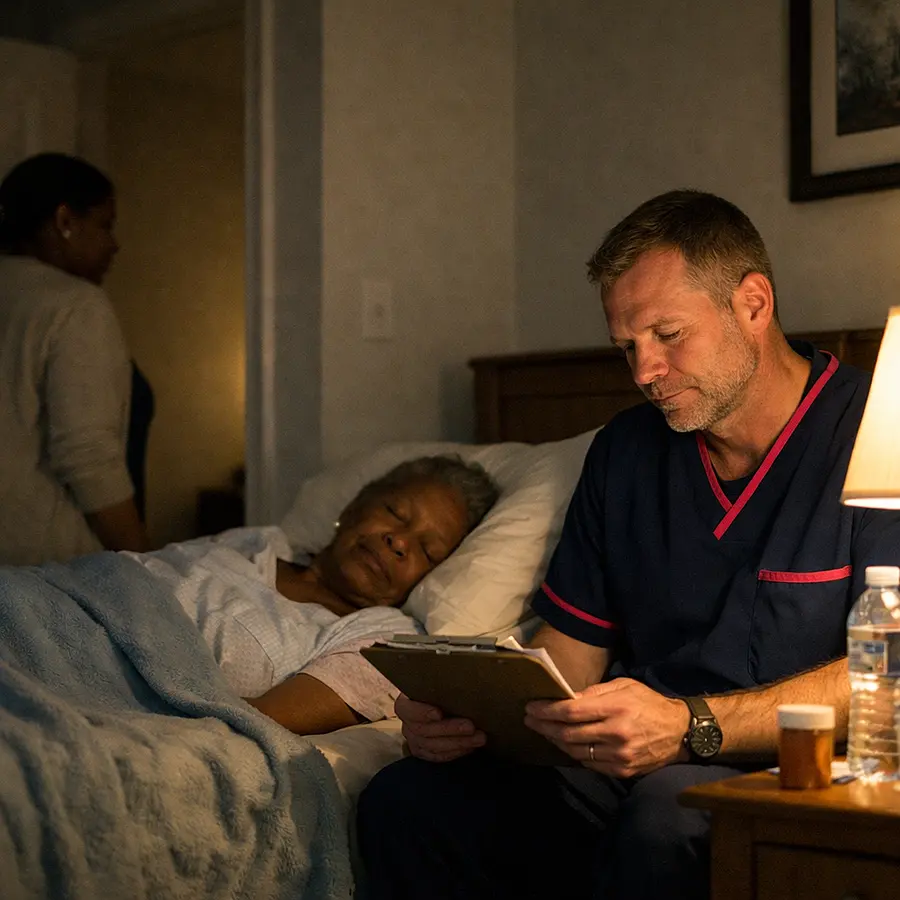
Realistic evening scene of a white male caregiver in a 00072b tunic with e51974 trim sitting by the bedside of a sleeping elderly Black woman reading notes by a small lamp while her middle aged daughter quietly leaves the room to rest illustrating respite and overnight support.

Use local planning and care needs assessment information

Families do not have to figure everything out alone. If your relative’s needs are growing, a care needs assessment can help identify what support is required day to day. It can also clarify safety concerns, mobility issues and personal care needs, making it easier to build a realistic plan instead of reacting only when there is a crisis.

White male caregiver in a 00072b tunic with e51974 detailing sitting with an adult daughter and her older Asian mother at a dining table discussing a written bowel care routine together all appearing engaged and reassured.

A morning routine can prevent rushed starts

Real life often becomes easier when mornings are predictable. For example, a daughter leaving for work at 8am might set out breakfast, while a lunchtime caller checks fluids and a neighbour confirms curtains are open. If your loved one needs help getting washed, dressed and settled for the day, planned support avoids panic and protects everyone’s schedule.

realistic caucasian female caregiver in 00072b tunic with e51974 accent preparing a light meal in a home kitchen for an asian male service user while a black family member smiles gratefully colourful soup and tea warm and uplifting atmosphere realistic photography

Make hospital trips easier with appointment planning

Appointments can disrupt workdays, school pickups and the older person’s energy levels. Keep a folder with letters, medication lists, glasses, hearing aids and snacks ready to go. If one family member cannot attend, share updates straight after. Planning transport and recovery time matters too, especially if mobility is affected or the person feels tired after long clinics.

A realistic warm scene of a Black female caregiver wearing a tunic uniform in color 00072b with e51974 accents smiling beside an elderly Caucasian man near a front door as they prepare for a day out checking a small bag and coat together bright natural lighting reassuring home care atmosphere joyful

Use technology support without making things complicated

Simple tools can help if they are easy to use. A shared digital calendar, medication reminder, video call slot or door sensor may reduce worry. Avoid introducing too much at once. Start with one useful change, such as a family group for updates after visits. The best systems save time rather than creating another task for everyone to monitor.

Realistic image of a white male caregiver in a 00072b tunic with e51974 trim showing a simple medication chart to a middle aged Black woman and her elderly father in their lounge all focused and relaxed cosy home environment.

Support changing health needs with elderly care planning

An older relative’s needs can change slowly or suddenly after illness, a fall or memory concerns. Families often cope for months before realising the plan no longer works. Reviewing routines every few weeks helps. If mobility, frailty or forgetfulness are increasing, pages on elderly care and frailty support can guide next steps.

Realistic scene of an Asian male caregiver in a 00072b tunic with e51974 trim talking kindly with a white middle aged woman and her older father in a lounge all seated together planning support.

The role of professional home care in family balance

Professional support does not replace family; it strengthens the whole arrangement. We can step in with regular visits, help with washing and dressing, support with medicines, meal routines, social visits or overnight reassurance. This gives relatives space to be sons, daughters, partners and parents again, rather than trying to carry every task alone while also working and managing home life.

A realistic family home scene showing a black female caregiver in a tunic uniform colour 00072b with e51974 accent supporting a caucasian family around an asian elderly female service user resting peacefully in bed glasses of water and mouth care items nearby warm and hopeful mood

Why choose us for supporting elderly relatives at home?

We understand that family life is busy, emotional and rarely predictable. Our approach is flexible, compassionate and shaped around the person receiving care as well as the people supporting them. Whether you need occasional help or a regular routine, we focus on dignity, reliability and practical relief, helping your loved one stay comfortable at home while your family regains breathing space.


Realistic image of a family living room where an elderly Black woman sits in an armchair with a blanket holding hands with her adult son while a White female caregiver in a 00072b tunic with e51974 accent chats with them warmly everyone appearing connected and supported.
Hands of young adult and senior women over green b
Contact Us

Contact us to arrange Elderly Care at home

If you're looking for support with daily living for some one elderly, we're here to help. Our friendly team is ready to offer guidance, answer your questions, and arrange elderly care tailored to your or your loved ones' needs in their own home. Reach out today for personalised advice and support.

Balancing work, family and caring for elderly relatives FAQ's

You’re bound to have questions when exploring your home care options, so we’ve answered some of the most common ones below.

Domestic duties matter because the home environment affects safety, comfort and independence every day. Laundry piling up, floors becoming cluttered, poor lighting, expired food or empty cupboards can all create risks. Families often focus first on medical or personal care needs, but everyday household tasks are part of keeping someone well at home. If work and family commitments are making it hard to stay on top of chores, support with the practical side of home life can make a real difference. Our light domestic support can help with routine household tasks that keep the home easier to manage. This can reduce falls risks, improve hygiene and stop family visits becoming entirely about cleaning and catching up on jobs.

The right time is usually earlier than families expect. If care is causing exhaustion, safety worries, repeated missed tasks or tension at home, it is worth exploring support. You do not need to wait until things become unmanageable. Professional care can step in with practical routines before a crisis develops, helping everyone feel more secure. Families often contact us after a fall, hospital stay, medication issue or a period of growing stress, but planned support is usually easier than emergency decisions. Asking for help is not a sign that family care has failed. It is often a thoughtful decision to protect your loved one’s dignity, safety and wellbeing while also protecting the people who love and support them.

Common signs include constant tiredness, missing work deadlines, forgetting your own appointments, resentment toward other relatives, poor sleep and feeling anxious every time the phone rings. You may also notice that your loved one is missing meals, leaving household jobs undone, forgetting medication or becoming lonely between visits. These are all signs that the caring load has gone beyond what one person can safely manage alone. It does not mean you have failed. It usually means the situation has changed and needs a better structure. Additional support with routines, social contact, meals, household tasks or overnight monitoring can make a major difference to both your wellbeing and your relative’s safety.

No, not always. Some families use support for a short period after illness, surgery, a fall or a hospital discharge. Others need help during particularly busy times, such as school holidays, work deadlines or when the main family carer is unwell. Short-term care can also be a useful way to trial support and understand what level of help feels right. For some people it gradually grows into a longer arrangement as needs change. The important thing is that support should match the current situation, not what you think you are supposed to manage alone. Flexible home care can be adjusted as circumstances change, helping families stay responsive without feeling locked into one approach.

Coming home from hospital often changes the level of help an older person needs, even if only temporarily. They may feel weaker, less steady on their feet, more forgetful or unsure about new medication routines. Family carers can quickly feel overwhelmed, particularly if they have already used up leave from work. Support after discharge can include help with washing, dressing, moving safely around the home, preparing meals, encouraging fluids, checking comfort and supporting medication routines. It can also provide reassurance while confidence rebuilds. This kind of practical help often prevents readmission by making the return home smoother, safer and less exhausting for both the person recovering and the family trying to support them.

Absolutely. Light domestic support is often overlooked, but it can have a major impact on safety and wellbeing. Cluttered floors, overflowing laundry, empty cupboards or poor kitchen hygiene can all add stress and increase risk. For an older relative, even small chores may become tiring or unsafe. Help with tidying, laundry, changing beds, washing up and keeping pathways clear can make the home easier to manage and reduce trip hazards. It also means family visits can focus less on racing through chores and more on genuine time together. When the home feels cleaner, calmer and safer, both the older person and the wider family usually feel more in control.

Emergency planning is essential because unexpected events happen when families are already busy. Keep key information in one place, including medication lists, GP details, contact numbers, hospital letters and who can step in if you are unavailable. Think through common scenarios such as a fall, sudden illness, confusion at night or a cancelled appointment. Knowing in advance who will respond can reduce panic and delays. It is also wise to tell your employer, where possible, that you have caring responsibilities, so there is some understanding if urgent issues arise. Professional support can make emergency situations easier to manage because there is already a care structure in place rather than needing to start from scratch during a stressful moment.

Yes, overnight support can be very helpful if your parent wakes often, becomes confused, needs the toilet regularly or is at risk of falls. Night-time worries can affect the whole family, especially if you are trying to be alert for work the next day. Lack of sleep quickly leads to poor concentration, emotional strain and burnout. Overnight care offers reassurance that someone is available to help with repositioning, comfort, toileting or calming a person who wakes distressed. It can also support safer nights after illness, a hospital discharge or a mobility setback. For many families, night support is the turning point that makes caring at home feel possible again rather than exhausting and unsustainable.

Start by asking what support is needed for mobility, medication, personal care, meals and follow-up appointments. Make sure the home is set up for safe movement, with clear walkways, good lighting and items within easy reach. It helps to prepare simple meals in advance, organise clothing and check that any instructions from the hospital are written down. Hospital discharge can be a difficult time for working families because needs are often higher than before admission. Bringing in support early can make recovery smoother and reduce the risk of readmission. Even short-term help with washing, dressing, meals or movement around the house can make a significant difference in the first days and weeks at home.

Yes, mobility support can make a big difference because moving safely around the home affects so many other tasks. If someone struggles to get from bed to bathroom, reach the kitchen or manage steps confidently, family carers often end up planning their whole day around those moments. This becomes especially difficult when trying to hold down a job. Information on mobility care can help families think about walking safety, confidence, routines and practical adaptations. Support might include help to get up safely, move around indoors, prepare for appointments or maintain confidence after a fall. Improving mobility support often helps meals, personal care, toileting and social contact become easier too.

We proudly provide high-quality home care across the East Midlands, in an around the towns and cities detailed below.

Elderly hands on a walking sitck

We're becoming a fully regulated service

While we are not currently regulated, meaning there are some services we cannot currently provide, we are in the process of registering to become a fully regulated service.

CQC
Elderly hands on a walking sitck

Call us to find out more about Balancing work, family and caring for elderly relatives

East Midlands

We proudly provide high-quality home care across the East Midlands

Our Reviews

We’re proud of the trust families place in us. Here’s what some of the people we support, and their loved ones, say about our home care services.

"Great support for my mum after she lost her confidence after a fall and hospital stay."

Sarah L

"Really helped me with keeping on top of my house work since my parkinson's has progressed."

Mark T

"They have been a great help with keeping on top of my dads laundry and general house cleaning as he is bed bound and have been being changed daily."

Emily R

Senior woman hand in caregiver hands

Join The Good News Newsletter

Be the first to discover exclusive offers, and service updates. Your journey to independent living starts here - where everything truly is fine.


Contact The Good Place

We’d love to hear from you! Whether you have questions, want to learn more about our home care service, or are ready for us to start supporting you or your loved one, our good people are here to help. If you are looking to make a complaint, you can contact our Registered Manager or Nominated Individual directly.

Send Us a Message


Elderly hands on a walking sitck

Working in Partnership

We work closely within the community to provide safe, compassionate, reliable home care that supports independence, dignity, and improved wellbeing while remaining at home.

Derbyshire County Council
Staffordshire County Council
NHS