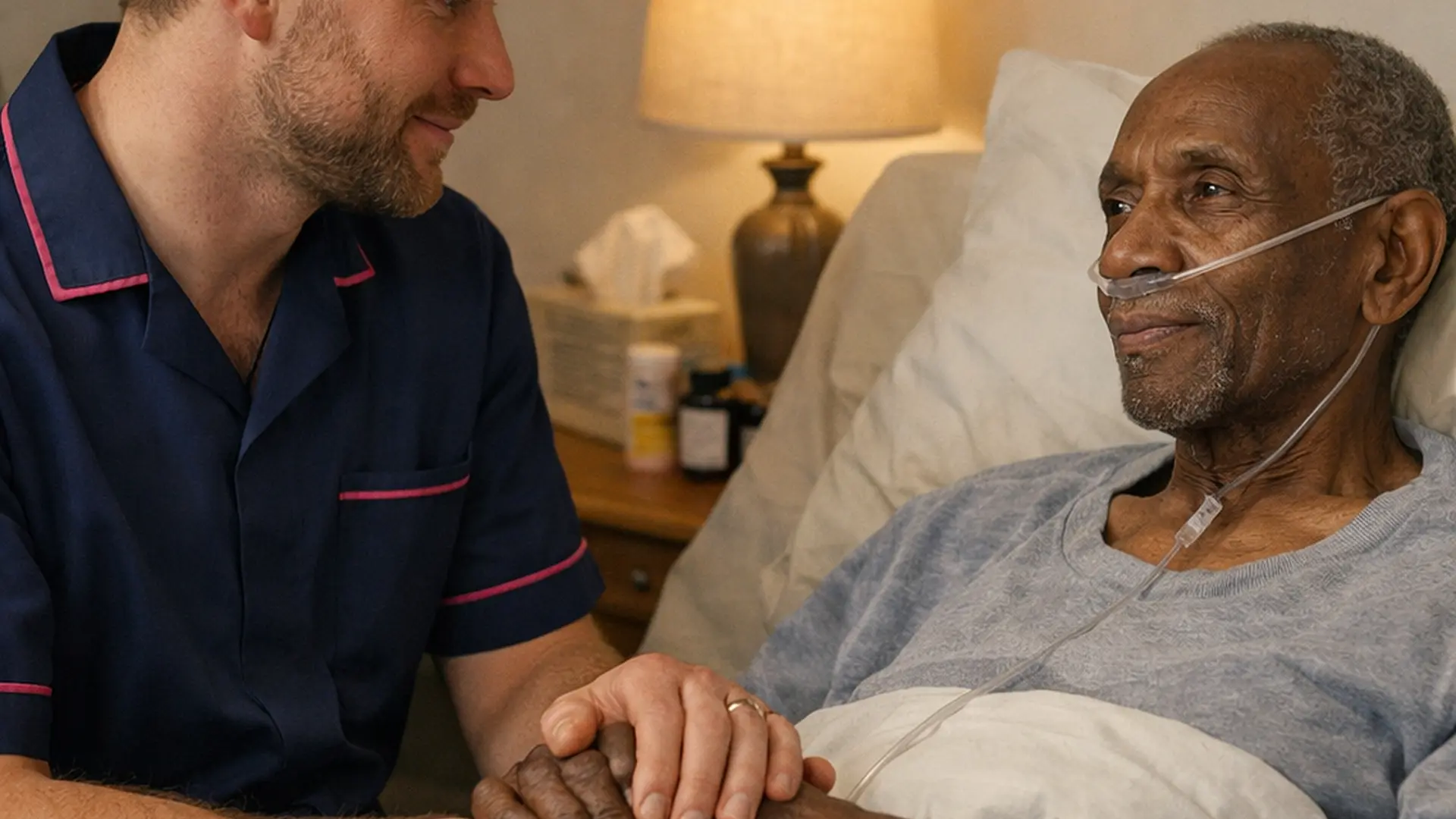
Understanding palliative care and end-of-life care at home
Palliative care and end-of-life care are closely linked, but they are not the same. Palliative care can begin much earlier, helping someone live as comfortably as possible with a serious illness. End-of-life care usually refers to support in the final stage of life. At home, both focus on comfort, dignity, emotional wellbeing, and practical help for the whole family.

What palliative care means in everyday life
Palliative care supports people living with serious or life-limiting conditions by managing symptoms, reducing distress, and helping daily life feel more manageable. It may run alongside treatment and can last weeks, months, or longer. End-of-life care is usually introduced when professionals believe someone may be in the last phase of life and comfort becomes the main priority.

Recognising key challenges at home
Families often find the emotional uncertainty hardest. Symptoms can change quickly, energy levels may vary from day to day, and it can be difficult to know when extra help is needed. There may also be concerns about pain, eating less, disturbed sleep, falls, or whether a loved one is becoming less able to manage washing, moving around, or taking medicines safely.

Planning care at home around comfort
A good starting point is to ask what comfort looks like for your loved one. That might mean a quieter bedroom, favourite blankets, familiar music, regular visitors, or fewer interruptions. Small routines help too, such as offering drinks little and often, keeping essentials nearby, and arranging support with washing and personal hygiene when tiredness makes tasks harder.

Managing symptoms and comfort day by day
Symptom support may include helping someone rest between activities, using pillows to ease breathlessness, encouraging sips of fluid, and noticing changes in pain, confusion, or agitation. Families often benefit from guidance on what is normal and what needs attention. Keeping a simple notebook of symptoms, appetite, sleep, and mood can make conversations with professionals clearer and more useful.

Supporting medication routines safely at home
Medicines may change over time, especially if symptoms increase or swallowing becomes difficult. Clear labels, an up-to-date list, and a regular review can reduce stress for everyone involved. Our support with medication management at home can help families keep track of timings, monitor comfort, and notice when a professional review may be needed.

Creating calm daily routines during serious illness
Even when health is changing, familiar structure can still be comforting. A simple plan for mornings, meals, rests, visiting times, and bedtime can reduce anxiety. You may find helpful ideas in our guide to creating a calm daily routine during palliative care at home, especially when days feel unpredictable or emotionally heavy.

Helping with food and fluids gently
Appetite often changes during palliative and end-of-life care, so pressure-free support matters. Smaller portions, favourite foods, softer textures, and drinks within easy reach can help. Some days a person may want very little, and that can be upsetting for relatives. Our help with meal preparation can make eating and drinking feel less demanding and more comforting.

Making the home environment easier to manage
Practical changes around the house can make a big difference. Keep walkways clear, move important items within reach, and make sure lighting is soft but sufficient. Extra help with laundry, dishes, and tidying can also reduce pressure on relatives. Our light domestic support helps families focus more on time together and less on everyday tasks.

Using overnight support when nights feel harder
Nights can be the most worrying time for families, especially if someone wakes confused, needs help to reposition, or becomes uncomfortable. Having planned overnight care can bring reassurance and help everyone get more rest. It can also mean changes in breathing, pain, or restlessness are noticed early rather than becoming overwhelming by morning.

Protecting emotional wellbeing for everyone involved
Serious illness affects the whole household. Some relatives want detailed information, while others need time to take things in. Gentle conversations, honest updates, and short breaks can help. Our guide on emotional support for family carers during palliative care at home offers practical ways to look after yourself while supporting someone else.
Knowing when end-of-life care may be needed
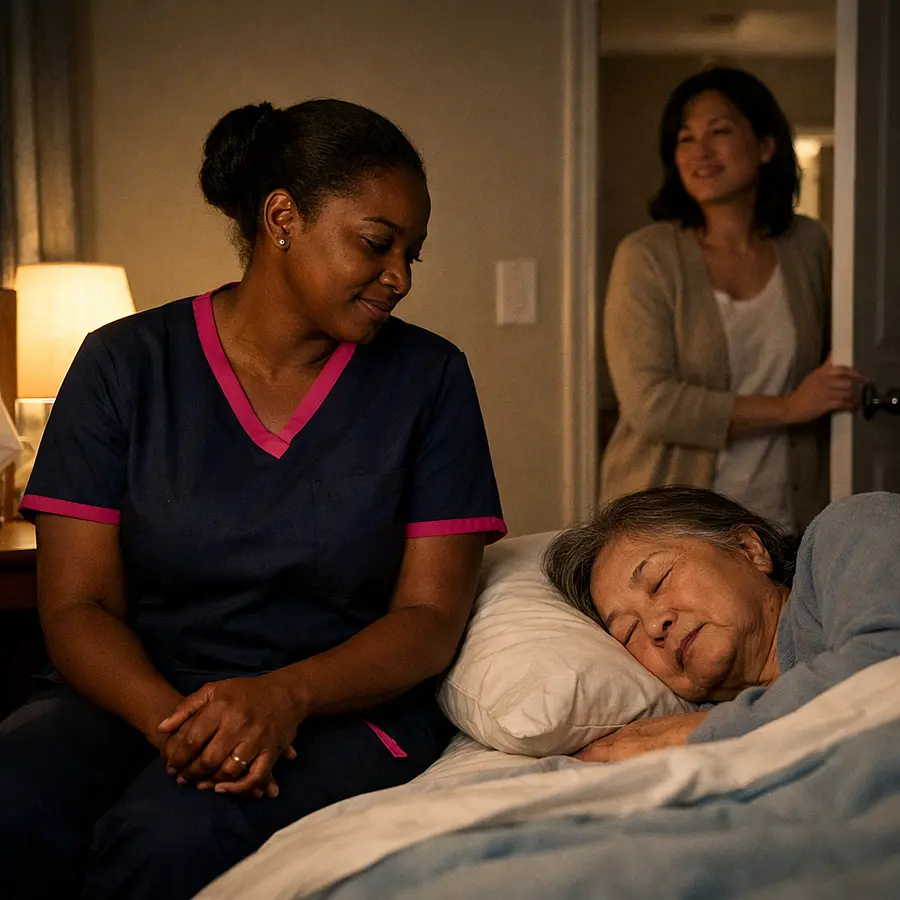
End-of-life care may become more relevant when someone is sleeping much more, eating and drinking less, becoming weaker, or showing signs that the body is slowing down. Families often feel uncertain about what these changes mean. Our guidance on recognising when it’s time to consider end-of-life care at home can help you prepare.

In real family routines the difference often becomes clearer
For example, someone with advanced cancer may receive palliative care at home for several months while still attending appointments and enjoying visits from friends. Support might include help with bathing, fatigue, and symptom monitoring. As their condition changes, care may gradually shift towards end-of-life support, with more focus on comfort, rest, and being surrounded by familiar people.

With progressive illness support can change over time
A person living with conditions such as motor neurone disease, advanced COPD, or Parkinson’s may need palliative care long before the final weeks of life. One month, they may only need support with fatigue and medicines. Later, they may need more help with moving, eating, and staying comfortable. That gradual change is often why the two terms can feel confusing.

When family carers need practical breathing space
Many relatives manage appointments, phone calls, shopping, and emotional support all at once. In practice, palliative care at home often works best when families accept help early. This might mean a carer taking over parts of a morning routine, offering friendly companionship so a relative can rest, or simply being there during difficult afternoons.

During the final weeks at home priorities often narrow
When someone is nearing the end of life, families often find that schedules matter less and comfort matters more. Visits may become shorter, the room quieter, and hands-on support more frequent. You may find it helpful to read our page on recognising the final weeks of life at home so changes feel less frightening.

Small comfort measures can mean a lot
Families often tell us that little actions become the most meaningful: moistening lips, fluffing pillows, opening a window for fresh air, playing favourite music, or helping someone feel clean and settled. Our guide to practical comfort measures at home can help you feel more prepared for those everyday moments.

How professional home care supports the whole picture
Professional carers can support both palliative and end-of-life care by helping with comfort, routine, observation, and reassurance. We work alongside families and other professionals to provide flexible support that responds to changing needs, whether that means help with showering and dressing, medicines, emotional reassurance, or practical overnight presence.

Why choose us for palliative care at home
We understand that this stage of life needs sensitivity, clear communication, and practical support that feels personal. Our care is shaped around the person, their wishes, and the family around them. Whether you need occasional visits or more regular help, we can support comfort, dignity, and peace of mind at home when it matters most.